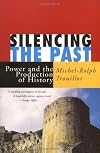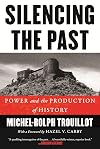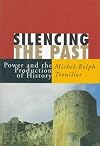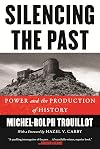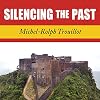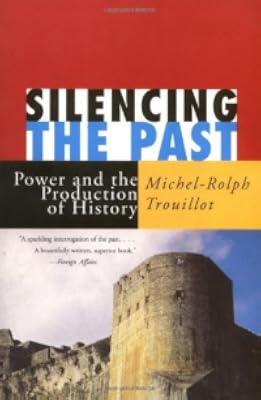
Silencing the Past: Power and the Production of History
by Michel-Rolph Trouillot
On This Page
Description
In this provocative analysis of historical narrative, Michel-Rolph Trouillot demonstrates how power operates, often invisibly, at all stages in the making of history to silence certain voices. From the West's failure to acknowledge the Haitian Revolution, the most successful slave revolt in history, to the continued debate over denials of the Holocaust, and the meaning of Columbus's arrival in the Americas, Trouillot shows us that history is not simply the recording of facts and events, but show more a process of actively enforced silences, some unconscious, others quite deliberate. show lessTags
Recommendations


Member Recommendations
Member Reviews
While much of this book focuses on the history of his native country of Haiti, Trouillot's goal is broader: an epistemological re-evaluation of how our perceptions of history are formed. Of how we understand history to be true. Of how opinions come to be historical fact. It's not light reading, but easy enough to absorb when he moves from the theoretical to the specific. He goes beyond the commonplace "History is written by the victors" to demonstrate by example the four stages leading to this end result.
Those four stages are the moments when decisions are made, intentionally or otherwise, that affect what we come to perceive as history: at the time original records are (or are not) created; at the time those records are selected for show more retention; at the time they are retrieved and put into a narrative; and at the time that narrative is evaluated for significance. Omissions ("silences") at any point can alter our interpretation of past events.
Silences result not just from disdain or prejudice, but from the fact that the reality is "unthinkable" to the recorder/archiver/narrative developer/evaluator. The Haitian revolution of 1791-1804 provides a vivid example: that the slaves could have, on their own, desired, organized and successfully concluded their own revolutionary war was an idea inconceivable by the French or most others interpreting the record. This section brought to mind a book I read not long ago, [b:Sea People: The Puzzle of Polynesia|40536236|Sea People The Puzzle of Polynesia|Christina Thompson|https://i.gr-assets.com/images/S/compressed.photo.goodreads.com/books/1542039373l/40536236._SY75_.jpg|19226650]. The reality of how the South Pacific was colonized remained unknown (at least outside Polynesian oral history) for hundreds of years because Europeans simply couldn't accept that the Polynesian outriggers could have travelled the distances it has since been proved that they can.
The book is a brilliant framework, illustrating the inherent reasons that the true histories of blacks, women, native populations, and others have been omitted from history. Since we continue to struggle with the ways in which these perceptions mold actions and opinions in the 21st century these are ideas that bear thinking about. show less
Those four stages are the moments when decisions are made, intentionally or otherwise, that affect what we come to perceive as history: at the time original records are (or are not) created; at the time those records are selected for show more retention; at the time they are retrieved and put into a narrative; and at the time that narrative is evaluated for significance. Omissions ("silences") at any point can alter our interpretation of past events.
Silences result not just from disdain or prejudice, but from the fact that the reality is "unthinkable" to the recorder/archiver/narrative developer/evaluator. The Haitian revolution of 1791-1804 provides a vivid example: that the slaves could have, on their own, desired, organized and successfully concluded their own revolutionary war was an idea inconceivable by the French or most others interpreting the record. This section brought to mind a book I read not long ago, [b:Sea People: The Puzzle of Polynesia|40536236|Sea People The Puzzle of Polynesia|Christina Thompson|https://i.gr-assets.com/images/S/compressed.photo.goodreads.com/books/1542039373l/40536236._SY75_.jpg|19226650]. The reality of how the South Pacific was colonized remained unknown (at least outside Polynesian oral history) for hundreds of years because Europeans simply couldn't accept that the Polynesian outriggers could have travelled the distances it has since been proved that they can.
The book is a brilliant framework, illustrating the inherent reasons that the true histories of blacks, women, native populations, and others have been omitted from history. Since we continue to struggle with the ways in which these perceptions mold actions and opinions in the 21st century these are ideas that bear thinking about. show less
History may be written by the winners, but it is also written by those in power. Often, they are one and the same. So, who is to say what becomes “history” and what does not? Who controls what is recorded as history and what is forgotten? What events are ignored or left silent? That is the premise of this book.
The author focuses mainly on Haitian history, since he is Haitian. However, the ideas are useful in analyzing all of history, from any place in the world. How do the events we live become history? Who chooses which to include in history books? What is left out and why? What becomes worthy of being recorded and passed down to future generations?
Details and events are often left out of historical accounts. Simply, there is no show more way to record everything, so some incidents or details are left out. The choice of what to include falls to those in power. That may be a nation, or an individual, or a society. Some facts are not recorded for posterity and some are just ignored. The silences are the people, events and happenings that get left out of the historical narrative.
The premise of this book is something to keep in mind whenever reading historical accounts. We need to consider that some things may have been “silenced” or simply left out of the narrative we read. This book provides a foundation for all readers and students of history to make a more thoughtful analysis of the historical accounts they read. Are those accounts complete, or was something important left out, either deliberately or through emphasis on the tale those in power wished to pass on to future generations?
It is thought-provoking material and a book that I recommend for all students of history. The language is a bit over-the-top at times, so it is something I would recommend for college students rather than high school history students. However, the information presented, and the author’s analysis of various historical events, and their written accounts, is fascinating reading. show less
The author focuses mainly on Haitian history, since he is Haitian. However, the ideas are useful in analyzing all of history, from any place in the world. How do the events we live become history? Who chooses which to include in history books? What is left out and why? What becomes worthy of being recorded and passed down to future generations?
Details and events are often left out of historical accounts. Simply, there is no show more way to record everything, so some incidents or details are left out. The choice of what to include falls to those in power. That may be a nation, or an individual, or a society. Some facts are not recorded for posterity and some are just ignored. The silences are the people, events and happenings that get left out of the historical narrative.
The premise of this book is something to keep in mind whenever reading historical accounts. We need to consider that some things may have been “silenced” or simply left out of the narrative we read. This book provides a foundation for all readers and students of history to make a more thoughtful analysis of the historical accounts they read. Are those accounts complete, or was something important left out, either deliberately or through emphasis on the tale those in power wished to pass on to future generations?
It is thought-provoking material and a book that I recommend for all students of history. The language is a bit over-the-top at times, so it is something I would recommend for college students rather than high school history students. However, the information presented, and the author’s analysis of various historical events, and their written accounts, is fascinating reading. show less
 This review was written for LibraryThing Early Reviewers.
Silencing the Past: Power and the Production of History
Michel-Rolph Trouillot
Beacon Press
March 2015
978-0807080535
At a time when educational “reformers” push to reduce not only the sciences, but also the humanities towards quantifiable, or more accurately testable, quanta of knowledge, the study of historical production is an increasingly important counter-balance to ideological efforts to constrain and sanitize historical knowledge. These reductions, far from just a banal attempt to analyze student performance, are part of the process of historical production themselves, playing out in school boards across the United States. Recent reactionary consternation to the revamping of the AP History curriculum demonstrates the jejune show more nature of the well-worn aphorism, history is written by the victors.
In Silencing the Past, Michel-Rolph Trouillot encourages us to unmask this aphorism to interrogate a number of productive forces. Far from the victors, as modern school boards and states have shown, history is written by the living for reasons so often disconnected and distantly related to the event. From the act of labeling—did Columbus “discover” or “encounter”—to establishing the importance of the event—was the landing important to those living in 1492—Trouillot focuses the reader on the many considerations involved in the construction of historical narratives. From Columbus’s journey through the Haitian Revolution and the Alamo to the Holocaust, he uses these historical events to push the reader to recognize historical actors who, removed from the events they narrated, gave life to historical lore in ways and for reasons that so often served themselves and the present.
Silencing the Past is an encompassing examination of these productive forces backdropped mainly by the Haitian Revolution. Trouillot strikes an impressive middle-ground between an academic text, useful and piquant for those who already have a passing familiarity with postmodernism and ideas of historical construction, and an evocative read for a lay audience, who at most would need a cursory Google search over a few theoretical concepts of which they might be unfamiliar. show less
Michel-Rolph Trouillot
Beacon Press
March 2015
978-0807080535
At a time when educational “reformers” push to reduce not only the sciences, but also the humanities towards quantifiable, or more accurately testable, quanta of knowledge, the study of historical production is an increasingly important counter-balance to ideological efforts to constrain and sanitize historical knowledge. These reductions, far from just a banal attempt to analyze student performance, are part of the process of historical production themselves, playing out in school boards across the United States. Recent reactionary consternation to the revamping of the AP History curriculum demonstrates the jejune show more nature of the well-worn aphorism, history is written by the victors.
In Silencing the Past, Michel-Rolph Trouillot encourages us to unmask this aphorism to interrogate a number of productive forces. Far from the victors, as modern school boards and states have shown, history is written by the living for reasons so often disconnected and distantly related to the event. From the act of labeling—did Columbus “discover” or “encounter”—to establishing the importance of the event—was the landing important to those living in 1492—Trouillot focuses the reader on the many considerations involved in the construction of historical narratives. From Columbus’s journey through the Haitian Revolution and the Alamo to the Holocaust, he uses these historical events to push the reader to recognize historical actors who, removed from the events they narrated, gave life to historical lore in ways and for reasons that so often served themselves and the present.
Silencing the Past is an encompassing examination of these productive forces backdropped mainly by the Haitian Revolution. Trouillot strikes an impressive middle-ground between an academic text, useful and piquant for those who already have a passing familiarity with postmodernism and ideas of historical construction, and an evocative read for a lay audience, who at most would need a cursory Google search over a few theoretical concepts of which they might be unfamiliar. show less
This review was written for LibraryThing Early Reviewers.I missed Michel Rolph Trouillot's Silencing the Past: Power and Production of History the first time around. I'm glad I had a chance to see it in its twentieth anniversary edition. Trouillot is inspiring in his passion, clear in his terminology, exquisitely precise in his explanations of facts and theories, and straightforward in his examples. And inspiring. I want to go back to reading and analyzing history.
The book takes the adage “history is written by the winners” and expands it with a challenge. “History is the fruit of power, but power itself is never so transparent that its analysis becomes superfluous. The ultimate mark of power may be its invisibility, the ultimate challenge, the exposition of its roots.” [xxiii] Each show more historical narrative has its own unique silences; issues and people left out of the history. These are created when a singular concept had to be addressed / repressed / silenced. Because of these differences, the methods of researching and reversing the silences need to be specially tailored to each, so voices can be investigated and exposed.
The points where “silences” most often enter the records and narratives are made apparent and I think I now have tools needed to see these silences in any history book or article I read.
I need to research the facts and find access to tools to help me find where my own thoughts are blinded by the “impossibilities” he discusses. “When reality does not coincide with deeply held beliefs, human beings tend to phrase interpretations that force reality within the scope of these beliefs. They devise formulas to repress the unthinkable and to bring it back within the realm of accepted discourse.” [72] This is what happened during the precursors to the Saint Domingo / Haiti slave rebellion. The slave-owners, the local government leaders, and the European governments which depended on slaves simply could not see the facts that we see as showing stronger rebel slaves. Slaves simply do not rebel. Period. It was unthinkable. “How does one write the history of the impossible?” [73]
The Notes section of the book is helpful, and it has an index, but because Trouillot died in 2012, Beacon Press's characteristic “resources for further study” could not be appended. I really miss that, as I want to go on, and am not sure how. show less
The book takes the adage “history is written by the winners” and expands it with a challenge. “History is the fruit of power, but power itself is never so transparent that its analysis becomes superfluous. The ultimate mark of power may be its invisibility, the ultimate challenge, the exposition of its roots.” [xxiii] Each show more historical narrative has its own unique silences; issues and people left out of the history. These are created when a singular concept had to be addressed / repressed / silenced. Because of these differences, the methods of researching and reversing the silences need to be specially tailored to each, so voices can be investigated and exposed.
The points where “silences” most often enter the records and narratives are made apparent and I think I now have tools needed to see these silences in any history book or article I read.
I need to research the facts and find access to tools to help me find where my own thoughts are blinded by the “impossibilities” he discusses. “When reality does not coincide with deeply held beliefs, human beings tend to phrase interpretations that force reality within the scope of these beliefs. They devise formulas to repress the unthinkable and to bring it back within the realm of accepted discourse.” [72] This is what happened during the precursors to the Saint Domingo / Haiti slave rebellion. The slave-owners, the local government leaders, and the European governments which depended on slaves simply could not see the facts that we see as showing stronger rebel slaves. Slaves simply do not rebel. Period. It was unthinkable. “How does one write the history of the impossible?” [73]
The Notes section of the book is helpful, and it has an index, but because Trouillot died in 2012, Beacon Press's characteristic “resources for further study” could not be appended. I really miss that, as I want to go on, and am not sure how. show less
This review was written for LibraryThing Early Reviewers.I found Silencing the Past (published in 1995) both fascinating and illuminating, still new, while at the same time anchored in the scholarly discourse of the 1990s. Since the January, 2010 earthquake in Haiti, Trouillot’s book seems to have appeared on every bookseller’s recommended shelf. But I wonder why I didn’t know about or read it fifteen years ago. Back then, I was a graduate student in English. Although my focus was Creative Writing, I had a special interest in what was/is called postcolonial literature and theory. Trouillot was not on my reading list in 1998, however, at least not at Sonoma State University.
Although he talks about particular events (the Haitian Revolution, Columbus’s landfall in the Bahamas in 1492) show more and historical characters (Christophe, Sans Souci, Columbus), the author’s primary concern here is with the production of history and the relation of power to that production with its consequential silences: “Silences enter the process of historical production at four crucial moments: the moment of fact creation (the making of sources); the moment of fact assembly (the making of archives); the moment of fact retrieval (the making of narratives); and the moment of retrospective significance (the making of history in the final instance).”
Trouillot’s stance is neither that of the positivist nor the constructivist. He states rather that “Whereas the positivist view hides the tropes of power behind a naive epistemology, the constructivist one denies the autonomy of the sociohistorical process.” He rejects “both the naive proposition that we are prisoners of our pasts and the pernicious suggestion that history is whatever we make it. History is the fruit of power, but power itself is never so transparent that its analysis becomes superfluous.”
I particularly appreciated and remain intrigued by Trouillot’s reminders to his readers regarding the materiality of history, “that history begins with bodies and artifacts: living brains, fossils, texts, buildings” as well as his discussion of the “ethical differences between scholars and intellectuals.” Silencing the Past is nothing less than (and what could be better?) a thought-provoking read. show less
Although he talks about particular events (the Haitian Revolution, Columbus’s landfall in the Bahamas in 1492) show more and historical characters (Christophe, Sans Souci, Columbus), the author’s primary concern here is with the production of history and the relation of power to that production with its consequential silences: “Silences enter the process of historical production at four crucial moments: the moment of fact creation (the making of sources); the moment of fact assembly (the making of archives); the moment of fact retrieval (the making of narratives); and the moment of retrospective significance (the making of history in the final instance).”
Trouillot’s stance is neither that of the positivist nor the constructivist. He states rather that “Whereas the positivist view hides the tropes of power behind a naive epistemology, the constructivist one denies the autonomy of the sociohistorical process.” He rejects “both the naive proposition that we are prisoners of our pasts and the pernicious suggestion that history is whatever we make it. History is the fruit of power, but power itself is never so transparent that its analysis becomes superfluous.”
I particularly appreciated and remain intrigued by Trouillot’s reminders to his readers regarding the materiality of history, “that history begins with bodies and artifacts: living brains, fossils, texts, buildings” as well as his discussion of the “ethical differences between scholars and intellectuals.” Silencing the Past is nothing less than (and what could be better?) a thought-provoking read. show less
To explain this book in the simplest terms I would simply say that Trouillot explains how we get holes, or as he calls them silences, in our historical narrative. It is simple, he writes, silences occur at “the moment of fact creation (making the sources), at the moment of fact assembly (making the archives), at the moment of fact retrieval (the making of the narratives), and that the moment of retrospective significance (the making of history in the final instance)” As he explains those four moments he also manages to teach a good bit of Haitian history, he demonstrates the difficulty in recording the history of “impossible” events, and examines the evolution of Columbus from a hired shipmaster who did not even make a log entry show more for October 12, 1492 to an immortal icon celebrated across three continents on October 12, 1992.
I feel humbled after reading Trouillot’s book. He explains concepts with such clarity that I am embarrassed I did not already know them. Even the one idea that I can claim to have already understood, that two historians with different world views can make honest use all the available data and come to differing conclusions, he explains so much better than I ever could. Without even mentioning Watergate the Tea Party he explained to me how so many adults at the time believed that Nixon did nothing wrong and now believe that Obama was not born here.
Silencing the Past is a first rate historiography and one of the few that I would recommend to non-historians. show less
I feel humbled after reading Trouillot’s book. He explains concepts with such clarity that I am embarrassed I did not already know them. Even the one idea that I can claim to have already understood, that two historians with different world views can make honest use all the available data and come to differing conclusions, he explains so much better than I ever could. Without even mentioning Watergate the Tea Party he explained to me how so many adults at the time believed that Nixon did nothing wrong and now believe that Obama was not born here.
Silencing the Past is a first rate historiography and one of the few that I would recommend to non-historians. show less
For most of the general public, the production of history is an apparently simple task: research, discover what happened, and then write it down. And, in a way, this simplistic description encompasses the work of many historians (though perhaps few would use this description themselves). Michel-Rolph Trouillot, a prominent Haitian scholar and professor at Johns Hopkins University, asserts that the process is far more complicated than everyone supposes. Unlike many historiographies, Trouillot does not focus merely on the methods of history, but in how history is produced. While the distinction between these two topics may not be apparent to the novice scholar, Trouillot succeeds admirably in clarifying his thesis: that power is involved show more in almost all aspects of historical production that affects how history is portrayed, and, indeed, what is included in history and what is neglected.
Trouillot sets out the distinction not usually noticed by consumers of history: the facts of the matter versus how those facts are reported: "what happened" as compared to "that which is said to have happened" (2). He asserts that there is often a large difference between the two, and that this difference can be ascribed to one concept, a concept that might be manifested in many ways but boils down to one word: power. "History is the fruit of power," according to Trouillot, and this power is reflected in the "ways in which the production of historical narratives involved the uneven contribution of competing groups and individuals who have unequal access to the means for such production" (xix).
This is reflected in the tension between what happened and what is said to have happened. Conceptually this makes "historian as revealer and discoverer of truth" somewhat troublesome. What actually occurs and how it is reported can differ, sometimes to a troubling degree. If we accept Trouillot's assertion that history—both 'what happened' and 'what is said to have happened'—is always a product of its own time, then "historical actors are also narrators and vice versa" (22).
To focus this problem further, Trouillot focuses on two specific issues. First, that process and narrative are both distinct and blurred. Second, there is a sense that the 'process of historical production' is more important than some esoteric debate about the 'nature of history' (24-25). This second concern is by far the most important debate as far as Trouillot is concerned, and it is this issue that occupies the bulk of his book. It is by focusing on how history as narrative is created we can see the role of power in creating and silencing facts and events (26).
Trouillot uses several examples to probe this issue of 'mentions' and 'silences,' most of which concern the Haitian Revolution, which has been strangely neglected by Western history. The Haitian Revolution, arguably one of the most unique occurrences in world history, has been afflicted by a 'cycle of silences' (26). Trouillot identifies these silences as occurring at every step of historical production: the "moment of fact creation, moment of fact assembly, moment of fact retrieval, and the moment of retrospective significance" (26). At every step of the way, from the making of sources to the making of history, power has been exercised to diminish or silence the revolutionary nature of the events in Haiti.
In the historical arena (as in other arenas), Haiti has been too poor and impotent to ensure that its history is treated equally. Thus, the story of the Haitian Revolution (an "unthinkable event" even as it was occurring [73]), became insignificant. The insignificance of this 'non-event' was represented at every aspect of historical production, from sources to archives to narratives (27). From primary documents to creation of archives to final historical narratives, the Haitian Revolution has been neglected; its true importance has been denigrated. Because its very occurrence was 'unthinkable' because of the racist climate of the time, its ultimate success was also 'unthinkable.' So, the facts were reassembled to "fit [the] world of possibilities" as it existed in the minds of both onlookers and participants (96). Instead of becoming the catalyst that forced Napoleon's sale of Louisiana, or a test of the ideals of the French and American Revolutions (88), the Haitian Revolution became an anomaly. It became a dusty, seldom considered, corner of history.
Trouillot considers next the legacy of Christopher Columbus, from explorer of new worlds to destroyer of worlds. His analysis of the perspectives of these events is astute. He shows us how Columbus's exploits created a narrative that shifted and changed to fit the needs of the narrators, from American history textbooks to Spanish and American exhibitions in the 1890s to modern examinations of his negative impact. This chapter is successful, but less groundbreaking than his analysis of Haitian history. Perhaps this is because the average person is more familiar with Columbus than with Sans Souci. Or, perhaps, it is a testament to Trouillot's theory: we are familiar with the event, but unfamiliar with the non-event.
Trouillot's Silencing the Past is ultimately successful, despite the occasional difficulties with language that can be expected to plague an author writing in a second language. The examples from Haitian history seem tailor-made to demonstrate the role that power—the uneven distribution of power—plays in the writing of history in the Western world. "Silences are inherent in history" (49), and these silences are instructive. How many peoples and things remain unrepresented in our history? Why do they remain absent? Trouillot's answer is that those with unequal power, or even an unconventional or unpopular story, can be neglected by those with the power to "create" and "write" history. Most modern historians, undoubtedly, commit these sins unwittingly. Or perhaps we accept it to prevent shattering an illusion, an "illusion of truth: what happened is what must have happened" (107). show less
Trouillot sets out the distinction not usually noticed by consumers of history: the facts of the matter versus how those facts are reported: "what happened" as compared to "that which is said to have happened" (2). He asserts that there is often a large difference between the two, and that this difference can be ascribed to one concept, a concept that might be manifested in many ways but boils down to one word: power. "History is the fruit of power," according to Trouillot, and this power is reflected in the "ways in which the production of historical narratives involved the uneven contribution of competing groups and individuals who have unequal access to the means for such production" (xix).
This is reflected in the tension between what happened and what is said to have happened. Conceptually this makes "historian as revealer and discoverer of truth" somewhat troublesome. What actually occurs and how it is reported can differ, sometimes to a troubling degree. If we accept Trouillot's assertion that history—both 'what happened' and 'what is said to have happened'—is always a product of its own time, then "historical actors are also narrators and vice versa" (22).
To focus this problem further, Trouillot focuses on two specific issues. First, that process and narrative are both distinct and blurred. Second, there is a sense that the 'process of historical production' is more important than some esoteric debate about the 'nature of history' (24-25). This second concern is by far the most important debate as far as Trouillot is concerned, and it is this issue that occupies the bulk of his book. It is by focusing on how history as narrative is created we can see the role of power in creating and silencing facts and events (26).
Trouillot uses several examples to probe this issue of 'mentions' and 'silences,' most of which concern the Haitian Revolution, which has been strangely neglected by Western history. The Haitian Revolution, arguably one of the most unique occurrences in world history, has been afflicted by a 'cycle of silences' (26). Trouillot identifies these silences as occurring at every step of historical production: the "moment of fact creation, moment of fact assembly, moment of fact retrieval, and the moment of retrospective significance" (26). At every step of the way, from the making of sources to the making of history, power has been exercised to diminish or silence the revolutionary nature of the events in Haiti.
In the historical arena (as in other arenas), Haiti has been too poor and impotent to ensure that its history is treated equally. Thus, the story of the Haitian Revolution (an "unthinkable event" even as it was occurring [73]), became insignificant. The insignificance of this 'non-event' was represented at every aspect of historical production, from sources to archives to narratives (27). From primary documents to creation of archives to final historical narratives, the Haitian Revolution has been neglected; its true importance has been denigrated. Because its very occurrence was 'unthinkable' because of the racist climate of the time, its ultimate success was also 'unthinkable.' So, the facts were reassembled to "fit [the] world of possibilities" as it existed in the minds of both onlookers and participants (96). Instead of becoming the catalyst that forced Napoleon's sale of Louisiana, or a test of the ideals of the French and American Revolutions (88), the Haitian Revolution became an anomaly. It became a dusty, seldom considered, corner of history.
Trouillot considers next the legacy of Christopher Columbus, from explorer of new worlds to destroyer of worlds. His analysis of the perspectives of these events is astute. He shows us how Columbus's exploits created a narrative that shifted and changed to fit the needs of the narrators, from American history textbooks to Spanish and American exhibitions in the 1890s to modern examinations of his negative impact. This chapter is successful, but less groundbreaking than his analysis of Haitian history. Perhaps this is because the average person is more familiar with Columbus than with Sans Souci. Or, perhaps, it is a testament to Trouillot's theory: we are familiar with the event, but unfamiliar with the non-event.
Trouillot's Silencing the Past is ultimately successful, despite the occasional difficulties with language that can be expected to plague an author writing in a second language. The examples from Haitian history seem tailor-made to demonstrate the role that power—the uneven distribution of power—plays in the writing of history in the Western world. "Silences are inherent in history" (49), and these silences are instructive. How many peoples and things remain unrepresented in our history? Why do they remain absent? Trouillot's answer is that those with unequal power, or even an unconventional or unpopular story, can be neglected by those with the power to "create" and "write" history. Most modern historians, undoubtedly, commit these sins unwittingly. Or perhaps we accept it to prevent shattering an illusion, an "illusion of truth: what happened is what must have happened" (107). show less
Members
- Recently Added By
Lists

Charleston Syllabus (waitingtoderail)
143 works; 2 members

Schomburg Centennial Reading List
100 works; 4 members

In Our Time books
4,934 works; 2 members
Author Information

8+ Works 1,022 Members
Michel-Rolph Trouillot (1949-2012) was one of the most prominent Haitian scholars working in the United States. He was the director of the Institute for Global Studies in Culture, Power, and History and Krieger/Eisenhower Distinguished Professor in Anthropology at Johns Hopkins University. Hazel V. Carby is the Charles C. and Dorothea S. Dilley show more Professor of African American Studies, professor of American studies, and director of the Initiative on Race, Gender, and Globalization at Yale University. show less
Awards and Honors
Common Knowledge
- People/Characters
- Toussaint L'Ouverture
- Important places
- Haiti; Hispaniola
- Important events
- Haitian Revolution
Classifications
Statistics
- Members
- 898
- Popularity
- 29,926
- Reviews
- 22
- Rating
- (4.35)
- Languages
- English, Spanish
- Media
- Paper, Audiobook, Ebook
- ISBNs
- 10
- UPCs
- 1
- ASINs
- 5