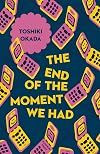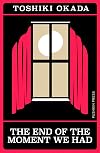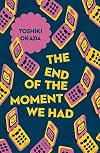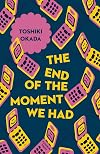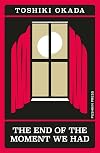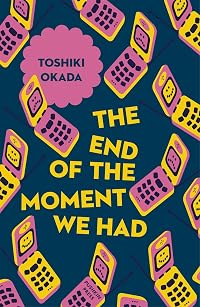
The End of the Moment We Had
by Toshiki Okada
On This Page
Description
"On the eve of the Iraq War, a man and a woman meet in a nightclub in Tokyo. They go to a love hotel, and spend the next five days in a torrid affair. Written in a stream of consciousness, with the reader's perceptions shifting and melting into one another, what is remarkable in this story is not what happens, but the ability of the writer to enter the minds and memories of the protagonists. In the second story, a woman living in a damp flat obsesses on the filthy state of her dwelling. She show more remains in bed for the duration of the narrative, but the drama and tension of her inner life - spiralling further and further into her memories and anxieties - keep the reader engrossed to the very end. The End of the Moment We Had demonstrates the fluidity and richness of this extraordinarily gifted writer's language and ideas."--Publisher's description. show lessTags
Recommendations




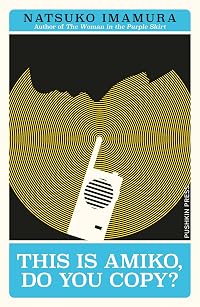



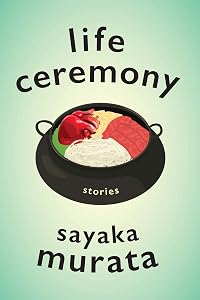
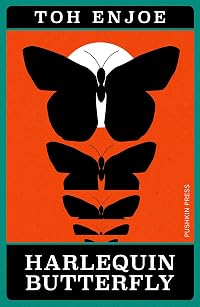

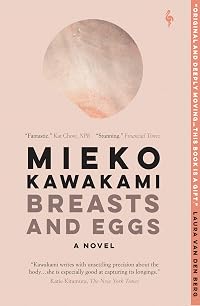






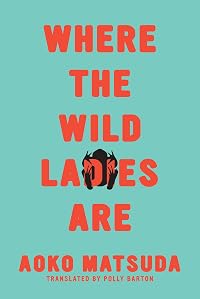
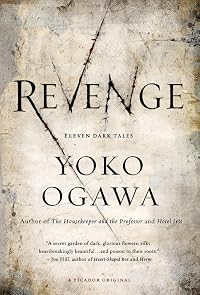




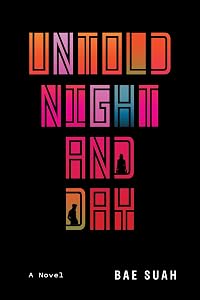

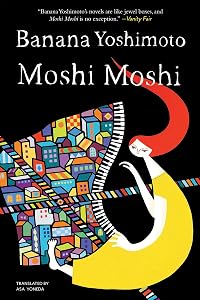
Member Recommendations
Member Reviews
Two excellent, quirky tales from the ever-excellent Pushkin Press. As I was reading them I was thinking it's a bit Kafka by way of Beckett - which seems about right, as Toshiki Okada is also a playwright, and indeed the title story was originally a stage play.
In the first, the title story, a young man and woman meet and spend 5 days, 4 nights in a love hotel, talking and having sex. When it's over, they part, agreeing never to meet again, that this will be some sort of one-off experience, taking them both out of their normal lives, something to cherish as a memory for ever. In the background is the run-up to the Iraq war (the setting is 2005, the book having been originally published in Japan in 2007). The narrative perspective changes show more from one to the other, and we see how each of the two main characters feel about the experience. It is, in essence, a snapshot of a moment, of a nation and its young people, and how politics and real-life frame and structure our everyday lives.
The second story (My Place in Plural) is very much like a Beckettian monologue, as an unnamed 30 year old woman lies in her futon all day, calling in sick to her work and looking back at her relationship with her husband, who is juggling several jobs and, as we see during the story, is long-suffering of her moods and outbursts. As we go on we start to see the apartment through her eyes: the cracks in the ceiling, the mould in the closets, the filth, and how the setting somehow becomes a metaphor for their own lives.
Here is a wonderful new voice in Japanese literature, translated into English here for the first time. Raw, honest, exciting - even though very little actually happens! I look forward to reading much more in the future from Okada. show less
In the first, the title story, a young man and woman meet and spend 5 days, 4 nights in a love hotel, talking and having sex. When it's over, they part, agreeing never to meet again, that this will be some sort of one-off experience, taking them both out of their normal lives, something to cherish as a memory for ever. In the background is the run-up to the Iraq war (the setting is 2005, the book having been originally published in Japan in 2007). The narrative perspective changes show more from one to the other, and we see how each of the two main characters feel about the experience. It is, in essence, a snapshot of a moment, of a nation and its young people, and how politics and real-life frame and structure our everyday lives.
The second story (My Place in Plural) is very much like a Beckettian monologue, as an unnamed 30 year old woman lies in her futon all day, calling in sick to her work and looking back at her relationship with her husband, who is juggling several jobs and, as we see during the story, is long-suffering of her moods and outbursts. As we go on we start to see the apartment through her eyes: the cracks in the ceiling, the mould in the closets, the filth, and how the setting somehow becomes a metaphor for their own lives.
Here is a wonderful new voice in Japanese literature, translated into English here for the first time. Raw, honest, exciting - even though very little actually happens! I look forward to reading much more in the future from Okada. show less
A pair of two Japanese novellas about, well, I guess about not being engaged in life, and having spiraled inwards, even when making connections to others. The first, a just-met pair stay at a love hotel for five days, then separate. The second, a wife lays in bed in her mouldy apartment, reading blogs online and thinking about her husband. The first novella takes place during Bush II years and it was like "Oh yeah, Bush. Lot's of bad stuff happened then." I'd forgotten about all that in the waves and waves of all the new bad stuff that's happened in the meantime. The second is more unmoored in time, even within the story which sort of floats around the way my thoughts float around when I, too, can't be bothered to put the effort in to show more get out of bed. Or like now, when it's humid and I'm sleepy and I feel as detached from life as the characters I read about in The End of the Moment We Had.
It's a very disorienting feeling after having read these stories; I've disassociated myself from all I suppose.
The End of the Moment We Had by Toshiki Okada went on sale September 4, 2018.
I received a copy free from Netgalley in exchange for an honest review. show less
It's a very disorienting feeling after having read these stories; I've disassociated myself from all I suppose.
The End of the Moment We Had by Toshiki Okada went on sale September 4, 2018.
I received a copy free from Netgalley in exchange for an honest review. show less
Ratings
Members
- Recently Added By
Author Information
5+ Works 88 Members
Some Editions
Series
Belongs to Publisher Series
Common Knowledge
- Canonical title
- The End of the Moment We Had
- Original language
- Japanese
Classifications
- Genres
- Fiction and Literature, General Fiction
- DDC/MDS
- 895.636 — Literature & rhetoric Literatures of other languages Literatures of East and Southeast Asia Japanese Japanese fiction 2000–
- LCC
- PL874 .K33 .A2 — Language and Literature Languages and literatures of Eastern Asia, Africa, Oceania Languages of Eastern Asia, Africa, Oceania Japanese language and literature Japanese literature
- BISAC
Statistics
- Members
- 73
- Popularity
- 432,164
- Reviews
- 2
- Rating
- (3.58)
- Languages
- English, German
- Media
- Paper, Ebook
- ISBNs
- 4
- ASINs
- 2