On This Page
Description
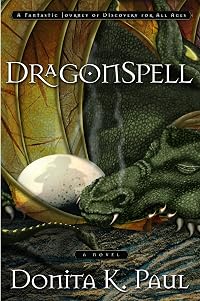
One Dragon Egg Holds the Key to the Future. Once a slave, Kale is given the unexpected opportunity to become a servant to Paladin. Yet this young girl has much to learn about the difference between slavery and service. A Desperate Search Begins ... A small band of Paladin's servants rescue Kale from danger but turn her from her destination: The Hall, where she was to be trained. Feeling afraid and unprepared, Kale embarks on a perilous quest to find the meech dragon egg stolen by the foul show more Wizard Risto. First, she and her comrades must find Wizard Fenworth. But their journey is threatened when a key member of the party is captured, leaving the remaining companions to find Fenworth, attempt an impossible rescue, and recover the egg whose true value they have not begun to suspect. Weaving together memorable characters, daring adventure, and a core of eternal truth, Dragonspell is a finely crafted and welcome addition to the corpus of fantasy fiction. show lessTags
Recommendations







Member Recommendations
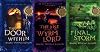
Member Reviews
Mixing fantasy fiction with Christian allegory is a long standing tradition, dating back at least as far as C.S. Lewis' Narnia series, and less obviously, to J.R.R. Tolkien's writings about Middle-Earth. When done well, it is subtle, or at least not particularly intrusive and serves to enhance the fantasy, or at the very least, does not hinder it. The danger in this sort of mixture is that the Christian lessons can become didactic, and drown out the fantasy to such an extent that it ruins the story. In DragonSpell, the first book in the DragonKeeper Chronicles, Donita K. Paul presents an enjoyable fantasy story set in a fairly original fantasy world but also throws in a heavy-handed Christian message that drags the quest story to a show more screeching halt every time it rears its head.
The overt structure of the story is fairly straightforward. In the fantasy land of Amara the o'rant slave girl Kale, our hero, is traveling from the village of mariones she lived in her whole life until she unexpectedly discovered a dragon egg and the village council set her free and sent her to study at the Hall in Vendela. Along the way she is waylaid by some grawligs (or mountain ogres) and her adventure takes an unexpected turn. And that's just the first chapter of the book. She is rescued from the grawligs by a dragon-mounted doneel named Dar, an emerlindien named Leetu Bends, and a large and powerful knight, but not before she discovers even more dragon eggs. After this, the MacGuffin hunt portion of the fantasy quest begins. It turns out that the evil wizard Risto is bent on acquiring a "meech egg" from which a powerful dragon will hatch, and Kale has a unique talent for finding dragon eggs. Because it is supposedly a matter of some urgency to find the meech egg before Risto can put his nefarious plan into action. Kale's trip to the Hall is put on hold so she can set out with Dar and Leetu to find the egg before the bad guy does.
Of course, no quest is complete without some complications and extended stops for tea. After stopping off at the elderly emmerlindien Granny Noon's house for some snacks, a special cloak, some religious instruction and hatching a healing dragon, our little band travels through a magical gateway (shades of the Forgotten Realms, or Stargate: SG-1) to get to the Bogs to find the Wizard Fenworth. Leetu gives Kale some instruction in 'mind-speaking", yet another skill that Kale unexpectedly turns out to have, and promptly gets captured by Risto's men, which prompts Dar to stop and make some more tea and play a couple tunes on his flute. And so the story goes. Kale and Dar rescue a dragon, Dar gets mad at a dragon, they rescue Leetu from Risto's fortress, Kale discovers more hidden talents, they all stop for a couple weeks of vacation in the shadow of Risto's fortress, they find Fenworth (who seems to have more than a passing resemblance to Fizzbin of The Dragonlance Chronicles), spend a couple more weeks puttering around his magical tower enjoying some tea and crumpets while waiting for yet another dragon to hatch, and eventually get around to looking for the meech egg. Despite being on a quest that was supposedly enormously urgent, the questers spend a lot of time sitting around. When the quest gets going, and the action is moving, the story is serviceable as a fairly generic MacGuffin hunt that uses most of the standard fantasy cliches in relatively well-written ways. The only real disappointment is that, in the end, the hunt for the meech egg truly does turn out to be nothing more than a MacGuffin hunt.
But the reason the story stops so often for the characters to drink tea, have a vacation, or otherwise sit around and do nothing much of improtance is to allow for the author to insert some lessons in Christian theology into the story. Paladin, standing in for Aslan, standing in for Jesus pops up a couple times in the story to save Kale and her companions and offer some lessons on how to properly serve Wulder, standing in for the Emperor Over the Sea, standing in for God/Jaweh. Kale, being just an uneducated slave girl from a backwater village needs lots of instruction, and so she (and the reader) are subjected to some sort of lesson from someone at least once every couple chapters. (As an aside, I am still wondering how allowing slavery as an everyday condition is copacetic with the Christian message of the book). But not only do the lesson sessions cause the story to grind to a halt to be delivered, but the actual theological stance taken in the book essentially undermines any suspence or tension the story might otherwise have. Kale, and the reader, are repeatedly told that the Pretender (and thus the Pretender's servants) is powerless before the might of Wulder. To keep a Pretender servant from reading your mind, for example, one must merely state that they are under Wulder's authority. Later it also turns out that this protection can be transferred, as others can assert Wulder's protection on your behalf. Leaving aside the fact that this essentially reduces God to a magical incantation, it also makes the villain into a non-threat to the heroes. When Paladin rides out to face a collection of evil dragons, they are unable to harm him in any way because he has Wulder's protection, and he dismisses them with nothing more than a shouted command. Wulder always triumphs over the Pretender, and because the heroes are under Wulder's protection, they win. This does not make for a very interesting story.
The theology presented in the book doesn't just sap the life out of the fantasy adventure, it also has the effect of making Wulder and Paladin seem fairly evil themselves. Kale is taught that everything is part of Wulder's plan. No matter what choice she makes, it is part of Wulder's plan, and therefore the right thing to do. When she reveals to Paladin towards the end of the story that she feels responsible for causing the deaths of some of her companions, he says that their deaths were part of Wulder's plan, and thus she chose the correct course of action. This presents a serious philosophical problem because it effectively means that there is no free will. No matter what choices anyone makes, they are meaningless, because there is no right or wrong answer. This means, for example, that when presented with Risto's offer to join him, it doesn't matter that Kale resisted and did the 'right" thing by staying loyal to Wulder, because if she had joined Risto that would have been the right thing too. This particular conversation also makes Paladin seem pretty callous, because while Kale is feeling guilty for killing her companions, he seems to console her, but doesn't bother to reveal to her that her companions are actually alive and well, a fact that she doesn't discover for months afterwards. So, in effect, Paladin is willing to let a young woman feel guilty over the death of a couple creatures to make the point that no one actually has free will rather than let her know that she didn't actually kill them. But this is not the most obnoxious theological argument in the book. In an attempt to answer Epicurus' question of why God (or Wulder in this case) allows evil to exist if he is omnipotent, Paladin makes the argument that one would not give a needle and thread to an infant destined to become a tailor on the grounds that preventing her from sticking herself with needles is for the child's own good. The comparison is made between a needle free infancy and an evil-free world, and Paladin explains that Wulder doesn't eliminate evil because humanity (in the form of the seven "humanities" of the setting) are not yet ready for such a world. But this is a truly obnoxious argument to make, because, when carried to its logical conclusion it means that the farming family that was slaughtered a few chapters before this little speech is delivered were all killed for their own good. To me, this just makes the Pretender look like a pretty good option - at least he won't arrange the affairs of the world in such a way as to kill you and tell you it is for your own benefit.
Despite the lousy theology and the suddenly not so interesting quest, the book is not all that bad. redeeming the book to some extent is the fact that Mrs. Paul's worldbuilding is fairly strong and inventive. The names and terms fly at the reader thick and fast, as it seems that Mrs. Paul was not content to simply import the more or less standard array of fantasy races and monsters into her fantasy reality. Instead of the usual cast of elves, dwarves, goblins, and trolls, one finds the seven "high" races (o'rant, marione, kimen, urhom, emerlindian, doneel, and tumanhofer) created by the all-powerful Wulder opposed by the seven "low" races (bisonbecks, blimmets, grawligs, mordakleep, quiss, ropma, and schoergs). Each of the "low" races was created by the Pretender, who fills in as the "Lucifer" figure in the theology of the story and is a mockery of one of the "high" races (something that seems to be directly influenced by J.R.R. Tolkien). The effect of this creativity is somewhat dampened as the reader works through the book, as one realizes that several of the "high" races are merely standard fantasy races renamed - urhoms are giants, emerlindians are basically fantasy elves, tumanhofers are fundamentally fantasy dwarves, doneels are furry hobbits with their hobbity personality traits on steroids, and so on. Though never explicitly stated, it seems that o'rant is the Amaran name for the human race. several of the low races also correspond to some standard fantasy tropes. In many cases, the renaming accomplishes little save to make the text confusing to the reader until one gets used to the idiosyncratic terminology, which unfortunately serves to obscure the more original elements of the setting, such as the kimen and mordakleeps.
I generally have mixed feelings about glossaries in fantasy fiction. On the one hand, they are somewhat handy as a quick reference that allows the reader to check up on various elements of the fantasy setting. On the other hand, the need for a glossary, especially an extensive glossary, is something of an indication that the author wasn't able to convey their fantasy reality effectively via their text. And the trouble here isn't that Mrs. Paul is ineffective as a writer, but rather that she loads the story with so much fnatasy detail that it gets distracting. trees aren't oaks or maples, they are bentleaf trees, or borling trees. Caves and tunnels don't have rats, they have uddums, the birds flying overhead aren't swallows and wrens, but rather double-crested mountain finches and halfnack birds, and so on. There is some definite fantasy overload in the book, which serves to actually detract from the inventiveness of the setting. if everything is fantastical, then the fantastical becomes somewhat mundane. Dialing just a bit back on the inclusion of fantasy versions of weasels, birds, and shrubs that serve as little more than set dressing would have made the fantastical elements that feature in the story that much more unusual, and thus more interesting. Calling relatively mundane things by mundane names would also help - there seems little reason to call beet, onion, and carrot soup "chukkajoop" or any young animal used as meat "jimmin" when there are perfectly good English words that can be used to express the same meaning quite clearly without the need for extra fantasy jargon.
DragonSpell really seems more like two books crammed together than one book. One book is a relatively cliched but decently written fantasy quest story set in a cleverly inventive fantasy world. The other book is a didactic series of lessons on a fantasy version of Christianity that are ham-fisted in execution and in many cases espouse some fairly offensive theology. Unfortunately, one cannot read the one without the other, so the overall effect is a book that is just barely mediocre. For those pining for more Christian-laced fantasy in the vein of The Lion, the Witch, and the Wardrobe, this book would not be an altogether bad choice, but given the choice, I would probably just read the Narnia books again.
This review has also been posted to my blog Dreaming About Other Worlds. show less
The overt structure of the story is fairly straightforward. In the fantasy land of Amara the o'rant slave girl Kale, our hero, is traveling from the village of mariones she lived in her whole life until she unexpectedly discovered a dragon egg and the village council set her free and sent her to study at the Hall in Vendela. Along the way she is waylaid by some grawligs (or mountain ogres) and her adventure takes an unexpected turn. And that's just the first chapter of the book. She is rescued from the grawligs by a dragon-mounted doneel named Dar, an emerlindien named Leetu Bends, and a large and powerful knight, but not before she discovers even more dragon eggs. After this, the MacGuffin hunt portion of the fantasy quest begins. It turns out that the evil wizard Risto is bent on acquiring a "meech egg" from which a powerful dragon will hatch, and Kale has a unique talent for finding dragon eggs. Because it is supposedly a matter of some urgency to find the meech egg before Risto can put his nefarious plan into action. Kale's trip to the Hall is put on hold so she can set out with Dar and Leetu to find the egg before the bad guy does.
Of course, no quest is complete without some complications and extended stops for tea. After stopping off at the elderly emmerlindien Granny Noon's house for some snacks, a special cloak, some religious instruction and hatching a healing dragon, our little band travels through a magical gateway (shades of the Forgotten Realms, or Stargate: SG-1) to get to the Bogs to find the Wizard Fenworth. Leetu gives Kale some instruction in 'mind-speaking", yet another skill that Kale unexpectedly turns out to have, and promptly gets captured by Risto's men, which prompts Dar to stop and make some more tea and play a couple tunes on his flute. And so the story goes. Kale and Dar rescue a dragon, Dar gets mad at a dragon, they rescue Leetu from Risto's fortress, Kale discovers more hidden talents, they all stop for a couple weeks of vacation in the shadow of Risto's fortress, they find Fenworth (who seems to have more than a passing resemblance to Fizzbin of The Dragonlance Chronicles), spend a couple more weeks puttering around his magical tower enjoying some tea and crumpets while waiting for yet another dragon to hatch, and eventually get around to looking for the meech egg. Despite being on a quest that was supposedly enormously urgent, the questers spend a lot of time sitting around. When the quest gets going, and the action is moving, the story is serviceable as a fairly generic MacGuffin hunt that uses most of the standard fantasy cliches in relatively well-written ways. The only real disappointment is that, in the end, the hunt for the meech egg truly does turn out to be nothing more than a MacGuffin hunt.
But the reason the story stops so often for the characters to drink tea, have a vacation, or otherwise sit around and do nothing much of improtance is to allow for the author to insert some lessons in Christian theology into the story. Paladin, standing in for Aslan, standing in for Jesus pops up a couple times in the story to save Kale and her companions and offer some lessons on how to properly serve Wulder, standing in for the Emperor Over the Sea, standing in for God/Jaweh. Kale, being just an uneducated slave girl from a backwater village needs lots of instruction, and so she (and the reader) are subjected to some sort of lesson from someone at least once every couple chapters. (As an aside, I am still wondering how allowing slavery as an everyday condition is copacetic with the Christian message of the book). But not only do the lesson sessions cause the story to grind to a halt to be delivered, but the actual theological stance taken in the book essentially undermines any suspence or tension the story might otherwise have. Kale, and the reader, are repeatedly told that the Pretender (and thus the Pretender's servants) is powerless before the might of Wulder. To keep a Pretender servant from reading your mind, for example, one must merely state that they are under Wulder's authority. Later it also turns out that this protection can be transferred, as others can assert Wulder's protection on your behalf. Leaving aside the fact that this essentially reduces God to a magical incantation, it also makes the villain into a non-threat to the heroes. When Paladin rides out to face a collection of evil dragons, they are unable to harm him in any way because he has Wulder's protection, and he dismisses them with nothing more than a shouted command. Wulder always triumphs over the Pretender, and because the heroes are under Wulder's protection, they win. This does not make for a very interesting story.
The theology presented in the book doesn't just sap the life out of the fantasy adventure, it also has the effect of making Wulder and Paladin seem fairly evil themselves. Kale is taught that everything is part of Wulder's plan. No matter what choice she makes, it is part of Wulder's plan, and therefore the right thing to do. When she reveals to Paladin towards the end of the story that she feels responsible for causing the deaths of some of her companions, he says that their deaths were part of Wulder's plan, and thus she chose the correct course of action. This presents a serious philosophical problem because it effectively means that there is no free will. No matter what choices anyone makes, they are meaningless, because there is no right or wrong answer. This means, for example, that when presented with Risto's offer to join him, it doesn't matter that Kale resisted and did the 'right" thing by staying loyal to Wulder, because if she had joined Risto that would have been the right thing too. This particular conversation also makes Paladin seem pretty callous, because while Kale is feeling guilty for killing her companions, he seems to console her, but doesn't bother to reveal to her that her companions are actually alive and well, a fact that she doesn't discover for months afterwards. So, in effect, Paladin is willing to let a young woman feel guilty over the death of a couple creatures to make the point that no one actually has free will rather than let her know that she didn't actually kill them. But this is not the most obnoxious theological argument in the book. In an attempt to answer Epicurus' question of why God (or Wulder in this case) allows evil to exist if he is omnipotent, Paladin makes the argument that one would not give a needle and thread to an infant destined to become a tailor on the grounds that preventing her from sticking herself with needles is for the child's own good. The comparison is made between a needle free infancy and an evil-free world, and Paladin explains that Wulder doesn't eliminate evil because humanity (in the form of the seven "humanities" of the setting) are not yet ready for such a world. But this is a truly obnoxious argument to make, because, when carried to its logical conclusion it means that the farming family that was slaughtered a few chapters before this little speech is delivered were all killed for their own good. To me, this just makes the Pretender look like a pretty good option - at least he won't arrange the affairs of the world in such a way as to kill you and tell you it is for your own benefit.
Despite the lousy theology and the suddenly not so interesting quest, the book is not all that bad. redeeming the book to some extent is the fact that Mrs. Paul's worldbuilding is fairly strong and inventive. The names and terms fly at the reader thick and fast, as it seems that Mrs. Paul was not content to simply import the more or less standard array of fantasy races and monsters into her fantasy reality. Instead of the usual cast of elves, dwarves, goblins, and trolls, one finds the seven "high" races (o'rant, marione, kimen, urhom, emerlindian, doneel, and tumanhofer) created by the all-powerful Wulder opposed by the seven "low" races (bisonbecks, blimmets, grawligs, mordakleep, quiss, ropma, and schoergs). Each of the "low" races was created by the Pretender, who fills in as the "Lucifer" figure in the theology of the story and is a mockery of one of the "high" races (something that seems to be directly influenced by J.R.R. Tolkien). The effect of this creativity is somewhat dampened as the reader works through the book, as one realizes that several of the "high" races are merely standard fantasy races renamed - urhoms are giants, emerlindians are basically fantasy elves, tumanhofers are fundamentally fantasy dwarves, doneels are furry hobbits with their hobbity personality traits on steroids, and so on. Though never explicitly stated, it seems that o'rant is the Amaran name for the human race. several of the low races also correspond to some standard fantasy tropes. In many cases, the renaming accomplishes little save to make the text confusing to the reader until one gets used to the idiosyncratic terminology, which unfortunately serves to obscure the more original elements of the setting, such as the kimen and mordakleeps.
I generally have mixed feelings about glossaries in fantasy fiction. On the one hand, they are somewhat handy as a quick reference that allows the reader to check up on various elements of the fantasy setting. On the other hand, the need for a glossary, especially an extensive glossary, is something of an indication that the author wasn't able to convey their fantasy reality effectively via their text. And the trouble here isn't that Mrs. Paul is ineffective as a writer, but rather that she loads the story with so much fnatasy detail that it gets distracting. trees aren't oaks or maples, they are bentleaf trees, or borling trees. Caves and tunnels don't have rats, they have uddums, the birds flying overhead aren't swallows and wrens, but rather double-crested mountain finches and halfnack birds, and so on. There is some definite fantasy overload in the book, which serves to actually detract from the inventiveness of the setting. if everything is fantastical, then the fantastical becomes somewhat mundane. Dialing just a bit back on the inclusion of fantasy versions of weasels, birds, and shrubs that serve as little more than set dressing would have made the fantastical elements that feature in the story that much more unusual, and thus more interesting. Calling relatively mundane things by mundane names would also help - there seems little reason to call beet, onion, and carrot soup "chukkajoop" or any young animal used as meat "jimmin" when there are perfectly good English words that can be used to express the same meaning quite clearly without the need for extra fantasy jargon.
DragonSpell really seems more like two books crammed together than one book. One book is a relatively cliched but decently written fantasy quest story set in a cleverly inventive fantasy world. The other book is a didactic series of lessons on a fantasy version of Christianity that are ham-fisted in execution and in many cases espouse some fairly offensive theology. Unfortunately, one cannot read the one without the other, so the overall effect is a book that is just barely mediocre. For those pining for more Christian-laced fantasy in the vein of The Lion, the Witch, and the Wardrobe, this book would not be an altogether bad choice, but given the choice, I would probably just read the Narnia books again.
This review has also been posted to my blog Dreaming About Other Worlds. show less
Kale is not just young, she's only known one kind of life. After spending her short lifetime with a race that shows little or no affection, she finds her abrupt transition from village slave to a member of a quest ameliorated by the friends she makes along the way.
I'm a tad puzzled at the "minor" dragons, wondering if they remain the same size as indicated in this book. But, I've already got the next title, so I hope to find out soon!
I'm a tad puzzled at the "minor" dragons, wondering if they remain the same size as indicated in this book. But, I've already got the next title, so I hope to find out soon!
Average book that I was expecting a bit more from; there were some parts I liked, but other things dragged it down for me and in the end it just came out as "okay."
Kale is an ex-slave who is excited about getting to move one step up in life; becoming a servant. But a chain of unexpected events throws her from her path, and she finds herself instead part of a questing party to find a rare dragon egg and save it from an evil wizard.
A lot about this book is just standard. Most parts are pretty obviously gleaned from other popular fantasy, with a few admittedly pleasant twists. There are dragons, and others of the "seven high races" that have barely concealed similarities to elves, dwarves, faeries, humans, and other generic fantasy races. show more The quest is fairly ho-hum, with a bit of danger but little that really draws you in and makes you feel what the characters are feeling. They're all nice and everything, but nothing makes the book really rise above an average level.
The final straw for me, however, was the Christian overtones of the book. In the past, I've cheerfully read Narnia and other books that incorporate some religious messages and symbols. And I'm not saying this book was bad about it; it certainly could have been worse. But as a nonreligious person, it just absolutely kills the story for me when the characters actually take a couple of entire pages aside here and there to preach the author's religious views, just changing the names of God and Jesus. It's a poorly concealed tactic; why not just come right out and say what you're trying to? And when Paladin (Jesus) actually becomes a main character that fights off evil with his aura and teaches Kale about his love and justness, well, then it's just a bit ridiculous.
Fantasy young adult books are not really the proper place for teaching people about your faith, especially not when you pretend that that isn't what you're doing. A good story at least has to be attached to it (as was the case with most of Narnia), and this book just kept my attention enough to possibly make me want to read the sequel to see if it might get better. show less
Kale is an ex-slave who is excited about getting to move one step up in life; becoming a servant. But a chain of unexpected events throws her from her path, and she finds herself instead part of a questing party to find a rare dragon egg and save it from an evil wizard.
A lot about this book is just standard. Most parts are pretty obviously gleaned from other popular fantasy, with a few admittedly pleasant twists. There are dragons, and others of the "seven high races" that have barely concealed similarities to elves, dwarves, faeries, humans, and other generic fantasy races. show more The quest is fairly ho-hum, with a bit of danger but little that really draws you in and makes you feel what the characters are feeling. They're all nice and everything, but nothing makes the book really rise above an average level.
The final straw for me, however, was the Christian overtones of the book. In the past, I've cheerfully read Narnia and other books that incorporate some religious messages and symbols. And I'm not saying this book was bad about it; it certainly could have been worse. But as a nonreligious person, it just absolutely kills the story for me when the characters actually take a couple of entire pages aside here and there to preach the author's religious views, just changing the names of God and Jesus. It's a poorly concealed tactic; why not just come right out and say what you're trying to? And when Paladin (Jesus) actually becomes a main character that fights off evil with his aura and teaches Kale about his love and justness, well, then it's just a bit ridiculous.
Fantasy young adult books are not really the proper place for teaching people about your faith, especially not when you pretend that that isn't what you're doing. A good story at least has to be attached to it (as was the case with most of Narnia), and this book just kept my attention enough to possibly make me want to read the sequel to see if it might get better. show less
RECEIVED FROM: Blogging For Books For Review
***NOTE MY REVIEWS OFTEN CONTAIN SPOILERS***
When Kale, an o’rant slave discovers a dragon egg in the stream by her home she is sent to serve in Palladins hall and take the dragon egg to him. However on her way she is intercepted by Grawligs, ogre like creatures who take her captive, only to be rescued by some of Palladins soldiers and enlisted for a quest to save a dragon meech egg from Risto, an enemy of Wulder and Palladin. But will Kale find the strength to embrace her new powers and the teachings of Wulder and Palladin? Will she be enough to save the egg from the powerful evil wizard?
Before I really begin I’ll mention I might not be the best audience to review this book. I’ll give show more you that it was well written and an interesting story, but it was less a fantasy novel and more a retelling of Christian values using characters like Palladin and Wulder to represent Jesus and God. As I’m agnostic, meaning I haven’t decided what I believe and probably won’t until I’ve researched religions enough to find one that meets with my own ideals of what is right and wrong, many of the messages portrayed in this book fell flat for me. Some of them were things I outright disagreed with.
For example at one point Kale discovers a dragon named Celise being held captive. The soldiers who hold her captive shoot her daily with poison to stop her from regaining her strength. They killed her entire family basically before her eyes. Once she’s freed she kills them and for the most part her new companions condemn her for it. I’m sorry but if someone killed my family I’d tear them to pieces as soon as I was able to as well. Basically the idea was the Celise should have forgiven them and left Wulder to mete punishment to the soldiers. My issue with that is one the soldiers deserved what they got and two it goes along with the ideal I often see abused in real life. The one where “devoutly religious” people mistreat everyone else regularly and because they go to confession or pray for forgiveness it’s somehow okay that they behave a poor excuses for human beings because their god forgives them for that. I’m not saying that every religious person does that, obviously that’s not the case. But there are way too many to count that do, people that seriously believe they can behave abominably and if they pray for forgiveness then that behavior is okay. It’s my main problem with religion, praying for forgiveness never makes abominable behavior okay in my personal opinion. Especially if it’s repeated behavior, like telling nasty rumors about young girls, asking for forgiveness one night and doing it all over again the next day. That doesn’t make it okay, it makes you a horrible person. It’s one thing to use your religion to appease guilt from the rare instance of saying or doing things you shouldn’t it’s another to do those thing repeatedly and believe you are absolved from guilt because of your religion. I think pushing this part of religious teachings through fiction or religious texts is wrong because in my opinion all it does is reinforce the ideals behind those who abuse their religions.
Another thing that bothered me is that Kale is often treated like she’s an idiot because she doesn’t know the religion inside and out. And it’s like she can’t do anything right. They chastise her for not knowing better, for not being able to make the right decisions on her own and then they chastise her again for not asking for permission from her superiors to make a decision the few times that she does make a decision on her own. So what exactly is it they want from this character? As a reader I found myself feeling like an idiot right alongside her because I didn’t see how she was doing anything wrong. At times I had to walk away from the book just because I was getting so frustrated that it never seemed this character could get it right when to me it seemed like she did willingly everything they asked of her.
Back to the religious front at one point Kale is chastised for believing she is the center of the quest. I mean she’s the one everyone is there to protect, she’s the one who’s supposed to find the meech egg and care for the baby dragon and she’s the only one with the ability to find dragon eggs. OF COURSE she’s not the center of the quest right? Nope, Wulder is the center of the quest even though he’s more a religious figure than a character; he is the center of everything. And, like mentioned before, even though everything points to Kale being the center of the quest, she’s treated like an idiot for not understanding that Wulder is the center of the quest.
Because the point in the novel is more to teach Christian ideals than to tell a fantasy story most of the action scenes aren’t very riveting, or at least what you feel should be action scenes aren’t very action like. The main villain the wizard Risto who seeks to use the meech egg to create a new race of slave beings doesn’t even appear until toward the final chapters. In later scenes he mind speaks with Kale which scares her but he physically doesn’t appear until the final chapters. And instead of some big physical battle it’s all mentally trying to push her to willingly follow him. It’s an attempt to get her to turn away from her religion and following of Palladin to serve Risto instead. There isn’t a battle, there isn’t torture or imprisonment. After all the characters in the quest say no it’s like he just leaves them alone because followers of Wulder and Palladin are apparently untouchable? The main strength of these characters is the ability to say the phrase “I stand under Wulder’s authority” and therefore gain protection from pretty much everything. The few fight scenes included are basically breezed through or not really shown since the main character Kale is pretty much supposed to run away and repeat her Wulder phrases when anything happens.
So what have we learned? If someone wrongs you, it’s wrong to get even and if faced with battle repeat religious phrases and you will then be protected- a little unrealistic to my state of mind. It’s one thing to show religious ideals within a story, it’s another to use religion as the action instead of giving the character real strengths and protection of their own. You could still portray the religious ideals in that if you follow the teachings of Christianity all of your strengths and talents are a gift from God and should you prosper it’s because he wanted you to. Therefore it seems realistic that you could fight back and not just repeat prayers during a battle and you’d still being getting Wulder’s help since he’s the one that gave you the ability to do something other than pray.
The story was well written and Paul does create some interesting characters. Another issue I had with her work those was that many of the descriptions were confusing to me. I couldn’t really picture the beings that I wasn’t already familiar with and normally I have a pretty good imagination. I found myself rereading some descriptions three or four times trying to understand what she’s trying to describe to me before just giving up and moving on. The idea of the plot was somewhat original though it does bear some similarities to both Eragon and The Lord of the Rings Trilogy. I’d say the story was kind of a combination of these two tales, but with a religious bent to it. If the action scenes had been played out instead of skipped over I think this could have been a tale to rival those well known stories, but with the falling back to religion anywhere she could really show conflict I didn’t think it quite measured up. In some ways the plot went in a logical order, but many of the times when she threw the religion back into the mix it was more of a huh? For example when Kale thinks she’s lost the dragons and the eggs but no one seems to be downhearted because she did it to save the rest of her companions’ lives. Okay yes she made the right decision and they should be thankful for that but Kale seems to be the only one bothered by the idea that they might have gone through all of that for nothing. Even if I was thankful to be alive I think I’d be feeling some frustration that my quest might have been for no good reason. Don’t get me wrong this story was extremely interesting; I just felt it relied too much on religion to tell the story and not enough on action and logical reactions to things that occurred within the story.
The story was moderately paced, not really fast but not really slow either, but I do feel this pacing worked well for the story. Paul has an original voice and beautifully portrays a close third person point of view. Meaning while we saw everything through Kale’s eyes it still allowed for detailed descriptions of surrounding and people including Kale herself. Not all of those descriptions were confusing although as mentioned above a few were. The ones they weren’t however were extremely well done and presented a nice clear picture of the scene. There really wasn’t an in between with descriptions in this book either they were crystal clear or they made no sense. There wasn’t anything in the middle where it was kind of vague but you got the idea, only one extreme or the other.
While all of the characters for the most part are memorable and likeable, my favorites being the dragon hatchlings Gymn and Meta , the only character I felt was really well developed was Kale herself. I would have liked to see a little more character development in the secondary characters. Most of the other characters can be described in short phrases which shouldn’t the case if a character is well developed. For example The Wizard Fenworth is powerful, but forgetful and he turns into a tree if he stays still for too long. That’s basically the entire character description of what could have been a truly interesting secondary character. All of these characters had so much potential but really needed a good fleshing out. For the most part this is only really going to find a home with Christian lovers of fantasy. Most regular fantasy fans will be disappointed with the way action is handled throughout the book. However the book is well written enough that I think Christians who enjoy fantasy themed stories will actually adore this tale because it will mix a love of dragons and fantasy creatures with religious teachings in a way that I think will truly appeal to the devoutly religious. Unfortunately I’m not one of the devoutly religious so I thought the book was okay, worth reading, but nothing I’d read more than once. show less
***NOTE MY REVIEWS OFTEN CONTAIN SPOILERS***
When Kale, an o’rant slave discovers a dragon egg in the stream by her home she is sent to serve in Palladins hall and take the dragon egg to him. However on her way she is intercepted by Grawligs, ogre like creatures who take her captive, only to be rescued by some of Palladins soldiers and enlisted for a quest to save a dragon meech egg from Risto, an enemy of Wulder and Palladin. But will Kale find the strength to embrace her new powers and the teachings of Wulder and Palladin? Will she be enough to save the egg from the powerful evil wizard?
Before I really begin I’ll mention I might not be the best audience to review this book. I’ll give show more you that it was well written and an interesting story, but it was less a fantasy novel and more a retelling of Christian values using characters like Palladin and Wulder to represent Jesus and God. As I’m agnostic, meaning I haven’t decided what I believe and probably won’t until I’ve researched religions enough to find one that meets with my own ideals of what is right and wrong, many of the messages portrayed in this book fell flat for me. Some of them were things I outright disagreed with.
For example at one point Kale discovers a dragon named Celise being held captive. The soldiers who hold her captive shoot her daily with poison to stop her from regaining her strength. They killed her entire family basically before her eyes. Once she’s freed she kills them and for the most part her new companions condemn her for it. I’m sorry but if someone killed my family I’d tear them to pieces as soon as I was able to as well. Basically the idea was the Celise should have forgiven them and left Wulder to mete punishment to the soldiers. My issue with that is one the soldiers deserved what they got and two it goes along with the ideal I often see abused in real life. The one where “devoutly religious” people mistreat everyone else regularly and because they go to confession or pray for forgiveness it’s somehow okay that they behave a poor excuses for human beings because their god forgives them for that. I’m not saying that every religious person does that, obviously that’s not the case. But there are way too many to count that do, people that seriously believe they can behave abominably and if they pray for forgiveness then that behavior is okay. It’s my main problem with religion, praying for forgiveness never makes abominable behavior okay in my personal opinion. Especially if it’s repeated behavior, like telling nasty rumors about young girls, asking for forgiveness one night and doing it all over again the next day. That doesn’t make it okay, it makes you a horrible person. It’s one thing to use your religion to appease guilt from the rare instance of saying or doing things you shouldn’t it’s another to do those thing repeatedly and believe you are absolved from guilt because of your religion. I think pushing this part of religious teachings through fiction or religious texts is wrong because in my opinion all it does is reinforce the ideals behind those who abuse their religions.
Another thing that bothered me is that Kale is often treated like she’s an idiot because she doesn’t know the religion inside and out. And it’s like she can’t do anything right. They chastise her for not knowing better, for not being able to make the right decisions on her own and then they chastise her again for not asking for permission from her superiors to make a decision the few times that she does make a decision on her own. So what exactly is it they want from this character? As a reader I found myself feeling like an idiot right alongside her because I didn’t see how she was doing anything wrong. At times I had to walk away from the book just because I was getting so frustrated that it never seemed this character could get it right when to me it seemed like she did willingly everything they asked of her.
Back to the religious front at one point Kale is chastised for believing she is the center of the quest. I mean she’s the one everyone is there to protect, she’s the one who’s supposed to find the meech egg and care for the baby dragon and she’s the only one with the ability to find dragon eggs. OF COURSE she’s not the center of the quest right? Nope, Wulder is the center of the quest even though he’s more a religious figure than a character; he is the center of everything. And, like mentioned before, even though everything points to Kale being the center of the quest, she’s treated like an idiot for not understanding that Wulder is the center of the quest.
Because the point in the novel is more to teach Christian ideals than to tell a fantasy story most of the action scenes aren’t very riveting, or at least what you feel should be action scenes aren’t very action like. The main villain the wizard Risto who seeks to use the meech egg to create a new race of slave beings doesn’t even appear until toward the final chapters. In later scenes he mind speaks with Kale which scares her but he physically doesn’t appear until the final chapters. And instead of some big physical battle it’s all mentally trying to push her to willingly follow him. It’s an attempt to get her to turn away from her religion and following of Palladin to serve Risto instead. There isn’t a battle, there isn’t torture or imprisonment. After all the characters in the quest say no it’s like he just leaves them alone because followers of Wulder and Palladin are apparently untouchable? The main strength of these characters is the ability to say the phrase “I stand under Wulder’s authority” and therefore gain protection from pretty much everything. The few fight scenes included are basically breezed through or not really shown since the main character Kale is pretty much supposed to run away and repeat her Wulder phrases when anything happens.
So what have we learned? If someone wrongs you, it’s wrong to get even and if faced with battle repeat religious phrases and you will then be protected- a little unrealistic to my state of mind. It’s one thing to show religious ideals within a story, it’s another to use religion as the action instead of giving the character real strengths and protection of their own. You could still portray the religious ideals in that if you follow the teachings of Christianity all of your strengths and talents are a gift from God and should you prosper it’s because he wanted you to. Therefore it seems realistic that you could fight back and not just repeat prayers during a battle and you’d still being getting Wulder’s help since he’s the one that gave you the ability to do something other than pray.
The story was well written and Paul does create some interesting characters. Another issue I had with her work those was that many of the descriptions were confusing to me. I couldn’t really picture the beings that I wasn’t already familiar with and normally I have a pretty good imagination. I found myself rereading some descriptions three or four times trying to understand what she’s trying to describe to me before just giving up and moving on. The idea of the plot was somewhat original though it does bear some similarities to both Eragon and The Lord of the Rings Trilogy. I’d say the story was kind of a combination of these two tales, but with a religious bent to it. If the action scenes had been played out instead of skipped over I think this could have been a tale to rival those well known stories, but with the falling back to religion anywhere she could really show conflict I didn’t think it quite measured up. In some ways the plot went in a logical order, but many of the times when she threw the religion back into the mix it was more of a huh? For example when Kale thinks she’s lost the dragons and the eggs but no one seems to be downhearted because she did it to save the rest of her companions’ lives. Okay yes she made the right decision and they should be thankful for that but Kale seems to be the only one bothered by the idea that they might have gone through all of that for nothing. Even if I was thankful to be alive I think I’d be feeling some frustration that my quest might have been for no good reason. Don’t get me wrong this story was extremely interesting; I just felt it relied too much on religion to tell the story and not enough on action and logical reactions to things that occurred within the story.
The story was moderately paced, not really fast but not really slow either, but I do feel this pacing worked well for the story. Paul has an original voice and beautifully portrays a close third person point of view. Meaning while we saw everything through Kale’s eyes it still allowed for detailed descriptions of surrounding and people including Kale herself. Not all of those descriptions were confusing although as mentioned above a few were. The ones they weren’t however were extremely well done and presented a nice clear picture of the scene. There really wasn’t an in between with descriptions in this book either they were crystal clear or they made no sense. There wasn’t anything in the middle where it was kind of vague but you got the idea, only one extreme or the other.
While all of the characters for the most part are memorable and likeable, my favorites being the dragon hatchlings Gymn and Meta , the only character I felt was really well developed was Kale herself. I would have liked to see a little more character development in the secondary characters. Most of the other characters can be described in short phrases which shouldn’t the case if a character is well developed. For example The Wizard Fenworth is powerful, but forgetful and he turns into a tree if he stays still for too long. That’s basically the entire character description of what could have been a truly interesting secondary character. All of these characters had so much potential but really needed a good fleshing out. For the most part this is only really going to find a home with Christian lovers of fantasy. Most regular fantasy fans will be disappointed with the way action is handled throughout the book. However the book is well written enough that I think Christians who enjoy fantasy themed stories will actually adore this tale because it will mix a love of dragons and fantasy creatures with religious teachings in a way that I think will truly appeal to the devoutly religious. Unfortunately I’m not one of the devoutly religious so I thought the book was okay, worth reading, but nothing I’d read more than once. show less
Set in a feudal other world, a former village slave girl carrying a dragon egg she discovered is much looking forward to her new life as a well-fed, well-dressed, free servant in the capital city but finds her life takes a totally different turn just as the city is in her sight.
And she's not terribly pleased to find that her visions of the cushy good life in the city are replaced with the realities of hardships and dangers in going a-questing. Dang that dragon egg-finding ability of hers :-) A thoroughly understandable position and an enjoyable and likeable heroine who does her best to cope with the hand she's dealt anyway.
Some people have compared this book series to Narnia. The only similarity is that both are fantasies and show more Christian allegories.
The "religious allegory" category is more of a turn-off than a sales point for me. In fact, that description almost stopped me from buying it as I can't stand proselytizing in any form. And I'd have missed a darn good read.
The Wulder/Paladin & God/Christ metaphor is not subtle but it's not terribly obnoxious either. The metaphor could easily be extended to other religions and though somewhat preachy "messages" do exist in this book, they are rare, short and generally upbeat and positive. I really can't complain.
I found the range of interesting and sometimes quirky characters endearing and look forward to reading the next in the series.
If anything, this book reminded me of 19th century children's novels wherein moral messages were expected. Where, in the end, good people thrived and bad people got their just desserts. Where doing the right thing, no matter how hard, made you a better person. Where character counts for more than popularity or what toys you own. Not a bad message for kids of any age or era. show less
And she's not terribly pleased to find that her visions of the cushy good life in the city are replaced with the realities of hardships and dangers in going a-questing. Dang that dragon egg-finding ability of hers :-) A thoroughly understandable position and an enjoyable and likeable heroine who does her best to cope with the hand she's dealt anyway.
Some people have compared this book series to Narnia. The only similarity is that both are fantasies and show more Christian allegories.
The "religious allegory" category is more of a turn-off than a sales point for me. In fact, that description almost stopped me from buying it as I can't stand proselytizing in any form. And I'd have missed a darn good read.
The Wulder/Paladin & God/Christ metaphor is not subtle but it's not terribly obnoxious either. The metaphor could easily be extended to other religions and though somewhat preachy "messages" do exist in this book, they are rare, short and generally upbeat and positive. I really can't complain.
I found the range of interesting and sometimes quirky characters endearing and look forward to reading the next in the series.
If anything, this book reminded me of 19th century children's novels wherein moral messages were expected. Where, in the end, good people thrived and bad people got their just desserts. Where doing the right thing, no matter how hard, made you a better person. Where character counts for more than popularity or what toys you own. Not a bad message for kids of any age or era. show less
I can remember one time when a book was so good that I read it twice in one sitting, front to back. That book was The Dragonbone Chair by Tad Williams and it spoke to me during a time in which I needed to hear it. My parents were fighting a lot and on the verge of divorce; it was 1996. Fifteen years have passed since I read that thick musty novel and when I glanced down at DragonSpell after finishing it, a novel by Donita K. Paul which was neither thick nor musty, I realized that I was tempted to do it all over again.
DragonSpell is an allegorical novel akin to C.S. Lewis’s Chronicles of Narnia and just as good. On one level, DragonSpell is about a befuddled girl named Kale Allerion and her transformation from a slave to a servant of show more the people, an adventurer and warrior for the cause she supports. Kale has found a dragon egg, setting her village on its ear, and with it she has been sent to The Hall to be Paladin’s servant and a child of Wulder. This novel follows Kale as she attempts to make a choice on whether she really wants to follow Paladin and live a life of righteousness and goodness.
Either despite of or because of you (depending on your view) the heavy Christian overtones of this novel, it is incredibly pleasant to read and fairly transportive. Kale learns what it means to be a good person and to truly put her trust in others (yet she still maintains some healthy skepticism) while she works through her quest to find the meech dragon egg stolen by an evil wizard. She develops friendships and learns respect and boundaries. This novel is great for anyone who is trying to determine what their path is and who they want to be. It is written on a young reading level and therefore would be very pleasant for YA readers.
There are a couple things that stood out to me. First, Mrs. Paul uses the world “flibbertigibbet.” This is my favorite word in the English language, and thus I must claim that Mrs. Paul and I will be best buddies for life. Second, Christian books and fantasy books don’t typically mix well in certain crowds. That means that this book, an allegory about a Christian’s journey to trust and acceptable written in a fantasy world, can help those children who are denied access to fantasy books by their parents to experience the rich and creative imaginary realm inherent in fantasy novels. I can’t think of anything worse than being cut off from the ability to dream and I like that Mrs. Paul is bridging the two worlds that sometimes don’t mesh.
Thank you, Mrs. Donita Paul, for writing this book.
Please comment on this review at www.emsun.org. Search for DragonSpell!
//Disclosure of Material Connection: I received DragonSpell by Donita K. Paul free from WaterBrooks Press through the Blogging for Books review program. I was not required to write a positive review and did not receive any other compensation. The opinions I have expressed are my own and no one else’s. I am disclosing this in accordance with the Federal Trade Commission’s 16 CFR, Part 255 : “Guides Concerning the Use of Endorsements and Testimonials in Advertising.”// show less
DragonSpell is an allegorical novel akin to C.S. Lewis’s Chronicles of Narnia and just as good. On one level, DragonSpell is about a befuddled girl named Kale Allerion and her transformation from a slave to a servant of show more the people, an adventurer and warrior for the cause she supports. Kale has found a dragon egg, setting her village on its ear, and with it she has been sent to The Hall to be Paladin’s servant and a child of Wulder. This novel follows Kale as she attempts to make a choice on whether she really wants to follow Paladin and live a life of righteousness and goodness.
Either despite of or because of you (depending on your view) the heavy Christian overtones of this novel, it is incredibly pleasant to read and fairly transportive. Kale learns what it means to be a good person and to truly put her trust in others (yet she still maintains some healthy skepticism) while she works through her quest to find the meech dragon egg stolen by an evil wizard. She develops friendships and learns respect and boundaries. This novel is great for anyone who is trying to determine what their path is and who they want to be. It is written on a young reading level and therefore would be very pleasant for YA readers.
There are a couple things that stood out to me. First, Mrs. Paul uses the world “flibbertigibbet.” This is my favorite word in the English language, and thus I must claim that Mrs. Paul and I will be best buddies for life. Second, Christian books and fantasy books don’t typically mix well in certain crowds. That means that this book, an allegory about a Christian’s journey to trust and acceptable written in a fantasy world, can help those children who are denied access to fantasy books by their parents to experience the rich and creative imaginary realm inherent in fantasy novels. I can’t think of anything worse than being cut off from the ability to dream and I like that Mrs. Paul is bridging the two worlds that sometimes don’t mesh.
Thank you, Mrs. Donita Paul, for writing this book.
Please comment on this review at www.emsun.org. Search for DragonSpell!
//Disclosure of Material Connection: I received DragonSpell by Donita K. Paul free from WaterBrooks Press through the Blogging for Books review program. I was not required to write a positive review and did not receive any other compensation. The opinions I have expressed are my own and no one else’s. I am disclosing this in accordance with the Federal Trade Commission’s 16 CFR, Part 255 : “Guides Concerning the Use of Endorsements and Testimonials in Advertising.”// show less
first picked up Donita Paul's Dragonspell from Lifeway's bargain stacks. The series centers around Kale, the perfect depiction of a fledgling soul, and her growth from slave girl to a keeper of dragons. The book screams Christian Allegory, so much more than Lewis' Narnia series. Aslan was the figure of Christ in the land beyond the wardrobe, and Paul does an adequate job of creating "Paladin," a human teacher with benevolent powers. The story is enjoyable and well crafted, although I miss a more subtle angle that Lewis would have taken. When an author takes it upon herself to be a creator of a world, the very role that God had in this world, everything must be created from scratch. To place such an obvious character as Paladin in a show more fantasy world is to disrupt the total transformation of the world from a Fantasy realm to one constructed by an author just to make a point. The world becomes secondary to a Sunday School teacher, using make-believe to illustrate a point. C.S. Lewis was a master in balancing the two ideas, which is why the books can be read as Christian Allegories or as fantasy novels to entertain readers of any age. Knowing that Donita Paul's works are Light Allegories with an obvious message and audience, it does not detract from the enjoying the books. I look forward to reading the rest of her works, as I have found the rest in the bargain stacks as well. show less
Members
- Recently Added By
Lists

Best Fantasy Novels
821 works; 361 members

Here There Be Dragons
143 works; 23 members

al.vick-series
381 works; 2 members
Author Information

25+ Works 5,536 Members
Awards and Honors
Series

Work Relationships
Common Knowledge
- Canonical title
- DragonSpell
- Original publication date
- 2004
- People/Characters
- Kale Allerion; Paladin; Wulder; Wizard Fenworth; Wizard Risto; Leetu Bends (show all 23); Dar; Grannny Noon; Librettowit; Metta; Gymn; Lee Ark; Farmer Brigg; Master Meiger; Celisse; Merlander; Glim; Brunstetter; Zayvion; Shimeran; D'Shay; Veazey; Seezle
- Dedication
- God has blessed me by bringing young people into my life. This book is dedicated to my first readers. They kept me on my toes and the story progressing.
- First words
- "Are ye sure ye won't ride all the way into the city?"
- Last words
- (Click to show. Warning: May contain spoilers.)Kale ran across the little hillside and jumped onto Celisse's saddle.
"Let's Go!"
Classifications
Statistics
- Members
- 1,327
- Popularity
- 18,167
- Reviews
- 28
- Rating
- (3.81)
- Languages
- English, French
- Media
- Paper, Audiobook, Ebook
- ISBNs
- 17
- ASINs
- 5