On This Page
Description
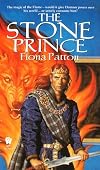
Galactic Spectrum Award nomination * Locus Recommended Reading List * Epic fantasy series with character-driven intrigue and spectacular magic The royal line of Branion have been blessed, or cursed, with the power of the Flame, a magic which--if wielded properly--none can stand against. But if called upon by one untrained, the Flame is as likely to destroy its human vessel as whatever foe it has been unleashed against. Yet even the Flame is less dangerous than Her Most Regal and show more Sacred Majesty Melesandra the Third, an unyielding and terrifying ruler. No one understands this better than Crown Prince Demnor, who is convinced he is his mother's most-treasured victim. Often at odds with Melesandra, Demnor knows he will receive no support from her when faced with the prospect of an unwanted, politically motivated marriage. But all his personal conflicts must be thrust aside when the realm of Branion is drawn into a far greater struggle as the eternally rebellious Heathland plots a bold new campaign of war. Only time will tell whether Demnor can survive the traitors within the Court and the ever-growing rebel forces--even as he strives to master the power which is his birthright. show lessTags
Recommendations




Member Reviews
This book was intense. There was political intrigue, war, romance. Everything. My mind is still swimming. I was expecting an interesting read but I wasn't expecting a new book for my favourites list.
The writing is good. The story flows very well and the language isn't too much or lacking. The characters are all pretty fresh and interesting. I fell in INSTANT love with Kelahnus. He was literally everything in this book for me. My enjoyment of the book was literally hinging on how his story progressed. I cried a few times because of him. Everyone else was pretty awesome too. Even the evil guys. I love how Patton shows so many POVs. Normally, I hate that with a passion but she does a really great job. Sometimes it goes into omniscient show more narrator but that never takes away from the book; only adds.
I described this book as "recklessly cute" as I was reading it. (Cute is my umbrella term for everything awesome, cool and badass.) Like, people do some really irresponsible stuff in this book but it all flies. Patton is magical in her character portrayal that way. I was even feeling for the bad guys. I mean, they kinda make sense a bit, you know?
I definitely recommend this book. Though, I would say steel yourself for the ride, if you're prone to emotional overwhelming like I am. show less
The writing is good. The story flows very well and the language isn't too much or lacking. The characters are all pretty fresh and interesting. I fell in INSTANT love with Kelahnus. He was literally everything in this book for me. My enjoyment of the book was literally hinging on how his story progressed. I cried a few times because of him. Everyone else was pretty awesome too. Even the evil guys. I love how Patton shows so many POVs. Normally, I hate that with a passion but she does a really great job. Sometimes it goes into omniscient show more narrator but that never takes away from the book; only adds.
I described this book as "recklessly cute" as I was reading it. (Cute is my umbrella term for everything awesome, cool and badass.) Like, people do some really irresponsible stuff in this book but it all flies. Patton is magical in her character portrayal that way. I was even feeling for the bad guys. I mean, they kinda make sense a bit, you know?
I definitely recommend this book. Though, I would say steel yourself for the ride, if you're prone to emotional overwhelming like I am. show less
The chief conceit of the book is to set a high-medieval swords and sorcery tale in a land characterized by more-than-21st-century sexual equality and promiscuity, focusing partly on a bisexual love triangle between the protagonist, his male concubine, and his bride. A certain linguistic awkwardness arises from this: there are no Ladies in this world, everyone of any note seems to be either a priest, a warrior, or both, and terms such as Lord, Earl, and Knight are bestowed on those of either gender. This "RenFest" anachronism can be a little disconcerting to those for whom European tradition is more ingrained than it obviously is in the author; though it is carefully introduced without fanfare on the second page, and flagged a little show more blatantly in the matronymic family names (not MacDonald and MacKenzie but DeKathrine and DeSandra). It is weird, too, in a quasi-European context, to meet cider in American guise as a non-alcoholic drink. The author is overfond of repeating full names and high sounding titles (oh you Americans, how you do love aristocracy!), and of capital letters for Important Things which don't really need them. There is also a frequent focus on clothing, a feature said to be typical of female authors, though actually I find it quite helpful in forming a mental picture of the proceedings, so I'm not complaining.
I'm not sure whether it is helpful to the reader's expectations or just lazy on the part of the author to base a secondary world on such a very lightly massaged version of medieval-cum-renaissance Europe. The map shows the British Isles more or less simply reversed left-to-right with all the countries transparently renamed, and Scotland (alias Heathland) is - surprise, surprise - in a strategic and religious alliance with France (alias Gallia) against England and Wales (alias Branion and Gwyneth). Some of the other place names read a little oddly to anyone acquainted with real British toponymy. (One good joke for the philologists: the Faith in the Triarchy is know not as the Triarchic but the Triarctic religion, which etymologically would indicate belief in the Three Bears!)
But although I've sounded a bit negative, it's a good enough read, with some nice rivalries between the characters, who are variously bloodthirsty, scheming, or both. The reliance on flashback is initially unsettling and not well enough signalled -- I had to go back and read the datelines again to check when I was reading about -- but it does allow the depth of the story and its characters to unfold gradually without swamping the reader with background information. The sacerdotal royal family and its tense relationship with the mysterious Flame rather remind me of the semi-divine royal house of Geraldine Harris's 'Seven Citadels' sequence, though Demnor DeMarian is an older, harsher, and more sexually active figure than Kerish lo Taan. It's the first in a sequence of four novels, and I might look out the others.
MB 31-x-2016 show less
I'm not sure whether it is helpful to the reader's expectations or just lazy on the part of the author to base a secondary world on such a very lightly massaged version of medieval-cum-renaissance Europe. The map shows the British Isles more or less simply reversed left-to-right with all the countries transparently renamed, and Scotland (alias Heathland) is - surprise, surprise - in a strategic and religious alliance with France (alias Gallia) against England and Wales (alias Branion and Gwyneth). Some of the other place names read a little oddly to anyone acquainted with real British toponymy. (One good joke for the philologists: the Faith in the Triarchy is know not as the Triarchic but the Triarctic religion, which etymologically would indicate belief in the Three Bears!)
But although I've sounded a bit negative, it's a good enough read, with some nice rivalries between the characters, who are variously bloodthirsty, scheming, or both. The reliance on flashback is initially unsettling and not well enough signalled -- I had to go back and read the datelines again to check when I was reading about -- but it does allow the depth of the story and its characters to unfold gradually without swamping the reader with background information. The sacerdotal royal family and its tense relationship with the mysterious Flame rather remind me of the semi-divine royal house of Geraldine Harris's 'Seven Citadels' sequence, though Demnor DeMarian is an older, harsher, and more sexually active figure than Kerish lo Taan. It's the first in a sequence of four novels, and I might look out the others.
MB 31-x-2016 show less
When I purchased this book, I did not notice the date it was published. I thought it was maybe 5-10 years old based on the amount books in the series (not sure how I thought that considering the cover design, but I did). Once I started reading it, I quickly realized it was older than I thought. That is not meant to be derogatory in any way. The theme, scope and world building of this novel simply has an older feel to it. It's definitely a sword and sorcery novel, draws heavily on British history in the world building, particularly the tensions between the scots and the brits and the protestants and the catholics. I'm not going to expose my lack of British history by attempting to point to any particular years, battles or monarchs that show more are used as a jumping off point. There is, unsurprisingly, glorification of battle and several characters clearly think violence is foreplay (think "honorable" violence like a duel or watching a fight not abuse). There is a high emphasis on honor, loyalty, and fealty.
The writing, plot and characterizations are quite solid and generally fall in line with what you might expect from a fantasy book of it's era with two notable exceptions that allows this book to stand out even today. Gender equality. This is a world where for the most part, gender discrimination does not seem to exist. People are treated the same regardless of gender. The same titles are used (expect in one case where a cleric is referred to as Sister), a Prince is a prince whether male or female, a priest is a priest. There is also a form of free love. One of the ways the society prevents unwanted pregnancies (if you are going to have gender equality in women going to war, this is key), the nobility have contracts with same gender courtesans (called companions). Some are in love with their companions, some simply use them for sex, and some companions are also contracted and nurses and nannies. There is in general quite a positive attitude to sex and love. This is not however, a steamy, sexy read. Any and all sex is fade to black (which personally I am ok with)
What keeps this from being five stars is that it definitely is pre Sanderson's law and there is some religious/sorcerous shannigans happening during some of the battle scenes that felt unsatisfactory to me due to being heavy on the symbolism and mysticism and light on the mythology and logic behind it. It's definitely the style of the time it was published, if this book was a recent novel, there might be more of an explanation on the mechanics of the sorcery or more focus on characters with sorcerous powers.
All in all, this was a solid 4 stars. Definitely recommend for readers looking for some fantasy with gay sub plot and not a gay romance set in a fantasy world (the second seems much easier to find). Also, for fans of sword and sorcery fantasy and for readers tired of patriarchal fantasy and interested in a different perspective on gender norms. show less
The writing, plot and characterizations are quite solid and generally fall in line with what you might expect from a fantasy book of it's era with two notable exceptions that allows this book to stand out even today. Gender equality. This is a world where for the most part, gender discrimination does not seem to exist. People are treated the same regardless of gender. The same titles are used (expect in one case where a cleric is referred to as Sister), a Prince is a prince whether male or female, a priest is a priest. There is also a form of free love. One of the ways the society prevents unwanted pregnancies (if you are going to have gender equality in women going to war, this is key), the nobility have contracts with same gender courtesans (called companions). Some are in love with their companions, some simply use them for sex, and some companions are also contracted and nurses and nannies. There is in general quite a positive attitude to sex and love. This is not however, a steamy, sexy read. Any and all sex is fade to black (which personally I am ok with)
What keeps this from being five stars is that it definitely is pre Sanderson's law and there is some religious/sorcerous shannigans happening during some of the battle scenes that felt unsatisfactory to me due to being heavy on the symbolism and mysticism and light on the mythology and logic behind it. It's definitely the style of the time it was published, if this book was a recent novel, there might be more of an explanation on the mechanics of the sorcery or more focus on characters with sorcerous powers.
All in all, this was a solid 4 stars. Definitely recommend for readers looking for some fantasy with gay sub plot and not a gay romance set in a fantasy world (the second seems much easier to find). Also, for fans of sword and sorcery fantasy and for readers tired of patriarchal fantasy and interested in a different perspective on gender norms. show less
3.5 Stars
I discovered this book, published in 1997, on a quest for more epic fantasy with LGBTQA characters. I was immediately taken with its worldbuilding of a gender-neutral society, where well-developed female characters are featured alongside a central male same-sex romance. The setting itself tastes somewhat of anachronism stew—the plot, name conventions, and the date of the admittedly fictional calendar all suggest the Dark Ages, but Renaissance trappings appear in characters’ costumes, architecture, and downright Shakespearian traveling player troupes. To top it off, characters sit sipping hot chocolate, so either the Americas have been discovered early in this world or its botany is somewhat askew. It is fantasy, to be sure, show more a genre where authors can and should get away with a lot, but I felt a distinct lack of consistency. Not just in the worldbuilding.
I could never quite come to terms with the way the storytelling so heavily relied on flashbacks. The plot would move forward a few pages, and then suddenly be hurtled back decades into the characters’ personal histories. At times there was some genuinely interesting parallel narrative as Demnor, the crown prince of Branion, struggles with his mother in the present day while reflecting on how he defied her by his childhood romance with his lover, courtesan/strategist Kellhanus. Yet after a while the frequency of flashbacks began to cut into the story’s momentum and even became disorienting. When Demnor “reflected” back to a conversation made earlier in the morning, it just got annoying. I think stories should be told chronologically more often than not, at least for events taking place within the same year!
The plot is a tangle of the personal and political. Demnor struggles with his tyrannical mother, the Aristok of Branion, as well as the barbarian Heaths to the north. There’s a religious schism that’s of some interest, although I can’t pinpoint its real life analogue (Protestant Reformation? Greek Orthodox?) if it even has one. Demnor’s marriage to Duke Isolde, and its impact—or lack thereof—on his romance with Kellhanus, and the friendship of all three members of this “love triangle” was refreshing to see, but in other cases character development got lost among a cast of characters that covers multiple feudal courts, two religions, at least one courtesan’s guild, and plenty of petty nobility. Why so many people? Where they all needed to tell this story? There were times when the point of the story seemed to be “Look at all these fictional people.”
That subverted love triangle aside, which may make the book worth reading on its own, The Stone Prince never really felt like it got going. Stepping back, I can trace how Demnor in his struggle for control of Branion, Kellhanus and some internal politics at the Companion’s Guild, and Isolde in her marriage to the crown prince all had some parallel building plotlines. Although, if my interpretation is correct, I’m not wild about how, in such an ostentatiously gender-neutral setting (Isolde is an Earl), the narrative climax of the primary female character is childbirth.
(For another “love triangle” that isn’t, including two romantically involved men and a woman, where the woman’s motivations and arc play out a little differently, I recently read Tanya Huff’s The Fire’s Stone and cannot recommend it highly enough).
The Stone Prince is worth looking into if you’d like to see more completely gender-neutral societies in fantasy settings, and perhaps if you’re into alternate history (for all the ‘history’ aspects sometimes don’t withstand aggressive scrutiny, it can be very fun to have a story with enough depth to really aggressively scrutinize in any case). The story continues in several sequels, but frankly I wish it hadn’t been so bogged down with minor characters and magical pyrotechnics (which never really seemed to come together) in this first book. show less
I discovered this book, published in 1997, on a quest for more epic fantasy with LGBTQA characters. I was immediately taken with its worldbuilding of a gender-neutral society, where well-developed female characters are featured alongside a central male same-sex romance. The setting itself tastes somewhat of anachronism stew—the plot, name conventions, and the date of the admittedly fictional calendar all suggest the Dark Ages, but Renaissance trappings appear in characters’ costumes, architecture, and downright Shakespearian traveling player troupes. To top it off, characters sit sipping hot chocolate, so either the Americas have been discovered early in this world or its botany is somewhat askew. It is fantasy, to be sure, show more a genre where authors can and should get away with a lot, but I felt a distinct lack of consistency. Not just in the worldbuilding.
I could never quite come to terms with the way the storytelling so heavily relied on flashbacks. The plot would move forward a few pages, and then suddenly be hurtled back decades into the characters’ personal histories. At times there was some genuinely interesting parallel narrative as Demnor, the crown prince of Branion, struggles with his mother in the present day while reflecting on how he defied her by his childhood romance with his lover, courtesan/strategist Kellhanus. Yet after a while the frequency of flashbacks began to cut into the story’s momentum and even became disorienting. When Demnor “reflected” back to a conversation made earlier in the morning, it just got annoying. I think stories should be told chronologically more often than not, at least for events taking place within the same year!
The plot is a tangle of the personal and political. Demnor struggles with his tyrannical mother, the Aristok of Branion, as well as the barbarian Heaths to the north. There’s a religious schism that’s of some interest, although I can’t pinpoint its real life analogue (Protestant Reformation? Greek Orthodox?) if it even has one. Demnor’s marriage to Duke Isolde, and its impact—or lack thereof—on his romance with Kellhanus, and the friendship of all three members of this “love triangle” was refreshing to see, but in other cases character development got lost among a cast of characters that covers multiple feudal courts, two religions, at least one courtesan’s guild, and plenty of petty nobility. Why so many people? Where they all needed to tell this story? There were times when the point of the story seemed to be “Look at all these fictional people.”
That subverted love triangle aside, which may make the book worth reading on its own, The Stone Prince never really felt like it got going. Stepping back, I can trace how Demnor in his struggle for control of Branion, Kellhanus and some internal politics at the Companion’s Guild, and Isolde in her marriage to the crown prince all had some parallel building plotlines. Although, if my interpretation is correct, I’m not wild about how, in such an ostentatiously gender-neutral setting (Isolde is an Earl), the narrative climax of the primary female character is childbirth.
(For another “love triangle” that isn’t, including two romantically involved men and a woman, where the woman’s motivations and arc play out a little differently, I recently read Tanya Huff’s The Fire’s Stone and cannot recommend it highly enough).
The Stone Prince is worth looking into if you’d like to see more completely gender-neutral societies in fantasy settings, and perhaps if you’re into alternate history (for all the ‘history’ aspects sometimes don’t withstand aggressive scrutiny, it can be very fun to have a story with enough depth to really aggressively scrutinize in any case). The story continues in several sequels, but frankly I wish it hadn’t been so bogged down with minor characters and magical pyrotechnics (which never really seemed to come together) in this first book. show less
Ignore what the book blurb says, this is really a story about Prince Demnor's personal journey from being a curious and sensitive child to a teenager dealing with between him and his mother to a country's proud ruler. All that stuff about Heathland and rebellion is really only a small part of the book. The plot moves slowly with lots of focus on the characters' inner thoughts and motivations, and plenty of flashbacks to give us the background on how Demnor became who he is now. The multiple POVs the story was told through meant we got to see different perspectives on the same scene, and I really like the fact that we were shown the villain's perspective as well. Overall, I enjoyed this book although I did at times wish the plot had a show more little more action. show less
Honestly, despite all the lukewarm and negative reviews, I loved this book. I completely ignored the similarity of Branion to Britain and the other thinly veiled references and enjoyed it at face value. Demnor, to me, was an interesting character - the portrayal of his inner struggles, especially with his mother, are very interesting to me, and they're written well. Kelahnus, too, is an interesting character, though I sort of wish we'd gotten to know a teeny bit more about the Guild. The Guild concept as a whole is interesting, though I'm a little confused as to why every single aristocrat is automatically bisexual (Consort and same-sex Companion). I can't imagine -everyone- is bisexual, but then I suppose if it's more of a cultural show more thing... I don't know. The other thing I liked/didn't like was the same titles for everyone, regardless of gender - Prince for both male/female heirs, for example. Liked it because of the loss of gender/power lines, didn't like it because it was darn confusing. Took me a while to get used to it.
It did take me a while to get into the book, especially because Patton has a love for titles, place names, and geography, it seems. The book is initially sort of off-putting with it's info-dump of "Demnor, Prince of this, Duke of that, blah blah blah" because it's honestly like "Really, is it -this- political?" It isn't, in the end - it's very character-driven, with a dash of politics thrown in, but it's nowhere near as scary as the beginning makes it feel. After the first couple chapters, it settled into a steady pace, where I always wanted to know what happened next - there are a few twists thrown in there too that keep you on your toes. I did sort of spoil the book by accidentally reading the last page before the rest of the book, so there wasn't quite as much tension in the ending as there could have been, but it was still very well written.
And also, I love the Demnor-Isolde and Demnor-Kelahnus relationships. Maybe I just really like Demnor. Either way, I loved this book, and would highly recommend it. show less
It did take me a while to get into the book, especially because Patton has a love for titles, place names, and geography, it seems. The book is initially sort of off-putting with it's info-dump of "Demnor, Prince of this, Duke of that, blah blah blah" because it's honestly like "Really, is it -this- political?" It isn't, in the end - it's very character-driven, with a dash of politics thrown in, but it's nowhere near as scary as the beginning makes it feel. After the first couple chapters, it settled into a steady pace, where I always wanted to know what happened next - there are a few twists thrown in there too that keep you on your toes. I did sort of spoil the book by accidentally reading the last page before the rest of the book, so there wasn't quite as much tension in the ending as there could have been, but it was still very well written.
And also, I love the Demnor-Isolde and Demnor-Kelahnus relationships. Maybe I just really like Demnor. Either way, I loved this book, and would highly recommend it. show less
This book really didn't captivate me. I found myself not really caring that much for the characters and having to skip through some of the overly long battle scenes.
There's not much fantasy in this one, just kings and dukes and earls, lots of fighting, a little bit of court intrigue.
There's very little feeling in the characters--they go out and kill dragons or each other, no real remorse over death, but then have a big party.
What is unique and interesting about this book that I've never seen before and applaud is the gender and sexual equality. There are not princesses or duchesses, everyone is prince, early, duke, etc. regardless of gender. Positions of power, inheritance are all first born, and same-sex relationships are common. show more Marriage isn't much more than a political contract to produce heirs. In this respect it differs from any other Medieval-sword-and-castle type of fantasy I've ever read. show less
There's not much fantasy in this one, just kings and dukes and earls, lots of fighting, a little bit of court intrigue.
There's very little feeling in the characters--they go out and kill dragons or each other, no real remorse over death, but then have a big party.
What is unique and interesting about this book that I've never seen before and applaud is the gender and sexual equality. There are not princesses or duchesses, everyone is prince, early, duke, etc. regardless of gender. Positions of power, inheritance are all first born, and same-sex relationships are common. show more Marriage isn't much more than a political contract to produce heirs. In this respect it differs from any other Medieval-sword-and-castle type of fantasy I've ever read. show less
Members
- Recently Added By
Lists

Good LGBT fiction for LGBT folk and friends
537 works; 50 members
Author Information
23+ Works 1,314 Members
Some Editions
Awards and Honors
Awards
Series

Belongs to Publisher Series
DAW Book Collectors (1053)
Common Knowledge
- Canonical title
- The Stone Prince
- Original publication date
- 1997
- Dedication
- For Tanya
For quiet walks and not so quiet cats - First words
- As the new sun touched the spiral tips of the capital city an elder priest of the Most Holy Order of the Flame slipped into the temple's main sanctuary.
- Last words
- (Click to show. Warning: May contain spoilers.)Catching Kelahnus's eye, the two men shared a soft smile of past memories and future promises, before turning back to the adulation of the crowd.
- Original language*
- Englisch
*Some information comes from Common Knowledge in other languages. Click "Edit" for more information.
Classifications
Statistics
- Members
- 439
- Popularity
- 69,599
- Reviews
- 10
- Rating
- (3.60)
- Languages
- English, German
- Media
- Paper, Ebook
- ISBNs
- 3
- ASINs
- 2