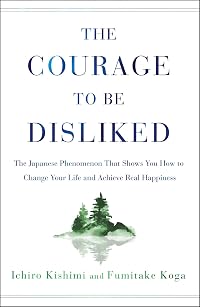
The Courage to Be Disliked: The Japanese Phenomenon That Shows You How to Change Your Life and Achieve Real Happiness
by Ichiro Kishimi, Fumitake Koga
On This Page
Description
An international bestseller and TikTok sensation with more than 10 million copies sold worldwide, The Courage to Be Disliked is a transformative and practical guide to personal happiness and self-fulfillment.Now you can unlock your full potential and free yourself from the shackles of past traumas and societal expectations to find true personal happiness. Based on the theories of renowned psychologist Alfred Adler, this book guides you through the principles of self-forgiveness, self-care, show more and mind decluttering in a straightforward, easy-to-digest style that's accessible to all.
The Courage to Be Disliked unfolds as a dialogue between a philosopher and a young man, who, over the course of five enriching conversations, realizes that each of us is in control of our life's direction, independent of past burdens and expectations of others.
Wise, empowering, and profoundly liberating, this book is a life-changing experience that shows you a path to lasting happiness and how to finally be the person you truly want to be. Millions are already benefiting from its teachings—and you can be next. show less
Tags
Recommendations








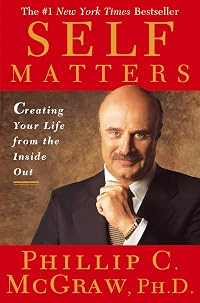
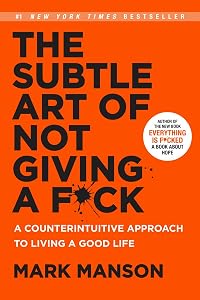
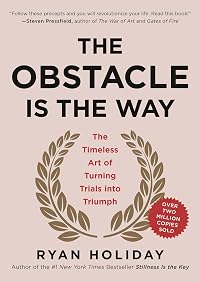

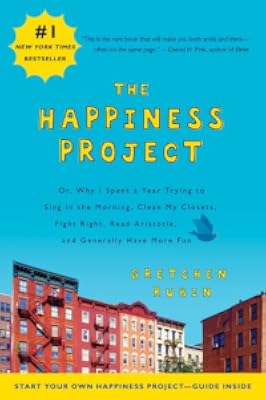




















Member Reviews
I wasn't sure if I'd finish this book but I did. The Adlerian teleology described here seems to be a mindset more suited for ideals than for practical living. I'm not familiar enough with Adler to know how closely this book adheres to his original ideas, but two of my biggest hang-ups have to do with the approach to trauma and to raising children. To say that "trauma does not exist" seems to ignore such physical and psychological responses as post traumatic stress disorder. It's one thing to say that we can move beyond our past traumas; it's another thing entirely to say that past traumas have no effect on our current state. They must be taken into consideration. This book also makes other leaps such as going from "I wish I was more show more like so-and-so" to saying this means "I hate myself." To want to develop more skills or to become more like someone we admire doesn't mean we hate ourselves or that we're desperately unhappy and overcome with envy. It just means we want to grow. Good for us.
The authors make other leaps that I also find highly subjective (and erroneous). For instance, the teacher in the book suggests that a girl's act of blushing was brought about by her unconscious goal of avoiding interaction. Again, some physiological responses are triggered without there being a hidden mental agenda. In fact, there is even research showing that some bird species blush and -not to belittle avian intelligence- I doubt the hens are like, wow, I'm going to blush to get myself out of having to interact with that rooster. This article offers a fun look at the science of blushing: https://www.rd.com/article/why-do-people-blush/
Then there's the approach to raising children. This book suggests that we not interfere with our children because to do so is to take on their life tasks, which is demeaning to them and the cause of unhappiness in the parent. Instead we ought to encourage them (not praise, reward, or punish) by showing gratitude for their efforts. Forgive me, but gratitude alone is not enough for my children to initiate doing certain tasks, such as cleaning their bathroom or doing any of the other chores that need to be done around the house. That doesn't change the fact that they still need to do their chores and clean up after themselves so that they can grow into responsible adults. So yes, I interfere. Or, if I see one of them engaging in dangerous behavior, I will most definitely be interfering in that instance as well. Once they are grown, that is another matter, and I can see the value of stepping back and letting them pursue their own choices. But this book doesn't make this distinction. So I would respectfully disagree with the authors and say that I can simultaneously treat my children with respect and dignity so that they grow up to be confident and capable adults while also providing support, guidance, and yes, the occasional interference.
Also, if an author is going to lay out their points using a discussion between student and teacher, it would help if the student's objections are similar to those of the reader. Maybe some readers do hear their thoughts echoed in the voice of this book's student (a young adult male with limited life experience, perhaps). I, however, did not.
This isn't to say I didn't find any takeaways within the pages. For example, I could do with more letting go of trying to please others and with less taking responsibility for the reactions of others. But as a whole, Adlerian teleology as this book describes it is not a philosophy that I am eager to adopt.
What stood out:
There's no need to rush the answers. What we need is dialogue.
and:
When you have danced here and now in earnest and to the full, that is when the meaning of your life will become clear to you. show less
The authors make other leaps that I also find highly subjective (and erroneous). For instance, the teacher in the book suggests that a girl's act of blushing was brought about by her unconscious goal of avoiding interaction. Again, some physiological responses are triggered without there being a hidden mental agenda. In fact, there is even research showing that some bird species blush and -not to belittle avian intelligence- I doubt the hens are like, wow, I'm going to blush to get myself out of having to interact with that rooster. This article offers a fun look at the science of blushing: https://www.rd.com/article/why-do-people-blush/
Then there's the approach to raising children. This book suggests that we not interfere with our children because to do so is to take on their life tasks, which is demeaning to them and the cause of unhappiness in the parent. Instead we ought to encourage them (not praise, reward, or punish) by showing gratitude for their efforts. Forgive me, but gratitude alone is not enough for my children to initiate doing certain tasks, such as cleaning their bathroom or doing any of the other chores that need to be done around the house. That doesn't change the fact that they still need to do their chores and clean up after themselves so that they can grow into responsible adults. So yes, I interfere. Or, if I see one of them engaging in dangerous behavior, I will most definitely be interfering in that instance as well. Once they are grown, that is another matter, and I can see the value of stepping back and letting them pursue their own choices. But this book doesn't make this distinction. So I would respectfully disagree with the authors and say that I can simultaneously treat my children with respect and dignity so that they grow up to be confident and capable adults while also providing support, guidance, and yes, the occasional interference.
Also, if an author is going to lay out their points using a discussion between student and teacher, it would help if the student's objections are similar to those of the reader. Maybe some readers do hear their thoughts echoed in the voice of this book's student (a young adult male with limited life experience, perhaps). I, however, did not.
This isn't to say I didn't find any takeaways within the pages. For example, I could do with more letting go of trying to please others and with less taking responsibility for the reactions of others. But as a whole, Adlerian teleology as this book describes it is not a philosophy that I am eager to adopt.
What stood out:
There's no need to rush the answers. What we need is dialogue.
and:
When you have danced here and now in earnest and to the full, that is when the meaning of your life will become clear to you. show less
I first encountered this book several years ago as an audiobook and gave it five stars at the time. Revisiting it now in print, I’m not sure it quite reaches that same level for me—but I still found it thoughtful, engaging, and ultimately worthwhile.
The book is structured as a dialogue between a philosopher and a skeptical young man, unpacking the ideas of Adlerian psychology through extended conversation. In audio form this structure works particularly well; on the page it can occasionally feel a bit repetitive or drawn out, and the younger interlocutor is not always the most likable conversational partner. That said, the format clearly echoes the style of classical philosophical dialogues—very much in the tradition of show more Socrates—where the friction between participants is part of how the ideas unfold.
I also have a soft spot for the niche genre of philosophy taught through narrative or conversation (Sophie's World remains one of my favourites), so this approach worked for me even when the discussion circled the same concepts more than once.
Even on a reread, the core ideas about responsibility, interpersonal relationships, and the freedom to define one’s own life remain compelling. It may not resonate with every reader—and some will likely find the philosophical framing or tone frustrating—but for those open to it, there’s a lot here to sit with. show less
The book is structured as a dialogue between a philosopher and a skeptical young man, unpacking the ideas of Adlerian psychology through extended conversation. In audio form this structure works particularly well; on the page it can occasionally feel a bit repetitive or drawn out, and the younger interlocutor is not always the most likable conversational partner. That said, the format clearly echoes the style of classical philosophical dialogues—very much in the tradition of show more Socrates—where the friction between participants is part of how the ideas unfold.
I also have a soft spot for the niche genre of philosophy taught through narrative or conversation (Sophie's World remains one of my favourites), so this approach worked for me even when the discussion circled the same concepts more than once.
Even on a reread, the core ideas about responsibility, interpersonal relationships, and the freedom to define one’s own life remain compelling. It may not resonate with every reader—and some will likely find the philosophical framing or tone frustrating—but for those open to it, there’s a lot here to sit with. show less
I almost put this book down after the first few chapters. The author's didactic presentation style was difficult to adapt to but that alone wasn't enough to turn me away. The almost-final straw was what I perceived to be the incessant victim blaming. For example, if the hypothetical student has a problem, the answer almost always is "you're choosing to have this problem."
But now that I've read the entirety of The Courage to Be Disliked, and consider it one of the most important books I've read this year, I can look back at my original objection and see the author was trying to make a difficult point as quickly as possible, like ripping off a band-aid, to condition the reader for some tough-love to come. The point of the early chapters show more is to realize that *most* problems are problems of choice and once you internalize that, then you can get to really good stuff.
Adlerian Psychology—this is the 'Japanese Phenomenon' from the title—feels like a religion. Honestly, I think that's more of a Japanese/American translation issue than anything else, but ultimately, it's beside the point. There are arguments and scientific backing for this branch of psychology which separates it from religion, but if this book is your main or only exposure to it, then it's going to come down to your gut feeling (aka belief/religion). My take is that's okay. Use the ideas or reject them. Let the results of how one manages the near-impossible task of changing one's life speak for themselves. show less
But now that I've read the entirety of The Courage to Be Disliked, and consider it one of the most important books I've read this year, I can look back at my original objection and see the author was trying to make a difficult point as quickly as possible, like ripping off a band-aid, to condition the reader for some tough-love to come. The point of the early chapters show more is to realize that *most* problems are problems of choice and once you internalize that, then you can get to really good stuff.
Adlerian Psychology—this is the 'Japanese Phenomenon' from the title—feels like a religion. Honestly, I think that's more of a Japanese/American translation issue than anything else, but ultimately, it's beside the point. There are arguments and scientific backing for this branch of psychology which separates it from religion, but if this book is your main or only exposure to it, then it's going to come down to your gut feeling (aka belief/religion). My take is that's okay. Use the ideas or reject them. Let the results of how one manages the near-impossible task of changing one's life speak for themselves. show less
First, an admission: I bought this book as a joke, not seriously intending to read it. 'The Courage to be Disliked'? Crazy. But then I actually started reading it, and within pages I was hooked.
Like almost everyone I can think of, I am familiar with the name Sigmund Freud, and of his impact on the world of psychiatry and psychology. His theory that all present problems can be traced back to a root cause is compelling and clearly understandable.
But most importantly, it might very well be wrong.
In this fascinating book, Kishimi introduces the reader to the work and philosophy of Freud's contemporary, Alfred Adler. He turned Freud's logic on its head, suggesting instead that we use our current state as an excuse not to change. For example, show more somebody who is depressed might say that they are depressed as a result of a failed marriage, or that they were never loved as children. But this way of looking at things will simply prevent positive change from happening: you cannot change the past, and therefore the future is already written for you. Adler instead said that a depressed person is using their depression as an excuse not to be depressed - or in other words, there are benefits to the depression that outweigh fighting against it.
At first, this sounds quite ridiculous, not to mention downright insensitive. But as you probe the argument, you find that it is rather more sensible than it first seemed: a depressed person does not have to take risks, such as trying to go out and find somebody to date. If you try asking somebody out, you can easily be rejected, and that causes pain; but if you say you are too depressed to even attempt change, you are protected against the risk.
The courage spoken of in the title of this book then is not so much that you go out of your way to be disliked, but that you come to an understanding of who's task it is to do the disliking. You cannot make people like you - you can only live in such a way that being liked or disliked matters little to you and your sense of self.
This was the first time I read the name Adler; I doubt it will be the last. My curiosity has been piqued, and I want to know more, for here I seem to have found an approach to living my life that I can really get onboard with. show less
Like almost everyone I can think of, I am familiar with the name Sigmund Freud, and of his impact on the world of psychiatry and psychology. His theory that all present problems can be traced back to a root cause is compelling and clearly understandable.
But most importantly, it might very well be wrong.
In this fascinating book, Kishimi introduces the reader to the work and philosophy of Freud's contemporary, Alfred Adler. He turned Freud's logic on its head, suggesting instead that we use our current state as an excuse not to change. For example, show more somebody who is depressed might say that they are depressed as a result of a failed marriage, or that they were never loved as children. But this way of looking at things will simply prevent positive change from happening: you cannot change the past, and therefore the future is already written for you. Adler instead said that a depressed person is using their depression as an excuse not to be depressed - or in other words, there are benefits to the depression that outweigh fighting against it.
At first, this sounds quite ridiculous, not to mention downright insensitive. But as you probe the argument, you find that it is rather more sensible than it first seemed: a depressed person does not have to take risks, such as trying to go out and find somebody to date. If you try asking somebody out, you can easily be rejected, and that causes pain; but if you say you are too depressed to even attempt change, you are protected against the risk.
The courage spoken of in the title of this book then is not so much that you go out of your way to be disliked, but that you come to an understanding of who's task it is to do the disliking. You cannot make people like you - you can only live in such a way that being liked or disliked matters little to you and your sense of self.
This was the first time I read the name Adler; I doubt it will be the last. My curiosity has been piqued, and I want to know more, for here I seem to have found an approach to living my life that I can really get onboard with. show less
Based on the theories of Alfred Adler, a twentieth century psychologist, the book is a conversation between the a philosopher and a youth. Over five separate occasions the two meet and discuss why we need to be liked, why we need relationships, why we choose to remain with grief or trauma and why we lack courage.
I found the two and fro nature between the two somewhat tiring after awhile. The youth was always abrasive and confrontational. The examples used were great if you were a man who had dominating parents who were not satisfied with your life choices. If you worked in a job that was stacking library shelves.
I can understand why some people will dismiss the book, especially the idea that you choose to live with the trauma of your show more past. That you choose to remain a victim of sexual abuse, family violence as you do not take the next step to move on, you languish in the comfort of knowing you are a victim. It sounds harsh and what is being said, is that you can allow an incident of the past to define you or you define yourself. It is up to you the reader to decide what you think of that.
Like all books that offer solutions, people will cherry pick what they want to appeal to them. There is some interesting theories and areas that will give you thought. Like why do we expend so much time on trying to be liked by all and sundry? Is it worth our time and effort?
It's an interesting read. It may or may not solve your personal dilemmas but you mind some useful self-reflection. show less
I found the two and fro nature between the two somewhat tiring after awhile. The youth was always abrasive and confrontational. The examples used were great if you were a man who had dominating parents who were not satisfied with your life choices. If you worked in a job that was stacking library shelves.
I can understand why some people will dismiss the book, especially the idea that you choose to live with the trauma of your show more past. That you choose to remain a victim of sexual abuse, family violence as you do not take the next step to move on, you languish in the comfort of knowing you are a victim. It sounds harsh and what is being said, is that you can allow an incident of the past to define you or you define yourself. It is up to you the reader to decide what you think of that.
Like all books that offer solutions, people will cherry pick what they want to appeal to them. There is some interesting theories and areas that will give you thought. Like why do we expend so much time on trying to be liked by all and sundry? Is it worth our time and effort?
It's an interesting read. It may or may not solve your personal dilemmas but you mind some useful self-reflection. show less
I couldn't finish it. Bless me, i tried to, i really did, but i really couldn't take any more of this tedious mediocrity.
I had to keep on putting it down and going off and reading other things, and each time i came back i came back with good intentions, but each time i just put it down and went and read something else. Eventually, after 4 months of this, i got to 80% read and i just had to give up: it really wasn't doing my happiness any good whatsoever.
To sum it up: there's someone who claims to be a philosopher who is having a discussion with a young man, but the young man is asking all the wrong questions and failing miserably to point out the flaws in the supposed philosopher's babble: the ridiculousness of this conversation just show more makes one feel like banging ones head against the wall.
Seriously people, you could just keep picking random books off library bookshelves for the rest of your life and not read anything as tedious and pointless as this book.
As such, this book has received my website's great honour of being placed on "The Bookshelf of Infamy", i've also deleted it from my Kindle and Amazon account: yes, it really is that bad.
I certainly won't be bothering to read the sequel. show less
I had to keep on putting it down and going off and reading other things, and each time i came back i came back with good intentions, but each time i just put it down and went and read something else. Eventually, after 4 months of this, i got to 80% read and i just had to give up: it really wasn't doing my happiness any good whatsoever.
To sum it up: there's someone who claims to be a philosopher who is having a discussion with a young man, but the young man is asking all the wrong questions and failing miserably to point out the flaws in the supposed philosopher's babble: the ridiculousness of this conversation just show more makes one feel like banging ones head against the wall.
Seriously people, you could just keep picking random books off library bookshelves for the rest of your life and not read anything as tedious and pointless as this book.
As such, this book has received my website's great honour of being placed on "The Bookshelf of Infamy", i've also deleted it from my Kindle and Amazon account: yes, it really is that bad.
I certainly won't be bothering to read the sequel. show less
Written in the stilted "dialogue" meant to emulate Plato, long passages of this book felt interminable as the wise teacher batted aside straw men of ego, fame and honor. Still, the underlying idea that our freedom to be ourselves lies in our ability to seek our value through duty to others while also accepting that we can not work to please others is a compelling one for me.
I'd say skip this short book unless they come out with an abridged version.
I'd say skip this short book unless they come out with an abridged version.
Members
- Recently Added By
Lists

Top Five Books of 2022
736 works; 272 members

21 Books for a Better You
21 works; 4 members

philosophy
28 works; 2 members

psychology
12 works; 1 member

current
52 works; 1 member

Books That Changed Our Perspective
423 works; 168 members

Men's healing resources
747 works; 1 member

Books Read in 2019
4,052 works; 110 members

el
1,139 works; 1 member
Author Information

24 Works 2,334 Members
3 Works 2,229 Members
Some Editions
Awards and Honors
Awards
Work Relationships
Common Knowledge
- Canonical title
- The Courage to Be Disliked: The Japanese Phenomenon That Shows You How to Change Your Life and Achieve Real Happiness
- Original title
- Kirawareru Yuki
- Alternate titles
- The Courage to Be Disliked
- Original publication date
- 2013
- Original language
- Japanese
Classifications
Statistics
- Members
- 2,029
- Popularity
- 10,309
- Reviews
- 41
- Rating
- (3.75)
- Languages
- 12 — Chinese, Dutch, English, Finnish, French, German, Italian, Japanese, Malayalam, Polish, Portuguese, Spanish
- Media
- Paper, Audiobook, Ebook
- ISBNs
- 37
- ASINs
- 14
