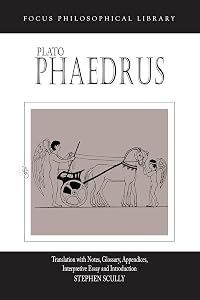
Plato : Phaedrus: A Translation With Notes, Glossary, Appendices, Interpretive Essay and Introduction (Focus Philosophical Library)
by Plato
On This Page
Description
This is an English translation of one of Plato's least political dialogues of Socrates and Phaedrus discussing many themes: the art and practice of rhetoric, love, reincarnation, and the soul. It includes an introduction, notes, glossary, appendices, and an interpretive essay and introduction. Also included are rarely seen illustrations, stone carvings, and vase paintings. Focus Philosophical Library translations are close to and are non-interpretative of the original text, with the notes show more and a glossary intending to provide the reader with some sense of the terms and the concepts as they were understood by Plato's immediate audience. show lessTags
Recommendations





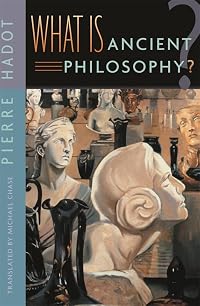
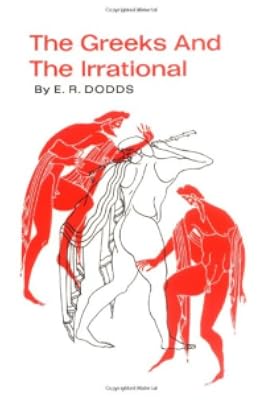
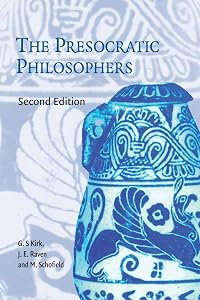
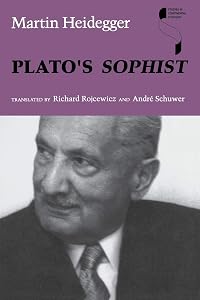



Member Reviews
More accessible than most of his dialogues, and with helpful footnotes that often veer into the irrelevant (unless you´re interested in ancient Greek as a language). Unfortunately, neither of these save the content of the dialogue itself from being boring. The majority of it is a discussion of man/boy love, and the last part is a discussion on rhetoric. There is some interesting punning going on, especially when Socrates uses a soul´s budding wings as a metaphor for an erection. Also nicely, the translator goes a long way in explaining the mentality of the ancient Greek. The love discussion is interesting just because you learn a lot about the relationships that older Greek men enjoyed with young men or boys, something I doubt most show more people know about. As for the discussion on rhetoric, Gorgias is much more interesting. show less
Ratings
Members
- Recently Added By
Author Information

2,727+ Works 100,643 Members
Plato was born c. 427 B.C. in Athens, Greece, to an aristocratic family very much involved in political government. Pericles, famous ruler of Athens during its golden age, was Plato's stepfather. Plato was well educated and studied under Socrates, with whom he developed a close friendship. When Socrates was publically executed in 399 B.C., Plato show more finally distanced himself from a career in Athenian politics, instead becoming one of the greatest philosophers of Western civilization. Plato extended Socrates's inquiries to his students, one of the most famous being Aristotle. Plato's The Republic is an enduring work, discussing justice, the importance of education, and the qualities needed for rulers to succeed. Plato felt governors must be philosophers so they may govern wisely and effectively. Plato founded the Academy, an educational institution dedicated to pursuing philosophic truth. The Academy lasted well into the 6th century A.D., and is the model for all western universities. Its formation is along the lines Plato laid out in The Republic. Many of Plato's essays and writings survive to this day. Plato died in 347 B.C. at the age of 80. (Bowker Author Biography) show less
Classifications
Statistics
- Members
- 121
- Popularity
- 269,321
- Reviews
- 1
- Rating
- (4.27)
- Languages
- English
- Media
- Paper
- ISBNs
- 1