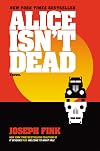
Alice Isn't Dead
by Joseph Fink
On This Page
Description
Keisha Taylor lived a quiet life with her wife, Alice, until the day that Alice disappeared. After months of searching, presuming she was dead, Keisha held a funeral, mourned, and gradually tried to get on with her life. But that was before Keisha started to see her wife, again and again, in the background of news reports from all over America. Alice isn't dead, and she is showing up at every major tragedy and accident in the country. Following a line of clues, Keisha takes a job with a show more trucking company, and begins searching for Alice. She eventually stumbles on an otherworldly conflict being waged in the quiet corners of our nation's highway system--uncovering a conspiracy that goes way beyond one missing woman. show lessTags
Recommendations





Member Reviews
A book I didn’t want to end! It felt a bit like reading Joe Hill - I was genuinely scared a number of times - and others I was laughing my ass off. I’m grateful to the author for creating such a great cast of diverse and fleshed-out characters. I adored Keisha - who is dealing with the fallout of her wife’s disappearance and her ongoing battles with anxiety. Her presumed dead wife is not so dead, the world is not what it seems, and in this battle Keisha’s anxiety is no longer a disadvantage - it’s a powerful weapon. There were some beautifully written passages about love and forgiveness that I just had to re-read. This book really hits a lot marks - very highly recommended!
Alice Isn't Dead is a really good novel. It's a really good horror book, a really good sci-fi/fantasy book, and a really good book about humans in general. Just from reading the plot summary, you might think this was a book all about some vast conspiracy involving the U.S. Government and a bunch of weird monsters. You'd be sort of right for thinking that, but it's also about so much more. Underneath all the monsters and supernatural wars is a love story between a woman and her wife. It's a story about losing someone you love, finding them, feeling betrayed, persevering against all odds, and coming together in order to save all you hold dear. It's a deeply intimate story, even with the giant scope of the subject matter. And that's what show more really makes this book something special. It's a story about people caught up in this giant supernatural event.
It would be super easy to feel lost in a story like this had Fink not grounded it so well with such an immediately relatable main character. From the first time we encounter Keisha, on the first page of the novel, we immediately identify with her. Fink does such a great job at getting us into her head and making us feel what she feels. Her struggle with anxiety will be immediately identifiable to anyone else who's struggled with it and the way she learns to cope with, and utilize, her anxiety is something that really resonates with me. Keisha is our window into this story and it's (mainly) through her that we experience the events. We see what she sees and we feel what she feels. Sure, the narration often shows us other people and events outside of Keisha's point of view, but it all ultimately comes back to her. Keisha, and her love for her wife (Alice), is what grounds this story. It's their relationship that makes this story work. It doesn't really matter who the Thistle Men are or why they do what they do because what we really care about is how Keisha and Alice will survive this story.
That's not to say, however, that the mystery of who the Thistle Men are and who's ultimately behind them and the supernatural war happening under the very nose of America isn't important, fleshed out, and ultimately solved in a satisfying way. Because while the story is mainly about Keisha's relationship with Alice and how it survives all that's happened between them, it's also about Keisha's journey to uncovering the secrets behind the Thistle Men, Bay and Creek, and the war between the two. It's a road trip story that takes Keisha all around America as she searches for answers: first as to where her wife is and later as to who is behind all of these strange and terrible events she's witnessing. In a way, Alice Isn't Dead reminds me a lot about Neil Gaiman's American Gods in the best way possible. Both are books about these huge supernatural wars between two sides who seem to hate each other. Both feature resolutions that prove that things weren't as they initially appeared. And both are largely road trip stories driven and revolving around a singular protagonist. Both novels use intimate stories about their main characters as the conduit to telling this larger story about supernatural wars. And both novels are superb.
I appreciate how this is a horror novel that doesn't really relish in how scary it is. The way Fink describes the Thistle Men will make your skin crawl and give you nightmares on end, but he doesn't linger with it. He tells you enough for you to get the picture and then moves on with the action. This isn't a book full of "jump scares"; it's a book that builds up its atmosphere and leaves you feeling like anything horrible could happen at any moment. It pumps you full of dread and fear for the main character. There are plenty of times where you really don't know if Keisha and Alice are gonna make it out of these events alive. You hope they will, but you realize they might not. It's a scary book that isn't obsessed with being scary. It's far more obsessed with exploring humanity. In the last third of the book, there's a lot of good exploration about humanity in general; what makes a human good or bad. There's this idea that we find it easy to call bad people monsters because it allows us to separate them from ourselves, to view them as un-human, as other. This book fights against that idea. At the end of the day, the scariest monsters are always humans.
It's worth noting that while Alice Isn't Dead is based on the podcast of the same name, this novel isn't just a novelization of the podcast. Yes, both the podcast and this novel tell what is essentially the same story, but the way they respectively tell it differs. The novel condenses and tweaks a lot of the events that happen in the podcast into a more concise series of events and even goes so far as to skip over entire episodes of the podcast as to include them in the novel would, quite frankly, totally destroy the pacing and forward thrust of the narrative. The novel doesn't differ from the podcast in what it doesn't contain, but there's also a whole lot of stuff added to the novel that isn't in the podcast. There's a lot you can do in novels, in terms of differing points of view, that you can't really do in a podcast that's being narrated from the point of view of a single character. So the novel features a ton of scenes that aren't in the podcast or were just alluded to having happened at some point. Point is: there's a lot in this book for fans of the podcast; it's not just the exact same story you've already heard. It's the same overall story but told in a different way with additions and changes and an entirely different feel.
Alice Isn't Dead is a genuinely good book. It's well written, featuring a number of dynamic, well-defined characters, each with clear motives and desires and agency. It's got a really good mystery that's ultimately resolved in a really satisfying way. It's full of strong prose that ushers the story along at a good pace. It might take a little bit to get going, but once it does, you won't want to put it down. It's a horror book in the best sense of that term: it explores the darkness of the worst of humanity and contrasts it with the brightness of the best of it. It's a story about love surviving in the worst of circumstances. It's a story of two people finding each other and forgiving each other after a major betrayal. It's a story about a woman coping with her anxiety and learning to use it to her advantage. It's a story about survival and fighting to save what you hold dear. It's an intimate story set against the backdrop of an epic one. If you enjoy scary stories about conspiracies, you'll enjoy this. If you enjoy survival stories, you'll enjoy this. If you enjoy stories of two lovers fighting for each other, you'll enjoy this. This is a great book by a great author. Read it. You'll enjoy it. show less
It would be super easy to feel lost in a story like this had Fink not grounded it so well with such an immediately relatable main character. From the first time we encounter Keisha, on the first page of the novel, we immediately identify with her. Fink does such a great job at getting us into her head and making us feel what she feels. Her struggle with anxiety will be immediately identifiable to anyone else who's struggled with it and the way she learns to cope with, and utilize, her anxiety is something that really resonates with me. Keisha is our window into this story and it's (mainly) through her that we experience the events. We see what she sees and we feel what she feels. Sure, the narration often shows us other people and events outside of Keisha's point of view, but it all ultimately comes back to her. Keisha, and her love for her wife (Alice), is what grounds this story. It's their relationship that makes this story work. It doesn't really matter who the Thistle Men are or why they do what they do because what we really care about is how Keisha and Alice will survive this story.
That's not to say, however, that the mystery of who the Thistle Men are and who's ultimately behind them and the supernatural war happening under the very nose of America isn't important, fleshed out, and ultimately solved in a satisfying way. Because while the story is mainly about Keisha's relationship with Alice and how it survives all that's happened between them, it's also about Keisha's journey to uncovering the secrets behind the Thistle Men, Bay and Creek, and the war between the two. It's a road trip story that takes Keisha all around America as she searches for answers: first as to where her wife is and later as to who is behind all of these strange and terrible events she's witnessing. In a way, Alice Isn't Dead reminds me a lot about Neil Gaiman's American Gods in the best way possible. Both are books about these huge supernatural wars between two sides who seem to hate each other. Both feature resolutions that prove that things weren't as they initially appeared. And both are largely road trip stories driven and revolving around a singular protagonist. Both novels use intimate stories about their main characters as the conduit to telling this larger story about supernatural wars. And both novels are superb.
I appreciate how this is a horror novel that doesn't really relish in how scary it is. The way Fink describes the Thistle Men will make your skin crawl and give you nightmares on end, but he doesn't linger with it. He tells you enough for you to get the picture and then moves on with the action. This isn't a book full of "jump scares"; it's a book that builds up its atmosphere and leaves you feeling like anything horrible could happen at any moment. It pumps you full of dread and fear for the main character. There are plenty of times where you really don't know if Keisha and Alice are gonna make it out of these events alive. You hope they will, but you realize they might not. It's a scary book that isn't obsessed with being scary. It's far more obsessed with exploring humanity. In the last third of the book, there's a lot of good exploration about humanity in general; what makes a human good or bad. There's this idea that we find it easy to call bad people monsters because it allows us to separate them from ourselves, to view them as un-human, as other. This book fights against that idea. At the end of the day, the scariest monsters are always humans.
It's worth noting that while Alice Isn't Dead is based on the podcast of the same name, this novel isn't just a novelization of the podcast. Yes, both the podcast and this novel tell what is essentially the same story, but the way they respectively tell it differs. The novel condenses and tweaks a lot of the events that happen in the podcast into a more concise series of events and even goes so far as to skip over entire episodes of the podcast as to include them in the novel would, quite frankly, totally destroy the pacing and forward thrust of the narrative. The novel doesn't differ from the podcast in what it doesn't contain, but there's also a whole lot of stuff added to the novel that isn't in the podcast. There's a lot you can do in novels, in terms of differing points of view, that you can't really do in a podcast that's being narrated from the point of view of a single character. So the novel features a ton of scenes that aren't in the podcast or were just alluded to having happened at some point. Point is: there's a lot in this book for fans of the podcast; it's not just the exact same story you've already heard. It's the same overall story but told in a different way with additions and changes and an entirely different feel.
Alice Isn't Dead is a genuinely good book. It's well written, featuring a number of dynamic, well-defined characters, each with clear motives and desires and agency. It's got a really good mystery that's ultimately resolved in a really satisfying way. It's full of strong prose that ushers the story along at a good pace. It might take a little bit to get going, but once it does, you won't want to put it down. It's a horror book in the best sense of that term: it explores the darkness of the worst of humanity and contrasts it with the brightness of the best of it. It's a story about love surviving in the worst of circumstances. It's a story of two people finding each other and forgiving each other after a major betrayal. It's a story about a woman coping with her anxiety and learning to use it to her advantage. It's a story about survival and fighting to save what you hold dear. It's an intimate story set against the backdrop of an epic one. If you enjoy scary stories about conspiracies, you'll enjoy this. If you enjoy survival stories, you'll enjoy this. If you enjoy stories of two lovers fighting for each other, you'll enjoy this. This is a great book by a great author. Read it. You'll enjoy it. show less
"Her anxiety was not a monster that haunted her. It was a part of her body, as much as her blood or her headaches."
Joseph Fink is very good at giving us our own reality in a story - and the abruptly turning it on it's head. Imagine a normal rest stop - with abnormal things there that others see but don't want to, because they don't want to get involved.
I love the title - letting you know automatically that Keisha is looking for Alice. I haven't listened to the podcast but unlike what I know of the podcast, this is the actual story of Keisha and her search for Alice. It's not her talking into the CB at night, actually very little is her talking in to it. Instead this is her day to day travel and looking and what all she found. It's show more another fun story and I liked it. I will definitely listen to the podcast. show less
Joseph Fink is very good at giving us our own reality in a story - and the abruptly turning it on it's head. Imagine a normal rest stop - with abnormal things there that others see but don't want to, because they don't want to get involved.
I love the title - letting you know automatically that Keisha is looking for Alice. I haven't listened to the podcast but unlike what I know of the podcast, this is the actual story of Keisha and her search for Alice. It's not her talking into the CB at night, actually very little is her talking in to it. Instead this is her day to day travel and looking and what all she found. It's show more another fun story and I liked it. I will definitely listen to the podcast. show less
Of course, lots of people get murdered every year, but he thought he was different from those people, for reasons he could not have articulated because the idea that nothing horrible could ever happen to us personally exists not in our thoughts but in the base of our necks.
Firstly - I love Joseph Fink's handling of language. Everything he writes sounds like him: these slightly off-tune muses, at once so blatantly clear and plain in language but unsettling in the right light. He perfectly encapsulates the tiny intimate moments in friendships, romances, fear, and long, long drives.
Secondly - boyyyy okay this was a weird, body horror-filled, very timely (very hopeful) metaphor about the KKK and the government's passivity when dealing with show more white supremacists.
Keisha's wife, Alice, was presumed dead after she never came back from a trucking job. But Keisha sees her on the news at the scene of a murder, and joins Alice's trucking company to travel across America searching for answers - which gets a little more complicated when she runs into the Thistle Man. A really swell gentleman who eats a guy right in front of her. There's a whole town of Thistle Men, and rural America is suffocating under their cruelty while the police turn a blind eye.
It's full of Joseph Fink-isms - mystical mixed with modern, like "highway oracles" who wear hoodies and hang out in gas stations - crystal-clear frustrations with North America - and plenty of lovely, often heart-wrenching quotes like those in this review.
But I don't think I'm alone in thinking that Fink's real medium is audio, and his writing doesn't have quite the same power when you read it. It's by no means bad, but somehow it comes across as slightly more shallow and heavy-handed when on paper; you can feel which sections were original to the book and which were adapted closely from the podcast.
If you're looking for subtlety, this isn't it. But it's a good release of frustration from all the politics we're bombarded with - because unlike the news and thinkpieces, it has a very strong and consistent pulse of hope.
There would be better kisses in their life together, ones that were softer, or more romantic, or swooned deeply down the spine, but there would never be another that felt like the first clear breath after surfacing with burning lungs from a long time underwater.show less
This is the novel version of the fiction podcast Alice Isn't Dead, which told the story of Keisha, who takes to the highway in a truck searching for her wife, Alice, who she believed was dead until she randomly showed up in the background of a TV news story. On those roads, Keisha encounters monsters and secrets, strangeness and violence. For those familiar with the podcast version, it's worth pointing out that this is basically the same story, albeit with some editing, changed details, and things left out. It's not a transcript of the podcast, and it's been translated from the first-person narrative of the original into a third-person one.
I had somewhat mixed feelings about the podcast, myself. From the beginning, there were things I show more really liked about it. The monsters are genuinely creepy and threatening and even compelling, in a disturbing sort of way. The weirdness is definitely to my taste. The idea that it was trying to say something about America through the medium of a fictional road trip was intriguing. And there were moments of really good, almost poetic insight.
But, I must confess, the shine wore off it a bit as it went along, for me. Even as I still rather liked it, I also got a bit tired of it. The plot went to a conspiracy-theory kind of place that didn't entirely work for me. And the ending felt anticlimactic, its commentary on political activism well-meaning but entirely too heavy-handed.
And I think I felt most of the same things about the novel. Well, more or less. The monsters maybe don't feel quite as creepy, meeting them for the second time, but the ending maybe feels less anticlimactic after three hundred pages of buildup rather than three years. The moments of poetic insight perhaps feel a bit muted, or maybe some of them just don't work quite as well on the page as they do delivered in Jasika Nicole's voice. I'm not sure. And, funnily enough, while the podcast felt to me like it dragged on just a little too long, the novel actually feels rather too fast, too compressed. Which just goes to show you how the sense of pacing can vary with the medium.
In the end, I'd say that both the podcast and the novel feel like they're grasping towards brilliance but not really making it there. The place they do make it to is interesting, but inevitably leaves me with the feeling that there's potential here that was never quite fulfilled.
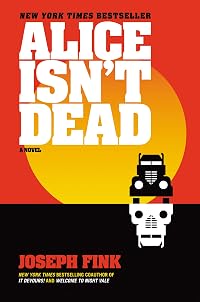
That truck/skull logo featured on the cover, though, is freaking amazing. I love it so much that, despite my mixed feelings about the story, I bought it on a t-shirt. show less
I had somewhat mixed feelings about the podcast, myself. From the beginning, there were things I show more really liked about it. The monsters are genuinely creepy and threatening and even compelling, in a disturbing sort of way. The weirdness is definitely to my taste. The idea that it was trying to say something about America through the medium of a fictional road trip was intriguing. And there were moments of really good, almost poetic insight.
But, I must confess, the shine wore off it a bit as it went along, for me. Even as I still rather liked it, I also got a bit tired of it. The plot went to a conspiracy-theory kind of place that didn't entirely work for me. And the ending felt anticlimactic, its commentary on political activism well-meaning but entirely too heavy-handed.
And I think I felt most of the same things about the novel. Well, more or less. The monsters maybe don't feel quite as creepy, meeting them for the second time, but the ending maybe feels less anticlimactic after three hundred pages of buildup rather than three years. The moments of poetic insight perhaps feel a bit muted, or maybe some of them just don't work quite as well on the page as they do delivered in Jasika Nicole's voice. I'm not sure. And, funnily enough, while the podcast felt to me like it dragged on just a little too long, the novel actually feels rather too fast, too compressed. Which just goes to show you how the sense of pacing can vary with the medium.
In the end, I'd say that both the podcast and the novel feel like they're grasping towards brilliance but not really making it there. The place they do make it to is interesting, but inevitably leaves me with the feeling that there's potential here that was never quite fulfilled.
That truck/skull logo featured on the cover, though, is freaking amazing. I love it so much that, despite my mixed feelings about the story, I bought it on a t-shirt. show less
The podcast “Alice Isn’t Dead” changed significantly over its run, with the second and third seasons showing a stronger focus on plot than the open-ended and frequently surreal debut. So of course, it was interesting to see Fink revisit the story and retell it as one cohesive whole. The result is a heartfelt, earnest and allegorical book about love, anxiety and the cruel social structures that bind the world. It’s a bit too direct and eager to progress the plot to ever be truly mysterious (notwithstanding that I already knew the broad strokes) but as a parable about relationships of all stripes and marriage in particular it rings heartwarmingly true.
I attempted the ‘Alice Isn’t Dead’ podcast, as someone recommended it and I’d enjoyed Welcome to Night Vale. However I only managed one episode because I have great difficulty concentrating on podcasts. I need something for my eyes and hands to do while absorbing words! (Knitting is useful for this purpose.) So I was pleased to discover that the podcast is also available in book format. Except, plot twist, the book is not the same as the podcast. This is noted in the afterword and surprised me, as the first chapter seemed like a transcription of the episode I listened to. ‘Alice Isn’t Dead’ has a somewhat twisty narrative that wasn’t quite what I expected. From Night Vale, I’d been hoping for some dark humour, but this show more did not materialise. The story begins as straight up horror, and is genuinely very creepy. Then it evolves into a simple yet effective political allegory, which I enjoyed a lot more. Also notable was the way that anxiety was presented, especially Keisha’s experiences of it. I liked the acknowledgement that living with anxiety can be terrible and incapacitating, but can also mean you’re filled with adrenaline and ready to fight when anything bad actually happens.
I have to go and catch a train, so have no time for more detail. Suffice it to say, I didn’t quite get what I’d expected from this book. The first half was a bit of a slog, but I liked the allegory and Alice and Keisha’s relationship. If you’re a horror fan, you’d very likely enjoy it more than I did. show less
I have to go and catch a train, so have no time for more detail. Suffice it to say, I didn’t quite get what I’d expected from this book. The first half was a bit of a slog, but I liked the allegory and Alice and Keisha’s relationship. If you’re a horror fan, you’d very likely enjoy it more than I did. show less
Members
- Recently Added By
Lists

Sexuality & Gender
160 works; 3 members

LGBTQ+ Speculative Fiction
821 works; 51 members

Kirkus Starred Fiction Reviews of Books Published in 2018
330 works; 3 members
Author Information

17+ Works 7,930 Members
Joseph Fink is a writer and editor. He is the co-owner of Commonplace Books and has two collections of short works. He and Jeffrey Cranor write the hit podcast and touring live show Welcome to Night Vale. It Devours!, is their second book. It was published in October 2017, and is a New York Times bestseller. (Bowker Author Biography)
Awards and Honors
Awards
Notable Lists
Work Relationships
Is an adaptation of
Common Knowledge
- Canonical title
- Alice Isn't Dead
- Original publication date
- 2018
- People/Characters
- Keisha Taylor; Alice Taylor; Sylvia Parker; Thistle Man
- Important places
- Victorville, California, USA
- Dedication
- To Meg, who took this road trip with me. And to Jasika and Jon, who made it possible for me to share it.
- First words
- Keisha Taylor settled back into the booth and tried to enjoy her turkey club.
- Last words
- (Click to show. Warning: May contain spoilers.)Focusing in on smaller time spans, they can stand invisibly in a study room when a college student named Keisha saw a college student named Alice, thought about her plan to be single, and then thought: Well, shit.
Classifications
Statistics
- Members
- 700
- Popularity
- 40,829
- Reviews
- 27
- Rating
- (3.54)
- Languages
- English
- Media
- Paper, Audiobook, Ebook
- ISBNs
- 16
- ASINs
- 6