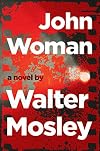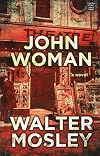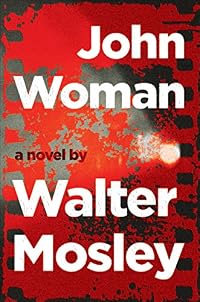
John Woman
by Walter Mosley
On This Page
Description
A convention-defying novel by bestselling writer Walter Mosley, John Woman recounts the transformation of an unassuming boy named Cornelius Jones into John Woman, an unconventional history professor-while the legacy of a hideous crime lurks in the shadows.At twelve years old, Cornelius, the son of an Italian-American woman and an older black man from Mississippi named Herman, secretly takes over his father's job at a silent film theater in New York's East Village. Five years later, as show more Herman lives out his last days, he shares his wisdom with his son, explaining that the person who controls the narrative of history controls their own fate. After his father dies and his mother disappears, Cornelius sets about reinventing himself-as Professor John Woman, a man who will spread Herman's teachings into the classrooms of his unorthodox southwestern university and beyond. But there are other individuals who are attempting to influence the narrative of John Woman, and who might know something about the facts of his hidden past.
Engaging with some of the most provocative ideas of recent intellectual history, John Woman is a compulsively readable, deliciously unexpected novel about the way we tell stories, and whether the stories we tell have the power to change the world.
. show less
Tags
Recommendations


Member Reviews
This is one of the most deeply aggravating novels I've ever read. The characters are unbelievable, the story line ridiculous, the action implausible, the relationships between men and women misogynistic and frequently repulsive. The hoped-for scenes of denouement come and go without resolution: after many pages of anticipation of a big show-down, two antagonistic characters finally meet and nothing happens. Over and over again.
Why am I giving it 5 stars? Well honestly it could have been 1 star just as easily except for this: I've decided to take a leap of faith with Walter Mosley.
I've decided to think, for instance, that when he writes a misogynistic scene it's for a purpose other than revolting me. It is a big leap to make, and I show more understand if other readers can't quite see the other side of the chasm.
But let's just say for now that this masterful storyteller isn't just blowing off steam, writing a quickie because he has nothing better to write. Let's say every sentence here is purposeful, up to and including when a prostitute says to her john the most limp and clichéd line possible: "I'm just a whore." Let go of your judgmental thoughts, and also, notice that a good third of the dialog in this novel consists of historiographical meanderings all leading to the conclusion that stories, even true ones, even what we call history, are imaginary constructs, made up by the powerful to take away even more power from the weak.
Let's say you start applying these historiographical meanderings to the story you're reading here on the page. Interesting things start to happen.
For instance you learn the whore has a day job and all sorts of other lives and she knows that about herself even when the narrator in a previous chapter made her say "I'm just a whore."
You learn that the protagonist, John Woman, who has been presented as having agency and as the hero of this story, is actually a pawn in a rich white man's cultish game.
There are many other mind tricks and challenges being thrown at the reader here, all at once, and the act of reading and interpreting the story demonstrates very literally the core thesis, that there is no truth, no cause-and-effect, no matter how we search for it, or try to make our own connections in this story.
You might hate it. It could be I'm just making this all up. But that, too, would turn back to the core philosophical thesis that threads through this entire novel. Is Cy Twombly's art a scribble on the canvas, or something deeper? Is this book stoopid pig slop, or is it a way into thinking about the nature of storytelling, and truth, and the uses of history?
I'll be thinking about this for a long time. show less
Why am I giving it 5 stars? Well honestly it could have been 1 star just as easily except for this: I've decided to take a leap of faith with Walter Mosley.
I've decided to think, for instance, that when he writes a misogynistic scene it's for a purpose other than revolting me. It is a big leap to make, and I show more understand if other readers can't quite see the other side of the chasm.
But let's just say for now that this masterful storyteller isn't just blowing off steam, writing a quickie because he has nothing better to write. Let's say every sentence here is purposeful, up to and including when a prostitute says to her john the most limp and clichéd line possible: "I'm just a whore." Let go of your judgmental thoughts, and also, notice that a good third of the dialog in this novel consists of historiographical meanderings all leading to the conclusion that stories, even true ones, even what we call history, are imaginary constructs, made up by the powerful to take away even more power from the weak.
Let's say you start applying these historiographical meanderings to the story you're reading here on the page. Interesting things start to happen.
For instance you learn the whore has a day job and all sorts of other lives and she knows that about herself even when the narrator in a previous chapter made her say "I'm just a whore."
You learn that the protagonist, John Woman, who has been presented as having agency and as the hero of this story, is actually a pawn in a rich white man's cultish game.
There are many other mind tricks and challenges being thrown at the reader here, all at once, and the act of reading and interpreting the story demonstrates very literally the core thesis, that there is no truth, no cause-and-effect, no matter how we search for it, or try to make our own connections in this story.
You might hate it. It could be I'm just making this all up. But that, too, would turn back to the core philosophical thesis that threads through this entire novel. Is Cy Twombly's art a scribble on the canvas, or something deeper? Is this book stoopid pig slop, or is it a way into thinking about the nature of storytelling, and truth, and the uses of history?
I'll be thinking about this for a long time. show less
Its not often I rate a book 5 stars, nor do I take it lightly. An avid reader like most on this site, I stumbled across this book at the library while browsing "New Fiction". Unfamiliar with Walter Mosley, I read the liner notes and was captured. In ways its difficult to put into words how extraordinary this author is with respect to what he's accomplished. Its not everyday we read a story about a child raised by a brilliant father who's self taught, reading included and then track the child as he grows, changes identities and becomes a professor under an assumed name. The more the story unfolds, the more profound it is, as is the author's mastery of the English language, his insights unlike any. John Woman, the embodiment of show more alternative thought touches on points that cause us to think, which is his purpose and I believe, the purpose of this story. A master of plot points, characters of depth, and unexpected twists, this is a masterpiece. I put this book at #1 on my list, and for those who seek the unique, you may as well. Bravo Walter Mosley, bravo! show less
JOHN WOMAN is vintage Walter Mosley and more. This is an inspiring, dark, convoluted, and quirky story that traces the life choices of Cornelius “CC” Jones and his transformation into John Woman, a truly unconventional history teacher. He is the son of an Italian-American mother and Herman Jones, an amazingly well-read and deeply philosophical black man, who lives out his final days instructing CC in the true power, use, and misuse of history. To keep the family financially afloat, CC takes over his father’s job as a movie theater projectionist, which propels the young man into committing an unspeakable crime. To escape this world and the law, CC disappears and reinvents himself as professor John Woman, imparting his father’s show more teachings to his both willing and unwilling students. Always looking over his shoulder, he attempts to sidestep his sordid past while protecting his career from those who find him a bit too controversial. The writing is, as always with Mosley, gritty and poetic and the characters richly nuanced.
DP Lyle, award-winning author of the Jake Longly thriller series show less
DP Lyle, award-winning author of the Jake Longly thriller series show less
When I was in college, one of my professors handed out the text of a very old newspaper article about a violent mob that rioted and how the army restored peace. It made it abundantly clear that the fault lay with the mob and sure enough, in time, the soldiers who fired on the rioters were acquitted. It was the Incident on King Street, something we call the Boston Massacre and describe very differently. It was an early example of how history is not just facts, but facts seen through different lenses depending on the viewer. That idea is the central theme of John Woman, a bold and engaging new novel from Walter Mosley.
Mosley is best known for his Easy Rawlins series of noir mysteries but has also written several stand-alone novels and show more nonfiction books. He is a public intellectual who has, in John Woman, married his fiction to his passion for history and historiography. The book introduces us to the child Cornelius. Growing up, Cornelius reads history and philosophy books to his father, becoming deeply steeped in history and in his father’s wise understanding of the power of narrative. This understanding of narrative helps him when he commits a crime to protect his father and himself. It guides him in reinventing himself as John Woman after his father dies at the end of Part One.
Much of the story is his struggle with other historians on the faculty where he worked and his exploration of history. He also has relationships with two women though no one would ever call those relationships love affairs. His lectures sometimes go viral and someone knows who he is as he receives a few vaguely threatening letters to Cornelius.
The university where he works is associated with a powerful cult-like group with a noble mission of saving humanity from its worse impulses. They aid John Woman a lot, seeing in him a potential asset, but who then is writing the narrative?
John Woman is fascinating for lovers of history. John Woman deconstructs history as a challenge to think for ourselves, to realize we must control our narrative. Some of his conflict with fellow history professors is they misunderstand his message. He’s not erasing history, he is expanding history. He’s taking the commonplace idea that history is written by the winners and suggesting a truer history is written by everyone.
The plot is a bit contrived with some all-powerful people intervening in unlikely ways, though considering the cult of Scientology and its overweening regulation of its members, I guess the Platinum Path is not completely unrealistic. They are the least interesting part of the book and other than as a plot device to move things along, I would happily see them gone from the book. John Woman is far more interesting as a person than as a pawn.
I liked John Woman a lot, but then, isn’t everything Walter Mosley writes excellent?
John Woman will be released September 4th. I received an e-galley from the publisher through Edelweiss.
John Woman at Grove Atlantic
Walter Mosley author site
★★★★
https://tonstantweaderreviews.wordpress.com/2018/08/12/9780802128416/ show less
Mosley is best known for his Easy Rawlins series of noir mysteries but has also written several stand-alone novels and show more nonfiction books. He is a public intellectual who has, in John Woman, married his fiction to his passion for history and historiography. The book introduces us to the child Cornelius. Growing up, Cornelius reads history and philosophy books to his father, becoming deeply steeped in history and in his father’s wise understanding of the power of narrative. This understanding of narrative helps him when he commits a crime to protect his father and himself. It guides him in reinventing himself as John Woman after his father dies at the end of Part One.
Much of the story is his struggle with other historians on the faculty where he worked and his exploration of history. He also has relationships with two women though no one would ever call those relationships love affairs. His lectures sometimes go viral and someone knows who he is as he receives a few vaguely threatening letters to Cornelius.
The university where he works is associated with a powerful cult-like group with a noble mission of saving humanity from its worse impulses. They aid John Woman a lot, seeing in him a potential asset, but who then is writing the narrative?
John Woman is fascinating for lovers of history. John Woman deconstructs history as a challenge to think for ourselves, to realize we must control our narrative. Some of his conflict with fellow history professors is they misunderstand his message. He’s not erasing history, he is expanding history. He’s taking the commonplace idea that history is written by the winners and suggesting a truer history is written by everyone.
The plot is a bit contrived with some all-powerful people intervening in unlikely ways, though considering the cult of Scientology and its overweening regulation of its members, I guess the Platinum Path is not completely unrealistic. They are the least interesting part of the book and other than as a plot device to move things along, I would happily see them gone from the book. John Woman is far more interesting as a person than as a pawn.
I liked John Woman a lot, but then, isn’t everything Walter Mosley writes excellent?
John Woman will be released September 4th. I received an e-galley from the publisher through Edelweiss.
John Woman at Grove Atlantic
Walter Mosley author site
★★★★
https://tonstantweaderreviews.wordpress.com/2018/08/12/9780802128416/ show less
I can't remember the last time I gave a book one star, and I can't believe I'm doing it to Walter Mosley, but I found much of the writing in this book unforgivable. I can get past the professor-student sex because I don't sense any power imbalance or coercion in the relationship, and in his B&D fixations, John Woman is always the B. In theory, I like many of the threads in this book - the crime plot, the examination of the practice of history, the protagonist's complicated relationship with truth. The first 80 pages covering his childhood were fine, but after that, so much went sour for me.
Among my aggravations: The female characters were wooden puppets; John Woman's much ballyhoo'ed genius as a historian and teacher were nowhere in show more evidence; his supposedly brilliant lectures were either tedious, or unrealistic Socratic dialogues, with students asking perfectly positioned questions (only Plato can get away with this); the cult thread was simultaneously grandiose and threadbare. So that's for starters.
But most unforgivable of all is the writing. There were some great moments, but they were few and far between. Mosley has a bizarre habit of giving a brief inventory (not description) of what a character is wearing whenever they make an appearance - it happens continually, and rarely adds anything to an understanding of the character. They felt like non-sequiturs to me, and after a while, almost laughable. What was Mosley thinking???? John Woman's pedantic speaking voice was so overdone that I was developing eye roll fatigue. In fact, in one snippet of dialogue, I think even Mosley was making fun of him:
“If you didn’t tell him then who did?” Colette asked.
“You knew I became a history professor.”
“So what?”
“In the modern world history is contained almost completely in language. Other modes of recording exist but the written word is still the accepted way to pass on knowledge.”
“Okay. So?”
“In your journal you recorded that you loved me and that I was Chris’ father.”
“Oh….shit.”
Mosley also makes it a point to describe the exact skin color of each non-white character. While this also stilts the writing, I can see more of a point here - if you're going to describe someone's skin color, then do it, don't resort to race categories and all the historical baggage they carry.
When the writing did work for me, it was wonderful though, as in this passage, where John compares himself to the father he revered, the self-taught Herman:
“John read the same books as Herman, had tried his best to disappear into stories that were both true and indecipherable. But rather than a king in exile he’d become a kind of Tallyrand agitating between the ruling classes, the workers and the revolutionists. Where Herman had been heroic John was just a scarecrow, forgotten in a barren field that had once been flush and fruitful.” show less
Among my aggravations: The female characters were wooden puppets; John Woman's much ballyhoo'ed genius as a historian and teacher were nowhere in show more evidence; his supposedly brilliant lectures were either tedious, or unrealistic Socratic dialogues, with students asking perfectly positioned questions (only Plato can get away with this); the cult thread was simultaneously grandiose and threadbare. So that's for starters.
But most unforgivable of all is the writing. There were some great moments, but they were few and far between. Mosley has a bizarre habit of giving a brief inventory (not description) of what a character is wearing whenever they make an appearance - it happens continually, and rarely adds anything to an understanding of the character. They felt like non-sequiturs to me, and after a while, almost laughable. What was Mosley thinking???? John Woman's pedantic speaking voice was so overdone that I was developing eye roll fatigue. In fact, in one snippet of dialogue, I think even Mosley was making fun of him:
“If you didn’t tell him then who did?” Colette asked.
“You knew I became a history professor.”
“So what?”
“In the modern world history is contained almost completely in language. Other modes of recording exist but the written word is still the accepted way to pass on knowledge.”
“Okay. So?”
“In your journal you recorded that you loved me and that I was Chris’ father.”
“Oh….shit.”
Mosley also makes it a point to describe the exact skin color of each non-white character. While this also stilts the writing, I can see more of a point here - if you're going to describe someone's skin color, then do it, don't resort to race categories and all the historical baggage they carry.
When the writing did work for me, it was wonderful though, as in this passage, where John compares himself to the father he revered, the self-taught Herman:
“John read the same books as Herman, had tried his best to disappear into stories that were both true and indecipherable. But rather than a king in exile he’d become a kind of Tallyrand agitating between the ruling classes, the workers and the revolutionists. Where Herman had been heroic John was just a scarecrow, forgotten in a barren field that had once been flush and fruitful.” show less
A remarkable accomplishment by Walter Mosley, which unfortunately will not appeal to many readers because of the weird discourses within. Almost certainly an ode to his own father, we follow the life of Cornelius (CC) Jones, who basically supports his ailing father Herman by taking over his job as projectionist in an old movie theater. He rushes through school, where he has no friends, to run the movies and be educated by his self-taught father, studying the great books of history and philosophy. Abandoned by his mother, who has run off with a mafioso, Cornelius eventually kills the theater owner when he fires Herman/CC. The lead policewoman investigator and CC start a sexual relationship. When Herman gets sick, she helps bring him home show more and he imparts final wisdom to CC. One of his gifts is a large sun of money from the ticket-taker, who has been skimming for years, which allow CC to start life anew. We next see CC as Professor John Woman, teaching unorthodox thoughts in history at a small liberal arts school, where he is loved by students and hated by his department colleagues. Eventually, his past catches up with him. A marked departure from his other series, this novel is a thoughtful, erudite story of a young man's journey to self-enlightenment. 3.5 stars, rounded up. show less
What a thought provoking book. Is history as we think we know it true? The question is much more complex than what I've just simply stated and honestly I'm not sure I always understood all the points that were being made. So the book has this philosophical bent but then complex characters and an underlying interesting plot so it hits all the bases. So well done and there could be a lot of discussion on what really happened at the end.
Members
- Recently Added By
Lists

Library TBR
64 works; 1 member
Author Information

105+ Works 26,576 Members
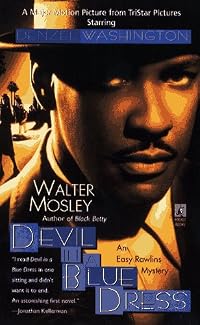
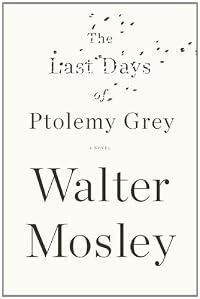
Walter Mosley was born in Los Angeles, California on January 12, 1952. He graduated from Johnson State College in Vermont. His first book, Devil in a Blue Dress, was published in 1990, won a John Creasy Award for best first novel, and was made into a motion picture starring Denzel Washington in 1995. He is the author of the Easy Rawlins Mystery show more series, the Leonid McGill Mystery series, and the Fearless Jones series. His other works include Always Outnumbered, Always Outgunned, 47, Last Days of Ptolemy Grey, and Twelve Steps toward Political Revelation. He has received numerous awards, including an O. Henry Award, the Carl Brandon Society Parallax Award, and PEN America's Lifetime Achievement Award. (Bowker Author Biography) Walter Mosley is the author of the acclaimed Easy Rawlins series of mysteries, the novels "Blue Light" and "RL's Dream", and two collections of stories featuring Socrates Fortlow, "Always Outnumbered", "Always Outgunned", for which he received the Anisfield-Wolf Award, and "Walkin' the Dog". He is a member of the board of directors of the National Book Awards and the founder of the PEN American Center's Open Book Committee. At various times in his life he has been a potter, a computer programmer, & a poet. He was born in Los Angeles & now lives in New York. (Publisher Provided) show less
Awards and Honors
Classifications
Statistics
- Members
- 181
- Popularity
- 179,310
- Reviews
- 9
- Rating
- (3.91)
- Languages
- English
- Media
- Paper, Audiobook, Ebook
- ISBNs
- 14
- ASINs
- 2