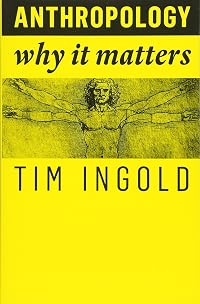
Anthropology: Why It Matters
by Tim Ingold
On This Page
Description
Humanity is at a crossroads. We face mounting inequality, escalating political violence, warring fundamentalisms and an environmental crisis of planetary proportions. How can we fashion a world that has room for everyone, for generations to come? What are the possibilities, in such a world, of collective human life? These are urgent questions, and no discipline is better placed to address them than anthropology. It does so by bringing to bear the wisdom and experience of people everywhere, show more whatever their backgrounds and walks of life. In this passionately argued book, Tim Ingold relates how a field of study once committed to ideals of progress collapsed amidst the ruins of war and colonialism, only to be reborn as a discipline of hope, destined to take centre stage in debating the most pressing intellectual, ethical and political issues of our time. He shows why anthropology matters to us all. Introducing Polity's Why It Matters series: In these short and lively books, world-leading thinkers make the case for the importance of their subjects and aim to inspire a new generation of students. show lessTags
Recommendations




























Member Reviews
I expected this little book to tell me something about human history, and why the study matters. I was surprised to find it hardly addresses this at all.
The book is short, at only about 130 pages. Most of it is spent expounding upon and lamenting about the in-fighting between various branches of anthropological studies. The book is more of an admonishment toward scholars, and perhaps a plea for unity in this field. It's really not a book that offers much to those of us outside this branch of academia.
Still, there are a few interesting nuggets of information. And it does hold appeal for anyone who wants a brief history of this field of study.
*I received a review copy from the publisher, via Amazon Vine.*
The book is short, at only about 130 pages. Most of it is spent expounding upon and lamenting about the in-fighting between various branches of anthropological studies. The book is more of an admonishment toward scholars, and perhaps a plea for unity in this field. It's really not a book that offers much to those of us outside this branch of academia.
Still, there are a few interesting nuggets of information. And it does hold appeal for anyone who wants a brief history of this field of study.
*I received a review copy from the publisher, via Amazon Vine.*
This is a very short book, and it is more about "What is Anthropology" than "Why it Matters". The answer being, there is no real agreement, but the author does tell you his view on it. Early on he comes dangerously close to treating anecdotes as empirical evidence, but he does successfully make the case for why Anthropology cannot follow the same form as natural sciences like Physics, Chemistry, or even Biology. This is a reasonable discussion, though a bit short, and so the amount of value one can get from it is a bit limited.
Ratings
Members
- Recently Added By
Author Information

37+ Works 911 Members
Tim Ingold is Emeritus Professor of Social Anthropology at the University of Aberdeen, UK. He is the author of many books, including Lines, Making, Imagining for Real and Being Alive.
Classifications
- Genres
- Anthropology, Nonfiction, Philosophy, Science & Nature
- DDC/MDS
- 301.01 — Society, government, & culture Social sciences, sociology & anthropology Sociology and anthropology standard subdivisions of sociology and/or anthropology Philosophy and theory
- LCC
- GN345 .I3726 — Geography, Anthropology and Recreation Anthropology Anthropology Ethnology. Social and cultural anthropology
- BISAC
Statistics
- Members
- 57
- Popularity
- 539,733
- Reviews
- 2
- Rating
- (3.42)
- Languages
- English, Portuguese, Spanish
- Media
- Paper, Ebook
- ISBNs
- 5
- ASINs
- 1