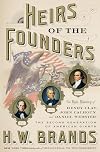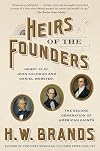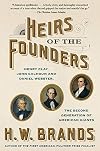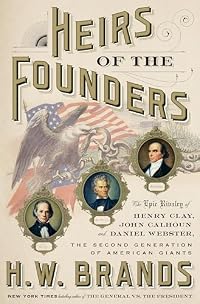
Heirs of the Founders: The Epic Rivalry of Henry Clay, John Calhoun, and Daniel Webster, the Second Generation of American Giants
by H. W. Brands
On This Page
Description
"From New York Times bestselling historian H. W. Brands comes the riveting story of how America's second generation of political giants--Henry Clay, Daniel Webster, and John Calhoun--battled to complete the unfinished work of the Founding Fathers and decide the shape of our democracy. In the early days of the nineteenth century, three young men strode onto the national stage, elected to Congress at a moment when the Founding Fathers were beginning to retire to their farms. Daniel Webster of show more Massachusetts, a champion orator known for his eloquence, spoke for the North and its business class. Henry Clay of Kentucky, as dashing as he was ambitious, embodied the hopes of the rising West. South Carolina's John Calhoun, with piercing eyes and an even more piercing intellect, defended the South and slavery. Together this second generation of American founders took the country to war, battled one another for the presidency, and tasked themselves with finishing the work the Founders had left undone. Above all, they sought to remedy the two glaring flaws in the Constitution: its fudge on where authority ultimately rested, with the states or the nation; and its unwillingness to address the essential incompatibility of republicanism and slavery. They wrestled with these issues for four decades, arguing bitterly and hammering out political compromises that held the union together, but only just. Then, in 1850, when California moved to join the union as a free state, "the three great men of America" had one last chance to save the country from the real risk of civil war. But by then they were never further apart. Thrillingly and authoritatively, H. W. Brands narrates the little-known drama of the dangerous early years of our democracy"-- show lessTags
Recommendations










Member Reviews
Plus ça change, plus c'est la même chose. Nothing illustrates the accuracy of that 1849 epigram by Jean-Baptiste Alphonse Karr better than Heirs of the Founders. There were those early 19th century statesmen who lamented loyalty to party over loyalty to nation and the damage done to the nation as a result. There were those who agitated against what they perceived as “Federal overreach” which infringed upon sacred “states' rights.” Meanwhile, a goodly portion of the voting populace could be counted on to support a populist war hero over an arguably more qualified statesperson for the highest elective office in the land. Obviously, nothing of significance has changed from the 19th to the 21st century.
Of course, Heirs does more show more than confirm the truism that human nature can be frustratingly consistent over the centuries. I came away from having read it with a more than marginally better understanding of the social, political and economic history of my native country over the first half of the 19th century. From my public school textbook of sixty years ago, I knew that we had fought the British during something called the War of 1812, but if that book explained why we initiated that war – and how very near we came to losing it – the explanation had dissipated over the ensuing years. Heirs explains it quite clearly.
Also vanished from memory, if indeed it was ever there, was the deleterious impact that the protectionist tariff of 1828 had on North and South sectional animosity. If I had ever known that South Carolina was on the verge of secession fully thirty years before outbreak of the Civil War and that Congress passed the “force act” authorizing President Andrew Jackson to use military force against the state if necessary to preserve the Union, I was innocent of that knowledge until Heirs awakened it.
What I wish to emphasize is that Heirs is more than a political biography of Henry Clay, John Calhoun, and Daniel Webster, influential as they were in the nation's political landscape. It is an informative account of a tumultuous period of United States history, although, to return to the introductory epigram, what period has not had its share of tumult? Plus ça change....
For its content, Heirs of the Founders is surely deserving of a five-star rating. The four that I have perhaps vaingloriously assigned indicate only that I occasionally bogged down a bit during the presentation of that content. In no way am I implying that Brands is either plodding or pedantic; he is certainly a better writer than that. Still, there were moments that I felt the prose could have been somewhat more – what word do I want? – innovative perhaps, or stylistically inspiring or invigorating. Still, if one measures the quality of a book by the knowledge and understanding that is gained from it, then Brands' oeuvre is assuredly worth the time spent reading it. show less
Of course, Heirs does more show more than confirm the truism that human nature can be frustratingly consistent over the centuries. I came away from having read it with a more than marginally better understanding of the social, political and economic history of my native country over the first half of the 19th century. From my public school textbook of sixty years ago, I knew that we had fought the British during something called the War of 1812, but if that book explained why we initiated that war – and how very near we came to losing it – the explanation had dissipated over the ensuing years. Heirs explains it quite clearly.
Also vanished from memory, if indeed it was ever there, was the deleterious impact that the protectionist tariff of 1828 had on North and South sectional animosity. If I had ever known that South Carolina was on the verge of secession fully thirty years before outbreak of the Civil War and that Congress passed the “force act” authorizing President Andrew Jackson to use military force against the state if necessary to preserve the Union, I was innocent of that knowledge until Heirs awakened it.
What I wish to emphasize is that Heirs is more than a political biography of Henry Clay, John Calhoun, and Daniel Webster, influential as they were in the nation's political landscape. It is an informative account of a tumultuous period of United States history, although, to return to the introductory epigram, what period has not had its share of tumult? Plus ça change....
For its content, Heirs of the Founders is surely deserving of a five-star rating. The four that I have perhaps vaingloriously assigned indicate only that I occasionally bogged down a bit during the presentation of that content. In no way am I implying that Brands is either plodding or pedantic; he is certainly a better writer than that. Still, there were moments that I felt the prose could have been somewhat more – what word do I want? – innovative perhaps, or stylistically inspiring or invigorating. Still, if one measures the quality of a book by the knowledge and understanding that is gained from it, then Brands' oeuvre is assuredly worth the time spent reading it. show less
The period from 1815 to 1825 is often referred to (sometimes ironically) in American history as the “Era of Good Feelings.” Maybe. But the next 35 years were anything but. The interim between James Monroe’s presidency and the Civil War was marked by extreme sectional division over many political issues, including protectionism v. free trade; annexation of new territories (Texas, California, and Oregon); and state nullification of federal law. But lurking behind these controversies was the overarching problem of slavery.
The Constitution of 1789 never explicitly mentioned slavery, but that institution was entrenched and enshrined in the very marrow and character of the southern states. The Missouri Compromise of 1820, engineered show more largely by Henry Clay, temporarily settled the issue of where slavery would be permitted in the United States, establishing the Mason-Dixon Line as the boundary between free and slave states. But as a result of the Mexican War of 1846-48, the United States greatly expanded its territory to include Texas, California, and what is now Arizona, Nevada, and New Mexico. As new states were to be admitted to the Union, would they be free or slave-holding?
H. W. Brands tells the story of a somewhat neglected period of American history in Heirs of the Founders. The subtitle of the book names the three towering figures that dominated the political arena during the period between the last of the Founding Fathers and the Civil War: Henry Clay of Kentucky; John C. Calhoun of South Carolina; and Daniel Webster of Massachusetts. Curiously, although the three came to be known as the “great triumvirate” and each of them sought the presidency to one degree or another, none of them ever achieved it.
Webster was an unsurpassed orator who forcefully advocated for the northern or free states interests on the floor of both the Senate and the House; Calhoun was the most formidable expounder of southern or slave state positions; and Clay was the man most responsible for working out various compromises that held the Union together for 40 years. But in the last of these agreements, the Compromise of 1850, the slave states achieved nearly all they had advocated. Even Webster accepted the expansion of slavery into new states, chastised the North for not cooperating in returning fugitive slaves to their southern masters, and criticized abolitionists and “extremists” for hurting their own cause. Nevertheless, the Compromise lasted only 10 years.
All three of the triumvirate had died by the outbreak of the Civil War in 1860. Calhoun surely would have supported the South’s secession. Webster probably would have supported the North’s military action to prevent the dissolution of the Union. And Clay would have striven mightily, but most likely unsuccessfully, to preserve the Union.
Brands’ book is part pure history, part biography. Because it deals perceptively with the issue of the extent of federal power and other sectional and ideological debates, it is surprisingly timely.
(JAB) show less
The Constitution of 1789 never explicitly mentioned slavery, but that institution was entrenched and enshrined in the very marrow and character of the southern states. The Missouri Compromise of 1820, engineered show more largely by Henry Clay, temporarily settled the issue of where slavery would be permitted in the United States, establishing the Mason-Dixon Line as the boundary between free and slave states. But as a result of the Mexican War of 1846-48, the United States greatly expanded its territory to include Texas, California, and what is now Arizona, Nevada, and New Mexico. As new states were to be admitted to the Union, would they be free or slave-holding?
H. W. Brands tells the story of a somewhat neglected period of American history in Heirs of the Founders. The subtitle of the book names the three towering figures that dominated the political arena during the period between the last of the Founding Fathers and the Civil War: Henry Clay of Kentucky; John C. Calhoun of South Carolina; and Daniel Webster of Massachusetts. Curiously, although the three came to be known as the “great triumvirate” and each of them sought the presidency to one degree or another, none of them ever achieved it.
Webster was an unsurpassed orator who forcefully advocated for the northern or free states interests on the floor of both the Senate and the House; Calhoun was the most formidable expounder of southern or slave state positions; and Clay was the man most responsible for working out various compromises that held the Union together for 40 years. But in the last of these agreements, the Compromise of 1850, the slave states achieved nearly all they had advocated. Even Webster accepted the expansion of slavery into new states, chastised the North for not cooperating in returning fugitive slaves to their southern masters, and criticized abolitionists and “extremists” for hurting their own cause. Nevertheless, the Compromise lasted only 10 years.
All three of the triumvirate had died by the outbreak of the Civil War in 1860. Calhoun surely would have supported the South’s secession. Webster probably would have supported the North’s military action to prevent the dissolution of the Union. And Clay would have striven mightily, but most likely unsuccessfully, to preserve the Union.
Brands’ book is part pure history, part biography. Because it deals perceptively with the issue of the extent of federal power and other sectional and ideological debates, it is surprisingly timely.
(JAB) show less
A great, must-read history of an overlooked period in American history: the decades leading up the Civil War, as both America's size and its sectional tensions grew steadily. Brands focuses his story on the three giants of the time, who died within a short time of each other: Daniel Webster, the eloquent Massachusetts orator; John Calhoun, the fiery South Carolina slaveholder; and Henry Clay, the Kentucky moderate. (Other giants of the era, half a generation older, also play prominent roles: Andrew Jackson and John Quincy Adams.) Clay plays the largest role, as indeed he did at the time, as a three-time presidential candidate and the dominant intellectual figure in the Whig Party. Calhoun serves as an antagonist, increasingly show more championing secession and moving sentiment in the South from a reluctant to a full-throated defense of slavery.
Though the issues are different than the ones we deal with today, and the political system quite different, the more general questions that Clay, Webster and Calhoun wrestled with — when to hold firm and when to compromise, and how to balance particular interests against the common good — remain with us today. Many of the quotes from the speeches that Brands quotes at length in this book remain almost as relevant in the 21st Century as they were in the 19th.
My criticisms as only quibbles: Brands sometimes isn't very clear about dates, leaving the reader struggling to position the debates he's describing in time. Large parts of the book are simply extended quotations, with moderate context, from one observer or another of the events in question — rather than a more rigorous narrative that cuts back and forth between different perspectives (though he does this, too, for some sections). But I still highly recommend this to anyone interested in American history, especially those whose knowledge of events in between the Early Republic and the Civil War is somewhat spotty. I probably know more than most Americans about that period but I still learned a lot (perhaps most notably about Webster's great address in the Webster-Hayne debate, which had long-since ceased to be a staple of public education by the time I was in school).
Excellent and essential. show less
Though the issues are different than the ones we deal with today, and the political system quite different, the more general questions that Clay, Webster and Calhoun wrestled with — when to hold firm and when to compromise, and how to balance particular interests against the common good — remain with us today. Many of the quotes from the speeches that Brands quotes at length in this book remain almost as relevant in the 21st Century as they were in the 19th.
My criticisms as only quibbles: Brands sometimes isn't very clear about dates, leaving the reader struggling to position the debates he's describing in time. Large parts of the book are simply extended quotations, with moderate context, from one observer or another of the events in question — rather than a more rigorous narrative that cuts back and forth between different perspectives (though he does this, too, for some sections). But I still highly recommend this to anyone interested in American history, especially those whose knowledge of events in between the Early Republic and the Civil War is somewhat spotty. I probably know more than most Americans about that period but I still learned a lot (perhaps most notably about Webster's great address in the Webster-Hayne debate, which had long-since ceased to be a staple of public education by the time I was in school).
Excellent and essential. show less
I found the analysis of several aspects of American history in this book very interesting. I enjoyed learning about the political views and perspectives of Calhoun, Webster, and Clay very interesting. While Webster made one of the most famous speeches in US history (the book calls it the most famous, but I think that’s the Gettysburg Address), I think Clay left the most lasting legacy. Webster’s most famous speech culminates in “liberty and union, one and inseparable, now and forever!” The book calls this the most famous speech in U.S. history, although I think that’s the Gettysburg Address. But Clay is best known for the Compromise of 1850. Among other things, it admitted California to the U.S. as a free state, and during the show more Civil War, the North was able to finance its war expenditures by selling bonds backed by the gold from California, and because the bonds were backed by gold, they were more marketable in Europe. The Compromise of 1850 delayed the onset of the Civil War by a decade, allowing time for the North to strengthen and solidify its industrial base as well as its population base, ultimately allowing it to win the Civil War – which might not have happened had it come a decade earlier.
In addition, I found the book’s analysis of the dynamics of slavery in the antebellum United States was just as interesting. While I had read about how the cotton gin influenced the spread of slavery, I hadn’t really thought about how the 1808 constitutional ban on the importation of new slaves affected the dynamics of slavery in the South. The way the Framers approached slavery was based on the premise that it was a dying institution. Tobacco is extremely hard on the soil, and by the time the Constitution was being written most of the tobacco plantations in Virginia and the Carolinas were in severe decline because of the exhaustion of the soil. The only other crop of commercial importance was long-staple cotton, which was easier on the soil but could only grow well near the coast. Short-staple cotton, which has a broader range, has a large number of sticky seeds mixed in the bolls, and before the cotton gin was invented, the seeds would have to have been removed by hand, one by one. It was simply not feasible to grow short-staple cotton commercially. The Framers thus expected slavery to eventually collapse in the South as well, especially after the 1808 ban on importation went into effect.
Enter the cotton gin, invented shortly after the Constitution and Bill of Rights were ratified, which could mechanically remove the seeds from short-staple cotton. All of the sudden, it became economically feasible to grow short-staple cotton both for domestic consumption and for export, at least in a slave-based economy. Short-staple cotton could grow throughout the South, and as the United States expanded west, more southern land became available for short-staple cotton cultivation, and this increased the demand for slaves. This increased demand could not be met by importation because of the 1808 ban. Part of the demand in Alabama, Mississippi, Louisiana, Missouri, and Arkansas was met by procreation among slaves the new planters took with them. However, the primary way of meeting demand was by importing slaves from the plantations along the Atlantic coast. Many of the coastal plantations could not compete with the plantations in the Deep South, where land was not only cheaper but the soil had not been exhausted by tobacco cultivation. In fact, if field crops had been the only exports of the coastal plantations, most of them would have failed as going concerns. If this had been the end of the story, both the plantation owners and the broader populations of the southern coastal states would have lost interest in slavery altogether, and the course of American history would been dramatically altered. But the owners of these plantations soon discovered they had something the Deep South plantations did not – slaves. By selling their slaves to plantations in the Deep South, the coastal plantations managed to stay commercially viable. And, “the demand for slaves was insatiable. It drove prices to record levels, until slaves became the most valuable asset of Southern planters, more valuable than the planters’ land.” (Pages 283-284). It is estimated that by the time the Civil War was over, the South had lost well over a billion dollars’ worth of equity in slaves alone.
But the coastal plantations could only remain viable as long as they could sell slaves at high prices; once the market for slaves in the Deep South became saturated, prices would fall, and the coastal plantations would fail. Access to new slave states and territories was thus imperative for the coastal plantations – whether in Texas, other land acquired in the Mexican cession, or even in the West Indies. But even within the South there were tensions surrounding slavery, with Eastern slave states deeply opposed to repealing the 1808 importation ban and Gulf and Western slave states equally in favor of repealing it. Because of their higher populations, the Eastern slave states won, but the tensions remained.
Meanwhile, slavery had already collapsed of its own weight in the North, and so the North rapidly industrialized, because the saving of labor had far greater appeal there than in the slave-based economy of the South. This industrialization enabled mass production and made it easier for the North to win the Civil War; while materiel alone can’t win a war, the lack of it can most certainly lose one. show less
In addition, I found the book’s analysis of the dynamics of slavery in the antebellum United States was just as interesting. While I had read about how the cotton gin influenced the spread of slavery, I hadn’t really thought about how the 1808 constitutional ban on the importation of new slaves affected the dynamics of slavery in the South. The way the Framers approached slavery was based on the premise that it was a dying institution. Tobacco is extremely hard on the soil, and by the time the Constitution was being written most of the tobacco plantations in Virginia and the Carolinas were in severe decline because of the exhaustion of the soil. The only other crop of commercial importance was long-staple cotton, which was easier on the soil but could only grow well near the coast. Short-staple cotton, which has a broader range, has a large number of sticky seeds mixed in the bolls, and before the cotton gin was invented, the seeds would have to have been removed by hand, one by one. It was simply not feasible to grow short-staple cotton commercially. The Framers thus expected slavery to eventually collapse in the South as well, especially after the 1808 ban on importation went into effect.
Enter the cotton gin, invented shortly after the Constitution and Bill of Rights were ratified, which could mechanically remove the seeds from short-staple cotton. All of the sudden, it became economically feasible to grow short-staple cotton both for domestic consumption and for export, at least in a slave-based economy. Short-staple cotton could grow throughout the South, and as the United States expanded west, more southern land became available for short-staple cotton cultivation, and this increased the demand for slaves. This increased demand could not be met by importation because of the 1808 ban. Part of the demand in Alabama, Mississippi, Louisiana, Missouri, and Arkansas was met by procreation among slaves the new planters took with them. However, the primary way of meeting demand was by importing slaves from the plantations along the Atlantic coast. Many of the coastal plantations could not compete with the plantations in the Deep South, where land was not only cheaper but the soil had not been exhausted by tobacco cultivation. In fact, if field crops had been the only exports of the coastal plantations, most of them would have failed as going concerns. If this had been the end of the story, both the plantation owners and the broader populations of the southern coastal states would have lost interest in slavery altogether, and the course of American history would been dramatically altered. But the owners of these plantations soon discovered they had something the Deep South plantations did not – slaves. By selling their slaves to plantations in the Deep South, the coastal plantations managed to stay commercially viable. And, “the demand for slaves was insatiable. It drove prices to record levels, until slaves became the most valuable asset of Southern planters, more valuable than the planters’ land.” (Pages 283-284). It is estimated that by the time the Civil War was over, the South had lost well over a billion dollars’ worth of equity in slaves alone.
But the coastal plantations could only remain viable as long as they could sell slaves at high prices; once the market for slaves in the Deep South became saturated, prices would fall, and the coastal plantations would fail. Access to new slave states and territories was thus imperative for the coastal plantations – whether in Texas, other land acquired in the Mexican cession, or even in the West Indies. But even within the South there were tensions surrounding slavery, with Eastern slave states deeply opposed to repealing the 1808 importation ban and Gulf and Western slave states equally in favor of repealing it. Because of their higher populations, the Eastern slave states won, but the tensions remained.
Meanwhile, slavery had already collapsed of its own weight in the North, and so the North rapidly industrialized, because the saving of labor had far greater appeal there than in the slave-based economy of the South. This industrialization enabled mass production and made it easier for the North to win the Civil War; while materiel alone can’t win a war, the lack of it can most certainly lose one. show less
H.W. Brands book, "Heirs of the Founders" looks at American history and political leaders , roughly between the years between 1800 through 1850. The United States was a brand new nation, with a brand new democracy and form of self government. The Constitution had been ratified, but many clarifications, interpretations, and rules had yet to be refined. The Founding Fathers and framers of the Constitution had passed on, and Brands looks at the next generation of leaders, and how they dealt with the issues facing the new Country. Much of the focus is on Henry Clay, John C. Calhoun, and Daniel Webster, although many other well known individuals, including all the Presidents from John Quincy Adams through John Tyler, receive significant show more attention.
During this early period of American history, the processes of government were evolving. The Executive Branch, Legislative Branch, and Judicial Branch all had to work out how the Constitution would be interpreted as it applied to them. Disputes arose between each Branch of the Government as well as among the States themselves, especially concerning States Rights vs. a strong Federal Government. There was also considerable disagreement between Northern States and Southern States involving slavery issues, about enacting tariffs without favoring any particular section of the Country, and how slavery should be handled in new States admitted to the Union.
The Country may not have survived those turbulent times without political leaders capable of forging grand compromises among disagreeing parties. John Calhoun and Daniel Webster were especially important spokespersons for finding ways forward. The statesmen and political leaders of this era had to deal with the issues mentioned above, as well as a variety of other issues. The British were interfering with maritime trade and violating U.S. Sovereignty, which led up to the War of 1812. Tariffs were enacted in the early 1800's as a source of revenue and to protect local products, but tariffs helped some areas and hurt others. There were disagreements over the need and desirability of maintaining a National Bank, which became an issue between Congress and the Executive Branch, most specifically President Andrew Jackson. With disputes among the various States, the issue of whether States could secede from the Union became relevant. Also, questions involving what was and was not "unconstitutional", and who made those determinations needed resolution. Determining how new States should be admitted to the Union without altering the relative strength and balance of Southern States and Northern States needed to be determined. Westward expansion was ongoing, and Texas, then a break-away part of Mexico and a newly independent Republic, was petitioning for admission to the Union. Also, President Polk seemed determined to provoke a war with Mexico, and the Treaty ending that conflict brought more territory to the Nation. The Missouri Compromise had temporarily how slavery would be handled with new States, yet continued arguments on the issue raged.
Brand looks at all these issues, and more, giving the reader an enlightening, if not a particularly riveting, review of American history during the first half of the 19th Century. As an audiobook listener, I thought the narrator could have picked up the pace a little. Also, I thought Brand introduced some non-relevant data in parts, and skipped around a little in terms of chronology, but I appreciated his treatment of this portion of American History, often an overlooked period between the Revolutionary War and the Civil War. Key points I got out of the book were seeing the importance of compromise in finding solutions to political differences; gaining insights into various Court rulings and interpretations of Constitutional issues; and developing a better understanding of the issues leading up to the Civil War. show less
During this early period of American history, the processes of government were evolving. The Executive Branch, Legislative Branch, and Judicial Branch all had to work out how the Constitution would be interpreted as it applied to them. Disputes arose between each Branch of the Government as well as among the States themselves, especially concerning States Rights vs. a strong Federal Government. There was also considerable disagreement between Northern States and Southern States involving slavery issues, about enacting tariffs without favoring any particular section of the Country, and how slavery should be handled in new States admitted to the Union.
The Country may not have survived those turbulent times without political leaders capable of forging grand compromises among disagreeing parties. John Calhoun and Daniel Webster were especially important spokespersons for finding ways forward. The statesmen and political leaders of this era had to deal with the issues mentioned above, as well as a variety of other issues. The British were interfering with maritime trade and violating U.S. Sovereignty, which led up to the War of 1812. Tariffs were enacted in the early 1800's as a source of revenue and to protect local products, but tariffs helped some areas and hurt others. There were disagreements over the need and desirability of maintaining a National Bank, which became an issue between Congress and the Executive Branch, most specifically President Andrew Jackson. With disputes among the various States, the issue of whether States could secede from the Union became relevant. Also, questions involving what was and was not "unconstitutional", and who made those determinations needed resolution. Determining how new States should be admitted to the Union without altering the relative strength and balance of Southern States and Northern States needed to be determined. Westward expansion was ongoing, and Texas, then a break-away part of Mexico and a newly independent Republic, was petitioning for admission to the Union. Also, President Polk seemed determined to provoke a war with Mexico, and the Treaty ending that conflict brought more territory to the Nation. The Missouri Compromise had temporarily how slavery would be handled with new States, yet continued arguments on the issue raged.
Brand looks at all these issues, and more, giving the reader an enlightening, if not a particularly riveting, review of American history during the first half of the 19th Century. As an audiobook listener, I thought the narrator could have picked up the pace a little. Also, I thought Brand introduced some non-relevant data in parts, and skipped around a little in terms of chronology, but I appreciated his treatment of this portion of American History, often an overlooked period between the Revolutionary War and the Civil War. Key points I got out of the book were seeing the importance of compromise in finding solutions to political differences; gaining insights into various Court rulings and interpretations of Constitutional issues; and developing a better understanding of the issues leading up to the Civil War. show less
I found the analysis of several aspects of American history in this book very interesting. I enjoyed learning about the political views and perspectives of Calhoun, Webster, and Clay very interesting. While Webster made one of the most famous speeches in US history (the book calls it the most famous, but I think that’s the Gettysburg Address), I think Clay left the most lasting legacy. Webster’s most famous speech culminates in “liberty and union, one and inseparable, now and forever!” The book calls this the most famous speech in U.S. history, although I think that’s the Gettysburg Address. But Clay is best known for the Compromise of 1850. Among other things, it admitted California to the U.S. as a free state, and during the show more Civil War, the North was able to finance its war expenditures by selling bonds backed by the gold from California, and because the bonds were backed by gold, they were more marketable in Europe. The Compromise of 1850 delayed the onset of the Civil War by a decade, allowing time for the North to strengthen and solidify its industrial base as well as its population base, ultimately allowing it to win the Civil War – which might not have happened had it come a decade earlier.
In addition, I found the book’s analysis of the dynamics of slavery in the antebellum United States was just as interesting. While I had read about how the cotton gin influenced the spread of slavery, I hadn’t really thought about how the 1808 constitutional ban on the importation of new slaves affected the dynamics of slavery in the South. The way the Framers approached slavery was based on the premise that it was a dying institution. Tobacco is extremely hard on the soil, and by the time the Constitution was being written most of the tobacco plantations in Virginia and the Carolinas were in severe decline because of the exhaustion of the soil. The only other crop of commercial importance was long-staple cotton, which was easier on the soil but could only grow well near the coast. Short-staple cotton, which has a broader range, has a large number of sticky seeds mixed in the bolls, and before the cotton gin was invented, the seeds would have to have been removed by hand, one by one. It was simply not feasible to grow short-staple cotton commercially. The Framers thus expected slavery to eventually collapse in the South as well, especially after the 1808 ban on importation went into effect.
Enter the cotton gin, invented shortly after the Constitution and Bill of Rights were ratified, which could mechanically remove the seeds from short-staple cotton. All of the sudden, it became economically feasible to grow short-staple cotton both for domestic consumption and for export, at least in a slave-based economy. Short-staple cotton could grow throughout the South, and as the United States expanded west, more southern land became available for short-staple cotton cultivation, and this increased the demand for slaves. This increased demand could not be met by importation because of the 1808 ban. Part of the demand in Alabama, Mississippi, Louisiana, Missouri, and Arkansas was met by procreation among slaves the new planters took with them. However, the primary way of meeting demand was by importing slaves from the plantations along the Atlantic coast. Many of the coastal plantations could not compete with the plantations in the Deep South, where land was not only cheaper but the soil had not been exhausted by tobacco cultivation. In fact, if field crops had been the only exports of the coastal plantations, most of them would have failed as going concerns. If this had been the end of the story, both the plantation owners and the broader populations of the southern coastal states would have lost interest in slavery altogether, and the course of American history would been dramatically altered. But the owners of these plantations soon discovered they had something the Deep South plantations did not – slaves. By selling their slaves to plantations in the Deep South, the coastal plantations managed to stay commercially viable. And, “the demand for slaves was insatiable. It drove prices to record levels, until slaves became the most valuable asset of Southern planters, more valuable than the planters’ land.” (Pages 283-284). It is estimated that by the time the Civil War was over, the South had lost well over a billion dollars’ worth of equity in slaves alone.
But the coastal plantations could only remain viable as long as they could sell slaves at high prices; once the market for slaves in the Deep South became saturated, prices would fall, and the coastal plantations would fail. Access to new slave states and territories was thus imperative for the coastal plantations – whether in Texas, other land acquired in the Mexican cession, or even in the West Indies. But even within the South there were tensions surrounding slavery, with Eastern slave states deeply opposed to repealing the 1808 importation ban and Gulf and Western slave states equally in favor of repealing it. Because of their higher populations, the Eastern slave states won, but the tensions remained.
Meanwhile, slavery had already collapsed of its own weight in the North, and so the North rapidly industrialized, because the saving of labor had far greater appeal there than in the slave-based economy of the South. This industrialization enabled mass production and made it easier for the North to win the Civil War; while materiel alone can’t win a war, the lack of it can most certainly lose one. show less
In addition, I found the book’s analysis of the dynamics of slavery in the antebellum United States was just as interesting. While I had read about how the cotton gin influenced the spread of slavery, I hadn’t really thought about how the 1808 constitutional ban on the importation of new slaves affected the dynamics of slavery in the South. The way the Framers approached slavery was based on the premise that it was a dying institution. Tobacco is extremely hard on the soil, and by the time the Constitution was being written most of the tobacco plantations in Virginia and the Carolinas were in severe decline because of the exhaustion of the soil. The only other crop of commercial importance was long-staple cotton, which was easier on the soil but could only grow well near the coast. Short-staple cotton, which has a broader range, has a large number of sticky seeds mixed in the bolls, and before the cotton gin was invented, the seeds would have to have been removed by hand, one by one. It was simply not feasible to grow short-staple cotton commercially. The Framers thus expected slavery to eventually collapse in the South as well, especially after the 1808 ban on importation went into effect.
Enter the cotton gin, invented shortly after the Constitution and Bill of Rights were ratified, which could mechanically remove the seeds from short-staple cotton. All of the sudden, it became economically feasible to grow short-staple cotton both for domestic consumption and for export, at least in a slave-based economy. Short-staple cotton could grow throughout the South, and as the United States expanded west, more southern land became available for short-staple cotton cultivation, and this increased the demand for slaves. This increased demand could not be met by importation because of the 1808 ban. Part of the demand in Alabama, Mississippi, Louisiana, Missouri, and Arkansas was met by procreation among slaves the new planters took with them. However, the primary way of meeting demand was by importing slaves from the plantations along the Atlantic coast. Many of the coastal plantations could not compete with the plantations in the Deep South, where land was not only cheaper but the soil had not been exhausted by tobacco cultivation. In fact, if field crops had been the only exports of the coastal plantations, most of them would have failed as going concerns. If this had been the end of the story, both the plantation owners and the broader populations of the southern coastal states would have lost interest in slavery altogether, and the course of American history would been dramatically altered. But the owners of these plantations soon discovered they had something the Deep South plantations did not – slaves. By selling their slaves to plantations in the Deep South, the coastal plantations managed to stay commercially viable. And, “the demand for slaves was insatiable. It drove prices to record levels, until slaves became the most valuable asset of Southern planters, more valuable than the planters’ land.” (Pages 283-284). It is estimated that by the time the Civil War was over, the South had lost well over a billion dollars’ worth of equity in slaves alone.
But the coastal plantations could only remain viable as long as they could sell slaves at high prices; once the market for slaves in the Deep South became saturated, prices would fall, and the coastal plantations would fail. Access to new slave states and territories was thus imperative for the coastal plantations – whether in Texas, other land acquired in the Mexican cession, or even in the West Indies. But even within the South there were tensions surrounding slavery, with Eastern slave states deeply opposed to repealing the 1808 importation ban and Gulf and Western slave states equally in favor of repealing it. Because of their higher populations, the Eastern slave states won, but the tensions remained.
Meanwhile, slavery had already collapsed of its own weight in the North, and so the North rapidly industrialized, because the saving of labor had far greater appeal there than in the slave-based economy of the South. This industrialization enabled mass production and made it easier for the North to win the Civil War; while materiel alone can’t win a war, the lack of it can most certainly lose one. show less
5727. Heirs of the Founders The Epic Rivalry of Henry Clay, John Calhoun and Daniel Webster, the Second Generation of American Giants, by H.W. Brands (read 28 Dec 2020) This is the 8th book by Brands I have read, and as always he has turned out a very readable book with not a boring page therein. I have previously read four biographies of Clay (The Life of Henry Clay, by Glyndon Van Duisen (read 12 July 1969), Henry Clay, Statesman for the Union, by Robert V. Remini (read 30 June 1983), Henry Clay The Essential American, by David S. Heidler (read 5 Feb 2011), and Henry Clay and the War of 1812, by Quentin Scott King (read 8 July 2014), and I read a three-volume biography of Calhoun by Charles M. Wiltse (in June and July 1976), and read show more four biographies of Webster (volume one of the biography by Claude M. Fuess (read 31 July 1976}, one by Irving H. Bartlett (read 26 Oct 1976), one by Morris G.Baxter (read 7 Oct 1986), and one by Robert V. Remini (read 26 Oct 1998) and I cannot say there was too much new fpr me in this book but it was good to read the well-put-together book which does not rely on secondary sources and often quotes the actual words of the senators (reminding me again of the impressive power of Webster's oratory). Really a good book to read. show less
Members
- Recently Added By
Lists

Top Five Books of 2019
387 works; 107 members
Author Information

55+ Works 12,044 Members
H.W. Brands was born Henry William Brands in Oregon. He graduated from Stanford University in 1975 with a B.A. in history, and from Jesuit High School in Portland, Oregon. He went on to earn his graduate degree in mathematics and history in Oregon and Texas. He taught at Vanderbilt University and Texas A&M University before he joined the faculty show more at the University of Texas at Austin. He acquired the title of Dickson Allen Anderson Centennial Professor of History at the U of Texas. He specializes in American History and politics, with books including Traitor to His Class, Andrew Jackson, The Age of Gold, the First American, and TR. Several of his books have been best sellers, including one recently published, The General vs. the President. Two of them - Traitor to His Class and The First American were finalist for the Pulitzer Prize. He lectures often on historical and current events and he can be seen and heard on national television and radio programs. (Bowker Author Biography) H. W. Brands lives in Austin, Texas. (Publisher Provided) H. W. Brands is Distinguished Professor of History and Ralph R. Thomas '21 Professor in Liberal Arts, Texas A&M University. (Bowker Author Biography) show less
Common Knowledge
- Canonical title
- Heirs of the Founders: The Epic Rivalry of Henry Clay, John Calhoun, and Daniel Webster, the Second Generation of American Giants
- Original publication date
- 2018
- People/Characters
- Henry Clay; John C Calhoun; Daniel Webster
- First words
- (Prologue) January 1850. The marvelous news from the West was the last thing Henry Clay had wanted to hear.
George Gleig had seen thousands of soldiers in battle, but he had never seen any perform more disgracefully than the Americans assigned to defend Washington in the summer of 1814. - Last words
- (Click to show. Warning: May contain spoilers.)It is with us still.
- Blurbers
- Meacham, Jon; Beschloss, Michael; Brookhiser, Richard
- Original language
- English US
- Canonical DDC/MDS
- 973.5
Classifications
- Genres
- History, Nonfiction, General Nonfiction, Biography & Memoir, Politics and Government
- DDC/MDS
- 973.5 — History & geography History of North America United States Jacksonian Era (1809-1837)
- LCC
- E338 .B73 — History of the United States United States Revolution to the Civil War, 1775/1783-1861 By period Early nineteenth century, 1801/1809-1845 General
- BISAC
Statistics
- Members
- 495
- Popularity
- 60,406
- Reviews
- 11
- Rating
- (3.90)
- Languages
- English
- Media
- Paper, Audiobook, Ebook
- ISBNs
- 9
- ASINs
- 2