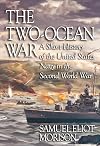
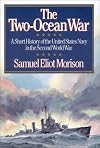
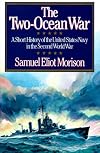
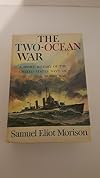
The Two-Ocean War: A Short History of the United States Navy in the Second World War
by Samuel Eliot Morison
On This Page
Description
Originally published in 1963, this classic, single-volume history draws on Morison's definitive 15-volume History of United States Naval Operations in World War II. More than a condensation, The Two-Ocean War highlights the major components of the larger work: the preparation for war, the Japanese attack on Pearl Harbor, the long war of attrition between submarines and convoys in the Atlantic, the battles of the Coral Sea and Midway, the long grind of Guadalcanal, the leapfrogging campaigns show more among the Pacific islands, the invasion of continental Europe, the blazes of glory at Leyte and Okinawa, and the final, grudging surrender of the Japanese. show lessTags
Recommendations

















Member Recommendations
by anonymous user
Member Reviews
As others have noted, this is a single-volume distillation of Morison's definitive multi-volume account. Even though it still clocks in at just under 600 pages it can still feel condensed, riding a sometimes awkward line between breadth of detail and narrative depth. Morison is a classically-informed military historian, so casual readers might find his attention to the minute particulars of each engagement frustrating. However, he occasionally finds room to spark the imagination with an evocative detail (sailors' pet names for their ship, a German copy of "Murders in the Rue Morgue" bubbling up from the wreckage of a submarine).
As a reader, I'm usually more interested in the human stories behind the grand narratives of battle. So, I show more sometimes found myself struggling through Morison's litanies of tonnage and displacement, contact reports, bomb hits, kill counts, casualties, degrees of list, and so on (the chapters on submarine warfare suffered especially in this regard). Indeed, readers should expect a semi-specialized text with a good deal of jargon (including plenty of terms outside its own glossary) that presumes a fair bit of naval familiarity on the part of the reader, or willingness to answer one's own questions through further research.
Not that I take any of these to be deficiencies of Morison or the book per se, just some of the hazards of reading hard military history. I found that Morison was at his best in the heat of battle, where he does an excellent job of following the action minute by minute and infusing his pages with a palpable sense of the tone and tenor of each operation.
Readers should also not expect a particularly critical point of view. As a retired sailor himself, Morison is more or less straightforward in his militarism. He sees America's inter-war pacifism as unmitigated folly, and also occasionally is heard to mourn the passing of the pre-20th century period of colonial expansion. Writing in the depths of the Cold War, he expresses an unrepentant belief in the importance of American strategic dominance. He will sometimes preface a chapter with some comments on the political background of the operation at hand, often to bemoan the loss of tactical advantage through diplomatic sluggishness (Churchill comes off especially poorly in these passages).
In conclusion, I think this book could be a worthwhile jumping-off point for a detailed study of the topic, and useful as a quick reference when investigating this or that incident of the war. Scholars and other readers of intense interest will no doubt want to tackle this volume's mother-work. Readers more interested in the human face of the war, the political maneuvers behind it, the cultural impact on the nations that endured it, and other not-strictly-military topics, will probably want to look elsewhere. show less
As a reader, I'm usually more interested in the human stories behind the grand narratives of battle. So, I show more sometimes found myself struggling through Morison's litanies of tonnage and displacement, contact reports, bomb hits, kill counts, casualties, degrees of list, and so on (the chapters on submarine warfare suffered especially in this regard). Indeed, readers should expect a semi-specialized text with a good deal of jargon (including plenty of terms outside its own glossary) that presumes a fair bit of naval familiarity on the part of the reader, or willingness to answer one's own questions through further research.
Not that I take any of these to be deficiencies of Morison or the book per se, just some of the hazards of reading hard military history. I found that Morison was at his best in the heat of battle, where he does an excellent job of following the action minute by minute and infusing his pages with a palpable sense of the tone and tenor of each operation.
Readers should also not expect a particularly critical point of view. As a retired sailor himself, Morison is more or less straightforward in his militarism. He sees America's inter-war pacifism as unmitigated folly, and also occasionally is heard to mourn the passing of the pre-20th century period of colonial expansion. Writing in the depths of the Cold War, he expresses an unrepentant belief in the importance of American strategic dominance. He will sometimes preface a chapter with some comments on the political background of the operation at hand, often to bemoan the loss of tactical advantage through diplomatic sluggishness (Churchill comes off especially poorly in these passages).
In conclusion, I think this book could be a worthwhile jumping-off point for a detailed study of the topic, and useful as a quick reference when investigating this or that incident of the war. Scholars and other readers of intense interest will no doubt want to tackle this volume's mother-work. Readers more interested in the human face of the war, the political maneuvers behind it, the cultural impact on the nations that endured it, and other not-strictly-military topics, will probably want to look elsewhere. show less
If you can't find what you want in this book, does Samuel Eliot Morison have an offer for you!
As other reviewers have pointed out, Morison authored a comprehensive naval history of American participation in World War II, and then produced this much shorter volume. It's still a very detailed study -- there are histories of the whole war shorter than this single specialized volume -- but things have been left out. Some of them, perhaps, very important. There are times when it can be easy to get lost.
I felt this most, for some reason, in the Atlantic sections. The material on the Pacific war with Japan seemed much clearer. Maybe it's just that the Pacific war had well-defined campaigns and clear-cut battles where it was relatively easy to show more count up the wins and losses.
This should not be interpreted as a complaint. Morison's ten-volume work is overkill for most people. I wish a few events (e.g. the Battle of Midway) had gotten more space, but for most casual readers, this is the only book on the naval history of the war that you will ever need. show less
As other reviewers have pointed out, Morison authored a comprehensive naval history of American participation in World War II, and then produced this much shorter volume. It's still a very detailed study -- there are histories of the whole war shorter than this single specialized volume -- but things have been left out. Some of them, perhaps, very important. There are times when it can be easy to get lost.
I felt this most, for some reason, in the Atlantic sections. The material on the Pacific war with Japan seemed much clearer. Maybe it's just that the Pacific war had well-defined campaigns and clear-cut battles where it was relatively easy to show more count up the wins and losses.
This should not be interpreted as a complaint. Morison's ten-volume work is overkill for most people. I wish a few events (e.g. the Battle of Midway) had gotten more space, but for most casual readers, this is the only book on the naval history of the war that you will ever need. show less
Just finished Samuel Eliot Morisson's, The Two-Ocean War. A short 586 page, which vividly describes both by theater and chronologically, the Naval War in both the Pacific and European theaters of World War II.
Originally published in 1963, Morrison starts in inter-war years, and the beginning stages of the war and thematically alternating between the Pacific and Atlantic Wars.
Some of the highlights the problems caused by the German U Boats leading to the convoy system being implemented and the losses in merchant shipping early in the war, the early setbacks in the Pacific, folliwed by victories at Coral Sea and Midway, the Guadalcanal campaign, North Africa and Sicilian campaigns.
Morrison then spends several chapters in Pacific on the show more Solomons, Gilbert, and Marshall Islands, New Guinea and the Marianas, then jumps back to the Mediterranean and Italy and the Naval aspects of Overlord.
He finishes with the Philippines, Iwo Jima, Okinawa, and the end of the war. While an ongoing topic, Morrison dedicates a section in the contributions of the submarine campaign in both theaters but concentrating on the Pacific where its contributions against both warships and Japanese merchant shipping were profound.
The best single volume on the Naval War I have read, and a solid 5 stars. show less
Originally published in 1963, Morrison starts in inter-war years, and the beginning stages of the war and thematically alternating between the Pacific and Atlantic Wars.
Some of the highlights the problems caused by the German U Boats leading to the convoy system being implemented and the losses in merchant shipping early in the war, the early setbacks in the Pacific, folliwed by victories at Coral Sea and Midway, the Guadalcanal campaign, North Africa and Sicilian campaigns.
Morrison then spends several chapters in Pacific on the show more Solomons, Gilbert, and Marshall Islands, New Guinea and the Marianas, then jumps back to the Mediterranean and Italy and the Naval aspects of Overlord.
He finishes with the Philippines, Iwo Jima, Okinawa, and the end of the war. While an ongoing topic, Morrison dedicates a section in the contributions of the submarine campaign in both theaters but concentrating on the Pacific where its contributions against both warships and Japanese merchant shipping were profound.
The best single volume on the Naval War I have read, and a solid 5 stars. show less
This is a good read if you are brushing up on naval history of WW2, especially some of the lesser known actions in the Pacific. However, it is not as scholarly as more modern writings on the subject. The author relies on personal experience and interviews, rather than written accounts. I still found it fascinating and educational.
Basically a distilled compendium of his multivolume history of US Naval operations in WWII, "The Two Ocean War" is a perfectly adequate, abriged account, but I do feel the original works are better written and provide more detail and the "sweep" of the campaign.
Having completed the larger multi-volumne work on the US Navy of WWII, Morison boiled it down to a mass-market book for more popular consumption. It is adequate, but not to the depth anywhere necessary for the serious student.
A well written survey history of the navy in WW2. The author was aboard ship at some of these actions and has a good understanding of what life aboard ship was like.
Members
- Recently Added By
Lists

Best Naval History Books
40 works; 12 members
Author Information

124+ Works 10,898 Members
Samuel Eliot Morison was born in Boston in 1887. He received his Ph.D. from Harvard in 1912 and began teaching history there in 1915, becoming full professor in 1925 and Jonathan Trumbull professor of American history in 1941. He served as the university's official historian and wrote a three-volume history of the institution, the Tercentennial show more History of Harvard College and University, which was completed in 1936. Between 1922 and 1925 he was Harmsworth professor of American history at Oxford. He also was an accomplished sailor who retired from the navy in 1951 as a rear admiral. In preparing for his Pulitzer Prize-winning biographies of Christopher Columbus and John Paul Jones, Admiral of the Ocean Sea (1941) and John Paul Jones: A Sailor's Biography (1952) he took himself out of the study and onto the high seas, where he traced the voyages of his subjects and "lived" their stories insofar as possible. When it came time for the U.S. Navy to select an author to write a history of its operations in World War II, Morison was the natural choice for the task. In 1942, Morison was commissioned by President Franklin Delano Roosevelt to write a history of U.S. naval operations in World War II and given the rank of lieutenant commander. The 15 volumes of his History of United States Naval Operations in World War II appeared between 1947 and 1962. Although he retired from Harvard in 1955, Morison continued his research and writing. A product of the Brahmin tradition, Morison wrote about Bostonians and other New Englanders and about life in early Massachusetts. He was an "American historian" in the fullest sense of the term. He also had a keen appreciation for the larger history of the nation and world, provincial is the last word one would use to describe Morison's writing. (Bowker Author Biography) show less
Awards and Honors
Distinctions
Common Knowledge
- Canonical title
- The Two-Ocean War: A Short History of the United States Navy in the Second World War
- Original publication date
- 1963
- Important places
- Atlantic Ocean; North Atlantic Ocean; Pacific Ocean; Guadalcanal, Solomon Islands; Rabaul, East New Britain, Papua New Guinea; Solomon Islands
- Important events
- World War II (1939 | 1945); Battle of the Atlantic (1939 | 1945); World War II, Pacific Theater (1941-12-07 | 1945-09-02); Attack on Pearl Harbor (1941-12-07); Liberation of the Philippines (1944-10-20 | 1945-08-15); Battle of Leyte Gulf (1944-10-23 | 1944-10-26)
- First words
- Although the United States participated heavily in World War I, the nature of that participation was fundamentally different from what it became in World War II.
- Disambiguation notice
- This book is not part of Samuel Eliot Morison's 15 Volume History of United States Naval Operations in World War II and the author clearly states in the preface of this book, "In this book I have not attempted a uni... (show all)form condensation of the fifteen volumes, but rather to select the most important battles and campaigns."
Classifications
Statistics
- Members
- 698
- Popularity
- 40,891
- Reviews
- 11
- Rating
- (4.09)
- Languages
- English
- Media
- Paper
- ISBNs
- 11
- ASINs
- 26