The War Outside
by Monica Hesse
On This Page
Description
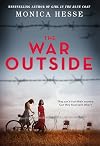
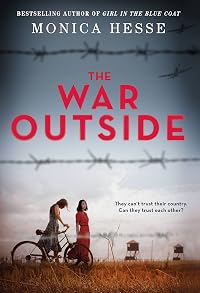
New from Monica Hesse, the bestselling and award-winning author of Girl in the Blue Coat—an "important" (New York Times Book Review), "extraordinary" (Booklist, starred review) novel of conviction, friendship, and betrayal"A must-read for fans of historical fiction." —Ruta Sepetys, #1 New York Times bestselling author
It's 1944, and World War II is raging across Europe and the Pacific. The war seemed far away from Margot in Iowa and Haruko in Colorado—until they were uprooted to dusty show more Texas, all because of the places their parents once called home: Germany and Japan.
Haruko and Margot meet at the high school in Crystal City, a "family internment camp" for those accused of colluding with the enemy. The teens discover that they are polar opposites in so many ways, except for one that seems to override all the others: the camp is changing them, day by day and piece by piece. Haruko finds herself consumed by fear for her soldier brother and distrust of her father, who she knows is keeping something from her. And Margot is doing everything she can to keep her family whole as her mother's health deteriorates and her rational, patriotic father becomes a man who distrusts America and fraternizes with Nazis.
With everything around them falling apart, Margot and Haruko find solace in their growing, secret friendship. But in a prison the government has deemed full of spies, can they trust anyone—even each other? show less
Tags
Recommendations




Member Reviews
I received an ARC of this book for free from TheNovl in exchange for an honest review. Since I received an ARC, my quotes from the book are tentative.
Last month I read a different YA novel about German American internment and was beyond disappointed by it. When I saw that TheNovl was offering a chance to read and review this book I jumped at the opportunity. Thankfully, The War Outside was a million times better than that other book I read.
This book was so heart wrenching and emotional. There was one incident towards the end that gave me chills and goosebumps.
I loved the dual perspectives and how well the author put you into each girl’s shoes. I also enjoyed the author’s writing style. It flowed easily and sucked you into the show more story.
I’m glad that the book showed both Japanese American and German American internment. I particularly liked that it discussed how being called the enemy was different for each group. At one point Haruko tells Margot, “I’m so sorry…that your father had to wake up and realize that you had become the enemy overnight. But a least you didn’t have to wake up and realize that other Americans had thought of you as an enemy all along” (148). She then explains, “the reason this imprisonment is hard to Margot’s father is because they didn’t know yet that this country was unfair…The West Coast Japanese had already given the government their shortwave radios, and they had already agreed to their curfew, eight PM to six AM, but it wasn’t enough, it was never enough. It was so easy for the government make those rules. You can’t hate someone all of a sudden. It takes practice. It takes a long time” (148). This is an idea that Margot revisits later in the book when imagining what it would be like to go back home to Iowa. She ponders, “Haruko was right the first time we talked. It was not like with the Japanese. where entire communities went away. With us it was like a scalpel: a German here, a German there, while the rest of the town went about their business” (207). These quotes showcase the idea of how we are not free in America until we’re all free. Everyone’s freedom is in jeopardy if one group loses theirs.
The ending was…WOW. It was one of the best endings I’ve read in a while. It left you thinking about all that happened between the girls and the motives behind their actions.
I liked that the author included a note at the end about the history behind the story. It is evident that she did a lot of research and tried to make it as accurate as possible.
Overall, this was an amazing and powerful novel whose ending will leave you questioning it all. show less
Last month I read a different YA novel about German American internment and was beyond disappointed by it. When I saw that TheNovl was offering a chance to read and review this book I jumped at the opportunity. Thankfully, The War Outside was a million times better than that other book I read.
This book was so heart wrenching and emotional. There was one incident towards the end that gave me chills and goosebumps.
I loved the dual perspectives and how well the author put you into each girl’s shoes. I also enjoyed the author’s writing style. It flowed easily and sucked you into the show more story.
I’m glad that the book showed both Japanese American and German American internment. I particularly liked that it discussed how being called the enemy was different for each group. At one point Haruko tells Margot, “I’m so sorry…that your father had to wake up and realize that you had become the enemy overnight. But a least you didn’t have to wake up and realize that other Americans had thought of you as an enemy all along” (148). She then explains, “the reason this imprisonment is hard to Margot’s father is because they didn’t know yet that this country was unfair…The West Coast Japanese had already given the government their shortwave radios, and they had already agreed to their curfew, eight PM to six AM, but it wasn’t enough, it was never enough. It was so easy for the government make those rules. You can’t hate someone all of a sudden. It takes practice. It takes a long time” (148). This is an idea that Margot revisits later in the book when imagining what it would be like to go back home to Iowa. She ponders, “Haruko was right the first time we talked. It was not like with the Japanese. where entire communities went away. With us it was like a scalpel: a German here, a German there, while the rest of the town went about their business” (207). These quotes showcase the idea of how we are not free in America until we’re all free. Everyone’s freedom is in jeopardy if one group loses theirs.
The ending was…WOW. It was one of the best endings I’ve read in a while. It left you thinking about all that happened between the girls and the motives behind their actions.
I liked that the author included a note at the end about the history behind the story. It is evident that she did a lot of research and tried to make it as accurate as possible.
Overall, this was an amazing and powerful novel whose ending will leave you questioning it all. show less
Interesting story about a fact I didn't know. During WWII it wasn't only Japanese who were sent to internment camps, but Germans also. Not all Germans--my grandparents spoke German at home, & apparently my grandfather at least, was pro-Nazi, but perhaps was quiet enough about it that he wasn't taken.
While I knew that all Japanese on the west coast were imprisoned, I didn't know there were separate camps for Japanese & Germans who were accused of spying--i.e. considered enemy combatants.
Chapters switch between two teen girls who present different sides of events & their experiences in their Texas internment camp.
Recommend.
While I knew that all Japanese on the west coast were imprisoned, I didn't know there were separate camps for Japanese & Germans who were accused of spying--i.e. considered enemy combatants.
Chapters switch between two teen girls who present different sides of events & their experiences in their Texas internment camp.
Recommend.
THE WAR OUTSIDE by Monica Hesse
Texas was the site of Crystal City – an internment camp for “Enemy Aliens” during World War II. Crystal City was for those people of German, Japanese or Italian ancestry that the government believed might be spies. Haruku and Margot both accompanied fathers who were suspects. They lived on opposite sides of the camp but became friends – sort of. This story gives a glimpse into the reality of their lives and that of the others interned at Crystal City. They were American teenagers, but because someone in their family was suspect, they had been uprooted and sent to a hot, dusty, ill equipped prison. They were enemies to each other and to their country.
Hesse writes clearly of young people confused show more and conflicted and does it extremely well. Margot and Haruku live and breathe. They become friends - and enemies. They trust each other - and break that trust. We learn of their families – their love, their politics, their fears, their coping – and their NOT coping.
Engrossing, terrifying, moving, sweet and bittersweet – all these and more. Ultimately a story of betrayal and forgiveness, THE WAR OUTSIDE is thought provoking and well worth reading.
5 of 5 stars show less
Texas was the site of Crystal City – an internment camp for “Enemy Aliens” during World War II. Crystal City was for those people of German, Japanese or Italian ancestry that the government believed might be spies. Haruku and Margot both accompanied fathers who were suspects. They lived on opposite sides of the camp but became friends – sort of. This story gives a glimpse into the reality of their lives and that of the others interned at Crystal City. They were American teenagers, but because someone in their family was suspect, they had been uprooted and sent to a hot, dusty, ill equipped prison. They were enemies to each other and to their country.
Hesse writes clearly of young people confused show more and conflicted and does it extremely well. Margot and Haruku live and breathe. They become friends - and enemies. They trust each other - and break that trust. We learn of their families – their love, their politics, their fears, their coping – and their NOT coping.
Engrossing, terrifying, moving, sweet and bittersweet – all these and more. Ultimately a story of betrayal and forgiveness, THE WAR OUTSIDE is thought provoking and well worth reading.
5 of 5 stars show less
A stunning novel of conviction, friendship, and betrayal from Monica Hesse, the Edgar Award-winning and bestselling author of Girl in the Blue Coat It's 1944, and World War II is raging across Europe and the Pacific. The war seemed far away from Margot in Iowa and Haruko in Colorado--until they were uprooted to dusty Texas, all because of the places their parents once called home: Germany and Japan.Haruko and Margot meet at the high school in Crystal City, a "family internment camp" for those accused of colluding with the enemy. The teens discover that they are polar opposites in so many ways, except for one that seems to override all the others: the camp is changing them, day by day and piece by piece. Haruko finds herself consumed by show more fear for her soldier brother and distrust of her father, who she knows is keeping something from her. And Margot is doing everything she can to keep her family whole as her mother's health deteriorates and her rational, patriotic father becomes a man who distrusts America and fraternizes with Nazis.With everything around them falling apart, Margot and Haruko find solace in their growing, secret friendship. But in a prison the government has deemed full of spies, can they trust anyone--even each other? show less
While I was working after college I craved learning and I took a class on Asian Immigration to United States and my professor had been one of the Japanese internment camps in California. One of the students challenged as to why it was important! We were all shocked. She told of being a girl scout and she thought she was 100% American. Neighbors were burying their china in the backyard and all of her family was taken to the Santa Anita stables to await reassignment. Also of what it was like to have guards standing around and knowing that you could not leave.
Years later, I moved to Texas and was looking for a historical fiction CD to listen to and I found this one. I did not know that there was a camp in Crystal City, Texas. All the time show more that I was listening, I was comparing this to the ones in California camps. Later I found a lot of information about the Crystal City Camp and it rang true for this story.
I liked how author did show the level of suspicion rampant in the general population. Her research emphasized that at the end of the book and when you think about the total story, that is an underlying theme among the prisoners, the two girls, the guards and outside the camp. It is subtle but easy to find. It reminds me of what my mother said. People at his work called him a "commie" because he was not service during WWII. In fact, he tried to sign up but was told that he more valuable to the country at home! Please think about suspicion when reading or listening to this book.
The love story is interesting between Margot and Haruko because the two girls did not express it openly even to each other. The times must be considered. There has been much change since then. Wanting to have an apartment together was and their dreams of it was the dearest part of the book for me. I reminded me of two sweet women that I knew as a child. I knew that they loved each other very much but that was in the 1950's. But even they were effect and endangered by suspicion . I love the story. The only jarring thing for me was one the speakers on the audio had a definite "Valley girl" way of talking. It took me away for the story at times. show less
Years later, I moved to Texas and was looking for a historical fiction CD to listen to and I found this one. I did not know that there was a camp in Crystal City, Texas. All the time show more that I was listening, I was comparing this to the ones in California camps. Later I found a lot of information about the Crystal City Camp and it rang true for this story.
I liked how author did show the level of suspicion rampant in the general population. Her research emphasized that at the end of the book and when you think about the total story, that is an underlying theme among the prisoners, the two girls, the guards and outside the camp. It is subtle but easy to find. It reminds me of what my mother said. People at his work called him a "commie" because he was not service during WWII. In fact, he tried to sign up but was told that he more valuable to the country at home! Please think about suspicion when reading or listening to this book.
The love story is interesting between Margot and Haruko because the two girls did not express it openly even to each other. The times must be considered. There has been much change since then. Wanting to have an apartment together was and their dreams of it was the dearest part of the book for me. I reminded me of two sweet women that I knew as a child. I knew that they loved each other very much but that was in the 1950's. But even they were effect and endangered by suspicion . I love the story. The only jarring thing for me was one the speakers on the audio had a definite "Valley girl" way of talking. It took me away for the story at times. show less
Setin a World War II internment camp, this YA novel is dually narrated by two young women - one of Japanese and one of German descent. Essentially imprisoned together with their families, these two women forge a bond that neither of them appears to fully understand. They both strongly desire to escape the camp, but they differ in how they approach the opportunities for leaving. This book is a quick read and easy to get into. It's also not hard to draw comparisons between what is portrayed in this book and current politics. Overall, this was a great and I'd highly recommend i to fans of YA historical fiction.
I was hoping for so much more with this book. I love WWII fiction, and I think that the subject matter isn't something that is often discussed, so I was really excited when I took this book out of the library. However, I think that the relationship between the two main characters was extremely rushed, and not well developed. The secondary characters were poorly developed, and I feel like daily life in the camps was over simplified and a bit romanticized (considering the subject matter). I also was not fond of how I got no real resolution in regards to the relationship between the girls. The book just abruptly ends and therefore, it felt very unfinished.
Members
- Recently Added By
Lists

Amazon best fictional genre picks monthly for 2018
418 works; 9 members

World War II Books
34 works; 1 member

Historical Fiction Books
99 works; 5 members

Recommendations for Rachel
35 works; 1 member
Author Information

7 Works 3,131 Members
Monica Hesse is a feature writer for the Washington Post. A finalist for a Livingston and a James Beard Award, she is also the author of Girl in the Blue Coat. She lives in Washington, Dc.
Awards and Honors
Awards
Distinctions
Classifications
Statistics
- Members
- 334
- Popularity
- 95,110
- Reviews
- 14
- Rating
- (4.09)
- Languages
- English, Italian, Portuguese
- Media
- Paper, Audiobook, Ebook
- ISBNs
- 15
- ASINs
- 2