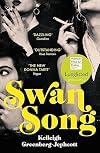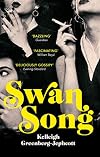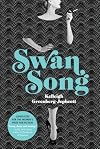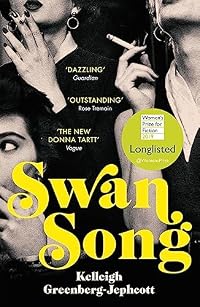
Swan Song
by Kelleigh Greenberg-Jephcott
On This Page
Description
They told him everything. He told everyone else... Based on ten years of research comes a dazzling literary debut about the rise and self-destructive fall of Truman Capote and the beautiful, wealthy, vulnerable women he called his swans.Tags
Recommendations











Member Reviews
Why are 'Prize' books generally so pretentious and tedious? This was such a chore to read, and a lonnnnnnnng one at that, when the actual plot could have made an interesting shorter novel. The only detail missing, to my mind, was perspective - either Truman Capote's or the women he betrayed - so that the reader could feel sympathy for even one of the characters, but no. Instead, we get a sort of omniscient, nameless 'we' narrator, bitching about everybody. I hated everyone in this damn book, and was on the point of burning my copy of In Cold Blood.
The plot, if there is one, is based on Truman Capote's unfinished novel Answered Prayers, where he basically dished the dirt on the society women he had befriended, including Jackie Kennedy's show more sister Lee. My question throughout the whole of this long study of obnoxious people was, 'Who cares?' If you 'adopt' a poisonous little dwarf because of his celebrity as a writer, and then confide all of your darkest secrets to him, what would you expect him to do? And that's the whole book - Truman whinging about his mother, the narrator referring to him as 'the boy' throughout, references to Harper Lee and Monroeville, where he grew up of course, and these pathetic but very rich and mostly beautiful women feeling hard done by when their husbands cheat and the infidelities end up in print. Yawn. The worst of the story can be summed up with this quote:
'Truman, we're all here for you. Because of what you wrote. Because of who you ahhrre [sic on the terrible 'Boston' phonetic accent]. You've thrown the best goddamn pahty anyone has ever seen. An act of creation, like a book or a play or a painting. We're all here because we love you. You, bustah, have arrived.'
Why did I keep reading? Because of a cartoon I found which perfectly describes my reading tenacity: 'This book is awful! The writing is so clumsy! The characters are one-dimensional and the plot is predictable!' .... 'So ... why are you still reading it?' ... 'I'm no quitter!' show less
The plot, if there is one, is based on Truman Capote's unfinished novel Answered Prayers, where he basically dished the dirt on the society women he had befriended, including Jackie Kennedy's show more sister Lee. My question throughout the whole of this long study of obnoxious people was, 'Who cares?' If you 'adopt' a poisonous little dwarf because of his celebrity as a writer, and then confide all of your darkest secrets to him, what would you expect him to do? And that's the whole book - Truman whinging about his mother, the narrator referring to him as 'the boy' throughout, references to Harper Lee and Monroeville, where he grew up of course, and these pathetic but very rich and mostly beautiful women feeling hard done by when their husbands cheat and the infidelities end up in print. Yawn. The worst of the story can be summed up with this quote:
'Truman, we're all here for you. Because of what you wrote. Because of who you ahhrre [sic on the terrible 'Boston' phonetic accent]. You've thrown the best goddamn pahty anyone has ever seen. An act of creation, like a book or a play or a painting. We're all here because we love you. You, bustah, have arrived.'
Why did I keep reading? Because of a cartoon I found which perfectly describes my reading tenacity: 'This book is awful! The writing is so clumsy! The characters are one-dimensional and the plot is predictable!' .... 'So ... why are you still reading it?' ... 'I'm no quitter!' show less
* I would like to thank NetGalley and the publisher for the opportunity to review this book. *
Swan Song is a novel about the swans: a bevy of rich glamorous socialites that gathered around author Truman Capote in his New York heyday. Capote flattered them, gossipped with them and became privy to their deepest secrets. When he published the early chapters of his unfinished novel Answered Prayers Capote proceeded to lay bare these secrets and did very little to obscure the inspiration for his characters. The backlash from his swans was instant and terrible.
The novel is, ironically, a roman a clef about an author who thought he was writing an epic roman a clef, which he thought justified his actions. His social milieu saw it very show more differently and ostracised him almost completely, although some did acknowledge that sharing your secrets with a writer would inevitably lead to him publishing them.
Each of Capote's swans is given a focus in the novel and her story told. Most of these were born to high society but some, including Capote, had a more staid background and had to lift themselves out of poverty. Most had lives that were blighted by sadness and misfortune which Capote played on for his material; little wonder they were angry. There are some nice touches in which an anecdote gets retold several times with differing detail, underlining the Chinese whispers nature of the gossip that lies at the centre of this drama.
As far as I could tell, the novel is pretty close to the truth and the author does make you feel sympathetic towards all of her main characters. There is a sadness to this story and the tragedy of a man of great promise and achievement who brought himself undone. show less
Swan Song is a novel about the swans: a bevy of rich glamorous socialites that gathered around author Truman Capote in his New York heyday. Capote flattered them, gossipped with them and became privy to their deepest secrets. When he published the early chapters of his unfinished novel Answered Prayers Capote proceeded to lay bare these secrets and did very little to obscure the inspiration for his characters. The backlash from his swans was instant and terrible.
The novel is, ironically, a roman a clef about an author who thought he was writing an epic roman a clef, which he thought justified his actions. His social milieu saw it very show more differently and ostracised him almost completely, although some did acknowledge that sharing your secrets with a writer would inevitably lead to him publishing them.
Each of Capote's swans is given a focus in the novel and her story told. Most of these were born to high society but some, including Capote, had a more staid background and had to lift themselves out of poverty. Most had lives that were blighted by sadness and misfortune which Capote played on for his material; little wonder they were angry. There are some nice touches in which an anecdote gets retold several times with differing detail, underlining the Chinese whispers nature of the gossip that lies at the centre of this drama.
As far as I could tell, the novel is pretty close to the truth and the author does make you feel sympathetic towards all of her main characters. There is a sadness to this story and the tragedy of a man of great promise and achievement who brought himself undone. show less
Each one of the 'swans' was a special friend of Truman Capote, revelling in his waspish sense of humour and loving being entertained by him. The six society woman were all horrified when Capote published an extract from his memoir in which several of them were described in unflattering terms and that secrets they had confided were displayed in public. Deciding to get their revenge the Swans blank Capote which distresses him. This is the story of six society women, proud, powerful and publicly known.
I absolutely loved this book. It tells the story of Truman Capote, self-made man of words from a small town in the South who becomes friendly with the society belles of the day. It also tells the tale of each and how Truman's fall affected show more them. The writing is beautiful, offering an opening into shelves of the insecure super-rich and the infidelities of their husbands. show less
I absolutely loved this book. It tells the story of Truman Capote, self-made man of words from a small town in the South who becomes friendly with the society belles of the day. It also tells the tale of each and how Truman's fall affected show more them. The writing is beautiful, offering an opening into shelves of the insecure super-rich and the infidelities of their husbands. show less
Truman Capote cultivated friendships with a number of American high society women (his 'swans'), fascinated by their jet-set lifestyles and personal stories. He subsequently lost their favour by writing about them or promising (threatening?) to do so in an age before celeb-gossip was everywhere.
The novel is narrated by the chorus of 'swans', perhaps channeling Capote's own style & delivering the secrets he had hinted at. And it is also a fragmented biography of the talented writer who was the author of his own downfall, exploiting confidences for his art & becoming consumed by drink & drugs.
I was unfamiliar with many of the names bandied about, so found myself googling a lot to fill in the blanks, and to see photos of Capote's show more celebrated 'party of the century'.
A cleverly structured, revealing, gossipy read.
Thank you to Netgalley for the advance copy. show less
The novel is narrated by the chorus of 'swans', perhaps channeling Capote's own style & delivering the secrets he had hinted at. And it is also a fragmented biography of the talented writer who was the author of his own downfall, exploiting confidences for his art & becoming consumed by drink & drugs.
I was unfamiliar with many of the names bandied about, so found myself googling a lot to fill in the blanks, and to see photos of Capote's show more celebrated 'party of the century'.
A cleverly structured, revealing, gossipy read.
Thank you to Netgalley for the advance copy. show less
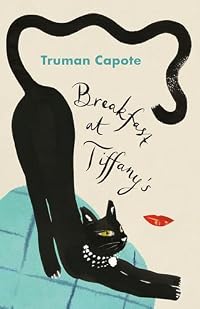
He has been one of the most fascinating writers of the last century, not only his works but also his private life offers much to talk about. Both are closely linked since he used the people around him as a source for his creative work. Kelleigh Greenberg-Jephcott retells Truman Capote‘s life as it might have been. From his first steps in writing as a boy - the chance to win a puppy was motivation enough to take part in a competition - to his well known novels „Breakfast at Tiffany’s“ and „In Cold Blood“. He had his charms, could easily win people for him, but then he misused their trust and confidence, played his games and made fun of the people who took him for a close friend.
The novel is lively told, the fact that show more Greenberg-Jephcott does not stick to the chronological order but springs back and forth in time adds to the liveliness. The dialogues are vivid and you get quite a good idea of how the people around Capote might have been, especially his mother and Babe. It is not a biography, but real life events taken and told a story out of the facts - just what Capote himself did. Also from a psychological point of view quite impressive. show less
The novel is lively told, the fact that show more Greenberg-Jephcott does not stick to the chronological order but springs back and forth in time adds to the liveliness. The dialogues are vivid and you get quite a good idea of how the people around Capote might have been, especially his mother and Babe. It is not a biography, but real life events taken and told a story out of the facts - just what Capote himself did. Also from a psychological point of view quite impressive. show less
Ratings
Members
- Recently Added By
Lists

2019 Women's Prize for Fiction Longlist
16 works; 12 members

Books Read in 2020
4,379 works; 124 members

Netgalley Reads
455 works; 3 members
Author Information

1 Work 162 Members
Some Editions
Awards and Honors
Common Knowledge
- People/Characters
- Truman Capote; Gianni Agnelli; Marella Agnelli; Vincente Agnelotti; Lauren Bacall; José García Capote (show all 37); Mary Benedict Cushing; Jack Dunphy; Don Erickson; Lillie Mae Faulk; Frances Cunningham Finch; Katharine Graham; C. Z. Guest; Winston Frederick Churchill Guest; Gloria Guinness; Pamela Harriman; Howard Hawks; Leland Hayward; Ernest Hemingway; Slim Keith; John F. Kennedy; Jacqueline Kennedy Onassis; Amasa Coleman Lee; Harper Lee; Babe Paley; Kate Paley; William S. Paley; Sally Quinn; Lee Radziwill; John Richardson; Diego Rivera; Stanley Siegel; Gore Vidal; Maria Von Trapp; Mary Welsh Hemingway; Daryl F. Zanuck; Sidney
- Important places
- Los Angeles, California, USA; Monroeville, Alabama, USA; New York, New York, USA; Capri, Campania, Italy
- Original language
- English
Classifications
Statistics
- Members
- 163
- Popularity
- 199,965
- Reviews
- 5
- Rating
- (3.65)
- Languages
- English
- Media
- Paper, Audiobook, Ebook
- ISBNs
- 8
- ASINs
- 3