On This Page
Description
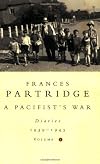
Francis Partridge's diaries are the record of a woman who not only participated in the lives of the legendary Bloomsbury group, but was the circle’s oldest surviving member until her death in 2004. At the outset of the Second World War, Ralph and Frances Partridge were both convinced pacifists. These extracts from Frances' war diary present an intimate and vivid picture of their life at Ham Spray in Wiltshire, a house they both adored and which became a place of refuge to many of the show more Bloomsbury circle, and numerous other waifs and strays of war. Frances Partridge's perceptively witty and lively account is held together by the thread of the Partridges' passionate concern and interest in the course of events, coupled with their belief that War itself was ethically unjustifiable. show lessTags
Recommendations





















Member Reviews
Florence Partridge was the 'nice' member of the famed Bloomsbury Group. During World War Two, the Partridges lived at Ham Spray House in Wiltshire. In 1978, Florence published her excerpted diary of the war years. Florence and husband Ralph were pacifists, which gives the book a quite different context than many wartime recollections. Their beliefs gave them no special shelter from the war's terrors and privations.
Florence records her experiences living with Ralph and their 4-year-old son Burgo and a seemingly continual parade of visitors and lodgers with acute insight and self-awareness. Not all of their friends shared their political or moral views and that creates an interesting tension throughout. Ralph's application for C.O. show more status hangs around the background of the diary, but seldom takes center stage (as she explains in the foreword, she felt little need to describe her thoughts about Ralph in her diary because he was central to her life).
The course of the war overwhelmed their daily lives in a way that is nearly unimaginable. With the invasion seemed like a foregone conclusion during much of 1940, Florence and her friends were plunged into depths of depression. Otherwise sane people seriously discussed the means and modes of committing suicide in the event the Germans did cross the Channel. They adjust to sleeping - or at least lying in bed - while planes drone overhead and learn the sounds and patterns of bombs being dropped. Even when the threat of invasion fades, the knowledge grows that the only possible outcomes are a German victory or a very long war indeed.
While the larger end is known, being a diary, the eventual outcome for specific individuals is not. In one instance, however, Partridge describes how Burgo was excited over meeting a young RAF pilot. She then reflects that `we are asking this young man to lose his life' at which point she added a powerful two-word footnote: "He did."
I came across this book from the historical endnotes in a work of historical detective fiction Second Violin: An Inspector Troy Thriller by John Lawton and temporarily rescued it from the lower stacks of our public library system. I highly recommended that you do the same. show less
Florence records her experiences living with Ralph and their 4-year-old son Burgo and a seemingly continual parade of visitors and lodgers with acute insight and self-awareness. Not all of their friends shared their political or moral views and that creates an interesting tension throughout. Ralph's application for C.O. show more status hangs around the background of the diary, but seldom takes center stage (as she explains in the foreword, she felt little need to describe her thoughts about Ralph in her diary because he was central to her life).
The course of the war overwhelmed their daily lives in a way that is nearly unimaginable. With the invasion seemed like a foregone conclusion during much of 1940, Florence and her friends were plunged into depths of depression. Otherwise sane people seriously discussed the means and modes of committing suicide in the event the Germans did cross the Channel. They adjust to sleeping - or at least lying in bed - while planes drone overhead and learn the sounds and patterns of bombs being dropped. Even when the threat of invasion fades, the knowledge grows that the only possible outcomes are a German victory or a very long war indeed.
While the larger end is known, being a diary, the eventual outcome for specific individuals is not. In one instance, however, Partridge describes how Burgo was excited over meeting a young RAF pilot. She then reflects that `we are asking this young man to lose his life' at which point she added a powerful two-word footnote: "He did."
I came across this book from the historical endnotes in a work of historical detective fiction Second Violin: An Inspector Troy Thriller by John Lawton and temporarily rescued it from the lower stacks of our public library system. I highly recommended that you do the same. show less
Ratings
Members
- Recently Added By
Author Information

12+ Works 514 Members
Series

Common Knowledge
- Canonical title
- A pacifist's war : diaries, 1939-1945
- Original publication date
- ©1978
- People/Characters
- Frances Partridge; Ralph Partridge; Lytton Strachey
- Important places
- Ham Spray, Wiltshire, England, UK
- Important events
- World War II 1939-1945
- Epigraph
- During the first months of the War - the phony War as it was afterwards called - Ham Spray House, Wiltshire, was crowded to overflowing with 'refugees' from London, where air-raids were daily expected. These were mostly the ... (show all)young families of friends. At the worst we had six children, three nannies, parents at weekends, and two adults. When week after week passed uneventfully here in England, they gradually took wing. By the start of 1940 our only permanent winter residents were a friend with two children; and of course we had "visitors" - quite a different thing.
- First words
- January 1st
As midnight struck, Ralph and I went out into the garden to see if we could hear the bells from the village church. But only total silence met our ears, and 1940 crept its way in, in a dense cold mist.
Classifications
- Genres
- Nonfiction, Biography & Memoir, History
- DDC/MDS
- 940.53 — History & geography History of Europe History of Europe 1918- World War II, 1939-1945
- LCC
- JX1962 .P29 .A37 — Political Science International law, see JZ and KZ (obsolete) International law, see JZ and KZ International arbitration, organization, etc.
- BISAC
Statistics
- Members
- 55
- Popularity
- 554,151
- Reviews
- 1
- Rating
- (4.50)
- Languages
- English
- Media
- Paper, Audiobook
- ISBNs
- 7
- ASINs
- 3