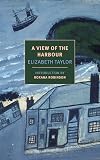
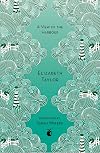
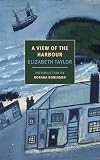
A View of the Harbour
by Elizabeth Taylor
On This Page
Description
""Are we to go on until we are old, with just these odd moments here and there and danger always so narrowly evaded? Love draining away our vitality, our hold on life, never adding anything to us." Blindness and betrayal are Elizabeth Taylor's great subjects, and in A View of the Harbour she turns her unsparing gaze on the emotional and sexual politics of a seedy seaside town that's been left behind by modernity. Tory, recently divorced, is having an affair with her neighbor Robert, a show more doctor, whose wife, Beth, is Tory's best friend. Beth notices nothing--an author of melodramatic novels, she is too busy with them to mind her house or its inhabitants--but her daughter Prudence knows what is up and is appalled. Gossip spreads in the little community, and Taylor's view widens to take in a range of characters from senile, snoopy Mrs. Bracey; to a young, widowed proprietor of the local waxworks, Lily Wilson; to the would-be artist Bertram. Taylor's novel is a beautifully observed and written examination of the fictions around which we construct our lives and manage our losses"-- show lessTags
Recommendations
























Member Recommendations


susanbooks Different in time, place & characters but so similar in mood
Member Reviews
The seaport of Newby sits tucked around its harbour but its glory days have passed by, with its buildings best seen from far out in the harbour where distance turns them from dingy to quaint. We see it first through the eyes of an outsider, Bertram Hemingway, R.N., Retd., who has come to the seashore to stay in the harbour pub so that he could finally paint “those aspects of the sea which for thirty or more years he had felt awaited his recognition”. He is a lonely man and he has come to a lonely place. With Bertram’s eyes we see Tory Foyle walk to the pub and to the doctor’s house carrying jugs, observe the grey lace curtains of the closed Waxworks. The village in its turn watches Bertram.
We, with Bertram, are looking in. When show more we are permitted to begin to see the inhabitants some thirteen pages later, we do so with a sense that we have breached the insular atmosphere of this fishing town and will now be shown something very intimate and private. And so we will.
We meet Tory Foyle, a divorcee who has been left for another woman by her wealthy husband, despite her great beauty. We encounter her best friend, Beth Cazabon, a writer whose writing constitutes a reality more compelling for her than that of her husband and children. Beth is married to Robert Cazabon, the local doctor. They have two children: Prudence, an awkward and sickly young woman of 20, and Stevie, a strong-willed girl of 6.
We are introduced to the termagant a few doors along from the Foyles and Cazabons, Mrs. Bracey, who ran the secondhand clothing shop until she became paralysed. Now she runs her daughter Maisie ragged with her demands, criticisms and coarseness. Maisie’s life is tied to her mother’s, shopkeeper and general dogsbody. Iris, her other daughter, is able to escape to her job at the pub. And yet they love their mother, as we learn.
There is little Edward Foyle, Tory’s son, writing sad little letters from his boarding school and making the odd appearance in his home. Sad too is Lily Wilson, the widow who runs the Waxworks, and flits in and out of the story like a ghost, lost since the death of her husband. There are also folks like Mr. Ned Pallister, the publican, Mrs. Flitcroft , who is Beth’s daily help and the one who lays out the dead when necessary, Eddie Flitcroft, her nephew, a fisherman, Mr. Lidiard, the curate, and the salacious Librarian with his odd censorship of people’s reading and disturbing licking of his lips. And, of course, there is Bertram Hemingway, insinuating himself into all of their lives, to his eventual great peril.
It is when we learn a secret about two of the characters that Elizabeth Taylor moves us from that first distant perspective to one with a focus so sharp, so perfectly defined, that I was in awe of how deftly she managed it. The characters are wonderfully drawn: the characterization of Mrs. Bracey is one of the best I have read in a long time. What actually happens to these people, what they do and how they end up is for the author to tell you. I can say without a spoiler that an excellent sense of humour informs the whole, albeit a bit noir at times and that, always, the writing is beautiful. show less
We, with Bertram, are looking in. When show more we are permitted to begin to see the inhabitants some thirteen pages later, we do so with a sense that we have breached the insular atmosphere of this fishing town and will now be shown something very intimate and private. And so we will.
We meet Tory Foyle, a divorcee who has been left for another woman by her wealthy husband, despite her great beauty. We encounter her best friend, Beth Cazabon, a writer whose writing constitutes a reality more compelling for her than that of her husband and children. Beth is married to Robert Cazabon, the local doctor. They have two children: Prudence, an awkward and sickly young woman of 20, and Stevie, a strong-willed girl of 6.
We are introduced to the termagant a few doors along from the Foyles and Cazabons, Mrs. Bracey, who ran the secondhand clothing shop until she became paralysed. Now she runs her daughter Maisie ragged with her demands, criticisms and coarseness. Maisie’s life is tied to her mother’s, shopkeeper and general dogsbody. Iris, her other daughter, is able to escape to her job at the pub. And yet they love their mother, as we learn.
There is little Edward Foyle, Tory’s son, writing sad little letters from his boarding school and making the odd appearance in his home. Sad too is Lily Wilson, the widow who runs the Waxworks, and flits in and out of the story like a ghost, lost since the death of her husband. There are also folks like Mr. Ned Pallister, the publican, Mrs. Flitcroft , who is Beth’s daily help and the one who lays out the dead when necessary, Eddie Flitcroft, her nephew, a fisherman, Mr. Lidiard, the curate, and the salacious Librarian with his odd censorship of people’s reading and disturbing licking of his lips. And, of course, there is Bertram Hemingway, insinuating himself into all of their lives, to his eventual great peril.
It is when we learn a secret about two of the characters that Elizabeth Taylor moves us from that first distant perspective to one with a focus so sharp, so perfectly defined, that I was in awe of how deftly she managed it. The characters are wonderfully drawn: the characterization of Mrs. Bracey is one of the best I have read in a long time. What actually happens to these people, what they do and how they end up is for the author to tell you. I can say without a spoiler that an excellent sense of humour informs the whole, albeit a bit noir at times and that, always, the writing is beautiful. show less
A bit slow off the mark, this novel rewards the reader's perseverance with Taylor's usual cold-blooded portrayal of human nature. Her ordinary people are so full of common quirks, uncommon eccentricities, pettiness and occasionally a dash of generosity that one almost has to squirm with recognition as they play their roles out on the page.
Read as part of the Elizabeth Taylor centenary celebrations of the Librarything Virago group – fellow virago readers beware – spoilers ahead.
A View of the Harbour was Elizabeth Taylor’s third published novel. The setting is a delight, a rather down at heel seaside town, with a wonderful cast of characters. There is the invalided and irascible Mrs Bracey and her two daughters, lonely, widowed Lily Watson, living above the waxworks, who goes to The Anchor to break up the evening. Beth a writer living with her two daughters and doctor husband next door to her best friend, divorcee Tory Foyle. Into this community where little ever happens, comes retired naval officer Bertram, “insinuating” himself into their lives, and trying to show more paint a view of the harbour for Ned Pallister the landlord of The Anchor.
Beth caught up with her writing is oblivious to the burgeoning relationship between her friend Tory and her husband Robert. However her elder daughter Prudence isn’t. Lily Watson imagines Bertram could be the cure to her loneliness, but Bertram is rather more interested in Tory, visiting Mrs Bracey, playing dominoes with the old men in The Anchor where he is staying, and painting. Prudence watches her father, watches Tory, as she carries her cats around and develops an odd relationship with a peculiarly intense young man who seems to admire her mother rather more. Mrs Bracey watches her view of the harbour, and the inhabitants of the town, and waits to die.
As so often with Elizabeth Taylor her characters are rather flawed, maybe not always likeable – although I liked Tory and Beth, they seemed very real. The children Stevie and Edward are marvellous; Elizabeth Taylor writes children wonderfully, she fully understands them. Little Stevie’s howling tantrums are funny and sweet. Bertram I wanted to like – but couldn’t really, he’s a bit too good to be true, a little creepy; although not bad I didn’t think. Robert I wanted to shake hard – he’s a selfish cowardly prig, and his view of his own future toward the end fully justified.
I was rather fascinated by Beth and her daughters. I wondered how autobiographical they were if at all. Elizabeth Taylor herself had a secret relationship with a man for many years; here she is writing about a woman whose husband and friend are betraying her. I would have to check back in the biography by Nicola Beauman to see how those events correspond to this novel, but I believe that relationship definitely pre-dated this novel. I wonder how Elizabeth Taylor felt about these characters she created and the situation she created for them.
I thoroughly enjoyed this novel, it is beautifully observed, and the setting and its community are touchingly portrayed. Mrs Bracey pretending to loath the fairground people who come each summer, secretly looking forward to their arrival as it marks for her the beginning of summer. It is therefore poignant when they don’t come, Mrs Bracey dies and Tory and Bertram leave. The reader is left wondering about the future of Tory and Bertram, and their new life, and is left with the impression that life will continue largely unaffected by them in the town of Newby. show less
A View of the Harbour was Elizabeth Taylor’s third published novel. The setting is a delight, a rather down at heel seaside town, with a wonderful cast of characters. There is the invalided and irascible Mrs Bracey and her two daughters, lonely, widowed Lily Watson, living above the waxworks, who goes to The Anchor to break up the evening. Beth a writer living with her two daughters and doctor husband next door to her best friend, divorcee Tory Foyle. Into this community where little ever happens, comes retired naval officer Bertram, “insinuating” himself into their lives, and trying to show more paint a view of the harbour for Ned Pallister the landlord of The Anchor.
Beth caught up with her writing is oblivious to the burgeoning relationship between her friend Tory and her husband Robert. However her elder daughter Prudence isn’t. Lily Watson imagines Bertram could be the cure to her loneliness, but Bertram is rather more interested in Tory, visiting Mrs Bracey, playing dominoes with the old men in The Anchor where he is staying, and painting. Prudence watches her father, watches Tory, as she carries her cats around and develops an odd relationship with a peculiarly intense young man who seems to admire her mother rather more. Mrs Bracey watches her view of the harbour, and the inhabitants of the town, and waits to die.
As so often with Elizabeth Taylor her characters are rather flawed, maybe not always likeable – although I liked Tory and Beth, they seemed very real. The children Stevie and Edward are marvellous; Elizabeth Taylor writes children wonderfully, she fully understands them. Little Stevie’s howling tantrums are funny and sweet. Bertram I wanted to like – but couldn’t really, he’s a bit too good to be true, a little creepy; although not bad I didn’t think. Robert I wanted to shake hard – he’s a selfish cowardly prig, and his view of his own future toward the end fully justified.
I was rather fascinated by Beth and her daughters. I wondered how autobiographical they were if at all. Elizabeth Taylor herself had a secret relationship with a man for many years; here she is writing about a woman whose husband and friend are betraying her. I would have to check back in the biography by Nicola Beauman to see how those events correspond to this novel, but I believe that relationship definitely pre-dated this novel. I wonder how Elizabeth Taylor felt about these characters she created and the situation she created for them.
I thoroughly enjoyed this novel, it is beautifully observed, and the setting and its community are touchingly portrayed. Mrs Bracey pretending to loath the fairground people who come each summer, secretly looking forward to their arrival as it marks for her the beginning of summer. It is therefore poignant when they don’t come, Mrs Bracey dies and Tory and Bertram leave. The reader is left wondering about the future of Tory and Bertram, and their new life, and is left with the impression that life will continue largely unaffected by them in the town of Newby. show less
This novel is set in a run-down harbor town following WWII. Its residents, both permanent and temporary, are skillfully and compassionately created by Taylor. There is not much of a plot; however, beneath the surface, there is much observed by and of the citizens that make for a thought-provoking read.
There is a range of ages and relationships. Beth, married to the resident doctor, is immersed in writing about whatever her imagination creates, remaining oblivious to the romantic relationship that has developed between her husband and best friend, Tory, whose husband has divorced her. Beth's two daughters have their own lives, seemingly separate from their parents. Prudence, the older sister, is aware of the romance, and acts out show more accordingly. Down the street live the Bracey family. The mother is a bedridden harridan, who lives for town gossip and shows little gratitude for those who attend to her needs. Bertram Hemmingway is a temporary resident, who fancies himself an artist despite evidence to the contrary. When Tory becomes disenchanted with the doctor and life in a small, dreary town, she deigns to marry Bertram as a means of returning to London.
None of these characters is particularly likeable, but their common bond is loneliness, which is perfectly captured. Their interactions are superficial and no meaningful dialogue with each other exists other than in their minds. At the end of her life, Mrs. Bracey concludes that we are all alone in both life and death, a staggering account of her own life that could have been different. show less
There is a range of ages and relationships. Beth, married to the resident doctor, is immersed in writing about whatever her imagination creates, remaining oblivious to the romantic relationship that has developed between her husband and best friend, Tory, whose husband has divorced her. Beth's two daughters have their own lives, seemingly separate from their parents. Prudence, the older sister, is aware of the romance, and acts out show more accordingly. Down the street live the Bracey family. The mother is a bedridden harridan, who lives for town gossip and shows little gratitude for those who attend to her needs. Bertram Hemmingway is a temporary resident, who fancies himself an artist despite evidence to the contrary. When Tory becomes disenchanted with the doctor and life in a small, dreary town, she deigns to marry Bertram as a means of returning to London.
None of these characters is particularly likeable, but their common bond is loneliness, which is perfectly captured. Their interactions are superficial and no meaningful dialogue with each other exists other than in their minds. At the end of her life, Mrs. Bracey concludes that we are all alone in both life and death, a staggering account of her own life that could have been different. show less
Lovely descriptive writing, plenty of period charm, some great lines, and an interesting group of characters. There is a story of sorts, but it doesn't really matter much: this is all about the momentary interactions between the characters and the setting.
In her introduction to the Virago edition, Sarah Waters draws attention to how visual Taylor's imagery is, with a lot of references to shapes and colours. But it's not just visual: sounds and smells play a very important part too. And we keep coming back to the passage of time:
Children know, too, those long periods of watching light as it fans out across ceilings, descends the walls. The ghost against the door returns to dressing-gown, the chest-of-drawers stands forward at last, so show more prosaically, a piece of furniture merely. Then, somewhere in the house, a bed moves, a grating, a creaking, prelude to the day. (Ch.15)
It would be a mistake to write it off as quaint and charming. There's a lot more going on here than a sleepy season in a decayed seaside resort. Taylor wants us to reflect on life and death, on expectations about the role of women, on the limitations of art, and on the gap between reality and imagination, among other things.
Someone else here already pointed out that there is a flavour of Under Milk Wood about A view of the harbour. I suppose a lot of that is simply down to the setting: one small fishing port is much like another. We are always going to find priests, landlords, retired captains, washerwomen and the rest. But there is also a strong similarity in the way so many of the characters have not-quite-intersecting stories, and the sense that there is a huge, exciting imaginative world concealed behind their rather prosaic lives. The two overlap in time, so either could conceivably have influenced the other, even if there's no evidence that they did — Dylan Thomas first put together some of the ideas he would use in Under Milk Wood in a short story called "Quite early one morning", broadcast in 1945; A view of the harbour was published in 1947; Thomas completed his work on Under Milk Wood in May 1953, and it was first broadcast (after his death) in January 1954. show less
In her introduction to the Virago edition, Sarah Waters draws attention to how visual Taylor's imagery is, with a lot of references to shapes and colours. But it's not just visual: sounds and smells play a very important part too. And we keep coming back to the passage of time:
Children know, too, those long periods of watching light as it fans out across ceilings, descends the walls. The ghost against the door returns to dressing-gown, the chest-of-drawers stands forward at last, so show more prosaically, a piece of furniture merely. Then, somewhere in the house, a bed moves, a grating, a creaking, prelude to the day. (Ch.15)
It would be a mistake to write it off as quaint and charming. There's a lot more going on here than a sleepy season in a decayed seaside resort. Taylor wants us to reflect on life and death, on expectations about the role of women, on the limitations of art, and on the gap between reality and imagination, among other things.
Someone else here already pointed out that there is a flavour of Under Milk Wood about A view of the harbour. I suppose a lot of that is simply down to the setting: one small fishing port is much like another. We are always going to find priests, landlords, retired captains, washerwomen and the rest. But there is also a strong similarity in the way so many of the characters have not-quite-intersecting stories, and the sense that there is a huge, exciting imaginative world concealed behind their rather prosaic lives. The two overlap in time, so either could conceivably have influenced the other, even if there's no evidence that they did — Dylan Thomas first put together some of the ideas he would use in Under Milk Wood in a short story called "Quite early one morning", broadcast in 1945; A view of the harbour was published in 1947; Thomas completed his work on Under Milk Wood in May 1953, and it was first broadcast (after his death) in January 1954. show less
I've heard so many positive things about this author, but I have to say I was kind of disappointed in this book. It's the kind of book I should love - 1950s, british, woman author, character-study type of book, but for some reason it didn't work for me. I felt that there were too many characters, I didn't like any of them, and the plot jumped around too much for me. I think the main thing was that I felt the characters and book in general were missing a certain charm that I look for in a book like this. That's a hard thing to put into words, but nonetheless I felt its lack in the book.
This is an author who's been sitting in my 'must get to' pile for a long while. For me there were definite parallels between her style and that of Anita Brookner; there is an air of sadness and and a sense of 'what might have been' to all the characters, although perhaps with more flashes of dark humour than found in Brookner's novels.
Set in a small harbour town after WWII, the novel revolves around the interconnecting stories of the people living in the harbour front houses. The characters are every day people with their own private problems going on behind closed doors, but a common thread was loneliness, disappointment and regret, of loves lost and missed opportunities.
I didn't struggle to get into the story, and Taylor was clearly a show more skilled writer who deserves to have belatedly received the accolades she missed out on for a long time, but at times I struggled to want to pick it up. A lot of that was down to my own mood at the time - there is a bleakness to this novel, and I wasn't in the headspace for wanting to immerse myself in that sentiment.
3.5 stars - wonderfully written, but a little depressing at times. show less
Set in a small harbour town after WWII, the novel revolves around the interconnecting stories of the people living in the harbour front houses. The characters are every day people with their own private problems going on behind closed doors, but a common thread was loneliness, disappointment and regret, of loves lost and missed opportunities.
I didn't struggle to get into the story, and Taylor was clearly a show more skilled writer who deserves to have belatedly received the accolades she missed out on for a long time, but at times I struggled to want to pick it up. A lot of that was down to my own mood at the time - there is a bleakness to this novel, and I wasn't in the headspace for wanting to immerse myself in that sentiment.
3.5 stars - wonderfully written, but a little depressing at times. show less
Members
- Recently Added By
Published Reviews
This is another book like The Tamarack Tree and Give Us Our Dream where the threads of a number of lives are woven together to make a unified whole. The setting of the book is a tiny harbor town in England, and the fascinating story is concerned with family and with human relationships, especially between men and women. The characters are of all ages, ranging from a young child to an old show more woman, everyone a masterpiece of delineation. Quite aside from the sureness of Mrs. Taylor's characterization, and a plot which is absorbed in how a selfish and attractive woman can work havoc on all around her, the book is studded with wonderful comments and observations on life and people. It is clever, apt and feminine in every sense of that word. show less
added by KMRoy
Lists

Favourite Virago Modern Classics
183 works; 38 members

1940s
221 works; 25 members

My Virago Modern Classics wish list
23 works; 3 members

Best books read in the first half of 2012
38 works; 6 members

Books Read in 2019
4,052 works; 110 members
Talk Discussions
Past Discussions
Elizabeth Taylor Centenary: A View of the Harbour in Virago Modern Classics (April 2012)
Author Information

30+ Works 7,829 Members
Some Editions
Series
Belongs to Publisher Series
Common Knowledge
- Canonical title
- A View of the Harbour
- Original publication date
- 1947
- People/Characters
- Tory Foyle; Mrs. Bracey; Bertram Hemingway; Robert Cazabon; Beth Cazabon; Prudence Cazabon (show all 9); Stevie Cazabon; Lily Wilson; Iris Bracey
- Important places
- Newby
- First words
- No gulls escorted the trawlers going out of the harbour, at tea-time, as they would on the return journey; they sat upon the rocking waters without excitement, perching along the sides of little boats, slapped up and down by ... (show all)one wake after another.
A View of the Harbour was Elizabeth Taylor's third novel, published in 1947 when Taylor was thirty-five. (Introduction) - Quotations
- 'I have been reading Donne as I sat here waiting,' said Geoffrey. 'Oh, have you?' Prudence murmured warily. A dreadful fear that he was going to read some poetry aloud to her, confused her, and she could think of nothing to s... (show all)tave him off. 'But it is too dark,' she decided. 'Unless he has a torch. Or' (and this was so much worse) 'knows it by heart.' 'I don't like poetry,' she said roughly. Geoffrey chuckled appreciatively, as if she had made a little joke. 'But I don't!' she insisted.
Up at her window, and in some discomfort (for her shoulder, her chest ached), Mrs. Bracey sat in judgment. Guilt she saw, treachery and deceit and self-indulgence. She did not see, as God might be expected to, the... (show all)ir sensations of shame and horror, their compulsion towards one another, for which they dearly paid, nor in what danger they so helplessly stood, now, in middle-age, not in any safe harbour, but thrust out to sea with none of the brave equipment of youth to buoy them up, no romance, no delight.
‘He is rather big. An ordinary sort of boy, shy and fashionable.’
‘Fashionable?’
‘I mean his literary tastes are all so up-to-date, loving the right ones – Donne and Turgenev and Sterne – and loa... (show all)thing Tolstoi and Dickens. At any moment he will find himself saying a good word for Kipling. He has already said one for Tennyson.’ - Last words
- (Click to show. Warning: May contain spoilers.)Then, with sensations in his heart of both dread and delight, he set off along the curving arm of the harbour-wall towards the waterfront.
(Click to show. Warning: May contain spoilers.)As a writer I've returned to her, too - in awe of her achievements, and trying to work out how she does it. (Introduction) - Blurbers
- Bowen, Elizabeth
Classifications
Statistics
- Members
- 674
- Popularity
- 42,559
- Reviews
- 35
- Rating
- (4.05)
- Languages
- English, French, German, Spanish
- Media
- Paper, Ebook
- ISBNs
- 16
- ASINs
- 10