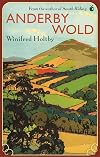
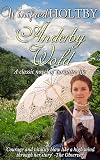
Anderby Wold
by Winifred Holtby
On This Page
Description
Mary Robson is a young Yorkshire woman, married to her solid, unromantic cousin, John. Together they battle to preserve Mary's neglected inheritance, her beloved farm, Anderby Wold. This labour of love - and the benevolent tyranny of traditional Yorkshire ways - have made Mary old before her time. Then into her purposeful life comes David Rossitur, red-haired, charming, eloquent: how can she help but love him? But David is a young man from a different England, radical and committed to social show more change. As their confrontation and its consequences inevitably unfold, Mary's life and that of the calm village of Anderby are changed forever. show lessTags
Recommendations











Member Reviews
Winifred Holtby was born seven miles from where I was born and I have always felt a connection with her, forged primarily by reading ‘South Riding’ as a teenager and reinforced by re-reading and two television series. And she also did what I wanted to do; she left the Yorkshire Wolds and became a writer. But until now, I am ashamed to say, I had not read her earlier novels. ‘Anderby Wold’ is her first; published in 1923 it is a portrayal of a Yorkshire Wolds village in the first years of the twentieth century. I was struck by the similarity to Jane Austen: both focus on the personalities, tensions, the pettiness, resentments and emotions of small communities, and both combine acute social observations with sharp humour.
The novel show more opens with a family party at the farm, Anderby Wold, as Mary Robson and John, her husband of ten years and also her cousin, are celebrating a decade of hard work and penny pinching to clear the mortgage on the farm they had inherited. We are introduced to Mary and the family from the viewpoint of John’s sister, the spiteful Sarah. If ever there was a negative first chapter that makes you think the story is going to be full of unlikeable characters, this is it. It is, perhaps, a sign of its times; I am not sure a novel would be published today with such an ill-feeling introduction. But do persist, this novel is worth reading. We are slowly introduced to each key character with their own viewpoint and take on their agricultural world, where hard toil, tough weather and difficult land unites – and separates – the community. Mary thinks of herself as a considerate benevolent mistress, she sits with sick people, visits the old, supports the school, and distributes gifts at Christmas. But she is unaware that some of the farm labourers resent what they see as her Mrs Bountiful role, a vision of her behaviour to which she is blind. She feels dissatisfaction with the minutiae of her life, dissatisfaction she pragmatically ignores. At a gathering of the village ladies, she listens to the gossip, ‘Mary shivered. They were as lifeless as the uprooted trees, carried from the wold side and laid in the back garden of the farm, awaiting destruction for firewood. Their talk was as meaningless as the rustle of dry leaves on brittle twigs.’
Into this fragile world where people speak bluntly and behaviour can be brusque, comes a writer from Manchester. He is researching the lot of the agricultural labourer with an eye on social change. When he comes into conflict with Mary, the beliefs and assumptions of both are challenged in an Austen-esque manner. As an outsider, David Rossitur is treated first with silence, then with suspicion. The innkeeper’s wife worries about his motivations, ‘Mrs Todd, being a personal of small imagination, had divided mankind into two classes, those who had designs on Victoria [her daughter], those who had designs on her Beer. Last night she had come to the regrettable conclusion that David had no true appreciation of Beer.’ A trade union for agricultural workers is formed, followed inevitably for a strike. At harvest time. Anderby Wold will be changed forever.
Read more of my book reviews at http://www.sandradanby.com/book-reviews-a-z/ show less
The novel show more opens with a family party at the farm, Anderby Wold, as Mary Robson and John, her husband of ten years and also her cousin, are celebrating a decade of hard work and penny pinching to clear the mortgage on the farm they had inherited. We are introduced to Mary and the family from the viewpoint of John’s sister, the spiteful Sarah. If ever there was a negative first chapter that makes you think the story is going to be full of unlikeable characters, this is it. It is, perhaps, a sign of its times; I am not sure a novel would be published today with such an ill-feeling introduction. But do persist, this novel is worth reading. We are slowly introduced to each key character with their own viewpoint and take on their agricultural world, where hard toil, tough weather and difficult land unites – and separates – the community. Mary thinks of herself as a considerate benevolent mistress, she sits with sick people, visits the old, supports the school, and distributes gifts at Christmas. But she is unaware that some of the farm labourers resent what they see as her Mrs Bountiful role, a vision of her behaviour to which she is blind. She feels dissatisfaction with the minutiae of her life, dissatisfaction she pragmatically ignores. At a gathering of the village ladies, she listens to the gossip, ‘Mary shivered. They were as lifeless as the uprooted trees, carried from the wold side and laid in the back garden of the farm, awaiting destruction for firewood. Their talk was as meaningless as the rustle of dry leaves on brittle twigs.’
Into this fragile world where people speak bluntly and behaviour can be brusque, comes a writer from Manchester. He is researching the lot of the agricultural labourer with an eye on social change. When he comes into conflict with Mary, the beliefs and assumptions of both are challenged in an Austen-esque manner. As an outsider, David Rossitur is treated first with silence, then with suspicion. The innkeeper’s wife worries about his motivations, ‘Mrs Todd, being a personal of small imagination, had divided mankind into two classes, those who had designs on Victoria [her daughter], those who had designs on her Beer. Last night she had come to the regrettable conclusion that David had no true appreciation of Beer.’ A trade union for agricultural workers is formed, followed inevitably for a strike. At harvest time. Anderby Wold will be changed forever.
Read more of my book reviews at http://www.sandradanby.com/book-reviews-a-z/ show less
After reading Winifred Holtby's South Riding last month, I was eager to read more of her work. Where South Riding is considered Holtby's masterpiece, Anderby Wold was her debut novel. It shows, but only a bit.
Mary Robson is the novel's protagonist. She's 28, and married to the much older John Robson, who rescued Mary from her father's debts through profitable farming that paid off the farm's mortgage. The book opens shortly after John and Mary have achieved this degree of financial freedom. And while John deserves credit for his farming success, Mary is no slouch. She is somewhat of a pillar in Anderby, visiting the sick and supporting community functions. But she's also a bit of a control freak, insisting on being present at every show more important event to make sure everything is done right. And she's not entirely happy in her marriage, because John is both distant and dull.
One day Mary encounters a young man traveling by foot. He is quite ill, and Mary provides him with shelter for a few days. He turns out to be David Rossitur, a journalist who espouses progressive ideas about farming and labor. His spirited private debates with Mary soon turn into community organizing down the pub, much to the chagrin of Mary and her relations. David forms an alliance with the schoolmaster Mr. Coates, who is not at all on good terms with Mary. Another man arrives from Manchester to form a union, and before you know it farm workers all over Anderby are threatening a strike.
This central conflict provides an opportunity for Winifred Holtby to explore the clash between progressive and conservative ideas. While Holtby was a very liberal thinker, she portrays characters on both sides of the debate sympathetically and often with a bit of humor. The result is an interesting, if somewhat strident, depiction of early 20th century England, showcasing the talent that created South Riding some 13 years later. show less
Mary Robson is the novel's protagonist. She's 28, and married to the much older John Robson, who rescued Mary from her father's debts through profitable farming that paid off the farm's mortgage. The book opens shortly after John and Mary have achieved this degree of financial freedom. And while John deserves credit for his farming success, Mary is no slouch. She is somewhat of a pillar in Anderby, visiting the sick and supporting community functions. But she's also a bit of a control freak, insisting on being present at every show more important event to make sure everything is done right. And she's not entirely happy in her marriage, because John is both distant and dull.
One day Mary encounters a young man traveling by foot. He is quite ill, and Mary provides him with shelter for a few days. He turns out to be David Rossitur, a journalist who espouses progressive ideas about farming and labor. His spirited private debates with Mary soon turn into community organizing down the pub, much to the chagrin of Mary and her relations. David forms an alliance with the schoolmaster Mr. Coates, who is not at all on good terms with Mary. Another man arrives from Manchester to form a union, and before you know it farm workers all over Anderby are threatening a strike.
This central conflict provides an opportunity for Winifred Holtby to explore the clash between progressive and conservative ideas. While Holtby was a very liberal thinker, she portrays characters on both sides of the debate sympathetically and often with a bit of humor. The result is an interesting, if somewhat strident, depiction of early 20th century England, showcasing the talent that created South Riding some 13 years later. show less
‘Anderby World’ was Winifred Holtby’s first novel, written when she was in her early twenties.
She would go on to write finer novels, but this was an excellent start; she wrote of the Yorkshire she knew, understanding the people, the history, the changes wrought by the Great War that she had lived through, and the way that the world was changing still.
The writing has such conviction, and I think it would be fair to say that this is a first novel sowing the seeds of greatness….
When her parents died Mary Robson married John, her steady, sensible, older cousin, so that she could keep the farm at Anderby Wold. It took them ten years to pay off the mortgage, and by then Mary was in full charge of her life and her world. She managed show more her farm, her home, and the village of Anderby. She was a strong and capable woman, and she was firm in her opinions.
She held her own in her social circle, but she was disliked by many. Sarah Bannister, John’s elder sister, who had raised him after their parents died, felt that Mary didn’t appreciate what John had done, leaving his own farm to help her save hers. Mr Coast, the village schoolmaster, was bitter that Mary wouldn’t accept his ideas for the school.
That made Mary vulnerable. The dullness of her marriage, her failure to produce a child, made her vulnerable. And, with debt gone and the farm secure, there was a space in her life, room for something more
It was then that she met David Rossitur, a red-haired, fiery, young idealist who preached socialism. She was captivated by his energy and his passion, she was intrigued by what he had to say. She loved their debates, but she was less happy when he began his work in the village. A colleague was summoned from Manchester, a union was formed a union, and soon Mary faced a choice between meeting demands that she felt were wholly unreasonable or having her farm-workers strike at the worst-possible time.
The story explores the conflict between traditional and progressive views wonderfully well; understanding both, and understanding that there is no black and white, that there are only shades of grey.
Above all it is a human story; a story of real, fallible, believable human beings, who all had good, solid reasons for being the people they were and doing the things they did.
Sarah was critical of Mary, but that came from her love for her brother, and when she was needed she would always be on their side. Mr Coast was critical, but he wanted the best for his school and his community. John was cautious and conservative, but he was content with his place in the world and he understood his wife much more than she realised.
Mary had so much potential, she could have done so much. But she only had her position at Anderby, and she so feared losing it …..
Winifred Holtby made this story so engaging, so readable, and I was captivated.
There are contrivances needed to make the story work, and there were moments when I might have wished for a little more subtlety, but the story did work, and I loved seeing the themes and ideas that she would explore in all of her novels threaded through this story so effectively.
‘Anderby Wold’ captures a particular place and time, a particular point in history very well.
It was clear that Winifred Holtby cared, and that she understood. show less
She would go on to write finer novels, but this was an excellent start; she wrote of the Yorkshire she knew, understanding the people, the history, the changes wrought by the Great War that she had lived through, and the way that the world was changing still.
The writing has such conviction, and I think it would be fair to say that this is a first novel sowing the seeds of greatness….
When her parents died Mary Robson married John, her steady, sensible, older cousin, so that she could keep the farm at Anderby Wold. It took them ten years to pay off the mortgage, and by then Mary was in full charge of her life and her world. She managed show more her farm, her home, and the village of Anderby. She was a strong and capable woman, and she was firm in her opinions.
She held her own in her social circle, but she was disliked by many. Sarah Bannister, John’s elder sister, who had raised him after their parents died, felt that Mary didn’t appreciate what John had done, leaving his own farm to help her save hers. Mr Coast, the village schoolmaster, was bitter that Mary wouldn’t accept his ideas for the school.
That made Mary vulnerable. The dullness of her marriage, her failure to produce a child, made her vulnerable. And, with debt gone and the farm secure, there was a space in her life, room for something more
It was then that she met David Rossitur, a red-haired, fiery, young idealist who preached socialism. She was captivated by his energy and his passion, she was intrigued by what he had to say. She loved their debates, but she was less happy when he began his work in the village. A colleague was summoned from Manchester, a union was formed a union, and soon Mary faced a choice between meeting demands that she felt were wholly unreasonable or having her farm-workers strike at the worst-possible time.
The story explores the conflict between traditional and progressive views wonderfully well; understanding both, and understanding that there is no black and white, that there are only shades of grey.
Above all it is a human story; a story of real, fallible, believable human beings, who all had good, solid reasons for being the people they were and doing the things they did.
Sarah was critical of Mary, but that came from her love for her brother, and when she was needed she would always be on their side. Mr Coast was critical, but he wanted the best for his school and his community. John was cautious and conservative, but he was content with his place in the world and he understood his wife much more than she realised.
Mary had so much potential, she could have done so much. But she only had her position at Anderby, and she so feared losing it …..
Winifred Holtby made this story so engaging, so readable, and I was captivated.
There are contrivances needed to make the story work, and there were moments when I might have wished for a little more subtlety, but the story did work, and I loved seeing the themes and ideas that she would explore in all of her novels threaded through this story so effectively.
‘Anderby Wold’ captures a particular place and time, a particular point in history very well.
It was clear that Winifred Holtby cared, and that she understood. show less
'Hot waves of perfume blew from the ripening corn across their flaming cheeks'
By sally tarbox on 27 Nov. 2012
Format: Paperback
Written in the 1920s, this is the story of Mary Robson - a 28 year old married to a cousin old enough to be her father, in a marriage of convenience. Resigned to her lot, she devotes her time to her home and village affairs. Her interference, as 'queen' of the village, annoys Mr Coast the schoolmaster. And when fiery young socialist David Rossitur shows up and urges the local labourers to strike at harvest time, Coast is only to happy to back him and cause problems for the Robsons.
But Mary is falling for Rossitur...
Perfectly readable but not a very memorable or outstanding work.
By sally tarbox on 27 Nov. 2012
Format: Paperback
Written in the 1920s, this is the story of Mary Robson - a 28 year old married to a cousin old enough to be her father, in a marriage of convenience. Resigned to her lot, she devotes her time to her home and village affairs. Her interference, as 'queen' of the village, annoys Mr Coast the schoolmaster. And when fiery young socialist David Rossitur shows up and urges the local labourers to strike at harvest time, Coast is only to happy to back him and cause problems for the Robsons.
But Mary is falling for Rossitur...
Perfectly readable but not a very memorable or outstanding work.
Anderby Wold is Winifred Holtby's first book, published when she was 25, I think. It is very much a first book, but a first book by a major talent. In it she uses the story of her parents' experience in losing their Yorkshire farm as a result of the unionization of farm workers.
Mary Robson has married her older, stolid cousin in order to save her family's farm. As the story opens, Mary and John have successfully paid off the mortgage and are looking forward to good times. Mary is queen of Anderby village: a benevolent queen, but an autocrat all the same. Into her kingdom comes David Rossitur, a vivid, young labor organizer. Although they know each other only three days, Mary falls in love with him.
The book is filled with loving and show more lovely descriptions of the Yorkshire countryside. The plot is a bit predictable. The writing shows flashes of Holtby's brilliance. I recommend it to anyone who can happily read a book whose pages turn in a leisurely manner. show less
Mary Robson has married her older, stolid cousin in order to save her family's farm. As the story opens, Mary and John have successfully paid off the mortgage and are looking forward to good times. Mary is queen of Anderby village: a benevolent queen, but an autocrat all the same. Into her kingdom comes David Rossitur, a vivid, young labor organizer. Although they know each other only three days, Mary falls in love with him.
The book is filled with loving and show more lovely descriptions of the Yorkshire countryside. The plot is a bit predictable. The writing shows flashes of Holtby's brilliance. I recommend it to anyone who can happily read a book whose pages turn in a leisurely manner. show less
This novel originally published in 1923 was Winifred Holtby's first published novel. While it lacks the scope, drama and power of her final and most famous novel South Riding, there is still much to commend it. An agricultural community on the brink of great change, with the raise of unions and social change is brought faithfully to life. Mary Robson is brilliant portrayed old before her time farmers wife, who believes the villagers couldn't manage without her, and makes herself indispensable. Mary manages the farm, her much older husband deferring to many of her decisions - she's a strong, stubborn woman, yet the readers can see her vulnerability, as her way of life is threatened and her disappointments lead her to desperately try to show more keep the status quo. Mary's fascination with fiery radical David Rossitur seems doomed from the start, coming as they do from different worlds and different persepectives.
I enjoyed this early Winifred Holtby novel immensely, the writing is glorious, with some fabulous characterisation, which clearly shows the emerging brilliant writer she already was. show less
I enjoyed this early Winifred Holtby novel immensely, the writing is glorious, with some fabulous characterisation, which clearly shows the emerging brilliant writer she already was. show less
Winifred Holtby quickly became one of my favorite authors when I read The Crowded Street early last year. Although Anderby Wold was Holbty’s first published novel, it ranks up there as one of my favorites. The novel is set in a familiar Holtby milieu—agricultural and rural Yorkshire. Mary Robson is a young housewife married to a man much older than she. Her marriage is pleasant, but lacking in passion. Although she has lived in Anderby all her life, she is somewhat of an outsider. Nonetheless, she’s a kind of social queen. One day, in the most dramatic fashion possible, she meets David Rossitur, a socialist writer who really shakes things up, so to speak, both in Anderby and with Mary herself.
Anderby Wold suffers a little bit from show more first-time writer’s syndrome; Winifred Holtby uses a few writers’ clichés here and there (witness the scene where Mary and David meet. The introduction of David into Mary’s life certainly isn’t subtle, and David is mentioned by name even before Mary knows who he is). But you can definitely see where Winifred Holtby’s career is going. The hallmarks of her books are there: a provincial Yorkshire town; an opinionated, outsider main character. South Riding, in my opinion, is one of her best books, but Anderby Wold comes a close second.
This is a novel that is heavy on character development; this is also a novel where the place in which it’s set also becomes a character. Winifred Holtby’s love for Yorkshire is very clear in this book. The author tends to hit her reader over the head with her political themes, but she’s not partial to one side or the other.
Winifred Holtby was born into a farming family in Yorkshire; for many years, she was a friend of the writer Vera Brittain (who wrote about her in Testament of Friendship, a copy of which I intend to track down immediately). She published six novels and several collections of short stories. Tragically, Holtby died of kidney disease at the age of 37. If not for that, Winifred Holtby could easily have been one of the 20th century’s greatest female writers. As it is, it’s a shame that her books are nearly out of print (although Virago is doing another revival of five of them this spring) and that she isn’t better known. show less
Anderby Wold suffers a little bit from show more first-time writer’s syndrome; Winifred Holtby uses a few writers’ clichés here and there (witness the scene where Mary and David meet. The introduction of David into Mary’s life certainly isn’t subtle, and David is mentioned by name even before Mary knows who he is). But you can definitely see where Winifred Holtby’s career is going. The hallmarks of her books are there: a provincial Yorkshire town; an opinionated, outsider main character. South Riding, in my opinion, is one of her best books, but Anderby Wold comes a close second.
This is a novel that is heavy on character development; this is also a novel where the place in which it’s set also becomes a character. Winifred Holtby’s love for Yorkshire is very clear in this book. The author tends to hit her reader over the head with her political themes, but she’s not partial to one side or the other.
Winifred Holtby was born into a farming family in Yorkshire; for many years, she was a friend of the writer Vera Brittain (who wrote about her in Testament of Friendship, a copy of which I intend to track down immediately). She published six novels and several collections of short stories. Tragically, Holtby died of kidney disease at the age of 37. If not for that, Winifred Holtby could easily have been one of the 20th century’s greatest female writers. As it is, it’s a shame that her books are nearly out of print (although Virago is doing another revival of five of them this spring) and that she isn’t better known. show less
Members
- Recently Added By
Lists

Favourite Virago Modern Classics
183 works; 38 members

...read all, pay nowt (Books set in Yorkshire)
86 works; 14 members

2025 Christmas Gifts
70 works; 19 members
Author Information

24+ Works 2,392 Members
Some Editions
Series
Belongs to Publisher Series
Work Relationships
Common Knowledge
- Canonical title
- Anderby Wold
- Original title
- Anderby Wold
- Original publication date
- 1923
- People/Characters
- Mary Robson; David Rossitur
- Important places
- Market Burton; Anderby Wold
- Epigraph
- 'Felicity is a continual progresse of the desire from one object to another, the attaining of the former being still but the way to the later...so that, in the first place, I put for a generall inclination of all mankind, a p... (show all)erpetuall and restlesse desire of power after power which ceaseth only after death...and there shall be no contentment but proceeding.'
-Hobbes. Leviathan, I, ii. - Dedication
- To
David and Alice Holtby
is dedicated
this imaginary story of
imaginary events on an
imaginary farm - First words
- When Sarah Bannister's dogcart bowled along the High Street of Market Burton, its progress was observed by several pairs of eyes, peeping discreetly from behind veiled windows.
Winifred Holtby was in hear (sic) early twenties when she wrote Anderby Wold, and it is an unusually satisfying first novel. (Introduction) - Last words
- (Click to show. Warning: May contain spoilers.)Golden beyond the sodden shrubbery the sun rose slowly over Anderby Wold.
(Click to show. Warning: May contain spoilers.)It is more than time that this outstanding novel should be made available to new audiences. (Introduction) - Original language
- English
Classifications
Statistics
- Members
- 225
- Popularity
- 145,035
- Reviews
- 9
- Rating
- (3.82)
- Languages
- English
- Media
- Paper, Audiobook, Ebook
- ISBNs
- 5
- ASINs
- 7