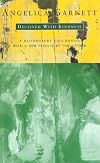
Deceived With Kindness: A Bloomsbury Childhood
by Angelica Garnett
On This Page
Description
'Passionate, lucid, risky, rash, hard to put down and impossible to forget. ' Hilary Spurling, OBSERVER Angelica Garnett may truly be called a child of Bloomsbury. Her Aunt was Virginia Woolf, her mother Vanessa Bell, and her father Duncan Grant, though for many years Angelica believed herself, naturally enough, the daughter of Vanessa's husband Clive. Her childhood homes, Charleston in Sussex and Gordon Square in London, were both centres of Bloomsbury activity, and she grew up surrounded show more by the most talked-about writers and artists of the day - Leonard and Virginia Woolf, Roger Fry, the Stracheys, Maynard Keynes, David Garnett (whom she later married), and many others. But the book is also a record of a young girl's particular struggle to emerge from that extraordinary and intense milieu as a mature and independent woman. With an honesty that is by degrees agonising and uplifting, the author creates a vibrant, poignant picture of her mother, Vanessa Bell, of her own emergent individuality, and of the Bloomsbury era. show lessTags
Recommendations
















Member Recommendations

Member Reviews
Like many who enjoy literature, I've always had a fascination with the Bloomsbury Group; that heady combination of intelligence, avant-garde creativity, fluid interpersonal relationships, and of course the big name shape-shifters that made up the group. Virginia Woolf and her artist sister Vanessa Bell have always been particularly interesting to me - I adore Woolf's writing (even though it took me a few decades to warm up to it), and also the artistic style of Vanessa, who had perhaps the most brow-raising domestic set-up of them all. It was therefore inevitable that I would read her daughter Angelica Garnett's memoir - who better to spill the tea than someone who grew up in the middle of the Bloomsbury madness.
Angelica Garnett's life show more was destined to be bohemian and dysfunctional from the moment she was conceived. Vanessa Bell (although married to Clive Bell), was deeply in love with the homosexual artist Duncan Grant, who she considered to be the great love of her life. Persuading him to have a sexual encounter with her to solidify their bond through a child, Bell became pregnant with Angelica, and went on to live domestically (but not in a sexual relationship) with Grant for 50 years (whilst still remaining married to Clive Bell). Angelica believed Clive Bell to be her father until the age of 18, and in this memoir she talks much of how Clive Bell had the capacity to be the father she wanted yet was constrained by knowing that Angelica was not his child, whilst Grant, although always amiable, was not cut out for fatherhood, and never attempted to lay down the fatherly boundaries she was searching for. Although shocking, in many ways it's not surprising that Angelica went on to marry Bunny Garnett, friend of her mother and sometime lover of her father, who pronounced when he saw her for the first time in her cradle that he could marry her, despite their 26 year age gap.
Angelica Garnett's life was therefore a hot mess of domestic and romantic arrangements, with this dysfunction played out in the spotlight and infamy of the Bloomsbury Group. She writes with skill and finesse in this memoir, and it's a shame she only published another couple of works beyond this. Her prose is often dense and required careful reading, so I never read large swathes of this memoir at a time, yet I never bored of the insights into her most dysfunctional upbringing.
In an updated preface ten years or so after the original publication in 1984, Garnett questions if she would write the same book again if starting from scratch, and happily concludes that she would. Her relationship with Vanessa was oppressive, and to give Garnett her due at several points she's at pains to point out that this is just her perspective. Vanessa clearly loved her dearly, and reading between the lines in many ways too much. There was no such word as no to Angelica, and as soon as she hit any obstacle in her education Vanessa insisted she was removed from the subject of difficulty, such that she never reached her academic capabilities. Despite all the freedom, what Angelica desperately sought was structure, which Vanessa was incapable of giving, yet she was a formidable influence over Angelica, a shadow that she never felt she could escape from. I had sympathy for Vanessa at times, as parenthood never comes with a handbook and clearly her intentions were good, yet the harder she tried to more she seemed to alienate herself from Angelica.
This is a memoir that probably appeals more to those already with an interest in the Bloomsbury group, otherwise I expect it could be a bit of a slog at times (although it's relatively slim), but I thoroughly enjoyed this fly-on-the-wall insight into the strange lives of part of this famous family.
4 stars - probably a niche read. show less
Angelica Garnett's life show more was destined to be bohemian and dysfunctional from the moment she was conceived. Vanessa Bell (although married to Clive Bell), was deeply in love with the homosexual artist Duncan Grant, who she considered to be the great love of her life. Persuading him to have a sexual encounter with her to solidify their bond through a child, Bell became pregnant with Angelica, and went on to live domestically (but not in a sexual relationship) with Grant for 50 years (whilst still remaining married to Clive Bell). Angelica believed Clive Bell to be her father until the age of 18, and in this memoir she talks much of how Clive Bell had the capacity to be the father she wanted yet was constrained by knowing that Angelica was not his child, whilst Grant, although always amiable, was not cut out for fatherhood, and never attempted to lay down the fatherly boundaries she was searching for. Although shocking, in many ways it's not surprising that Angelica went on to marry Bunny Garnett, friend of her mother and sometime lover of her father, who pronounced when he saw her for the first time in her cradle that he could marry her, despite their 26 year age gap.
Angelica Garnett's life was therefore a hot mess of domestic and romantic arrangements, with this dysfunction played out in the spotlight and infamy of the Bloomsbury Group. She writes with skill and finesse in this memoir, and it's a shame she only published another couple of works beyond this. Her prose is often dense and required careful reading, so I never read large swathes of this memoir at a time, yet I never bored of the insights into her most dysfunctional upbringing.
In an updated preface ten years or so after the original publication in 1984, Garnett questions if she would write the same book again if starting from scratch, and happily concludes that she would. Her relationship with Vanessa was oppressive, and to give Garnett her due at several points she's at pains to point out that this is just her perspective. Vanessa clearly loved her dearly, and reading between the lines in many ways too much. There was no such word as no to Angelica, and as soon as she hit any obstacle in her education Vanessa insisted she was removed from the subject of difficulty, such that she never reached her academic capabilities. Despite all the freedom, what Angelica desperately sought was structure, which Vanessa was incapable of giving, yet she was a formidable influence over Angelica, a shadow that she never felt she could escape from. I had sympathy for Vanessa at times, as parenthood never comes with a handbook and clearly her intentions were good, yet the harder she tried to more she seemed to alienate herself from Angelica.
This is a memoir that probably appeals more to those already with an interest in the Bloomsbury group, otherwise I expect it could be a bit of a slog at times (although it's relatively slim), but I thoroughly enjoyed this fly-on-the-wall insight into the strange lives of part of this famous family.
4 stars - probably a niche read. show less
Before saying anything, I will explain that the 4 1/2 stars are for a perceived genuineness to this memoir, an almost desperate effort to make sense of a childhood, which while it clearly had moments of happiness, was shot through with the effect of all the words not being said, all the explanations not being made. I did come to feel that this was a 'replay' of a classic Demeter-Persephone story, with Angelica's husband, David Garnett (Bunny) clearly in the role of Hades, taking the young girl away. In some ways it is an awkward book and an uncomfortable one, and at first I wasn't sure if I wanted to read it, as it appeared to be offering a much starker view of the inner world of the Bloomsbury folk than I have ever encountered and I show more was afraid there was vindictiveness in it. For all my wide reading, I realize I had a view of Vanessa informed mostly by Virginia's view of her, bountiful, calm, equilibrated in a way she herself never was, presiding over her house and strange menage a trois with calm dignity etcetera. I had a vague idea of Angelica as a somewhat 'difficult' child who had then gone off with a man twice her age, in a shocking defiant way. Vanessa had three children, two with her husband Clive Bell, and one with Duncan Grant, the passion of her life, but a homosexual who only briefly had a physical relationship with her, although their love/friendship continued through their lifetimes. Angelica grew up in this household, the unacknowledged child of Duncan and Vanessa. Both potential fathers, the real and the legal, however, declined to take on Vanessa and have some say in Angelica's upbrining and so Vanessa made all the decisions to do with her education etcetera, with disastrous effect as her priority always, was to protect her and smooth her way. Nothing was explained, little was required of her, and Angelica grew up somehow always 'locked out' of understanding and experience gained from hard work and high expectations from your parents. It is almost a horror story, frankly, not that far off from a kind of abuse by benign neglect - and it is a window into the ways in which this was a transitional group of people. While they had rejected the Victorian ways of their parents and they declared themselves bohemian, they had no tools for actually confronting and discussing and being open with one another, their upper-middle-class selves just could not take bohemianism that far! That is - you would accept that your former lover was gay, but you couldn't ask him what to do about your mutual child.... as if just accepting difference was as far as they could go. If you are a Bloomsbury afficionado, this is a must read, but expect to see things a bit less rosily at the end. I commend Angelica Garnett for her efforts to make sense of her life and to move on. It's quite impressive. ****1/2 show less
Angelica Garnett was the daughter of Vanessa (Stephens) Bell and Duncan Grant, inner circle members of the Bloomsbury group. She didn’t learn that Grant was her father until she was 18, led to believe through it never actually being stated that her mother’s husband, Clive Bell, was her father.
“Deceived with Kindness” is the story of her childhood, adolescence and early twenties in this rarified atmosphere of art and artists, writers, musicians, actors, many of whom lived in defiance of the codes of conduct of the day. The Bells had enough income to be able to keep a home in London and one in the country, supported by a cast of cooks and servants. But there any semblance of convention stopped for their existence was bohemian and show more unconventional. Vanessa was the powerhouse at the centre of it all, her powerful personality guiding both Bell and Grant throughout the years. Bell had his own place in London but his wife continued to live with Grant, with whom she had a deep relationship around art, if eventually nothing else.
Angelica was a child with no fathers. Bell, not being her biological father, was steps removed from her. Grant was completely incapable of functioning as a father. Although she portrays him as sweet and somewhat vague, the image of him is of a rather spineless character who just wandered through life doing pretty much what he pleased.
This benign neglect on the one hand and the forceful personality of her mother on the other left Angelica a prime target for the machinations of Bunny Garnett, her father’s former lover. More than twice her age, he targetted her for acquisition at her cradle, a plan he carried out. Her marriage to him left her relationship to her mother permanently damaged.
The book is really an attempt to come to grips with all of this on the part of Angelica. In doing so, it sheds light into certain corners of Virginia Woolf’s personality, Vanessa Bell and the lives of the whole Bloomsbury group. But that illumination is incidental to the real purpose of the book: a deeply introspective look by an individual at what has shaped them to be the person they have ended up being. An interesting read. show less
“Deceived with Kindness” is the story of her childhood, adolescence and early twenties in this rarified atmosphere of art and artists, writers, musicians, actors, many of whom lived in defiance of the codes of conduct of the day. The Bells had enough income to be able to keep a home in London and one in the country, supported by a cast of cooks and servants. But there any semblance of convention stopped for their existence was bohemian and show more unconventional. Vanessa was the powerhouse at the centre of it all, her powerful personality guiding both Bell and Grant throughout the years. Bell had his own place in London but his wife continued to live with Grant, with whom she had a deep relationship around art, if eventually nothing else.
Angelica was a child with no fathers. Bell, not being her biological father, was steps removed from her. Grant was completely incapable of functioning as a father. Although she portrays him as sweet and somewhat vague, the image of him is of a rather spineless character who just wandered through life doing pretty much what he pleased.
This benign neglect on the one hand and the forceful personality of her mother on the other left Angelica a prime target for the machinations of Bunny Garnett, her father’s former lover. More than twice her age, he targetted her for acquisition at her cradle, a plan he carried out. Her marriage to him left her relationship to her mother permanently damaged.
The book is really an attempt to come to grips with all of this on the part of Angelica. In doing so, it sheds light into certain corners of Virginia Woolf’s personality, Vanessa Bell and the lives of the whole Bloomsbury group. But that illumination is incidental to the real purpose of the book: a deeply introspective look by an individual at what has shaped them to be the person they have ended up being. An interesting read. show less
Angelica Garnett was the daughter of painters Vanessa Bell and Duncan Grant, but she grew up assuming her mother's husband, Clive Bell was her father. Although I knew this fact, I did not know the circumstances. Garnett explains:
"But Vanessa knew exactly what she wanted. She persuaded Duncan to give her a child, prepared to take the responsibility on herself provided he remained close to her. For her he was a genius, his offspring destined to be exceptional."
Except Angelica's life actually didn't turn out to be that exceptional--odd, yes, but not exceptional. This memoir seems to me to be her way of chasing down and dealing with the demons that came from growing up in Bloomsbury, surrounded by unusual but very intelligent adults and show more very few children. Vanessa Bell loved her own children, but didn't provide much guidance, as according to Garnett, her goal in life was to be unconventional. Written at the age of 66, this memoir expresses Garnett's feelings of being raised with a lack of real parenting.
Deceived With Kindness is an uneven book--some sections were dull, but some absolutely sparkled. I could see the influence of her Aunt Virginia's literary flair. She writes some beautiful passages about Christmases at the Bell family estate, boring winters in London, and annual spring trips in France. I was looking forward to hearing her explain how at the age of 19 she married 48 year old David (Bunny) Garnett, who had once been Duncan Grant's lover, but I found this part completely unsatisfying.
Recommended for: Readers who are interested in Bloomsbury, figures in modernism, or bohemian English life from the 1920s through the 1950s. This memoir won the 1985 JR Ackerley Prize for Autobiography, so I'd also recommend it to people who enjoy reading memoirs. show less
"But Vanessa knew exactly what she wanted. She persuaded Duncan to give her a child, prepared to take the responsibility on herself provided he remained close to her. For her he was a genius, his offspring destined to be exceptional."
Except Angelica's life actually didn't turn out to be that exceptional--odd, yes, but not exceptional. This memoir seems to me to be her way of chasing down and dealing with the demons that came from growing up in Bloomsbury, surrounded by unusual but very intelligent adults and show more very few children. Vanessa Bell loved her own children, but didn't provide much guidance, as according to Garnett, her goal in life was to be unconventional. Written at the age of 66, this memoir expresses Garnett's feelings of being raised with a lack of real parenting.
Deceived With Kindness is an uneven book--some sections were dull, but some absolutely sparkled. I could see the influence of her Aunt Virginia's literary flair. She writes some beautiful passages about Christmases at the Bell family estate, boring winters in London, and annual spring trips in France. I was looking forward to hearing her explain how at the age of 19 she married 48 year old David (Bunny) Garnett, who had once been Duncan Grant's lover, but I found this part completely unsatisfying.
Recommended for: Readers who are interested in Bloomsbury, figures in modernism, or bohemian English life from the 1920s through the 1950s. This memoir won the 1985 JR Ackerley Prize for Autobiography, so I'd also recommend it to people who enjoy reading memoirs. show less
Angelica Garnett, dochter van Vanessa Bell en nicht van Virginia Woolf, hoort op 18-jarige leeftijd dat haar vader niet Clive Bell is, maar wel de homoseksuele schilder, Duncan Grant, die haar moeder op die manier aan zich probeerde te binden. Niet in staat om voor zichzelf te denken, trouwt zij met de veel oudere David 'Bunny' Garnett, die bij haar geboorte aanwezig was en toen aankondigde dat hij met haar zou trouwen. Het huwelijk houdt niet stand. Pas als haar ouders gestorven zijn, kan zij de dingen op een rijtje zetten en komt zij min of meer in het reine met het verleden.
Yes indeed deceived! After reading the book I was left with completely different views of Clive, Vanessa, and Duncan that I had imagined from reading Virginia Woolf's letters and diaries. Still can't figure out what Vanessa was thinking.
Een beschrijving van het leven van Vanessa Bell en haar relatie tot haar dochter, Angelica Garnett. Het boek is eerlijk over de moeilijke relatie: Angelica die lange tijd in het onzekere gelaten wordt over wie haar vader is en die uiteindelijk trouwt met de minnaar van Duncan, Bunny. Voor voor psychologen zeker. Het boek geeft een inkijkje in vooral het opgroeien bij een moeder die haar gevoelens niet kon tonen en waar emoties onbespreekbaar waren. In dit boek kon ik niet echt doorlezen, was ook regelmatig afgeleid en dat doet dit boek waarschijnlijk geen recht.
Members
- Recently Added By
Author Information

6+ Works 292 Members
Awards and Honors
Awards
Common Knowledge
- People/Characters
- Angelica Garnett; Vanessa Bell; Duncan Grant; Clive Bell; Virginia Woolf; David Garnett (show all 7); Quentin Bell
- First words
- In 1975 I was living on the north side of London in Islington, a prey to loneliness and regret, following a love affair with someone much younger than myself. - Prologue
For many years I was so much a part of Vanessa, and she of me, that I could not have attempted to describe her with detatchment, and even now I sometimes feel as though she might be looking over my shoulder. - Last words
- (Click to show. Warning: May contain spoilers.)No outward habits were changed, but the raison d'etre of the old ones had vanished.
Classifications
Statistics
- Members
- 267
- Popularity
- 121,811
- Reviews
- 7
- Rating
- (3.54)
- Languages
- 6 — English, French, German, Italian, Spanish, Swedish
- Media
- Paper, Ebook
- ISBNs
- 13
- ASINs
- 2