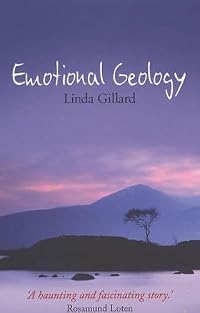
Emotional Geology
by Linda Gillard
On This Page
Description
Rose Leonard, on the run from her life, has taken refuge in a remote island community, cocooned in her work and solitude in a house by the sea. However, still haunted by her past, Rose must decide whether she has chosen a new life - or just a different kind of death? Life and love are offered by new friends, her daughter, and Calum, a younger man who has his own demons to exorcise. But does Rose, with her tenuous hold on life and sanity, have the courage to say yes to life and put her past show more behind her? show lessTags
Recommendations




























Member Reviews
Although rocks have always symbolized stability, in fact to a geologist what they show is change. Over time, mountains push up from the earth, mesas and buttes are formed, striations appear, arroyos are carved out, and the shapes metamorphose. But all this takes a very long time. In Gillard’s first novel, Emotional Geology, she weaves a story of emotional healing into the contoured landscape that plays such a large role in the lives of its inhabitants. The process of healing, like the process of geological formation, is many-layered, slow, and inexorable. And with both, the surface must be penetrated to discover the secrets within. The smooth rock face that you see from far off is revealed to have fractures and fissures when you get show more close. And the stony exterior may conceal the sparkling essence of a precious gem.
On a remote isle of Uist, west of the coast of Scotland, Rose Leonard comes to live and try to rebuild her sanity after the betrayal of her lover Gavin and her subsequent mental breakdown. Diagnosed with bipolar affective disorder, she seeks the tranquility and isolation of the Hebrides Isles where she can feel more in control. She sets up a workroom for her textile art and balances the intrusiveness of bad memories with the onslaught of sea and wind and weather. Through her textiles she looks for patterns to anchor and explain her feelings.
Among her new neighbors is a handsome poet, Calum, who is also a technical rock climber like Gavin was. Now Calum only climbs in summers on the Isle of Skye, and otherwise teaches school and writes poems. There is a sadness about him; a forced gaiety; but he remains as silent as stone. He and Rose are drawn to each other, and to the ways in which their text and textures complement each other. They plan a joint exhibit of their work.
As their relationship grows, they both realize they cannot rush the geologic-like process of healing from their previous heartbreaks. Together, they struggle to help each other break through the carapaces they have built up around themselves. They count on time and nature to reshape them, even as it remolds the mountains of their island.
Evaluation: Although this book does not exhibit the polish of Gillard’s later work, it is nevertheless astounding in its ability to capture the reality of people and behavior and emotions. The dialogue seems honest and true, like the characters. You don’t want to leave them when the book is over, because these are people just like your friends and family, who have strengths and weaknesses that seem familiar. There is definitely emotional pain in this book, but there is a lot of humor and a lot of the complex ropy entanglements of love as well. Gillard's books are not light summer reading; they have more gravitas; they are enduring. Highly recommended. show less
On a remote isle of Uist, west of the coast of Scotland, Rose Leonard comes to live and try to rebuild her sanity after the betrayal of her lover Gavin and her subsequent mental breakdown. Diagnosed with bipolar affective disorder, she seeks the tranquility and isolation of the Hebrides Isles where she can feel more in control. She sets up a workroom for her textile art and balances the intrusiveness of bad memories with the onslaught of sea and wind and weather. Through her textiles she looks for patterns to anchor and explain her feelings.
Among her new neighbors is a handsome poet, Calum, who is also a technical rock climber like Gavin was. Now Calum only climbs in summers on the Isle of Skye, and otherwise teaches school and writes poems. There is a sadness about him; a forced gaiety; but he remains as silent as stone. He and Rose are drawn to each other, and to the ways in which their text and textures complement each other. They plan a joint exhibit of their work.
As their relationship grows, they both realize they cannot rush the geologic-like process of healing from their previous heartbreaks. Together, they struggle to help each other break through the carapaces they have built up around themselves. They count on time and nature to reshape them, even as it remolds the mountains of their island.
Evaluation: Although this book does not exhibit the polish of Gillard’s later work, it is nevertheless astounding in its ability to capture the reality of people and behavior and emotions. The dialogue seems honest and true, like the characters. You don’t want to leave them when the book is over, because these are people just like your friends and family, who have strengths and weaknesses that seem familiar. There is definitely emotional pain in this book, but there is a lot of humor and a lot of the complex ropy entanglements of love as well. Gillard's books are not light summer reading; they have more gravitas; they are enduring. Highly recommended. show less
Wow!
I really enjoyed The Dangerous Sports Euthanasia Society, but it was a very different type of book to this Transita one.
The writing was very evocative without being a chore to read, which reminded me in a way of Never Let Me Go by Kazuo Ishiguro. Both books really came to life in my head, but were quite easy to read. I wasn't so sure about the poetry bits. I like some poetry, but I think I tend to like prose and poetry separate. Overall, utterly absorbing, and haunting. I also appreciated how LG wrote the book very much from the point of view of Rose, and brought across her feelings so well, but also made it clear through her daughter that she wasn't necessarily the easiest person to live with. Mental illness affects both the show more sufferer and their close friends/family and in an understated way, I really liked how this was put across.
A page-turner, a romance, and haunting as well as a beautiful evocation of the Scottish Isles - I'd like to visit now! Something I'd definitely like to read again at a later date. show less
I really enjoyed The Dangerous Sports Euthanasia Society, but it was a very different type of book to this Transita one.
The writing was very evocative without being a chore to read, which reminded me in a way of Never Let Me Go by Kazuo Ishiguro. Both books really came to life in my head, but were quite easy to read. I wasn't so sure about the poetry bits. I like some poetry, but I think I tend to like prose and poetry separate. Overall, utterly absorbing, and haunting. I also appreciated how LG wrote the book very much from the point of view of Rose, and brought across her feelings so well, but also made it clear through her daughter that she wasn't necessarily the easiest person to live with. Mental illness affects both the show more sufferer and their close friends/family and in an understated way, I really liked how this was put across.
A page-turner, a romance, and haunting as well as a beautiful evocation of the Scottish Isles - I'd like to visit now! Something I'd definitely like to read again at a later date. show less
Geology, according to the dictionary, is "the science that treats of the origin and structure of the earth, including the physical forces which have shaped it and its physical and organic history..." (Funk & Wagnalls, pg. 268). Geology of a different kind, that of looking at the emotional forces which shape the heart and soul, is the focus of Linda Gillard's novel, Emotional Geology.
Emotional Geology is the story of Rose, a textile artist suffering from bipolar disorder, who is trying to recover from the devastating effects of a broken relationship. Following a hospital stay, she knows within herself that the only way she can possibly heal is to seek solitude, return to her work, and become chemically independent. She finds herself in a show more cottage on the island of Uist. It is here where she fights to put her past behind her while putting the pieces of her life back into place, not realizing just how much she needs the help and love of others in order to accomplish this. She becomes a collaborator with her neighbor's brother, Calum, who teaches poetry. They decide to put their creative talents together in an exhibition of textile art with companion poetry pieces. The collaboration/friendship seems destined to move in the direction of a new relationship, but both Rose and Calum have private battles to overcome before that is possible. It is through these battles that the emotional geology is forged.
I really enjoyed Emotional Geology. I liked the descriptions of the Scottish islands and their inhabitants. I learned about the thrills and dangers of mountain climbing. I loved exploring the textures of the quilts through their descriptions. But what impressed me the most, though, were the characters. Ms. Gillard allows them to be believeable. In Rose we see an insecure, almost middle-aged woman struggle for her emotional and physical survival. She has difficulty with relationships, even with that of her adult daughter. Not all mother/daughter relationships in real life are those of best friends, and it is refreshing to see this portrayed in fiction. In Calum we see a man who has plenty of emotional struggles of his own, which he tends to drown quietly in alcohol. Rose and Calum are like real people - neither is perfect. Yet their strengths and weaknesses play well off each other.
Emotional Geology is good fiction. It is creative, insightful, and most importantly, believeable. show less
Emotional Geology is the story of Rose, a textile artist suffering from bipolar disorder, who is trying to recover from the devastating effects of a broken relationship. Following a hospital stay, she knows within herself that the only way she can possibly heal is to seek solitude, return to her work, and become chemically independent. She finds herself in a show more cottage on the island of Uist. It is here where she fights to put her past behind her while putting the pieces of her life back into place, not realizing just how much she needs the help and love of others in order to accomplish this. She becomes a collaborator with her neighbor's brother, Calum, who teaches poetry. They decide to put their creative talents together in an exhibition of textile art with companion poetry pieces. The collaboration/friendship seems destined to move in the direction of a new relationship, but both Rose and Calum have private battles to overcome before that is possible. It is through these battles that the emotional geology is forged.
I really enjoyed Emotional Geology. I liked the descriptions of the Scottish islands and their inhabitants. I learned about the thrills and dangers of mountain climbing. I loved exploring the textures of the quilts through their descriptions. But what impressed me the most, though, were the characters. Ms. Gillard allows them to be believeable. In Rose we see an insecure, almost middle-aged woman struggle for her emotional and physical survival. She has difficulty with relationships, even with that of her adult daughter. Not all mother/daughter relationships in real life are those of best friends, and it is refreshing to see this portrayed in fiction. In Calum we see a man who has plenty of emotional struggles of his own, which he tends to drown quietly in alcohol. Rose and Calum are like real people - neither is perfect. Yet their strengths and weaknesses play well off each other.
Emotional Geology is good fiction. It is creative, insightful, and most importantly, believeable. show less
I loved this book from the very first page. It immediately pulls you in, as the story starts to unfold. Rose has bi-polar, and although I don’t know how accurate the portrayal it is, it seems very real, and gives a rather frightening insight.
Rose’s past is gradually revealed as the story develops, along with it’s affect on her present.. and the people around her. Her relationship with Calum is explored, as well as the one she has with the daughter.
The author calls it “an off-beat love story”, but it offers so much more. It remains a warm, positive story, whilst not shying away from the thoughts and emotions that are needed to make it come alive. It’s a book to lose yourself in, and I will be searching out more from this author.
Rose’s past is gradually revealed as the story develops, along with it’s affect on her present.. and the people around her. Her relationship with Calum is explored, as well as the one she has with the daughter.
The author calls it “an off-beat love story”, but it offers so much more. It remains a warm, positive story, whilst not shying away from the thoughts and emotions that are needed to make it come alive. It’s a book to lose yourself in, and I will be searching out more from this author.
This was a tough read. The subject matter that is. Rose is attempting to start fresh after an attempted suicide; a subject that I personally tend to stay away from. It's not a very enticing subject, and not very entertaining for obvious reasons. But sometimes it's not what is being said, but how one says it that matters. I could not have stomached this story if Gillard's writing had been any less beautiful.
It's fitting that it's a story about an artist, as it paints very vivid pictures. I envisioned landscapes and backdrops, in an array of colors and textures as Rose created each piece. I felt and shared Calum's frustration as he struggled to reach Rose, who was still trapped in the place between the death of her old life and the hope show more of a new one. I loved that their relationship grew through their art, and they found each other in her pictures and his poems.
I also hated Gavin. What a horror of a human being. And while I can't blame him for Rose's actions, those are hers to own and hers alone, I'd rather she tried to off him than herself. By the end of the story I had yet to come to terms with her daughter, Megan, and thinking on her now I'm still not sure that I could forgive her, even if her mother could.
The book takes place on an island off the coast of Scotland and the entire story is steeped in cold and damp, and the struggle to keep it out of the heart. Normally I would be opposed to the idea of two sad saps coming together but Rose and Calum's relationship was not one about healing by relying on another. I would not have been able to tolerate a needy, dependant, damaged love between two damaged people. Rose was adamant that she would be the one to fix Rose, and Calum never once interfered, each of them attending to their own pasts without making the other its keeper. show less
It's fitting that it's a story about an artist, as it paints very vivid pictures. I envisioned landscapes and backdrops, in an array of colors and textures as Rose created each piece. I felt and shared Calum's frustration as he struggled to reach Rose, who was still trapped in the place between the death of her old life and the hope show more of a new one. I loved that their relationship grew through their art, and they found each other in her pictures and his poems.
I also hated Gavin. What a horror of a human being. And while I can't blame him for Rose's actions, those are hers to own and hers alone, I'd rather she tried to off him than herself. By the end of the story I had yet to come to terms with her daughter, Megan, and thinking on her now I'm still not sure that I could forgive her, even if her mother could.
The book takes place on an island off the coast of Scotland and the entire story is steeped in cold and damp, and the struggle to keep it out of the heart. Normally I would be opposed to the idea of two sad saps coming together but Rose and Calum's relationship was not one about healing by relying on another. I would not have been able to tolerate a needy, dependant, damaged love between two damaged people. Rose was adamant that she would be the one to fix Rose, and Calum never once interfered, each of them attending to their own pasts without making the other its keeper. show less
Confusing at first, as this book switches frequently between first and third person narration. But the characters are well drawn, and I soon got caught up in the story. It features Rose, a textile artist who has moved to the island of Uist in the Scottish Highlands, as she recovers from the traumatic breakdown of a relationship a few years previously.
Poetry and art complement each other, and there are some moving, even shocking sections of the book as Rose and her neighbour's brother unravel their difficult past histories and learn to forgive themselves. More bad language than I'm comfortable with - so much it rather lost its effect - but otherwise a very readable and thought-provoking book.
Poetry and art complement each other, and there are some moving, even shocking sections of the book as Rose and her neighbour's brother unravel their difficult past histories and learn to forgive themselves. More bad language than I'm comfortable with - so much it rather lost its effect - but otherwise a very readable and thought-provoking book.
Rose Leonard has moved to North Uist, a Hebridean island off the west coast of Scotland, to start afresh after having a mental breakdown. There she meets Calum, a man as deeply flawed as she is, although she doesn't realise this at first, as she is so absorbed in her own feelings. Slowly she comes to realise that she is not the only person to have experienced tragedy and hurt.
Without giving anything away, there is a part of Calum's story that made me cry and was so very moving. This is the third Linda Gillard book that I have read (having read them in reverse order) and I love them all so much. The writing in Emotional Geology was superb, and interesting with the change between first and third person, which worked very well.
I came away show more with such strong feelings from this book that it left its effect on me for a while after reading it. I heartily recommend this author. I loved her descriptions of North Uist too. show less
Without giving anything away, there is a part of Calum's story that made me cry and was so very moving. This is the third Linda Gillard book that I have read (having read them in reverse order) and I love them all so much. The writing in Emotional Geology was superb, and interesting with the change between first and third person, which worked very well.
I came away show more with such strong feelings from this book that it left its effect on me for a while after reading it. I heartily recommend this author. I loved her descriptions of North Uist too. show less
Members
- Recently Added By
Author Information
16+ Works 533 Members
Awards and Honors
Awards
Common Knowledge
- People/Characters
- Rose Leonard; 'Calum' Malcolm John Morrison; Shona; Megan; Gavin Duffy
- Important places
- North Uist, Na h-Eileanan Siar, Scotland, UK; Hebrides, Scotland, UK
- Epigraph
- O the mind, the mind has mountains; cliffs of fall Frightful, sheer, no man fathomed.
Gerard Manley Hopkins - First words
- I talk to the Island.
- Last words
- (Click to show. Warning: May contain spoilers.)'Aye ... so are we.'
- Blurbers
- Dewar, Islar
Classifications
Statistics
- Members
- 92
- Popularity
- 347,455
- Reviews
- 14
- Rating
- (4.03)
- Languages
- English
- Media
- Paper, Ebook
- ISBNs
- 3
- ASINs
- 1