Monument: Poems New and Selected
by Natasha Trethewey
On This Page
Description
"[Trethewey's poems] dig beneath the surface of history—personal or communal, from childhood or from a century ago—to explore the human struggles that we all face." —James H. Billington, 13th Librarian of CongressLayering joy and urgent defiance—against physical and cultural erasure, against white supremacy whether intangible or graven in stone—Trethewey's work gives pedestal and witness to unsung icons. Monument, Trethewey's first retrospective, draws together verse that show more delineates the stories of working class African American women, a mixed-race prostitute, one of the first black Civil War regiments, mestizo and mulatto figures in Casta paintings, Gulf coast victims of Katrina. Through the collection, inlaid and inextricable, winds the poet's own family history of trauma and loss, resilience and love.
In this setting, each section, each poem drawn from an "opus of classics both elegant and necessary,"* weaves and interlocks with those that come before and those that follow. As a whole, Monument casts new light on the trauma of our national wounds, our shared history. This is a poet's remarkable labor to source evidence, persistence, and strength from the past in order to change the very foundation of the vocabulary we use to speak about race, gender, and our collective future.
*Academy of American Poets' chancellor Marilyn Nelson
. show less
Tags
Recommendations



Member Reviews
I am getting a head start on reading for National Poetry Month with this retrospective volume of Natasha Trethewey's poetry. She is one of my favorite poets, and I don't say that lightly, because I find most poetry makes the simple hard to understand merely by being in verse. Trethewey's poetry is not at all like that. Whether she's reflecting on history as in "Native Guard," delving into her personal history as in "Early Evening, Frankfort, Kentucky" or delving into artwork in one of her ekphrastic poems, she has a way of choosing just the right word of phrase to say precisely what she means in a way the reader understands, and occasionally taking one's breath away. Though I've read three of her collections so only some of the poems show more were truly new to me, they were nonetheless fresh and I occasionally had to reread a couple of times to just to let it fully sink in. A phenomenal collection I highly recommend to anyone. show less
I’m new to poet-laureate Natasha Trethewey’s work and was captured from the moment of the first poem in this omnibus. These are vignette-ish narratives, with close-in perspectives of people of color, past and recent -- their traumas and histories and grief and resilience -- including Trethewey herself, particularly as regards her white father and her mother’s death at the hands of an ex-husband.
My typical practice with collections of short works is to note in the table of contents the entries that especially resonate. I managed to do so with that first poem ... and then was repeatedly surprised to find I’d become so immersed in a series of poems that I’d forgotten to pause and note them.
(Review based on an advance reading copy show more provided by the publisher.) show less
My typical practice with collections of short works is to note in the table of contents the entries that especially resonate. I managed to do so with that first poem ... and then was repeatedly surprised to find I’d become so immersed in a series of poems that I’d forgotten to pause and note them.
(Review based on an advance reading copy show more provided by the publisher.) show less
Monument: Poems New and Selected -Natasha Trethewey
5 stars
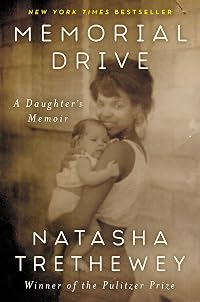
Natasha Trethewey has a memoir that will be released at the end of this month. That book’s description caught my attention on several recent lists of books by black authors. I knew her name. How did I know her name? She is a poet. I read a lot of poetry, but I couldn’t quite place her in my memory. I looked for her work at Poetry Foundation (poetryfoundation.org/poets/natasha-tretheway). After reading a few poems from the website, I was hooked.
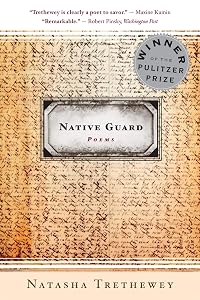
Trethewey is a former US poet laureate. She won a Pulitzer prize in 2007 for her third book of poems, Native Guard. Like Trevor Noah, she was also ‘born a crime’ in 1966 a year before the ruling in Loving v. Virginia.
As the title show more indicates, Monument: Poems New and Selected is a collection. They are meditations, examinations of race, both personally and historically. They are autobiographical; grief stricken examinations of her mother’s murder by an abusive stepfather, personal explorations of a mixed race childhood. Trethewey is an accomplished poet, but I didn’t read these poems thinking about how well she handled line and meter, image and paradox. The content of these poems is accessible. They are worthy of rereading and further thought, but they also have an immediate impact.
I look forward to reading Memorial Drive: A Daughter’s Memoir when it is published a week from now. I’ve also ordered copies of Bellocq’s Ophelia and Native Guard because neither of those books, by this award winning poet, are available from either of the public library systems that I can access. show less
5 stars
Natasha Trethewey has a memoir that will be released at the end of this month. That book’s description caught my attention on several recent lists of books by black authors. I knew her name. How did I know her name? She is a poet. I read a lot of poetry, but I couldn’t quite place her in my memory. I looked for her work at Poetry Foundation (poetryfoundation.org/poets/natasha-tretheway). After reading a few poems from the website, I was hooked.
Trethewey is a former US poet laureate. She won a Pulitzer prize in 2007 for her third book of poems, Native Guard. Like Trevor Noah, she was also ‘born a crime’ in 1966 a year before the ruling in Loving v. Virginia.
As the title show more indicates, Monument: Poems New and Selected is a collection. They are meditations, examinations of race, both personally and historically. They are autobiographical; grief stricken examinations of her mother’s murder by an abusive stepfather, personal explorations of a mixed race childhood. Trethewey is an accomplished poet, but I didn’t read these poems thinking about how well she handled line and meter, image and paradox. The content of these poems is accessible. They are worthy of rereading and further thought, but they also have an immediate impact.
I look forward to reading Memorial Drive: A Daughter’s Memoir when it is published a week from now. I’ve also ordered copies of Bellocq’s Ophelia and Native Guard because neither of those books, by this award winning poet, are available from either of the public library systems that I can access. show less
Monument by Natasha Trethewey: a poetry collection consisting of serious stories of a mixed-race prostitute, historical struggles of people of colour, about hurricane Katrina, the poet's own family stories of loss. Still, the writing doesn't pull me in as a reader, there's not a lot of emotion here. It doesn't seem like a purposefully lack of emotion either, and it got better towards the end. She describes scenes, but doesn't add much to most of them, the way I see it. 2/5 stars.
Ratings
Members
- Recently Added By
Lists

Top Five Books of 2020
982 works; 350 members

Favorite Recent Poetry: 1980-2022
178 works; 70 members

Books Read in 2024
4,623 works; 126 members
Author Information

13+ Works 2,238 Members
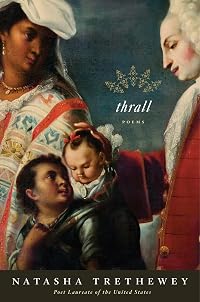
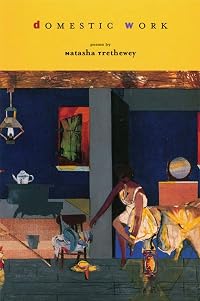
Natasha Trethewey was the Poet Jaureate Consultant in Poetry to the Library of Congress, 2012-14. She is the author of four collections of poetry: Thrall, Domestic Work, Bellocq's Ophelia, and Native Cuard, for which she was awarded the Pulitzer Prize. She is the Robert W. Woodruff Professor of English and Creative Writing at Emory University.
Some Editions
Awards and Honors
Awards
Distinctions
Notable Lists
Common Knowledge
- Original publication date
- 2018
- Epigraph
- Where no monuments exist to heroes but in the common words and deeds...
—from "The Great City," Walt Whitman
Memory is a cemetery
I've visited once or twice, white
ubiquitous and the set-aside
Everywhere under foot...
—Charles Wright
What is love?
One name for it is knowledge.
—Robert Penn Warren
After such knowledge, what forgiveness?
—T.S. Eliot
Often I am permitted to return to a meadow
as if it were a given property of the mind...
—Robert Duncan - Dedication
- For my parents—
Gwen and Rick
and
for Brett - First words
- Imperatives for Carrying On
in the Aftermath
Do not hang your head or clench your fists
when even your friend, after hearing the story,
says, My mother would never put up with that. - Quotations
- Cleanliness is next to godliness...
Windows and doors flung wide,
curtains two-stepping
forward and backward, neck bones
bumping in the pot, a choir
of clothes clapping on the line
Nearer m... (show all)y God to Thee...
She beats time on the rugs,
blows dust from the broom
like dandelion spores, each one
a wish for something better.
–excerpt from Domestic Work, 1937
Gesture of a Woman in Process
FROM A PHOTOGRAPH BY
CLIFTON JOHNSON, 1902
In the foreground, two women,
their squinting faces
creased into texture—
a deep relief—the lines
like palms... (show all) of hands
I could read if I could touch.
Around them, their dailiness:
clotheslines sagged with linens,
a patch of greens and yams,
buckets of peas for shelling.
One woman pauses for the picture.
The other won't be still.
Even now, her hands circling,
the white blur of her apron
still in motion.
Yes: I was born a slave, at harvest time,
in the Parish of Ascension; I've reached
thirty-three with history of one younger
inscribed upon my back. I now use ink
to keep record, a closed book, not the lure
of m... (show all)emory—flawed, changeful—that dulls the lash
for the master, sharpens it for the slave.
—excerpt from Native Guard (November 1862)
Native Guard
December 1862
For the slave, having a master sharpens
the bend into work, the way the sergeant
moves us now to perfect battalion drill,
dress parade. Still, we're called supply units—
... (show all)not infantry—and so we dig trenches,
haul burdens for the army no less heavy
than before. I heard the colonel call it
nigger work. Half rations make our work
familiar still. We take those things we need
from the Confederates' abandoned homes:
salt, sugar, even this journal, near full
with someone else's words, overlapped now,
crosshatched beneath mine. On every page,
his story intersecting with my own.
7. Benediction
I thought that when I saw my brother
walking through the gates of the prison,
he would look like a man entering
his life. And he did. He carried
a small bag, holding it away from his body... (show all)
as if he would not touch it, or
that it weighed almost nothing.
The clothes he wore seemed to belong
to someone else, like hand-me-downs
given a child who will one day
grow into them. Behind him, at the fence,
the inmates were waving, someone saying
All right now. And then
my brother was walking toward us,
a few awkward steps, at first, until
he got it—how to hold up the too-big pants
with one hand, and in the other
carry everything else he had.
The servant, still a child, cranes
his neck, turns his face
up toward all of them. He is dark
as history, origin of the word
native: the weight of blood,
a pale mistress on his back,
heavier every... (show all) year.
—excerpt from Taxonomy
Why is everything I see the past
I've tried to forget? In dreams
I am a child again, underwater, my limbs
sluggish as I struggle to wake. Always
I am pursued. Waking, I am freighted
with memory: my moth... (show all)er's last words
spoken—after her death—in a dream:
Do you know what it means
to have a wound that never heals?
And now this thirst:
how many times have I cupped my hands
to drink, found—in the map
of my palms—this same pattern: lines
crossed and capillary as veins
in the body, these willowy reeds?
How can I see anything
but this: how trauma lives in the sea
of my body, awash in the waters
of forgetting. In every resilient blade
I see the ancestors, my mother's face.
—excerpt from Waterborne
Letter to Inmate #271847,
Convicted of Murder, 1985
When I heard you might get out, I was driving through the Delta,
rain pounding my windshield, the sun angled and bright beneath dark
clouds—familiar weathe... (show all)r, what I'd learned long ago to call the devil
beating his wife. I was listening to two things at once: an old song on the
radio and, on the phone, a woman from Victim Services—her voice
solicitous, slow, as though she were speaking to a child. I was back in
the state I still call home, headed south on Highway 49, trying to resur-
rect my mother in the landscape of childhood as the Temptations were
singing her song—the one she played over and over our last year in
Mississippi, 1971, that summer before we moved to the city that would
lead us, soon, to you. It was Just My Imagination and I could see her
again: her back to me, swaying over the ironing board, the iron's steel
plate catching the sun and holding it there. For a moment I was who I
had been before, the joyful daughter of my young mother—until the
woman on the phone said your name, telling me I must write the parole
board a letter. I was again stepdaughter, daughter of sorrow, daughter
of the murdered woman. This is how the past interrupts our lives, all
of it entering the same doorway—like the hole in the trunk of my
neighbor's tree: at once a natural shelter, haven for small creatures, but
also evidence of injury, an entrance for decay. When I saw it, I thought
of how, as a child, I'd have chosen it for play—a place to crawl inside
and hide. And when I thought of hiding, I could not help but think of
you. What does it mean to be safe in the world? Everywhere I go she is
with me—my long-dead mother. Is there nowhere I might go and not
find you, there too? - Last words
- (Click to show. Warning: May contain spoilers.)And how could I not—bathed in the light
of her wound—find my calling there?
Classifications
Statistics
- Members
- 143
- Popularity
- 229,022
- Reviews
- 4
- Rating
- (4.21)
- Languages
- English
- Media
- Paper, Ebook
- ISBNs
- 3
- ASINs
- 1