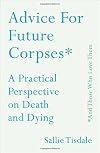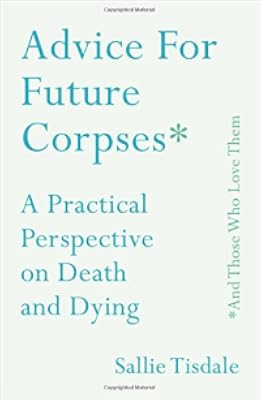
Advice for Future Corpses (and Those Who Love Them): A Practical Perspective on Death and Dying
by Sallie Tisdale
On This Page
Description
You get ready to die the way you get ready for a trip. Start by realizing you don't know the way. Read a few travel guides. Study the language, look at maps, gather equipment. Let yourself imagine what it will be like. Pack your bags. This book is one of those travel guides-a guide to preparing for your own death and the deaths of people close to you. The fact of death is hard to believe. Sallie Tisdale explores our fears and all the ways death and talking about death make us show more uncomfortable-but she also explores its intimacies and joys. Tisdale looks at grief, what the last days and hours of life are like, and what happens to dead bodies. Advice for Future Corpses includes exercises designed to make you think differently about the inevitable. She includes practical advice, personal experience, a little Buddhist philosophy, and stories. But this isn't a book of inspiration or spiritual advice-Advice for Future Corpses is about how you can get ready. Start by admitting that we are all future corpses. show lessTags
Recommendations




Member Reviews
As the title of her current book makes clear, Sallie Tisdale is a provocative writer who likes to address uncomfortable (even taboo) subjects that many prefer to avoid. If you can get past the blunt, weirdly funny, and challenging title of this book, you’ll be okay with the contents: an interesting mix of personal stories, practical advice to assist you in preparing for your own death or caring for a dying loved one, details about the actual process of dying (the changes in the body at various stages, including the time after the death has occurred), information about options for the disposal of the body, and reflections on grief. There are four appendices, which address making death plans, advance directives, organ and tissue show more donation, and assisted death.
Tisdale has lived a “braided” life as a writer, a nurse/end-of-life educator, and Buddhist practitioner/teacher, and each of these roles has required her to confront hard truths. Since childhood, she says, she has been fascinated with bodies and anatomy, and her rural upbringing brought her into regular contact with death, both human and animal.
Early in her book, Tisdale, who was born in 1957, muses: “We’ve been a most fortunate generation and also one of the most delusional. We are energetically trying not to be as old as we are, to not look old, feel old, and most of all, to not be perceived as old.” She goes on to observe that her Buddhist practice has required her to confront the fact that we (and everyone we love) are constantly changing and will die. Throughout the book, Tisdale refers to a number of writers, scholars, and memoirists who have addressed aspects of death and dying—from American cultural anthropologist Ernest Becker (author of The Denial of Death, 1973 ) to health journalist Virginia Morris (Talking about Death Won’t Kill You, 2001) and Australian writer/memoirist/melanoma patient Cory Taylor, among many others. (I do wish Tisdale had included a bibliography.)
For me, the most valuable part of Tisdale’s book was her discussion of the changes the dying person undergoes and what caregivers can do and say to make him or her more comfortable. She’s very direct about what family and friends should not do, including burden the patient with their own guilt, grief, and need for consolation. I wish I’d had some of this information available to me as I helped to care for a member of my own family who was terminally ill.
While some topics are more thoroughly addressed than others, this is still a rich and worthwhile book. It is worth pushing oneself past the title and reading this guide, especially in an age in which the lives of terminally ill and demented patients can be uncomfortably and futilely extended by modern technologies. show less
Tisdale has lived a “braided” life as a writer, a nurse/end-of-life educator, and Buddhist practitioner/teacher, and each of these roles has required her to confront hard truths. Since childhood, she says, she has been fascinated with bodies and anatomy, and her rural upbringing brought her into regular contact with death, both human and animal.
Early in her book, Tisdale, who was born in 1957, muses: “We’ve been a most fortunate generation and also one of the most delusional. We are energetically trying not to be as old as we are, to not look old, feel old, and most of all, to not be perceived as old.” She goes on to observe that her Buddhist practice has required her to confront the fact that we (and everyone we love) are constantly changing and will die. Throughout the book, Tisdale refers to a number of writers, scholars, and memoirists who have addressed aspects of death and dying—from American cultural anthropologist Ernest Becker (author of The Denial of Death, 1973 ) to health journalist Virginia Morris (Talking about Death Won’t Kill You, 2001) and Australian writer/memoirist/melanoma patient Cory Taylor, among many others. (I do wish Tisdale had included a bibliography.)
For me, the most valuable part of Tisdale’s book was her discussion of the changes the dying person undergoes and what caregivers can do and say to make him or her more comfortable. She’s very direct about what family and friends should not do, including burden the patient with their own guilt, grief, and need for consolation. I wish I’d had some of this information available to me as I helped to care for a member of my own family who was terminally ill.
While some topics are more thoroughly addressed than others, this is still a rich and worthwhile book. It is worth pushing oneself past the title and reading this guide, especially in an age in which the lives of terminally ill and demented patients can be uncomfortably and futilely extended by modern technologies. show less
Best for:
Those who know someone who is dying, or those who may die themselves one day.
In a nutshell:
Palliative care nurse Sallie Tisdale offers thoughts on both the reality of accepting (or at least acknowledging) one’s own mortality while also providing seriously practical suggestions and examples for what to expect.
Worth quoting:
“Our image of Grandpa at home in his own bed assumes that Grandpa likes his bed, that his house is safe and quiet, and that he really wants his relatives to take care of his most personal needs.”
“Sick people need to not be sick people all the time. They are also plumbers, parents, students, friends, chess players.”
Why I chose it:
Old habits die (heh) hard. I used to do planning related to death in my show more old job and I still find it interesting.
Review:
What happens as one dies? Not after, but before and during? And what can those of us who are supporting those people do (or not do) to make that experience less scary?
Tisdale’s book is not exactly a road map, and it is not really a memoir, either. She does use some stories to illustrate points (the experiences of three people she knows who have died are shared in different chapters), but this is not a book on the wisdom of those who are near death. No, instead it’s a mixture of how to confront one’s own mortality as well as observations from someone who has been with those who are dying and knows what to do (and what not to do).
The book follows essentially the path of death from illness, including chapters on what to do with the remains and what grief may be like. I think the most valuable chapter is the one on communication, full of dos and don’ts (mostly don’ts). If you haven’t been close to someone who is seriously ill, it’s likely you don’t know how you’ll react or what is appropriate to ask, say, or do, and this book provides some suggestions on that front.
At times this book had me confronting my own mortality; at other times it had me thinking about the mortality of those I love (especially those who are much older than me). I think it’s useful reading, and I’ll be keeping it around until I’ll need it.
Keep it / Pass to a Friend / Donate it / Toss it:
Keep it show less
Those who know someone who is dying, or those who may die themselves one day.
In a nutshell:
Palliative care nurse Sallie Tisdale offers thoughts on both the reality of accepting (or at least acknowledging) one’s own mortality while also providing seriously practical suggestions and examples for what to expect.
Worth quoting:
“Our image of Grandpa at home in his own bed assumes that Grandpa likes his bed, that his house is safe and quiet, and that he really wants his relatives to take care of his most personal needs.”
“Sick people need to not be sick people all the time. They are also plumbers, parents, students, friends, chess players.”
Why I chose it:
Old habits die (heh) hard. I used to do planning related to death in my show more old job and I still find it interesting.
Review:
What happens as one dies? Not after, but before and during? And what can those of us who are supporting those people do (or not do) to make that experience less scary?
Tisdale’s book is not exactly a road map, and it is not really a memoir, either. She does use some stories to illustrate points (the experiences of three people she knows who have died are shared in different chapters), but this is not a book on the wisdom of those who are near death. No, instead it’s a mixture of how to confront one’s own mortality as well as observations from someone who has been with those who are dying and knows what to do (and what not to do).
The book follows essentially the path of death from illness, including chapters on what to do with the remains and what grief may be like. I think the most valuable chapter is the one on communication, full of dos and don’ts (mostly don’ts). If you haven’t been close to someone who is seriously ill, it’s likely you don’t know how you’ll react or what is appropriate to ask, say, or do, and this book provides some suggestions on that front.
At times this book had me confronting my own mortality; at other times it had me thinking about the mortality of those I love (especially those who are much older than me). I think it’s useful reading, and I’ll be keeping it around until I’ll need it.
Keep it / Pass to a Friend / Donate it / Toss it:
Keep it show less
This book operated on two different levels for this reader, as a person who’s been fascinated by death since childhood, and as a man who lost his wife of decades in July of 2018. It does an excellent job of covering the scientific, cultural, emotional, and some of the religious details of the last stages of life, the moment of death, and the process of decay under many different situations. The cruel facts of life and death were always interesting to me, it’s just now those same facts are much more relevant, painful, and personal to me.
The author covers so many topics: from what to expect from hospice care (the great help and some of the shortcomings), how important it is for each person to figure out what they view as a good show more death, what is reasonable to expect from families and caregivers at different stages, and how to talk to the dying and the grieving.
Speaking for myself, I know well just how uncomfortable people are when talking to the grieving. Tisdale mentions many of the stupid, insensitive, and cruel things that people say to those suffering a devastating loss. These people mostly mean well, but many times they don’t think before they speak, believing they’re giving sound and comforting advice. They are also wondering how long will this person be so upset before they return to normal and are fun to be around again. Our society doesn’t handle the uncomfortable well, in the back of many minds are three seemingly simple words, get over it. Having read a fair number of grieving books, I found that most mention many of the same insensitive words and phrases. I remember wanting to rip the head off a young supermarket bagger who told me, “It’s God’s plan.” She still has her head, as this young girl had such a sweet smile, and I realized she was trying to be helpful in the best way she knew … she just didn’t know I was an atheist on edge. I just left quietly.
This book does such a good job of explaining what the dying person may be going through at each stage. Being restless, not eating or drinking, losing control of their body, being talkative, or silent, so many things … all of it’s hard for the caregiver if they don’t have a clue to what is going on. Every death has some things in common, and all may be as different as the dying person was during their entire life.
Another thing that the book covers is some of the legal details of death plans, advance directives, organ and tissue donations, and assisted death.
Advice for Future Corpses* is such a clear, straightforward, and kind book that I would recommend it to everyone, as all of us will be near to someone who dies, and knowledge is power, and many times comforting. show less
The author covers so many topics: from what to expect from hospice care (the great help and some of the shortcomings), how important it is for each person to figure out what they view as a good show more death, what is reasonable to expect from families and caregivers at different stages, and how to talk to the dying and the grieving.
Speaking for myself, I know well just how uncomfortable people are when talking to the grieving. Tisdale mentions many of the stupid, insensitive, and cruel things that people say to those suffering a devastating loss. These people mostly mean well, but many times they don’t think before they speak, believing they’re giving sound and comforting advice. They are also wondering how long will this person be so upset before they return to normal and are fun to be around again. Our society doesn’t handle the uncomfortable well, in the back of many minds are three seemingly simple words, get over it. Having read a fair number of grieving books, I found that most mention many of the same insensitive words and phrases. I remember wanting to rip the head off a young supermarket bagger who told me, “It’s God’s plan.” She still has her head, as this young girl had such a sweet smile, and I realized she was trying to be helpful in the best way she knew … she just didn’t know I was an atheist on edge. I just left quietly.
This book does such a good job of explaining what the dying person may be going through at each stage. Being restless, not eating or drinking, losing control of their body, being talkative, or silent, so many things … all of it’s hard for the caregiver if they don’t have a clue to what is going on. Every death has some things in common, and all may be as different as the dying person was during their entire life.
Another thing that the book covers is some of the legal details of death plans, advance directives, organ and tissue donations, and assisted death.
Advice for Future Corpses* is such a clear, straightforward, and kind book that I would recommend it to everyone, as all of us will be near to someone who dies, and knowledge is power, and many times comforting. show less
"Births and deaths bring the crowds, and the crowds seem to say, This is what counts." (p. 126)
This book is full of good, useful information, and often staggering insight. I fear, though, that it contains far too much of both to be useful to most people who already know that they, or someone they love, is actively dying. It was difficult to take it all in, and I had to go slowly, even with neither threat (as far as I know) currently at my doorstep. I'm glad to have read it, though, and it bears re-reading, too. Tisdale's experience as a palliative care nurse coupled with her Buddhist practice, thorough research, and skillful writing make for a winning combination. She is also direct (sometimes intimidatingly so, especially in Chapter 4, show more Communication), matter of fact, and unfussy, and we could all benefit from listening to what she has to say. show less
This book is full of good, useful information, and often staggering insight. I fear, though, that it contains far too much of both to be useful to most people who already know that they, or someone they love, is actively dying. It was difficult to take it all in, and I had to go slowly, even with neither threat (as far as I know) currently at my doorstep. I'm glad to have read it, though, and it bears re-reading, too. Tisdale's experience as a palliative care nurse coupled with her Buddhist practice, thorough research, and skillful writing make for a winning combination. She is also direct (sometimes intimidatingly so, especially in Chapter 4, show more Communication), matter of fact, and unfussy, and we could all benefit from listening to what she has to say. show less
This book had many good elements, both philosophical or practical. I liked that Tisdale did not take a particularly religious (or irreligious) view of the process of dying. Rather, she approached it as something that happens to each of each of us. Dying is very much a bodily process, and this is something she emphasizes even as she discusses the psychological process that the dying and those with them also explore.
Sadly, I cannot speak to the practical applicability of the advice. Because of my father's terminal cancer, I was about to read this book, but he died more quickly than we anticipated and I had barely started it when he died. Although this book is about dying, not grieving the dead, even reading it just after a death still show more helped. It emphasized that there is always another thing to wish for. Not having read this book in time, not having more time to say goodbye, would have just been something else a few weeks or months later. show less
Sadly, I cannot speak to the practical applicability of the advice. Because of my father's terminal cancer, I was about to read this book, but he died more quickly than we anticipated and I had barely started it when he died. Although this book is about dying, not grieving the dead, even reading it just after a death still show more helped. It emphasized that there is always another thing to wish for. Not having read this book in time, not having more time to say goodbye, would have just been something else a few weeks or months later. show less
The author does a lovely job sharing her experiences with death and the dying along with beneficial information for the reader; it can be a difficult read at times but is sorely needed as you just never know, and being prepared can help so many.
This was just the book for me, 80-plus and never having thought much about death, its prequels and sequels. Each page is worth reading, and rereading.
Members
- Recently Added By
Author Information
20+ Works 1,056 Members
Classifications
- Genres
- Nonfiction, General Nonfiction, Biography & Memoir
- DDC/MDS
- 306.9 — Society, government, & culture Social sciences, sociology & anthropology Social Behavior - Dating, Marriage, Divorce Institutions pertaining to death
- LCC
- HQ1073 .T57 — Social sciences The family. Marriage, Women and Sexuality The Family. Marriage. Women Thanatology. Death. Dying
- BISAC
Statistics
- Members
- 276
- Popularity
- 116,784
- Reviews
- 9
- Rating
- (4.15)
- Languages
- English
- Media
- Paper, Audiobook, Ebook
- ISBNs
- 8
- ASINs
- 2