On This Page
Description
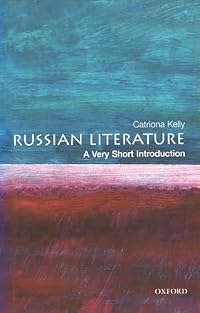
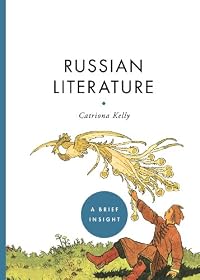
This text explores the place and importance of literature of all sorts in Russian culture and aims to answer the questions: How and when did a Russian national literature come into being? and What shaped its creation?Tags
Recommendations








Member Reviews
My main mistake when beginning to read this introduction to Russian Lit was to fight the author tooth and nail on her conception of how an introduction should be written.
In her preface, Catriona Kelly delineates three main types of literary introductions and then explains why she was not going to write her book in any of those styles. The first style, an exploration of the lives and books of the main figures in the Russian canon, was the kind of book I was hoping to read. Upon discovering her decision to focus the book on Alexander Pushkin and focus every chapter on branching out from him, I threw a tantrum. Don't do what I did, or you won't learn anything.
This is still an imperfect introduction, but Kelly herself makes the point that show more it would be impossible to do complete justice to such a wide body of work filled with so many thousand-page monstrosities. The structure is a bit jarring at first, but you get the hang of it, and Kelly does a good job of making Russian/Soviet society an interesting topic of study. I'd call the book an introduction to Russian literary culture rather than literature itself, but if you're looking for a reason to care about the best books ever written, this introduction should at the very least pique your curiosity. show less
In her preface, Catriona Kelly delineates three main types of literary introductions and then explains why she was not going to write her book in any of those styles. The first style, an exploration of the lives and books of the main figures in the Russian canon, was the kind of book I was hoping to read. Upon discovering her decision to focus the book on Alexander Pushkin and focus every chapter on branching out from him, I threw a tantrum. Don't do what I did, or you won't learn anything.
This is still an imperfect introduction, but Kelly herself makes the point that show more it would be impossible to do complete justice to such a wide body of work filled with so many thousand-page monstrosities. The structure is a bit jarring at first, but you get the hang of it, and Kelly does a good job of making Russian/Soviet society an interesting topic of study. I'd call the book an introduction to Russian literary culture rather than literature itself, but if you're looking for a reason to care about the best books ever written, this introduction should at the very least pique your curiosity. show less
I picked up this book to gain insight into an anglophone's view of Russian literature. Catriona is clearly well-educated about the subject, and has provided me with a better understanding of the relationship between the Russian language and the literature. Her original approach to the subject felt like a novel of its own kind, whereupon I wanted to keep reading this analytical text to find out where she'd take it next. Overall, I would have preferred more discussion of authors other than Pushkin, but then again I never spend enough time thinking about Pushkin, so thanks Catriona for talking to me about him.
Taking as her starting-point Pushkin's poem, "The Monument", the author looks at themes of Russian attitudes to literature amongst lay people and writers and how literature deals with themes of women, ethnic minorities, and religion.
She says in the introduction that she has deliberately eschewed a survey approach as plenty of surveys of Russian literature already exist. But she seems to forget that this is an INTRODUCTION. The audience must therefore be assumed to know nothing about Russian literature apart from a few big names and so a survey is what is needed.
She says in the introduction that she has deliberately eschewed a survey approach as plenty of surveys of Russian literature already exist. But she seems to forget that this is an INTRODUCTION. The audience must therefore be assumed to know nothing about Russian literature apart from a few big names and so a survey is what is needed.
Got it as my study material for MA Russian have still not arrived from IGNOU, expecting a straightforward "short introduction". However, into two chapters so far, this reads more like a polemical tract than a simple survey. The author seems more interested in sounding 'savvier than usual', lending it a sort of 'smart-alecky' flavor, if that is a word! The first chapter, for instance, far from giving the background of geography, history, or society, politics, or religion, launches into a fairly 'arcane' (obscure) debate on 'monumentality' with reference, apparently, to the iconic status accorded by both pre- and post-revolution commentators to Pushkin and statues of him in various poses. The author seems to be using this book to press show more some of her 'pet peeves', as it were; mainly, that Pushkin wasn't really as great as the Russians have made him out to be.
Finished the book now, and haven't gained much from it. It's not really an "introduction" to the subject, and may at best be thought of as a somewhat clever-seeming polemic to debunk commonly held stereotype beliefs about Russian lit. Mercifully, it is short and doesn't cost much. To me it appears that this scholar is not much in sympathy with the Russian 'spirit', their emotional relationship with their civilization and land as 'sacred', something which is important equally in my own culture. show less
Finished the book now, and haven't gained much from it. It's not really an "introduction" to the subject, and may at best be thought of as a somewhat clever-seeming polemic to debunk commonly held stereotype beliefs about Russian lit. Mercifully, it is short and doesn't cost much. To me it appears that this scholar is not much in sympathy with the Russian 'spirit', their emotional relationship with their civilization and land as 'sacred', something which is important equally in my own culture. show less
Very interesting indeed, with an approach I wasn't expecting. Kelly uses Pushkin's poem 'Monument' as the springboard into discussions of various themes within Russian literature, as well as of the writer's position in Russian society throughout the past two centuries. A quick read, which I found at once useful and enjoyable.
The first thing to say about this VSI on Russian Literature is that it needs updating. Authored by Catriona Kelly from Oxford, it was published in 2001 - ten years after the end of the Soviet Union in 1991 - and you only need to look at the Russian category on Stu's blog at Winston's Dad and here at ANZ LitLovers to see that not only are there now numerous post-Soviet writers clamouring for our attention but also that books suppressed under the Soviet regime are now seeing the light of day. These recent titles - none of whose authors get a mention in the VSI - include:
But that is not my only reservation about this VSI. I found the whole approach a bit disconcerting.
In the Introduction, for various reasons, Kelly rejects the three forms common to introductions to national literatures: the canon; the sketch of literary movements and cultural institutions, and the subjective personal appreciation approach. (Alas, I was expecting something rather like a combination of those, which I think would have been rather useful). Unsurprisingly, given the brevity of the VSI series, she also declines to try the strong central thesis or the in-depth analysis approach. Instead, she decided to centre it on the Russian equivalent of Shakespeare i.e. Aleksandr Pushkin (1799-1837):
The trouble is, pitching a VSI to Russian Literature via Pushkin is problematic since most of the English-speaking readers to whom the VSI series is pitched won't have read Pushkin except in translation, which is not usually an encouraging experience.
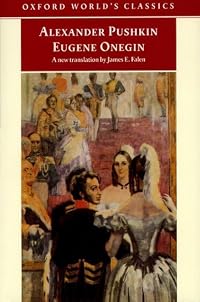
Kelly begins, in Chapter 1 'Testament' by acknowledging this difficulty of Pushkin for non-Russian readers. On a pedestal in the Russian literary world as the 'greatest' among Russian writers, Pushkin's position is less secure among readers reliant on translation. Outside Russia, admiration rests on the great prose writers exploring ideas and moral dilemmas - with Tolstoy and Dostoyevsky at the pinnacle. Pushkin didn't write any comparable novels, and he does not even seem particularly 'Russian'. But undeterred, Kelly goes on to explain, in some detail, Pushkin's intense sensitivity to stylistic register, to the connotations of words especially the opposition between Church Slavonic, the liturgical language of Russian Orthodoxy, and those of native Russian origin - well, that's interesting up to a point, but this genius of Pushkin remains inaccessible to us. Translations of Pushkin's style are problematic. Kelly says that modern linguistic taste has changed in the English-speaking world but not in Russia. It follows that translations admired by native speakers of Russian tend to go down badly with native speakers of English, and vice versa. For most us, reading Pushkin in clumsy translation is as close as we're going to get. (I did not like Anthony Briggs' version of Pushkin's Yevgeny Onegin at all). Kelly thinks this problem is best served by multiple translations. Well, maybe.
(BTW, I may not have liked Briggs' translation, but I did like his more down-to-earth explanation of why Pushkin is A Big Deal).
Moving on, Kelly sets out to frame her VSI in her own idiosyncratic design.
To read the rest of my review please visit https://anzlitlovers.com/2017/11/10/russian-literature-a-very-short-introduction... show less
- Christened with crosses by Eduard Kochergin (2009)
- Moscow in the 1930’s by Natalia Gromova (2016, also reviewed here on this blog)
- Gnedich by Maria Rybakova (2015)
- target="_top">The New Moscow Philosophy by Vyacheslav Pyetsukh (1989, also reviewed here on this blog)
- One-Two, by Igor Eliseev (2015)
- The Investigator, by Margarita Khemlin, translated by Melanie Moore (2012)
- Daniel Stein, Interpreter, by Ludmila Ulitskaya, translated by Arch Tait, Guest review by Subhash Jaireth (2006)
- The Funeral Party, by Ludmila Ulitskaya, translated by Cathy Porter(1992)
- The Concert Ticket by Olga Grushin(2010)
But that is not my only reservation about this VSI. I found the whole approach a bit disconcerting.
In the Introduction, for various reasons, Kelly rejects the three forms common to introductions to national literatures: the canon; the sketch of literary movements and cultural institutions, and the subjective personal appreciation approach. (Alas, I was expecting something rather like a combination of those, which I think would have been rather useful). Unsurprisingly, given the brevity of the VSI series, she also declines to try the strong central thesis or the in-depth analysis approach. Instead, she decided to centre it on the Russian equivalent of Shakespeare i.e. Aleksandr Pushkin (1799-1837):
Pushkin's writings themselves touch on many central themes in contemporary literary history, from the colonisation of the Caucasus to salon culture. Many different critical approaches have been applied to them, from textology, or the comparison of manuscript variants, to Formalism, to feminism. The development of the 'Pushkin myth' (the writer as 'the founding father of Russian literature' raises all kinds of interesting questions about how literary history is made, about how the idea of a 'national literature' comes into being, and about the way in which these processes made certain kinds of writing seem marginal (writing by Russian women, for instance).
The trouble is, pitching a VSI to Russian Literature via Pushkin is problematic since most of the English-speaking readers to whom the VSI series is pitched won't have read Pushkin except in translation, which is not usually an encouraging experience.
Kelly begins, in Chapter 1 'Testament' by acknowledging this difficulty of Pushkin for non-Russian readers. On a pedestal in the Russian literary world as the 'greatest' among Russian writers, Pushkin's position is less secure among readers reliant on translation. Outside Russia, admiration rests on the great prose writers exploring ideas and moral dilemmas - with Tolstoy and Dostoyevsky at the pinnacle. Pushkin didn't write any comparable novels, and he does not even seem particularly 'Russian'. But undeterred, Kelly goes on to explain, in some detail, Pushkin's intense sensitivity to stylistic register, to the connotations of words especially the opposition between Church Slavonic, the liturgical language of Russian Orthodoxy, and those of native Russian origin - well, that's interesting up to a point, but this genius of Pushkin remains inaccessible to us. Translations of Pushkin's style are problematic. Kelly says that modern linguistic taste has changed in the English-speaking world but not in Russia. It follows that translations admired by native speakers of Russian tend to go down badly with native speakers of English, and vice versa. For most us, reading Pushkin in clumsy translation is as close as we're going to get. (I did not like Anthony Briggs' version of Pushkin's Yevgeny Onegin at all). Kelly thinks this problem is best served by multiple translations. Well, maybe.
(BTW, I may not have liked Briggs' translation, but I did like his more down-to-earth explanation of why Pushkin is A Big Deal).
Moving on, Kelly sets out to frame her VSI in her own idiosyncratic design.
To read the rest of my review please visit https://anzlitlovers.com/2017/11/10/russian-literature-a-very-short-introduction... show less
Ratings
Members
- Recently Added By
Lists

In Our Time books
4,934 works; 2 members
Author Information
19 Works 502 Members
Catriona Kelly is a professor of Russian at New College, Oxford. She is the author of a book on the history of Russian women's writing.
Series

Common Knowledge
- Canonical title
- Russian Literature: A Very Short Introduction
- Original publication date
- 2001
- People/Characters
- Alexander Pushkin
- First words
- In 1925, the Anglo-Russian literary critic D. S. Mirsky began Modern Russian Literature, a pioneering 'very short' introduction published by Oxford University Press, by referring to Pushkin.
- Last words
- (Click to show. Warning: May contain spoilers.)Like any other literature, it represents the world in new and extraordinary ways, it investigates areas of human experience that we sometimes prefer not to think about (madness, homicidal urges, tyranny); and it offers not only intellectual stimulation but the sensual delight of language stretched to its limits, of laughter, and of flights of imaginative fancy.
- Blurbers
- France, Peter
Classifications
- Genres
- Literature Studies and Criticism, Nonfiction, Fiction and Literature
- DDC/MDS
- 891.709 — Literature & rhetoric Asian Literature East Indo-European and Celtic literatures Russian and East Slavic languages Russian literature History and criticism of Russian literature
- LCC
- PG2950 .K45 — Language and Literature Slavic languages and literatures. Baltic languages. Albanian language Slavic. Baltic. Albanian Russian literature General
- BISAC
Statistics
- Members
- 227
- Popularity
- 142,326
- Reviews
- 6
- Rating
- (3.38)
- Languages
- English, French
- Media
- Paper, Ebook
- ISBNs
- 8
- ASINs
- 1