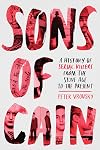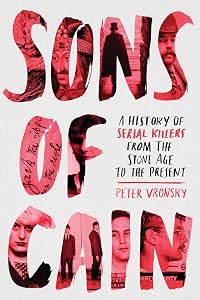
Sons of Cain: A History of Serial Killers from the Stone Age to the Present
by Peter Vronsky
On This Page
Description
"From the author of Serial Killers: The Method and Madness of Monsters ... an in-depth examination of sexual serial killers throughout human history, how they evolved, and why we are fascinated by their horrifying crimes"--Back cover.Tags
Recommendations




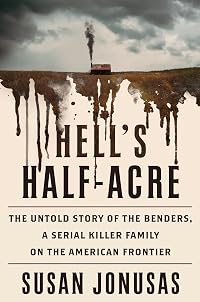
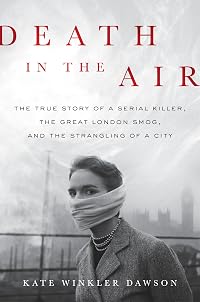
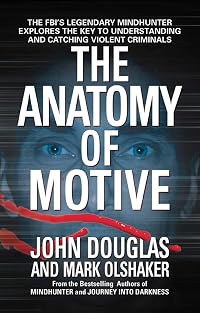
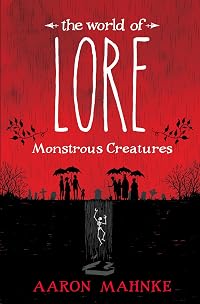
Member Recommendations
Member Reviews
+ Comprehensive: Despite the title of this book, I wasn't expecting a super deep dive. I was expecting a nice examination of give or take a few notable serial killers, and their hows/whys/whens using a big history approach. I know how some books can oversell themselves, especially when they are what is needed to put food on the author's table. Instead, what I was surprised with was a well-done, grand, and wide-sweeping examination of serial killers from the disturbing origins of humanity all the way to the potential future of serial killers. Despite this massive undertaking and depth of information, the author has managed to make this book an easy, accessible read I would suggest to anybody into people into stabbing other people.
+ show more Fantastic Interdisciplinary Approach: Whenever you tackle a subject as complex and confusing as serial killers, your lens and frames of reference should be equally complex. Vronsky nails this with ease. Instead of just using a few frames of reference, the author manages to use multiple disciplines that include (but are not limited to) biology, psychology, history, anthropology, good ole' class politics, and sociology. Even with all these diverse disciplines in hand, Vronsky is able to craft a book that doesn't feel dry, cluttered, or confusing.
+ Good Sense of Dark Humor & Respect: Heavier topics like the mass murder of women during the infamous Witch Hunts of Europe require a good sense of tact. So it's generally considered a bad idea to crack jokes over stuff like this in polite company. Nevertheless, Vronsky is able to delve into this grim period of murderous, state-funded misogyny, and speak power to the victims. I wasn't expecting the European witch trials to pop up in a book about serial killers, but the author was able to weave it into his book in a way that was disturbing, chilling, and darkly illuminating. Moving past this, I'd also have to say that I found myself wheezing at some of the joking bits Vronsky wrote in elsewhere. He seems like the kind of guy I'd drink a cider with and talk about how much of a bitch life can be.
+Nice Theory on the "Golden Age of American Serial Killers:" To avoid spoiling what I think was one of the more profound sections of the book, I won't explain it it detail. But I will still give him credit for being able to draw interesting connections between the return of veterans from WW2 and Vietman and the rise of the infamous serial killers. Believe me, it's good stuff, folks. show less
+ show more Fantastic Interdisciplinary Approach: Whenever you tackle a subject as complex and confusing as serial killers, your lens and frames of reference should be equally complex. Vronsky nails this with ease. Instead of just using a few frames of reference, the author manages to use multiple disciplines that include (but are not limited to) biology, psychology, history, anthropology, good ole' class politics, and sociology. Even with all these diverse disciplines in hand, Vronsky is able to craft a book that doesn't feel dry, cluttered, or confusing.
+ Good Sense of Dark Humor & Respect: Heavier topics like the mass murder of women during the infamous Witch Hunts of Europe require a good sense of tact. So it's generally considered a bad idea to crack jokes over stuff like this in polite company. Nevertheless, Vronsky is able to delve into this grim period of murderous, state-funded misogyny, and speak power to the victims. I wasn't expecting the European witch trials to pop up in a book about serial killers, but the author was able to weave it into his book in a way that was disturbing, chilling, and darkly illuminating. Moving past this, I'd also have to say that I found myself wheezing at some of the joking bits Vronsky wrote in elsewhere. He seems like the kind of guy I'd drink a cider with and talk about how much of a bitch life can be.
+Nice Theory on the "Golden Age of American Serial Killers:" To avoid spoiling what I think was one of the more profound sections of the book, I won't explain it it detail. But I will still give him credit for being able to draw interesting connections between the return of veterans from WW2 and Vietman and the rise of the infamous serial killers. Believe me, it's good stuff, folks. show less
Sons of Cain : a History of Serial Killers from the Stone Age to the Present is author Peter Vronsky's third book on the subject, following Serial Killers and Female Serial Killers. Expect little in the way of the most famous serial killers, aside from H. H. Holmes and Jack the Ripper. The subtitle is not a joke. The author does go back to the Stone Age to explain why we have serial killers. He also explains what has been the definition of a serial killer, a term coined in the 20th century. I was surprised to learn that the modern definition means one need kill as few as two persons to be considered a serial killer.
It was even more interesting to learn that 'werewolf' and 'vampire' were terms used for what we would call serial killers show more in the past. I remember reading about the 1929 serial killer Peter Kürten years ago. I'd wondered why he was known as the "Vampire of Düsseldorf" as well as the "Düsseldorf Ripper" and the "Düsseldorf Monster". Now that makes sense.
The chapter on the European Witch Hunts would probably have been more shocking to me had I not already read The Encyclopedia of Witchcraft and Demonology by Rossell Hope Robbins. If you've not read or seen much about that period, be prepared to start sneering at what's called a witch hunt these days after you've read this part.
Chapter 10 is the one about Jack the Ripper. The section on profiling the Ripper using today's techniques was food for thought.
Peter Vronsky makes the point that we keep forgetting what we learn about catching and interviewing serial killers. Reading about how an attorney named Émile Fourquet used linkage analysis to have Joseph Vacher, the French Ripper, captured as long ago as 1897 was fascinating -- as was the fact that his interrogation of Vacher used the proper manner for dealing with psychopaths. (See chapter 11)
The chapter about what a small percentage of our soldiers did during World War II (rapes) was disturbing. It was good to learn that there are protocols for returning the bones of Japanese soldiers that some GIs brought back as war souvenirs. When are we going to do the same for the bones of North Vietnamese soldiers? (What was with the family that objected to returning their skull?)
The author makes a point about how many of the serial killers of the 1970s - 1990s were the sons of World War II soldiers, as well as the effect of reading mainstream postwar men's adventure and true detective magazines known as 'sweats' because their covers featured sweating torturers and female victims. I've read reprints of earlier pulp magazine stories, but had no idea the ones available after World War II were as bad as described here.
They sound really sick. Vronksky asks a very good question: why aren't there more serial killers? Why are they such a small percentage of our population?
The last chapter is about a modern serial killer and the daughter of one of his victims.
NOTES:
Chapter 1: Has a list of proposed definitions of serial killings.
Chapter 3: Has a list of some paraphilias.
Chapter 6: Describes some of the instruments of torture used during the European witch hunts.
Chapter 7: Has Dr. Anil Aggrawal's 10 categories of necrophilia.
Chapter 8: Explains how the British slang term '[sweet] Fanny Adams' originated.
Chapter 9: The author mentions how very many books there are about Jack the Ripper and those in which he appears as a character. What about TV? I quickly thought of the episodes with Jack on the original "Star Trek" and "Babylon 5" series. (By coincidence, that very Trek episode was rerunning while I was reading the chapter, so I got to refresh my memory.)
Chapter 13: Lists some famous murders of the1960s. (Although the 1960s began on January 1st 1961 and ended December 31st, 1970. Anno Domini/Common Era years are supposed to have started with the birth of Christ. The first decade would start with the moment of birth and end when He turned 11 because he had to live the entire 10 years for it to be the first decade. That's why I, who am 65 as I write this, am in my 7th decade of life.)
Chapter 14: Has a list of some American Serial Killers, their birth dates, and the main years in which they did their murders. It also includes a sample of headlines from men's 'sweats' (adventure and true detective) magazines.
Personally, I want to know what makes serial killers able to do what they do to their fellow human beings. This book provides some reasons. show less
It was even more interesting to learn that 'werewolf' and 'vampire' were terms used for what we would call serial killers show more in the past. I remember reading about the 1929 serial killer Peter Kürten years ago. I'd wondered why he was known as the "Vampire of Düsseldorf" as well as the "Düsseldorf Ripper" and the "Düsseldorf Monster". Now that makes sense.
The chapter on the European Witch Hunts would probably have been more shocking to me had I not already read The Encyclopedia of Witchcraft and Demonology by Rossell Hope Robbins. If you've not read or seen much about that period, be prepared to start sneering at what's called a witch hunt these days after you've read this part.
Chapter 10 is the one about Jack the Ripper. The section on profiling the Ripper using today's techniques was food for thought.
Peter Vronsky makes the point that we keep forgetting what we learn about catching and interviewing serial killers. Reading about how an attorney named Émile Fourquet used linkage analysis to have Joseph Vacher, the French Ripper, captured as long ago as 1897 was fascinating -- as was the fact that his interrogation of Vacher used the proper manner for dealing with psychopaths. (See chapter 11)
The chapter about what a small percentage of our soldiers did during World War II (rapes) was disturbing. It was good to learn that there are protocols for returning the bones of Japanese soldiers that some GIs brought back as war souvenirs. When are we going to do the same for the bones of North Vietnamese soldiers? (What was with the family that objected to returning their skull?)
The author makes a point about how many of the serial killers of the 1970s - 1990s were the sons of World War II soldiers, as well as the effect of reading mainstream postwar men's adventure and true detective magazines known as 'sweats' because their covers featured sweating torturers and female victims. I've read reprints of earlier pulp magazine stories, but had no idea the ones available after World War II were as bad as described here.
They sound really sick. Vronksky asks a very good question: why aren't there more serial killers? Why are they such a small percentage of our population?
The last chapter is about a modern serial killer and the daughter of one of his victims.
NOTES:
Chapter 1: Has a list of proposed definitions of serial killings.
Chapter 3: Has a list of some paraphilias.
Chapter 6: Describes some of the instruments of torture used during the European witch hunts.
Chapter 7: Has Dr. Anil Aggrawal's 10 categories of necrophilia.
Chapter 8: Explains how the British slang term '[sweet] Fanny Adams' originated.
Chapter 9: The author mentions how very many books there are about Jack the Ripper and those in which he appears as a character. What about TV? I quickly thought of the episodes with Jack on the original "Star Trek" and "Babylon 5" series. (By coincidence, that very Trek episode was rerunning while I was reading the chapter, so I got to refresh my memory.)
Chapter 13: Lists some famous murders of the1960s. (Although the 1960s began on January 1st 1961 and ended December 31st, 1970. Anno Domini/Common Era years are supposed to have started with the birth of Christ. The first decade would start with the moment of birth and end when He turned 11 because he had to live the entire 10 years for it to be the first decade. That's why I, who am 65 as I write this, am in my 7th decade of life.)
Chapter 14: Has a list of some American Serial Killers, their birth dates, and the main years in which they did their murders. It also includes a sample of headlines from men's 'sweats' (adventure and true detective) magazines.
Personally, I want to know what makes serial killers able to do what they do to their fellow human beings. This book provides some reasons. show less
Utterly fascinating - you loved the content covering paraphilias and pre-historic psychopathy!
I generally do not read true crime, so this book was very new to me. I came across this "Sons of Cain: A History of Serial Killers from the Stone Age to the Present" by chance because of my interest in pre-civilization history. I did not think the author, Peter Vronsky, an investigative journalist turned crime researcher, could give a complete history of serial killers as described in the subtitle, but he did.
The book is mostly chronological. Following other theorists, Vronsky claims that violence is a part of our human nature, dating it all the way to the conquest of Neanderthals by modern humans, a time of terrible genocidal barbarity. He mentions laws from early civilizations as evidence that serial killers existed then, but there show more is a large gap until he reaches the Middle Ages of Europe, a section of the book that was quite interesting.
Vronsky says, convincingly, that werewolf and witch myths were created in order to explain the serial killers of that time. He describes several cases of the Medieval era in which murderers were accused of being werewolves before going into other cases during the Age of Discovery and Enlightenment. The cases of serial killers during these eras were all similar and held my attention, despite diatribes about church-sponsored sadism during sanctioned witch hunts. As the book goes on, a thesis appears that Jack the Ripper was not the first serial killer and Vronsky finds plenty of cases in the 1800's to prove that point.
Large sections of the book zigzag casually from one topic to the next. During a discussion of one murderer, he will mention similarities with others. This caused some frustration with me because I wanted to learn more about the topics and people he mentioned. Because of the nature of the topic and the killers written about, the book contains some graphic, though academic, information about the sexuality involved with serial murdering.
One downside to the book is that it mostly concentrates on European and American serial killers. Murderers from other parts of the world get brief mention. I would have been interested to read about murderers from other cultures and parts of the world. Vronsky could have bolstered his thesis that violence is inherent to humans.
It contains a comprehensive index and plenty citations and sources.
Vronsky clearly knows his stuff, but the book often meanders. Despite the material, the book is relaxed and unceremonious. I think readers of true crime will particularly enjoy it. show less
The book is mostly chronological. Following other theorists, Vronsky claims that violence is a part of our human nature, dating it all the way to the conquest of Neanderthals by modern humans, a time of terrible genocidal barbarity. He mentions laws from early civilizations as evidence that serial killers existed then, but there show more is a large gap until he reaches the Middle Ages of Europe, a section of the book that was quite interesting.
Vronsky says, convincingly, that werewolf and witch myths were created in order to explain the serial killers of that time. He describes several cases of the Medieval era in which murderers were accused of being werewolves before going into other cases during the Age of Discovery and Enlightenment. The cases of serial killers during these eras were all similar and held my attention, despite diatribes about church-sponsored sadism during sanctioned witch hunts. As the book goes on, a thesis appears that Jack the Ripper was not the first serial killer and Vronsky finds plenty of cases in the 1800's to prove that point.
Large sections of the book zigzag casually from one topic to the next. During a discussion of one murderer, he will mention similarities with others. This caused some frustration with me because I wanted to learn more about the topics and people he mentioned. Because of the nature of the topic and the killers written about, the book contains some graphic, though academic, information about the sexuality involved with serial murdering.
One downside to the book is that it mostly concentrates on European and American serial killers. Murderers from other parts of the world get brief mention. I would have been interested to read about murderers from other cultures and parts of the world. Vronsky could have bolstered his thesis that violence is inherent to humans.
It contains a comprehensive index and plenty citations and sources.
Vronsky clearly knows his stuff, but the book often meanders. Despite the material, the book is relaxed and unceremonious. I think readers of true crime will particularly enjoy it. show less
Pretty good and thorough pop science read on the topic.
Important to note that the book is over half a decade old, and in any social or related science, that's a long time. Some of the language is outdated and some facts presented are no longer considered facts.
I also noticed some minor factual errors when it came to language/translations and background anecdotes.
There are some WEIRD takes at the end that focus on islamic extremism, when right-wing terrorism would have been a much more logical connection (and it was alive and well when this book was written).
All in all I'd say it's a good Introductory read for people interested in some more historical aspects of serial killers. Just don't take the book as academic literature.
Important to note that the book is over half a decade old, and in any social or related science, that's a long time. Some of the language is outdated and some facts presented are no longer considered facts.
I also noticed some minor factual errors when it came to language/translations and background anecdotes.
There are some WEIRD takes at the end that focus on islamic extremism, when right-wing terrorism would have been a much more logical connection (and it was alive and well when this book was written).
All in all I'd say it's a good Introductory read for people interested in some more historical aspects of serial killers. Just don't take the book as academic literature.
Ratings
Members
- Recently Added By
Author Information

16 Works 1,292 Members
Peter Vronsky is an investigative journalist and a producer of documentary films for television. His work has appeared on PBS, Discovery Channel, MTV, CNN, and various international channels
Common Knowledge
- People/Characters
- Jerry Brudos; Caligula; Peter Stübbe; Peter Stumpf; Peter Stumpp (as Peter Stü | bbe or Peter Stumpf); Michel Verdung (show all 51); Gilles Garnier; Werewolf of Chalon; Jean Grenier; Jacques Roulet; Gilles de Rais; Little Red Riding Hood; Heinrich Kramer; Matthew Hopkins; François Bertrand; Martin Dumollard; Albert DeSalvo; Andreas Bichel; Giorgio Orsoano; Manuel Blanco Romasanta; Louis-Joseph Philippem; Eusebius Pieydagnelle; Vincenzo Verzeni; Carino 'Callisto' Grandi; Juan Diaz de Garayo; Ed Gein; H. H. Holmes; Jesse Harding Pomeroy; Joseph La Page; Thomas W. Piper; Theodore Durrant; the servant-girl annihilater; the London monster; William Cooper; John Williams; Eliza Grimwood; Frederick Baker; Jack the Ripper; Joseph Vacher; Ted Bundy; Carl Bartle; Juan Corona; Theophil Mary; Émile Fourquet; Joseph Paul de River; Carol Ann Boone; Victoria Compton; Dennis Rader; Richard Cottingham; Jennifer Weiss; Pierre Bourgot
- Important places
- Imperial Rome; Oregon, USA; Poligny, France; Chalon, France; Coutras, France; Angers, France (show all 28); Paris, France; Lyons, France; Boston, Massachusetts, USA; Germany; San Giorgio, Italy; Allariz, Spain; Vignevieille, France; Bergamo, Italy; Val d'Arno Incisa, Italy; Plainfield, Wisconsin, USA; Chicago, Illinois, USA; Philadelphia, Pennsylvania, USA; Vermont, USA; New Hampshire, USA; San Francisco, California, USA; Austin, Texas, USA; London, England, Uk; Alton, Hampshire, England, UK; Yuba City, California, USA; New York, New York, USA; New Jersey, USA; Bremen, Germany
- Important events
- witch hunts; 1893 Chicago World's Fair; World War I; World War II
- Epigraph
- 'I want a Tibetan sky funeral with flagellants
beating themselves to the song.' - Dedication
- In memory of Dave Walker, murdered at the Gate of Death
in Angkor Wat, Cambodia, February 14, 2014 - First words
- When I encountered my first serial killer in 1979, I did not know there was such a thing.
- Quotations
- No matter what we read in newspapers or see in the media, statistically speaking, in advanced societies, civilian murder rates have declined over the centuries, albeit with ebbs and flows. For example, the homicide rate in id... (show all)yllic colonial America in the 1700s was 30 murders per 100 thousand people, but in the worst decade of the modern era, the 1990s, the homicide rate in the US was 10 to 11 murders per 100 thousand people on average. In the current dramatic rise of murder in Chicago, one of the worst in the United States, the murder rate between 2005 and 2015 ranged between 17.3 and 18.8 per 100 thousand, still only roughly half of what it was in colonial America. Only at its craziest recent worst, in 2016, has Chicago approached a murder rate comparable to that of colonial America. (chapter 2)
- Last words
- (Click to show. Warning: May contain spoilers.)I suppose now, there is going to be another book now.
Classifications
- Genres
- Nonfiction, Politics and Government, General Nonfiction, History
- DDC/MDS
- 364.152 — Society, government, & culture Social problems and social services Crime Criminal offenses Offenses against the person Homicide
- LCC
- HV6505 .V76 — Social sciences Social pathology. Social and public welfare. Criminology Social pathology. Social and public welfare. Criminology Crimes and offenses
- BISAC
Statistics
- Members
- 198
- Popularity
- 165,997
- Reviews
- 5
- Rating
- (3.71)
- Languages
- English
- Media
- Paper, Audiobook, Ebook
- ISBNs
- 4
- ASINs
- 3