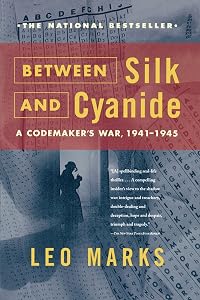
Between Silk and Cyanide
by Leo Marks
On This Page
Description
Between Silk and Cyanide presents the memoir of the man who transformed code-making and code-breaking for the Special Operations Executive in World War Two. Leo Marks later went on to become an award-winning scriptwriter.Tags
Recommendations














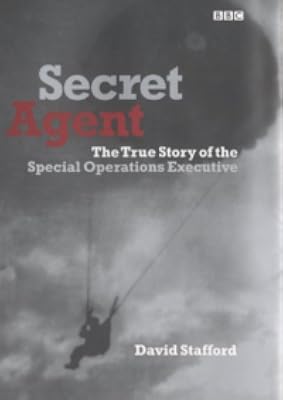
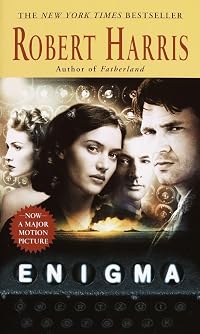


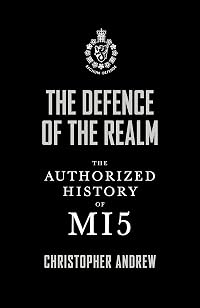
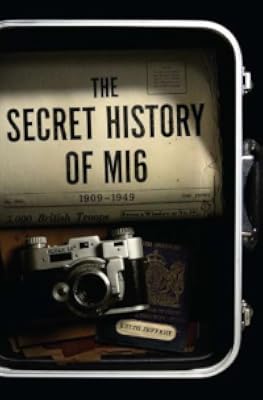
Member Recommendations

John_Vaughan Between offers the human (and even humor) side to Code-Breaking
Member Reviews
A fantastic, humorous, very well-written memoir by Britain's top codemaker and Director of Communications for SOE during WWII. At age 23 Marks leaves home hoping to do his bit for his country. While everyone else in his cryptographic class heads off for Bletchley Park, Leo ends up on Baker Street with the SEO. He becomes the head of code making for the British. His story is honest, self-deprecating, and funny. But he never forgets the agents lost, especially Violette Szabo and Yeo-Thomas. The title refers to a conversation Marks had to convince the purse-string holders to produce his codes on strips of silk. He says the agents lives may very well come down to his silks, or cyanide. Highly recommended. (Read and reviewed in 2017)
Another WWII book that's quite different. Unbelievable that Leo Marks was a master cryptographer and was only in his 20's. Irreverent, funny, sarcastic and readable describing very hard to describe methods of encrypting agents messages and the value of communications in war and peace time.
This on will move along to a non-BC reader in Utah.
This on will move along to a non-BC reader in Utah.
Last night I finished my third reading of Between Silk & Cyanide. I was up to the wee hours finishing it up; it is a very hard book to put down. This is the kind of book that you almost regret finishing.
Leo Marks was a cryptographer with the British Special Operations Executive during World War II; this book chronicles his experiences during that time. It reads like a James Bond novel, and is made all the more fascinating by the fact that it is non-fiction. Leo Marks was a superior cryptographer. He became head of communications at SOE, where he ultimately transformed code-making techniques, and trained many of the most famous agents of the time in their use.
While I didn't know it on my first reading of this book, Leo Marks was also a show more playwright, albeit largely unknown. He brings to his autobiography a narrative style that is at times self-effacing and humorous, and at others wrenching in the depths of the emotion it conveys.
Here, take this excerpt:
"For a short while the whole class seemed to be moving in orderly mental convoy towards the promised land of Bletchley. But amongst those potential problem-masters there was one confirmed problem-pupil. I knew that if I didn't break behaviour patterns as well as codes, I would be lucky to last the term - a prospect which made me keep peace with my teachers for a personal best of about a week. The regression started when I felt a code of my own simmering inside me. This unwanted pregnancy was accompanied by morning sickness which took the form of questioning the quality of the exercises which were supposed to extend us. I was convinced that the school's methods of teaching would be better suited to a crash course in accountancy. The decline was irreversible..."
Hard to believe the man found little success as a playwright, but, then, screenplays are not a medium well-suited to prose. He should have become a novelist.
The first time I read Between Silk & Cyanide, I had no idea what a significant impact its author, Leo Marks, had made. In his book he is self-effacing to the extreme, poking fun at SOE, his superiors within that organization, and most especially himself. So it was not until after my first reading of the book, when curiosity led me to Google him, that I realized that he single-handedly changed the way the British managed their codes and the agents using them in World War II.
It reads like the plot of a Jack Higgins novel. This book has everything you’d expect to find in a novel. It has intrigue, excitement, adventure. But it packs an emotional punch that is wholly unexpected.
At the beginning of the book, Leo Marks is young. Impulsive, impetuous, brash, and convinced of his own correctness. At the end, he's still young in years; this book covers a span of only a handful of years, so the author was entering his mid-twenties when the war ended. Still impulsive and impetuous (though more inclined to spare at least a moment's thought to something stupid before he actually does it), he is also tired. The kind of bone-deep weariness that comes from life's more difficult experiences, rather than from physical labor. And he's disgusted and a little angry, after so long a time trying to work around politics and infighting in his efforts to keep agents alive.
During the war, he fell in love for the first time, and lost that love. His best friend, Forest Frederick Edward Yeo-Thomas, an SOE agent, is captured by the Nazis and tortured, and returns from captivity at the end of the war an old man in a young man's skin. Aside - Tommy's Google entry doesn't do him justice, but check it out anyway. He was a true-blue hero.
The author learned to love codes at the age of 8 in his father's book store, 84 Charing Cross Road (yes, that 84 Charing Cross Road). He loved puzzles and codes. But at the end of the war he walked away from them without a backward glance. But the war, such a small fraction of his life in years, obviously left an indelible impression, and nearly forty years later, he wrote this book. At the time, some of what he described was still so sensitive that it was not until 1998 that the British government allowed it to be published. Fortunate for us that they finally did.
I read a lot of history. In particular (though not exclusively), a lot of military history. This book is one of the finest examples of the genre I have ever had the pleasure of reading. The excerpts I've shared with you can give only a glimmer of the true impact of this book; it has to be read to be fully experienced, and it is an experience well worth the time. I haven't done it justice; it is impossible to do so. I hope you'll read the book and see for yourself. show less
Leo Marks was a cryptographer with the British Special Operations Executive during World War II; this book chronicles his experiences during that time. It reads like a James Bond novel, and is made all the more fascinating by the fact that it is non-fiction. Leo Marks was a superior cryptographer. He became head of communications at SOE, where he ultimately transformed code-making techniques, and trained many of the most famous agents of the time in their use.
While I didn't know it on my first reading of this book, Leo Marks was also a show more playwright, albeit largely unknown. He brings to his autobiography a narrative style that is at times self-effacing and humorous, and at others wrenching in the depths of the emotion it conveys.
Here, take this excerpt:
"For a short while the whole class seemed to be moving in orderly mental convoy towards the promised land of Bletchley. But amongst those potential problem-masters there was one confirmed problem-pupil. I knew that if I didn't break behaviour patterns as well as codes, I would be lucky to last the term - a prospect which made me keep peace with my teachers for a personal best of about a week. The regression started when I felt a code of my own simmering inside me. This unwanted pregnancy was accompanied by morning sickness which took the form of questioning the quality of the exercises which were supposed to extend us. I was convinced that the school's methods of teaching would be better suited to a crash course in accountancy. The decline was irreversible..."
Hard to believe the man found little success as a playwright, but, then, screenplays are not a medium well-suited to prose. He should have become a novelist.
The first time I read Between Silk & Cyanide, I had no idea what a significant impact its author, Leo Marks, had made. In his book he is self-effacing to the extreme, poking fun at SOE, his superiors within that organization, and most especially himself. So it was not until after my first reading of the book, when curiosity led me to Google him, that I realized that he single-handedly changed the way the British managed their codes and the agents using them in World War II.
It reads like the plot of a Jack Higgins novel. This book has everything you’d expect to find in a novel. It has intrigue, excitement, adventure. But it packs an emotional punch that is wholly unexpected.
At the beginning of the book, Leo Marks is young. Impulsive, impetuous, brash, and convinced of his own correctness. At the end, he's still young in years; this book covers a span of only a handful of years, so the author was entering his mid-twenties when the war ended. Still impulsive and impetuous (though more inclined to spare at least a moment's thought to something stupid before he actually does it), he is also tired. The kind of bone-deep weariness that comes from life's more difficult experiences, rather than from physical labor. And he's disgusted and a little angry, after so long a time trying to work around politics and infighting in his efforts to keep agents alive.
During the war, he fell in love for the first time, and lost that love. His best friend, Forest Frederick Edward Yeo-Thomas, an SOE agent, is captured by the Nazis and tortured, and returns from captivity at the end of the war an old man in a young man's skin. Aside - Tommy's Google entry doesn't do him justice, but check it out anyway. He was a true-blue hero.
The author learned to love codes at the age of 8 in his father's book store, 84 Charing Cross Road (yes, that 84 Charing Cross Road). He loved puzzles and codes. But at the end of the war he walked away from them without a backward glance. But the war, such a small fraction of his life in years, obviously left an indelible impression, and nearly forty years later, he wrote this book. At the time, some of what he described was still so sensitive that it was not until 1998 that the British government allowed it to be published. Fortunate for us that they finally did.
I read a lot of history. In particular (though not exclusively), a lot of military history. This book is one of the finest examples of the genre I have ever had the pleasure of reading. The excerpts I've shared with you can give only a glimmer of the true impact of this book; it has to be read to be fully experienced, and it is an experience well worth the time. I haven't done it justice; it is impossible to do so. I hope you'll read the book and see for yourself. show less
I admit that all the jargon about codemaking and codebreaking went over my head, but Marks's self-deprecating humor and engaging writing style kept me going so I finished the whole book in just two sittings in less than 24 hours. People who like World War II books will love this -- it's thrilling and suspenseful but without the violence. I did not envy the coders, and even less so the field agents, and I admired Marks for kicking and screaming and agitating so much to try to make their lives easier (and longer).
Bonus: I wrote an Executed Today entry for Noor Inayat Khan, one of the more memorable characters I first encountered in Between Silk and Cyanide.
Bonus: I wrote an Executed Today entry for Noor Inayat Khan, one of the more memorable characters I first encountered in Between Silk and Cyanide.
Wonderful book. I didn't understand anything about the codes, but that didn't prevent me from enjoying this book immensely. The story he has to tell us is fascinating and he tells it with great wit and humanity. Marks, by the way, was the son of one of the owners of Marks and Co., the bookshop at 84 Charing Cross Road. The agents who risked their lives to defeat the Germans were an extraordinary bunch of brave and highly intelligent people. And so were people like Marks, who did everything they could to try to keep them from getting caught.
I didn't read this edition. I read a 2008 edition published by The History Press -- the worst editing I have ever seen in a printed book. And I loved it in spite of that (and the codes). But I advise show more you to stay away from The History Press publication and find another one, which I will do when I go to buy more copies as gifts. show less
I didn't read this edition. I read a 2008 edition published by The History Press -- the worst editing I have ever seen in a printed book. And I loved it in spite of that (and the codes). But I advise show more you to stay away from The History Press publication and find another one, which I will do when I go to buy more copies as gifts. show less
I really enjoyed reading this book. It didn't feel like I was reading a book but that I had sat down with Leo Marks and he was telling me stories about his coding work during WWII. This was a fascinating look into the work that SOE did during the war. You can tell that Marks grew close to those he worked with and you could feel his grief when some of his most beloved co-workers were killed. It was heartbreaking reading about those deaths. I loved Leo's sense of humor; even with the seriousness of the war he still managed to make me laugh at odd times throughout the book. I would recommend this book to those wanting to know more about code making during WWII.
Consistently funny. Consistently opaque. There are too many damn acronyms and too many damn characters, sketched too briefly, for me ever to really grasp this one. I wish I did, and I'm grateful for what I learned from it (M. Yeo-Thomas, holy shit, I want to write a novel about him), but my World War II ignorance meant that I was always, always struggling as I read this.
Members
- Recently Added By
Published Reviews
added by doomjesse
Lists

Books About World War II
102 works; 29 members

Best Espionage (Non-Fiction)
32 works; 6 members

Books about World War II
241 works; 22 members

Favourite Books
1,820 works; 316 members

THE WAR ROOM
813 works; 24 members
Author Information

6 Works 1,245 Members
Leo Marks is renowned both as a cryptographer and as a screenwriter. His most famous work, Peeping Tom, a terrifying psychological thriller, is a cult classic of 1960s cinema, rereleased in 1999 under the auspices of Martin Scorsese. His father, Benjamin Marks, was the founder and owner of the legendary London bookshop 84 Charing Cross Road.
Some Editions
Common Knowledge
- Canonical title
- Between Silk and Cyanide
- Original title
- Between Silk and Cyanide : A Codemaker's War, 1941-1945
- Alternate titles
- Between Silk and Cyanide : The Story of SOE's Code War
- Original publication date
- 1998
- People/Characters
- Violette Szabo; Noor Inayat Khan; F.F.E. Yeo-Thomas; Leo Marks; Special Operations Executive
- Important places
- Bletchley Park, Bletchley, Buckinghamshire, England, UK; 84, Charing Cross Road, City of Westminster, London, England, UK
- Important events
- World War II (1939 | 1945); World War II, British Home Front
- Dedication
- In December 1943 I wrote a poem which I gave to Violette Szabo to use as a code. This book is dedicated to all those who have shared it with her.
The life that I have
Is all that I have
And the life that ... (show all)I have
Is yours.
The love that I have
Of the life that I have
Is yours and yours and yours.
A sleep I shall have
A rest I shall have
Yet death will be but a pause.
For the peace of my years
In the long green grass
Will be yours and yours and yours. - First words
- In January 1942 I was escorted to the war by my parents in case I couldn't find it or met with an accident on the way.
- Last words
- (Click to show. Warning: May contain spoilers.)And walked out of her office to make what I could of a code called peacetime.
- Blurbers
- Scorsese, Martin; Kahn, David; Ringle, Ken; Bernstein, Richard
Classifications
- Genres
- History, Nonfiction, General Nonfiction, Biography & Memoir, Technology
- DDC/MDS
- 940.548641 — History & geography History of Europe History of Europe 1918- Military history of World War II Other Topics Unconventional warfare of Allies Europe British Isles
- LCC
- D810 .C88 .M375 — History of Europe, Asia, Africa and Oceania History (General) World War II (1939-1945)
- BISAC
Statistics
- Members
- 1,108
- Popularity
- 23,065
- Reviews
- 33
- Rating
- (4.14)
- Languages
- English
- Media
- Paper, Audiobook, Ebook
- ISBNs
- 11
- ASINs
- 18