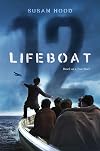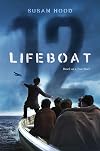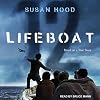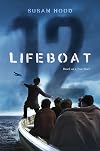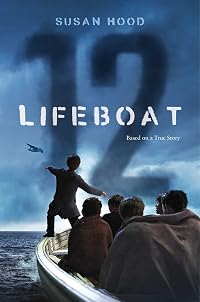
Lifeboat 12
by Susan Hood
On This Page
Description
In 1940, a group of British children, their escorts, and some sailors struggle to survive in a lifeboat when the ship taking them to safety in Canada is torpedoed. Includes historical notes.Tags
Recommendations









Member Reviews
Thank you to Netgalley, Susan Hood, and Simon & Schuster Books for Young Readers for Lifeboat 12. I loved this book and was happy to post my honest review.
Lifeboat 12 is a middle-grade novel in verse told from the point of view of a survivor of the S.S. City of Benares, a boat carrying children being evacuated from London that was sunk by a German U-Boat in September 1940.
Lifeboat 12 is also structured in three parts—Escape, Adrift, and Rescue. Escape sets up the dangerousness of life in London during the Blitzkrieg, Ken’s feeling of being unwanted by his stepmother, and the boarding and sinking of the ship. Adrift is the story of the eight days the survivors spent at sea. And Rescue is exactly what it sounds like—it is the show more boy’s return home, a return from the grave for their parents had been notified they had been lost at sea. While these three sections make for a hefty book—336 pages—because the story is told in verse, this was a quick read. Hood’s poetry lends the story a spare quality—the narrator is a twelve year-old boy so there are no flowery turns of phrase here. Each of the words seemed chosen for maximum impact, so that I might have only read fifty words on a page, yet the scene was as richly set and the characters as alive as if they were right next to me. The poetry also lent a more dramatic air—with portions of the book feeling as if they were pulled straight from an adventure novel.
Ken is a charming narrator—he’s a boy’s boy, obsessed with planes and always willing to give some help to a pal. Unlike most other narrators in WWII books I’ve read, Ken’s family is poor—I feel like I’ve read novels where everyone was effected by wartime rationing and scarcity, but I’m not sure I’ve read a book where the main character was poor before the book started—where liver was once or twice a week luxury. He represented an under-represented class in WWII narrators. He also doesn’t have a perfect family life—he’s fairly convinced his stepmother can’t stand him and this plan to send him to Canada is partly just to get him out of the house since she doesn’t like him. My heart ached for him when he talked about feeling unloved—while Ken does realize she cares for him by how she reacts when he comes home, my one criticism of Lifeboat 12 is that more wasn’t done with this relationship. With so many kids coming from blended families, books with boys Ken’s age who come to realize that their stepmothers really do care feel necessary.
I knew Lifeboat 12 was based on a true story, but I didn’t realize just how closely Hood stuck to the truth until I read the Author’s Note and afterward. Ken Sparks was a real survivor and the book is based on Hood’s interviews with him as well as her extensive research on the S.S. City of Benares. The Note and afterward are necessary reading—if you pick up this gem, you can’t stop reading at the end of the novel.
Recommended
Because it is so closely based on fact, I recommend Lifeboat 12 for kids (or adult middle-grade readers) who like books about historical events and adventure tales. The sinking of the S.S. City of Benares was another event I had no knowledge of—Lifeboat 12 was an enjoyable introduction to the event (if one can say learning about a devastating loss of life is in any way enjoyable). This is Hood’s first middle-grade novel after a successful career as a picture book author. I can’t wait to see where she goes next for her middle-grade-and-up readers.
Notes
Published: September 4, 2018 by Simon & Schuster Books for Young Readers (@simonandschuster)
Author: Susan Hood (@shoodbooks21)
Date read: September 7, 2018
Rating: 4 ¼ stars show less
Lifeboat 12 is a middle-grade novel in verse told from the point of view of a survivor of the S.S. City of Benares, a boat carrying children being evacuated from London that was sunk by a German U-Boat in September 1940.
Lifeboat 12 is also structured in three parts—Escape, Adrift, and Rescue. Escape sets up the dangerousness of life in London during the Blitzkrieg, Ken’s feeling of being unwanted by his stepmother, and the boarding and sinking of the ship. Adrift is the story of the eight days the survivors spent at sea. And Rescue is exactly what it sounds like—it is the show more boy’s return home, a return from the grave for their parents had been notified they had been lost at sea. While these three sections make for a hefty book—336 pages—because the story is told in verse, this was a quick read. Hood’s poetry lends the story a spare quality—the narrator is a twelve year-old boy so there are no flowery turns of phrase here. Each of the words seemed chosen for maximum impact, so that I might have only read fifty words on a page, yet the scene was as richly set and the characters as alive as if they were right next to me. The poetry also lent a more dramatic air—with portions of the book feeling as if they were pulled straight from an adventure novel.
Ken is a charming narrator—he’s a boy’s boy, obsessed with planes and always willing to give some help to a pal. Unlike most other narrators in WWII books I’ve read, Ken’s family is poor—I feel like I’ve read novels where everyone was effected by wartime rationing and scarcity, but I’m not sure I’ve read a book where the main character was poor before the book started—where liver was once or twice a week luxury. He represented an under-represented class in WWII narrators. He also doesn’t have a perfect family life—he’s fairly convinced his stepmother can’t stand him and this plan to send him to Canada is partly just to get him out of the house since she doesn’t like him. My heart ached for him when he talked about feeling unloved—while Ken does realize she cares for him by how she reacts when he comes home, my one criticism of Lifeboat 12 is that more wasn’t done with this relationship. With so many kids coming from blended families, books with boys Ken’s age who come to realize that their stepmothers really do care feel necessary.
I knew Lifeboat 12 was based on a true story, but I didn’t realize just how closely Hood stuck to the truth until I read the Author’s Note and afterward. Ken Sparks was a real survivor and the book is based on Hood’s interviews with him as well as her extensive research on the S.S. City of Benares. The Note and afterward are necessary reading—if you pick up this gem, you can’t stop reading at the end of the novel.
Recommended
Because it is so closely based on fact, I recommend Lifeboat 12 for kids (or adult middle-grade readers) who like books about historical events and adventure tales. The sinking of the S.S. City of Benares was another event I had no knowledge of—Lifeboat 12 was an enjoyable introduction to the event (if one can say learning about a devastating loss of life is in any way enjoyable). This is Hood’s first middle-grade novel after a successful career as a picture book author. I can’t wait to see where she goes next for her middle-grade-and-up readers.
Notes
Published: September 4, 2018 by Simon & Schuster Books for Young Readers (@simonandschuster)
Author: Susan Hood (@shoodbooks21)
Date read: September 7, 2018
Rating: 4 ¼ stars show less
Oh wow, what a book. A middle grade novel in verse that tells the true story of a small group of survivors adrift in a lifeboat in the North Atlantic for 13 days after their ship City of Benares was torpedoed by a German U-Boat in 1940. The book is told from the perspective of Ken Sparks, who at 13 won a place via lottery on a ship that would bring British children to safety in Canada to escape the bombings in London. He has mixed feelings about going, feeling it is a way for his stepmother to get rid of him, but soon is swept up in the excitement of the sea voyage with 90 other children. Life aboard ship is pretty grand, with sumptuous meals not seen in ration-era, hungry England for a long time, as well as toys and games. They zig-zag show more their way with a protective convoy until it is decided they are out of range of German U-Boats, which is precisely the time that they strike. The torpedoes, the fleeing of the ship in lifeboats, the chaos in the nighttime waters, and the desperate struggle to survive aboard the lifeboat in unimaginable conditions make for a heart-pounding, breathless read. I read the book pretty much in one sitting, and sobbed with relief and joy upon rescue. The book is thoroughly researched, with pages of notes, original sources, recommended reading, interview notes, and photographs of the ship, the lifeboat, and Ken Sparks and other characters in the book. Highly recommended. show less
This book is based on the real-life story of Ken Sparks, a 13-year-old British boy who boards a boat bound for Canada with a bunch of other children ages 5 to 15 in hopes of avoiding the Blitz at home. But their ride is quickly torpedoed and the children are forced to abandon ship. Ken and roughly 40 people (children, adults, and crewman) scramble aboard Lifeboat 12 and are soon adrift on sea waiting for rescue....
Based on a true story, this historical fiction novel was riveting and tells a lesser-known story from this period of history. It covers a little of everything from bombings to rations to warfare. The book ends with extensive backmatter relaying the actual facts (although it appears the fictional story stays very close to the show more true one), sources for more information, and archival photographs.
I found the book incredibly compelling and read it in one sitting. Despite its length, it reads quickly as it is not a traditional prose novel but a novel in verse. Each short poem made me want to read the next one. However, I worry that this particular format might turn away the intended young reader audience. I think once they start it, they would also be equally engrossed by the story, but it's been my experience that kids just glance at that format and turn away immediately. I hope not in this case as it's a story of courage and resilience worth reading. show less
Based on a true story, this historical fiction novel was riveting and tells a lesser-known story from this period of history. It covers a little of everything from bombings to rations to warfare. The book ends with extensive backmatter relaying the actual facts (although it appears the fictional story stays very close to the show more true one), sources for more information, and archival photographs.
I found the book incredibly compelling and read it in one sitting. Despite its length, it reads quickly as it is not a traditional prose novel but a novel in verse. Each short poem made me want to read the next one. However, I worry that this particular format might turn away the intended young reader audience. I think once they start it, they would also be equally engrossed by the story, but it's been my experience that kids just glance at that format and turn away immediately. I hope not in this case as it's a story of courage and resilience worth reading. show less
Lifeboat 12 by Susan Hood is a kid's historical fiction novel about the sinking of the SS City of Benares by a German U-Boat. Among the passengers were children being sent from London to Canada to keep them safe from the bombings. We see the story through the eyes of a survivor, 13yr old Ken Sparks. An accident of fate found Ken separated from his friend Terry, on Lifeboat 12, instead of Lifeboat 8 like he should have been. For 8 days, the survivors of Lifeboat 12 floated alone and lost, with dwindling water supplies. By the time rescue arrived one man had died, and several were critical. All were malnourished and suffering from 'trench foot’. But they survived when many didn't. This is their story.
I loved this book! First, this is show more about a subject I know little about, and I found it fascinating. Hood wrote in Ken's voice, and from his perspective. What we know of the events are only what this boy knows. The tale is written via a series of free-verse poems that got very creative at times, with font changes and zig-zaggy words, that mirrored the emotions Ken was going through. Each poem pulled me to the next. I HAD to know if they got rescued. Every day they got weaker and weaker. Who might be gone the next day? I see more and more books like this, of late, where the stories are told through snapshot poems. Such poignant stories can be told this way, and I find that I quite enjoy the style. The end of the book has sections with the stats of the Benares, and a more concise rendering of the facts of the case. This is perfect for the middle-grade reader who loves history, and for classroom reading.
***Many thanks to Netgalley and Simon & Schuster Children's for providing an egalley in exchange for a fair and honest review. show less
I loved this book! First, this is show more about a subject I know little about, and I found it fascinating. Hood wrote in Ken's voice, and from his perspective. What we know of the events are only what this boy knows. The tale is written via a series of free-verse poems that got very creative at times, with font changes and zig-zaggy words, that mirrored the emotions Ken was going through. Each poem pulled me to the next. I HAD to know if they got rescued. Every day they got weaker and weaker. Who might be gone the next day? I see more and more books like this, of late, where the stories are told through snapshot poems. Such poignant stories can be told this way, and I find that I quite enjoy the style. The end of the book has sections with the stats of the Benares, and a more concise rendering of the facts of the case. This is perfect for the middle-grade reader who loves history, and for classroom reading.
***Many thanks to Netgalley and Simon & Schuster Children's for providing an egalley in exchange for a fair and honest review. show less
This book is based on the true story of Ken Sparks, a 13-year old boy, who is one of the evacuees from the London Blitz, on board the SS City of Benares when it is torpedoed by a German U-boat. One of the seminal questions of the book is whether you would rather be bombed at home in London or torpedoed at sea. Told from Ken's middle-grade perspective, he feels unloved by his stepmother and finds friends among his fellow evacuees. One of the unique things about this novel is that it is told in verse. Hood did excellent research, including several sessions with Ken himself, who always thought modestly of himself as a survivor, not a hero.
IMO, this is very similar to but better than Ruta Sepetys' Salt to the Sea.
IMO, this is very similar to but better than Ruta Sepetys' Salt to the Sea.
Heavily based on a true story, including interviewing the person who is the main character in the book, this novel in verse tells the story of the survivors of a shipwreck. The SS City of Benares was transporting children to Canada in WWII when they were torpedoed off the coast of Ireland, and evacuated. One lifeboat got separated from the rest and was lost at sea. Fascinating history, and an excellent telling of a tragic tale. Boy main character, high adventure, very few survivors. I love how one of the more important adults in the story is the Lascar Steward, Ramjam Buxoo. The verse is effective, but I did find the book a bit of a slow start, and I wasn't entirely sure why it was in verse. A solid read about an aspect of WWII that show more isn't often covered in children's materials. show less
Based on true events this short verse novel captures the horror faced by Ken and other young English evacuees when the ship they are travelling on is torpedoed by a German U-boat during World War II. The author did a good job capturing the voice of 13-year-old Ken. He was believable and likeable and showed maturity and kindness when things looked bleak for those on Lifeboat 12.
This novel was certainly a survival story with a difference and should appeal to young readers looking for an action-packed read. Personally, I liked all the facts, photos and information that can be found at the end of the book. Although there were some sad moments in this book, overall, "Lifeboat 12" was a story of hope and courage.
This novel was certainly a survival story with a difference and should appeal to young readers looking for an action-packed read. Personally, I liked all the facts, photos and information that can be found at the end of the book. Although there were some sad moments in this book, overall, "Lifeboat 12" was a story of hope and courage.
Members
- Recently Added By
Lists

Books for 2020 Book Club
53 works; 3 members
Author Information

154+ Works 8,481 Members
Awards and Honors
Awards
Distinctions
Notable Lists
Classifications
- Genres
- Poetry, Tween, Kids, Fiction and Literature, Children's Books
- DDC/MDS
- 786.2092 — Arts & recreation Music Keyboard, mechanical, electrophonic, percussion instruments Pianos [formerly: keyboard string instuments]
- LCC
- PZ7.5 .H665 .L — Language and Literature Fiction and juvenile belles lettres Fiction and juvenile belles lettres Juvenile belles lettres
- BISAC
Statistics
- Members
- 354
- Popularity
- 88,876
- Reviews
- 18
- Rating
- (4.09)
- Languages
- English
- Media
- Paper, Audiobook, Ebook
- ISBNs
- 10
- ASINs
- 2