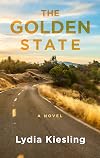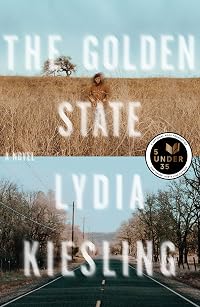
The Golden State
by Lydia Kiesling
On This Page
Description
In Lydia Kiesling's debut novel, we accompany Daphne, a young mother on the edge of a breakdown, as she flees her sensible but strained life in San Francisco for the high desert of Altavista with her toddler, Honey. Bucking under the weight of being a single parent--her Turkish husband is unable to return to the United States because of a "processing error"--Daphne takes refuge in a mobile home left to her by her grandparents in hopes that the quiet will bring clarity.Tags
Recommendations





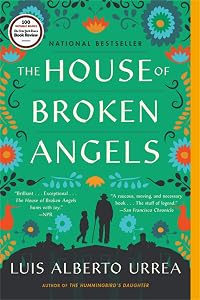
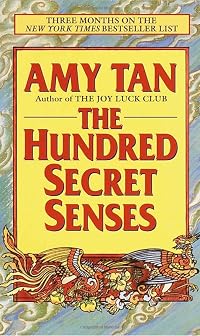


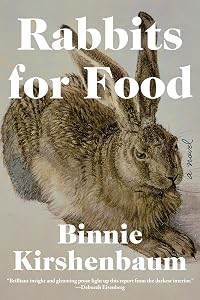
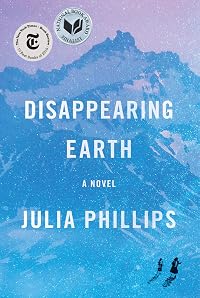
Member Recommendations
Member Reviews
Daphne leaves her unsatisfying administrative job at a San Francisco university to spend a few days with her one-year-old daughter in the California high country. Immigration issues have stranded her husband in Turkey, and a tragic occurrence at her job has left her disoriented. Packing up the house left to her by the recent deaths of her mother and grandparents, she deals with her memories, cares for her daughter, and tries to reconnect with the community she hasn't seen since childhood. But there's a lot going on under the surface in this rural town. Daphne finds a friend of sorts in Alice, a somewhat mysterious older woman travelling the area alone.
What impressed me about this book was Lydia Kiesling's ability to write about the show more everyday tasks of our lives with truth, insight and sly humor. She can write about the tedious yet oddly absorbing and sometimes terrifying routine of caring for a young toddler in a way that brings back my memories of those days. She describes the utterly mundane tasks of an average office job, and also the unwarranted importance given to those tasks, and even the guilt when what seems a simple, meaningless decision goes horribly wrong. But that's not all -- Kiesling also writes about some of the most prominent issues facing us today: our problematic immigration system and the threat of right-wing political radicalism. And she also includes the developing friendship between Daphne and older, somewhat cranky Alice, which goes in several unexpected directions, and even Daphne's adjustment to the grief of losing her mother and grandparents and thus her connection to the area. So many threads to Daphne's story, but they are all thoughtfully and intelligently written and make up a book that really does seem like a slice of life and not just a story. show less
What impressed me about this book was Lydia Kiesling's ability to write about the show more everyday tasks of our lives with truth, insight and sly humor. She can write about the tedious yet oddly absorbing and sometimes terrifying routine of caring for a young toddler in a way that brings back my memories of those days. She describes the utterly mundane tasks of an average office job, and also the unwarranted importance given to those tasks, and even the guilt when what seems a simple, meaningless decision goes horribly wrong. But that's not all -- Kiesling also writes about some of the most prominent issues facing us today: our problematic immigration system and the threat of right-wing political radicalism. And she also includes the developing friendship between Daphne and older, somewhat cranky Alice, which goes in several unexpected directions, and even Daphne's adjustment to the grief of losing her mother and grandparents and thus her connection to the area. So many threads to Daphne's story, but they are all thoughtfully and intelligently written and make up a book that really does seem like a slice of life and not just a story. show less
Stylistically this is excellent. The close focus on the day-to-day childcare of a toddler, with all the pleasure and frustration and mind-numbing boredom that it entails, made me flash back to days when I was doing that kind of labor. Reading the book doesn't just recall those days, though, it makes you relive them through the endless descriptions of a mundanity that can occasionally become something magical and profound (before relapsing into mundanity). The novel is divided into chapters for each day covered, ten in all, and each day is minutely documented, from morning to night. It's a bit like Reservoir 13 in that sense, although I didn't think of the latter book at all while I was reading.
The story is told entirely from the show more Daphne's point of view, in present tense, with lots of run-on sentences. Honey, her daughter, is almost always endearing, which is quite a feat considering she is a very believable and realistic 16-month-old. Toward the end, when the plot ramps up, Honey recedes a bit into the background and becomes conveniently less troublesome, but for the most part she is on every page.
The substance of the material apart from the mother-daughter storyline is what brings my evaluation down. Daphne exhibits a 21stC type of Orientalism, even as she's aware of trying to be sympathetic and non-Orientalist (the term comes up regularly). She obsesses more about losing her Turkish language skills than she does about possibly separating from her Turkish husband, who is stuck in Turkey because of a green card mixup by the US government that they are taking months to resolve. No character except for "the crone," who eventually transforms into Alice the interesting old lady, rises above a stereotype, and everyone is filtered through Daphne's solipsistic (although, once again, self-aware) worldview. The State of Jefferson subplot is a caricature worthy of a (caricature of a) Berkeley academic (faculty, staff or student), but maybe it is supposed to be? And the idea that Daphne's family aren't the original settlers of Paiute County is paid lip-service but functionally they and their fellow pioneers are the original inhabitants.
I can see why this has received such strong endorsements, but for me the drawbacks outweighed the stylistic strengths. show less
The story is told entirely from the show more Daphne's point of view, in present tense, with lots of run-on sentences. Honey, her daughter, is almost always endearing, which is quite a feat considering she is a very believable and realistic 16-month-old. Toward the end, when the plot ramps up, Honey recedes a bit into the background and becomes conveniently less troublesome, but for the most part she is on every page.
The substance of the material apart from the mother-daughter storyline is what brings my evaluation down. Daphne exhibits a 21stC type of Orientalism, even as she's aware of trying to be sympathetic and non-Orientalist (the term comes up regularly). She obsesses more about losing her Turkish language skills than she does about possibly separating from her Turkish husband, who is stuck in Turkey because of a green card mixup by the US government that they are taking months to resolve. No character except for "the crone," who eventually transforms into Alice the interesting old lady, rises above a stereotype, and everyone is filtered through Daphne's solipsistic (although, once again, self-aware) worldview. The State of Jefferson subplot is a caricature worthy of a (caricature of a) Berkeley academic (faculty, staff or student), but maybe it is supposed to be? And the idea that Daphne's family aren't the original settlers of Paiute County is paid lip-service but functionally they and their fellow pioneers are the original inhabitants.
I can see why this has received such strong endorsements, but for me the drawbacks outweighed the stylistic strengths. show less
Attempting to distance herself from unpleasantness in her work and personal life, Daphne takes an impromptu trip to her family home in the high desert of northern California only to find new challenges there.
This novel reads a bit like funny Kafka. The style---present-tense, long comma-less lists--- grates a bit at times, but Daphne is relatable in her maternal anxieties and her craving for a sense of place, and the story is interesting.
This novel reads a bit like funny Kafka. The style---present-tense, long comma-less lists--- grates a bit at times, but Daphne is relatable in her maternal anxieties and her craving for a sense of place, and the story is interesting.
The Golden State by Lydia Kiesling is a recommended debut novel about a young mother on the edge of a breakdown.
Daphne has a 16 month old daughter, Honey, a Turkish husband, Engin, who has been denied reentry to the USA by immigration officials, and a good university job at the Al-Ihsan Foundation for the Study of Islamic Societies and Civilizations in San Francisco when she suddenly decides to pack up a few things for her and Honey, flee San Francisco, and head to the high desert of Altavista, California. She inherited a mobile home there that she rarely visits, but her uncle has kept it in good repair. Stressed out by Engin's absence and haunted by the death of a student who was traveling on Institute funds, she thinks she needs an show more escape, a break to a quiet, simple life. Daphne is on the edge of a breakdown.
The novel follows 10 days in Daphne's life. Parenting alone with a 16 month old, trying to Skype with Engin to maintain their relationship, and filling the time during what feels like endless days, in an environment that is even more isolating for her is a dubious choice that may serve only to increase Daphne's isolation and loneliness. She meets a neighbor, Cindy, who is part of an anti-government, anti-immigration secessionist group, and meets a 92-year-old woman, Alice, who speaks a little Turkish and is visiting Altavista with a plan.
What worked was the raw emotion she captures in Daphne character. You can feel her honesty as she worries about Engin and Honey, and tries to be a good parent. She is struggling to find her way in her isolation. Mothers will recall many of Daphne's struggles with Honey and should be able to relate to the tantrums, the meal choices, nap time woes, and what can feel like endless boring routines involved in caring for a very young child who can't express themselves.
As for the writing - readers will have to be willing to overlook many long, run-on sentences with few commas. Kiesling's writing style may require some readers to pause and reread what they just read due to the aforementioned long run-on sentences. I did so several times, and, honestly, her writing style did begin to grate. The novel also begins to drag a bit as nothing much happens until very late in the narrative. The ending wasn't entirely successful for me.
Disclosure: My review copy was courtesy of Farrar, Straus and Giroux.
http://www.shetreadssoftly.com/2018/09/the-golden-state.html show less
Daphne has a 16 month old daughter, Honey, a Turkish husband, Engin, who has been denied reentry to the USA by immigration officials, and a good university job at the Al-Ihsan Foundation for the Study of Islamic Societies and Civilizations in San Francisco when she suddenly decides to pack up a few things for her and Honey, flee San Francisco, and head to the high desert of Altavista, California. She inherited a mobile home there that she rarely visits, but her uncle has kept it in good repair. Stressed out by Engin's absence and haunted by the death of a student who was traveling on Institute funds, she thinks she needs an show more escape, a break to a quiet, simple life. Daphne is on the edge of a breakdown.
The novel follows 10 days in Daphne's life. Parenting alone with a 16 month old, trying to Skype with Engin to maintain their relationship, and filling the time during what feels like endless days, in an environment that is even more isolating for her is a dubious choice that may serve only to increase Daphne's isolation and loneliness. She meets a neighbor, Cindy, who is part of an anti-government, anti-immigration secessionist group, and meets a 92-year-old woman, Alice, who speaks a little Turkish and is visiting Altavista with a plan.
What worked was the raw emotion she captures in Daphne character. You can feel her honesty as she worries about Engin and Honey, and tries to be a good parent. She is struggling to find her way in her isolation. Mothers will recall many of Daphne's struggles with Honey and should be able to relate to the tantrums, the meal choices, nap time woes, and what can feel like endless boring routines involved in caring for a very young child who can't express themselves.
As for the writing - readers will have to be willing to overlook many long, run-on sentences with few commas. Kiesling's writing style may require some readers to pause and reread what they just read due to the aforementioned long run-on sentences. I did so several times, and, honestly, her writing style did begin to grate. The novel also begins to drag a bit as nothing much happens until very late in the narrative. The ending wasn't entirely successful for me.
Disclosure: My review copy was courtesy of Farrar, Straus and Giroux.
http://www.shetreadssoftly.com/2018/09/the-golden-state.html show less
Daphne is raising her toddler daughter Honey alone in San Francisco, working in an international institute at a University and dealing with the green card limbo of her Turkish husband. A tragedy on a trip she set up and the pressure of single parenting cause her to pack her car and her toddler and move abruptly to the California high desert, where she owns a mobile home inherited from her mother and her grandparents. She is seeking clarity, but over the next 10 days she drinks too much, wanders aimlessly around the town, and befriends an nonagenarian on a pilgrimage to a once happy place. Raw and emotional, this debut novel explores themes of motherhood, grief, and the difficulties of multi cultural marriage.
2019 TOB--I'm really disappointed the TOB selections this year. I wanted to tell the main character to start taking Prozac. The child, Honey, was a brat. I've had 2 children--they aren't that unmanageable. The mother really didn't know how to entertain and interact with her child. Not a realistic view of motherhood. The most interesting character was Alice but we really didn't find out all her secrets. The best thing I can say about this book is that it was a quick read.
This one starts out slow & seems to get slower. The life of a scholar, her daughter and Turkish husband has so much potential but it has bored & depressed me into not even finishing it. I’m absolutely interested in the musings of Daphne’s life in Turkey and her husband’s outings, but it’s the long, drawn out day to day in the high country of CA with her that I am lost to boredom. I’m sorry, I just can’t continue.
*I received an arc from the publisher through NetGalley for an honest review
*I received an arc from the publisher through NetGalley for an honest review
Members
- Recently Added By
Lists

2019 Tournament of Books
18 works; 17 members

Amazon best fictional genre picks monthly for 2018
418 works; 9 members
Author Information

2 Works 347 Members
Awards and Honors
Common Knowledge
- Canonical title
- The Golden State
- Important places
- California, USA
Classifications
Statistics
- Members
- 220
- Popularity
- 148,344
- Reviews
- 11
- Rating
- (3.70)
- Languages
- English
- Media
- Paper, Audiobook, Ebook
- ISBNs
- 11
- ASINs
- 1