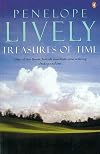
Treasures of Time
by Penelope Lively
On This Page
Description
When the BBC plans a programme on the dig which made archaeologist Hugh Paxton famous, a host of memories are disinterred, and lives disrupted. Kate adored her father and considers the TV scheme an intrusion. Laura Paxton, lonely and bored, is delighted at the prospect of being seen as the charming widow of a distinguished scholar. A cynical on-looker to the filming is Tom Rider, Kate's fiance. While completing his thesis on an 18th century antiquarian, Tom observes the perplexities of being show more English and the parasitism of making a living out of the past. For Paxton's family and colleagues, the site, a Neolithic barrow, becomes the focus for recollections as selective as the filming which will in turn distort the Wiltshire scenery. show lessTags
Recommendations





















Member Reviews
An acute observation of entitled British society in the hierarchical sense, covering employment situations, societal boundaries, and family expectations. While reflective of the times (1970's), many aspects still ring true.
Lively wrote eloquently of Laura, the widow, her sister (Aunt Nellie), and Kate (Laura and Hugh's daughter). The juxtaposition between a retrospective by the BBC's documentary team and the different views of the surviving family, sets the background for the story of Hugh Paxton, the deceased archaeologist and his achievements. In filming at Charlie's Tump, Hugh's land-breaking dig, more secrets emerge and disrupt the prevailing attitudes of what was found there and how it was interpreted by the participants then and show more now.
Readers spend time with supporting characters: the BBC lead person (Tony), Aunt Nellie, and Kate's fiancé (Tom Rider) amongst others, which reveals the flaws and positive attributes amongst these individuals. Some participants appear respected (but evidently disliked by their peers), some cater to upper class snobbery, and others are disdainful. Penelope Lively conveys all these impressions so thoroughly, readers will easily feel they, too, are in the midst of the arguments and discoveries.
Philosophically, this is a strong book and I highly recommend it. My one niggle: the final closing pages seemed flat. Though realistic, the storyline simply wasn't filled out. Nevertheless, the book is wholly worth reading because there's a maturity to the narrative and the incisive writing is brilliant. show less
Lively wrote eloquently of Laura, the widow, her sister (Aunt Nellie), and Kate (Laura and Hugh's daughter). The juxtaposition between a retrospective by the BBC's documentary team and the different views of the surviving family, sets the background for the story of Hugh Paxton, the deceased archaeologist and his achievements. In filming at Charlie's Tump, Hugh's land-breaking dig, more secrets emerge and disrupt the prevailing attitudes of what was found there and how it was interpreted by the participants then and show more now.
Readers spend time with supporting characters: the BBC lead person (Tony), Aunt Nellie, and Kate's fiancé (Tom Rider) amongst others, which reveals the flaws and positive attributes amongst these individuals. Some participants appear respected (but evidently disliked by their peers), some cater to upper class snobbery, and others are disdainful. Penelope Lively conveys all these impressions so thoroughly, readers will easily feel they, too, are in the midst of the arguments and discoveries.
Philosophically, this is a strong book and I highly recommend it. My one niggle: the final closing pages seemed flat. Though realistic, the storyline simply wasn't filled out. Nevertheless, the book is wholly worth reading because there's a maturity to the narrative and the incisive writing is brilliant. show less
Easy reading with characters that are fully fleshed out. The plot revolves around the re-examination of a now deceased archaeologist's (Hugh Paxton) work and theories which are centred on an ancient barrow in Wiltshire.
In the course of this story, those associated with the archaeolgist, his family and colleagues, must re-examine their own choices in life.
Paxton's work is clouded since his great discoveries because he has drawn conclusions about it that might tend to favour his own advancement. He has concluded what he wants to see in his discoveries.
Likewise, his family members and associated characters are forced to recognize that their own preconceptions of self and others are, in the course of this novel, matters that they too might show more have good cause to reassess.
Intelligent writing, coherent and well paced narrative. show less
In the course of this story, those associated with the archaeolgist, his family and colleagues, must re-examine their own choices in life.
Paxton's work is clouded since his great discoveries because he has drawn conclusions about it that might tend to favour his own advancement. He has concluded what he wants to see in his discoveries.
Likewise, his family members and associated characters are forced to recognize that their own preconceptions of self and others are, in the course of this novel, matters that they too might show more have good cause to reassess.
Intelligent writing, coherent and well paced narrative. show less
Penelope Lively's second novel for adults, first published in 1979, is an enjoyable mixture - a sometimes poignant comedy of misunderstandings, with a theme about history and archaeology, but very much a book of its time - whatever happened to the Britain in which "There's political stability and a fair degree of tolerance and a certain capacity to admit mistakes."
The plot centres on the family of a now dead archaeologist Hugh Paxton, who made his name with spectacular finds from a dig at a barrow known as Charlie's Tump near his Wiltshire home. His widow Laura, who had little interest in his work, now occupies their house with her disabled elder sister Nellie, a former archaeologist who was responsible for introducing the mismatched show more couple. Their only child is Kate, who has her own dealings with the past in her museum job. Kate's partner Tom is writing a thesis on the (real) eighteenth century archaeologist William Stukeley. Tom likes a drink, is wary of commitment and easily led, and much of the comedy in the book derives from his misadventures.
A television crew turns up intending to make a program about Hugh Paxton and his work, and this leads the various protagonists to share their very different accounts of the events at the pivotal dig and what they saw and felt. The ending is a little melodramatic but rather satisfying.
A very enjoyable book, as Lively's novels always are. show less
The plot centres on the family of a now dead archaeologist Hugh Paxton, who made his name with spectacular finds from a dig at a barrow known as Charlie's Tump near his Wiltshire home. His widow Laura, who had little interest in his work, now occupies their house with her disabled elder sister Nellie, a former archaeologist who was responsible for introducing the mismatched show more couple. Their only child is Kate, who has her own dealings with the past in her museum job. Kate's partner Tom is writing a thesis on the (real) eighteenth century archaeologist William Stukeley. Tom likes a drink, is wary of commitment and easily led, and much of the comedy in the book derives from his misadventures.
A television crew turns up intending to make a program about Hugh Paxton and his work, and this leads the various protagonists to share their very different accounts of the events at the pivotal dig and what they saw and felt. The ending is a little melodramatic but rather satisfying.
A very enjoyable book, as Lively's novels always are. show less
The fact is, of course, that what you feel about what you see depends not on what is, but who you are. A place is an illusion.A very subtle, understated measure of time—in the individual sense; in the familial sense; in the generational sense; and in the historical sense—and how all of these converge and conflict when the BBC descends upon the fractured Paxton family, intent on making a documentary about deceased archeologist Hugh Paxton.
Navigating the different memories this present-day excavation unearths, Lively is able to give us a true sense of how those who have devoted their lives to uncovering the truths of history—e.g., Paxton, and also the young Tom, engaged to Paxton’s aloof and emotionally traumatized show more daughter, Kate—may know less than those who have lived their own histories more organically, such as Nellie, first Paxton’s lover and then sister-in-law (and, possibly, her lover yet again), who is confined to a wheelchair after a stroke yet is still more mobile in the outside world—as well as the inner world—than many of the other characters; Laura, Nellie’s sister and Paxton’s widow, who, despite her class-conscious snobbism and her disdain for the new generation (it seems like the mid-to-late-1970s), clings to memories of her past, even if only for purely selfish reasons; and the Paxtons’ daughter Kate, who is as unpredictable as the land her father explored and charted, proving, in short, that only nature rules where mankind fails, and that it is our blunder to think we can either rewrite history or claim ownership or knowledge of a land’s spoils.
While this is a minor Lively, her pacing is spot-on, even as she moves somewhat quickly from each characters’ point-of-view and from the present to the past. Recommended for fans of Lively’s more mature work, fans of Bowen, fans of Taylor, and also perhaps fans of Brookner. show less
Tom, an academic, lives with Kate, whose father was a famous archaeologist. As past and present intertwine, we learn more about each person. Cleverly written with a realistic ending.
(7.5)This is one of this author's earlier novels published in 1979, so forty years ago. I found it 'very English' in its depiction of the landed gentry and their mannerisms, the rural setting and Oxbridge. A pleasant undemanding reading.
Not my favourite Penelope Lively, but not bad all the same. Characters all seeming a bit dated now.
Members
- Recently Added By
Author Information

73+ Works 14,491 Members
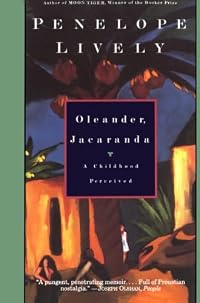
Penelope Lively has written over 18 books for children, and over 15 titles for adults, distinguishing herself on both levels. Among the awards she has received are the coveted Booker Prize for the adult novel "Moon Tiger" (1987) and the Carnegie Medal for the highly acclaimed juvenile work, "The Ghost of Thomas Kempe" (1973). In Lively's writing, show more for both adults and children, the recurrent theme is interpreting the past through exploring the function of memory. "My particular preoccupation as a writer is with memory. Both with memory in the historical sense and memory in the personal sense." Beginning her writing career in the early 1970's, Lively wrote exclusively for children for over a decade. Because children have limited memories, devices were used to explore their perceptions of the past, such as ghosts in "Uninvited Ghosts and Other Stories" (1985), and a sampler in "A Stitch in Time' (1976). Lively's first adult novel, "The Road to Lichfield" (1977) was the result of turning to an older audience when she felt inspiration running out. Her adult novels include "Passing On" (1995), the story of a mother's legacy to her children and 'Oleander, Jacarandi: A Childhood Perceived' (1994) which is a memoir of Lively's childhood. Penelope (Low) Lively, born March 17, 1933 in Cairo, Egypt, had a most unusual childhood. She grew up in Cairo with no formal education until age 12, when her family put her in boarding school in England. After earning a B.A. in history at Oxford in 1955, she married Jack Lively, a university professor, whom she calls her most useful critic. They have a son and a daughter, Adam and Josephine. (Bowker Author Biography) show less
Awards and Honors
Series
Belongs to Publisher Series
Penguin Decades (1970s)
Common Knowledge
- Original publication date
- 1979
- Important places
- Wiltshire, England, UK
- First words
- The alarm went. He resisted it, burrowing against Kate's warm back.
Classifications
Statistics
- Members
- 166
- Popularity
- 196,596
- Reviews
- 9
- Rating
- (3.48)
- Languages
- English
- Media
- Paper, Audiobook, Ebook
- ISBNs
- 10
- ASINs
- 2