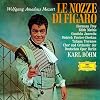
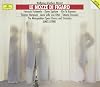
The marriage of Figaro [complete sound recording]
by Wolfgang Amadeus Mozart (Composer), Lorenzo da Ponte (Librettist), James Levine (Conductor), Metropolitan Opera
On This Page
Tags
Recommendations






Member Reviews
The story in outline: randy husband with roving eye chases reluctant young woman while neglected wife schemes to rewin husband’s affections. Meanwhile, woman’s fiancé struggles with issues of trust as youthful neighbour comes to terms with coming of age.
Mozart's "The Marriage of Figaro" embodied the spirit of the French Revolution when it premiered in 1786, portraying the comic triumph of skilled and quick-witted middle-class servants over their pompous and decadent royal masters. The Beaumarchais play from which this opera drew inspiration had been banned in Paris for its volatile political content: finding dark humour in class power struggles was dangerous business in pre-Revolutionary France. For the many fans of the show more effervescent masterpiece today, its revolutionary overtones are all but lost. Yet it endures because Mozart went beyond the class struggles of his day to weave many of life's timeless themes into the opera: love and betrothal, betrayal and justice, greed and vengence, innocent youth and jaded old age. Characters who Beaumarchais sketched as ideologically shaded silhouettes gain through Mozart’s music the hearts and souls of persons one might embrace. A youth trembling with new passions. A young man confident of his cleverness. A loving wife, forlorn, her husband estranged. Couples that, like real couples, can both quarrel and forgive. show less
Mozart's "The Marriage of Figaro" embodied the spirit of the French Revolution when it premiered in 1786, portraying the comic triumph of skilled and quick-witted middle-class servants over their pompous and decadent royal masters. The Beaumarchais play from which this opera drew inspiration had been banned in Paris for its volatile political content: finding dark humour in class power struggles was dangerous business in pre-Revolutionary France. For the many fans of the show more effervescent masterpiece today, its revolutionary overtones are all but lost. Yet it endures because Mozart went beyond the class struggles of his day to weave many of life's timeless themes into the opera: love and betrothal, betrayal and justice, greed and vengence, innocent youth and jaded old age. Characters who Beaumarchais sketched as ideologically shaded silhouettes gain through Mozart’s music the hearts and souls of persons one might embrace. A youth trembling with new passions. A young man confident of his cleverness. A loving wife, forlorn, her husband estranged. Couples that, like real couples, can both quarrel and forgive. show less
Not sure if it's my familiarity with the material or that Tatiana Troyanos can enunciate the hell out of her part. Her tone is just a bit too mellow for a very young man, but ee-by-gum you can understand everything she says. Fischer-Dieskaw as the Conte comes off dark throughout. Surely there's room for some lightness. Delightful recording that includes some arias often left out of staged productions.
Ratings
Members
- Recently Added By
Author Information

Born in Salzburg, Austria, Wolfgang Amadeus Mozart's life and musical career were fiery but brief. The son of Leopold Mozart, a musician and well-known composer, Wolfgang Mozart was a child prodigy. By the age of 5, he was writing minuets and playing the harpsichord; by the age of 8, he had written his first symphony. Because of his prodigious show more talent, Mozart's father took him and his sister (who was also an excellent musician) on tour throughout Europe, and he met and performed for several royal courts. In 1769, at the age of only 13, Mozart was made concertmaster at the court of the Archbishop of Salzburg. By 1781 he had become unhappy in Salzburg and quarreled with the Archbishop. As a result, he was dismissed from his position and left for Vienna. In 1782, while in Vienna, Mozart married Constanze Weber. Although plagued by troubles, including the deaths of four of his children and his wife's ill health, he composed some of his finest works in Vienna. These included the operas The Abduction from the Seraglio (1782) and Cosi fan tutte (1790), his famous last three symphonies, several piano concertos, and many other works. By 1788 Mozart was seriously in debt. One reason was that audiences began finding some of his latest music difficult and stayed away from his concerts. In the summer of 1791, he began suffering from fever and severe headaches. Later that year he fell into a coma and died on December 5, leaving behind his last great work, the Requiem mass, which was left unfinished. Because he was so poor, his coffin was dumped into an unmarked pauper's grave, and his place of burial remains unknown. Mozart's talent as a musician was tremendous. He could compose whole symphonies and operas in his head, needing only to write them out for performance. His gifts as a composer of endless streams of melodies, beautifully harmonized, are astounding. His symphonies and concerti are brilliant; his chamber music, stunning. His operas Don Giovanni (1787), The Magic Flute (1791), and The Marriage of Figaro (1786), are among the best-known and beloved operas performed today. His brief life has produced nearly two centuries of deserved adulation from the trained musician, the music scholar, and unsophisticated listener. (Bowker Author Biography) show less


151+ Works 644 Members
All Editions
Some Editions
Common Knowledge
- Canonical title
- The Marriage of Figaro [complete sound recording]; The marriage of Figaro [complete sound recording]
- Disambiguation notice
- This work should contain only complete sound recordings of the entire opera. If you can identify any of these recordings as incomplete (e.g. highlights), please move them to the appropriate work.
Classifications
Statistics
- Members
- 181
- Popularity
- 180,839
- Reviews
- 2
- Rating
- (4.69)
- Languages
- English, Finnish, Italian
- ISBNs
- 1
- UPCs
- 2
- ASINs
- 49