On This Page
Description
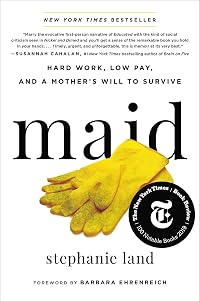
NEW YORK TIMES BESTSELLER AND INSPIRATION FOR THE NETFLIX LIMITED SERIES, HAILED BY ROLLING STONE AS "A GREAT ONE." "A single mother's personal, unflinching look at America's class divide, a description of the tightrope many families walk just to get by, and a reminder of the dignity of all work."-PRESIDENT BARACK OBAMA, Obama's Summer Reading List
At 28, Stephanie Land's dreams of attending a university and becoming a writer quickly dissolved when a summer fling turned into an show more unplanned pregnancy. Before long, she found herself a single mother, scraping by as a housekeeper to make ends meet.
Maid is an emotionally raw, masterful account of Stephanie's years spent in service to upper middle class America as a "nameless ghost" who quietly shared in her clients' triumphs, tragedies, and deepest secrets. Driven to carve out a better life for her family, she cleaned by day and took online classes by night, writing relentlessly as she worked toward earning a college degree. She wrote of the true stories that weren't being told: of living on food stamps and WIC coupons, of government programs that barely provided housing, of aloof government employees who shamed her for receiving what little assistance she did. Above all else, she wrote about pursuing the myth of the American Dream from the poverty line, all the while slashing through deep-rooted stigmas of the working poor.
Maid is Stephanie's story, but it's not hers alone. It is an inspiring testament to the courage, determination, and ultimate strength of the human spirit.
. show less
Tags
Recommendations



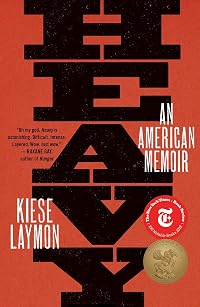
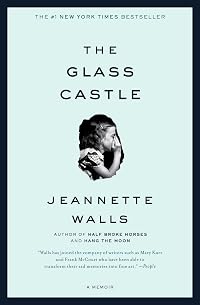
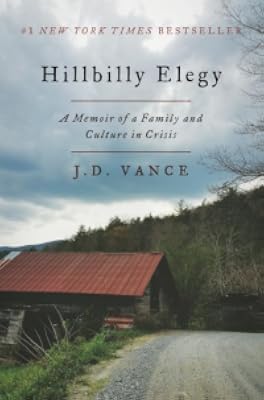


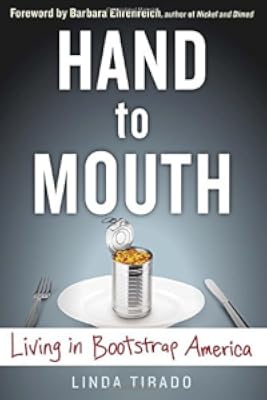


Member Recommendations
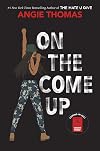
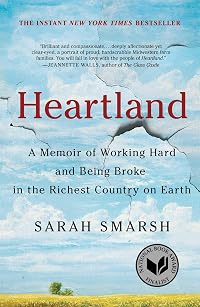
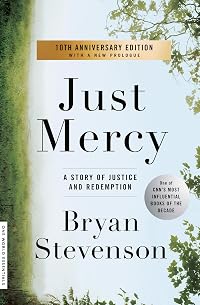
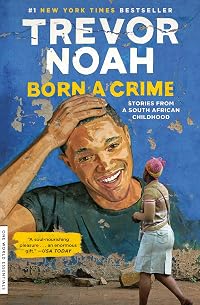
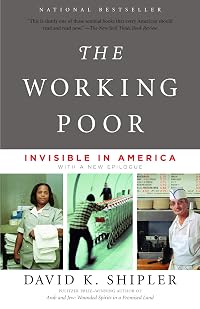
kristenl Coincidentally I was listening to this at the same time that I read Maid. Although it is a fictionalized young adult novel about a Black girl, the descriptions of poverty felt very similar.
Member Reviews
I really don't know how conservatives can hear a story like this, that is just like so many other stories, and think, you know what, f*** my neighbor, anyone on government assistance is the problem with this country.
This is like Poverty, by America but from the first person point of view. There is just no working your way out of poverty. Those in poverty are by far harder workers than those with any amount of means. Constantly doing the math to see if you can afford the gas, living in pain because you for sure can't afford the doctor, praying the childcare your government assistance can be used at will actually care for your child well. Earning just a little bit more because you put in extra hours so your government assistance goes down show more the same amount so what was the point. This just broke my heart. What is society even for if not to lift up the downtrodden and struggling. I'm so glad they had a happy ending, but that's rare, and the ones who can't get a happy ending still deserve food, shelter, medical care, and dignity. show less
This is like Poverty, by America but from the first person point of view. There is just no working your way out of poverty. Those in poverty are by far harder workers than those with any amount of means. Constantly doing the math to see if you can afford the gas, living in pain because you for sure can't afford the doctor, praying the childcare your government assistance can be used at will actually care for your child well. Earning just a little bit more because you put in extra hours so your government assistance goes down show more the same amount so what was the point. This just broke my heart. What is society even for if not to lift up the downtrodden and struggling. I'm so glad they had a happy ending, but that's rare, and the ones who can't get a happy ending still deserve food, shelter, medical care, and dignity. show less
This is one of those memoirs that make you think a little differently about the world. I'm not rich and privileged and certainly not wealthy, however, this books makes me realize how much I take for granted. Having a safety net of family and friends. Never being one paycheck away from homelessness. Being able to afford nights out and trips to the bookstore. I always gripe about how I wish I had more money or how I should be better at saving, but after reading Maid and seeing what one single mom can survive on a month, I feel ashamed. I've got lots of cushion. Stephanie Land's memoir is about how broken our country's welfare and workforce is. About how she had to work full time scrubbing toilets and showers only to bring home practically show more nothing and then be denied other government benefits that she needed to help feed her kid. It's about how no matter how hard you work, there are still barriers all around you keeping you away from achieving financial stability. It's also about one of the most undervalued and underpaid jobs in the workforce, being a maid. It's thankless, invisible work. Most won't bother to learn your name, yet for the maid, she sees all. She knows the family most intimately based on their homes. The puke in the toilet, the pills on the counter, the sad little romance books hidden in a corner, the lube on the nightstand. It's an unflinching look at what many of our poorest have to suffer through. A great memoir. show less
Maid is a haunting look at living in poverty and relying on everchanging government assistance in America. It’s well written and doesn’t pull any punches on the continual need to earn more, save more but never being able to do so.
Stephanie had dreams of studying in Montana when she found out she was pregnant. Her relationship with the baby’s father became untenable and she and her daughter were forced into a homeless shelter. With little money and no higher education, limited job options were available (plus the need to look after her daughter). Stephanie works as a maid, cleaning houses with bathrooms as big as her studio apartment and dealing with unfathomable dirtiness, mould and plain lazy people who happen to have money to show more spend. When Stephanie is not working, she’s calculating how much money she needs to live and how she can work more. There’s also an overview of government benefits available to her, which involve a lot of form completion and long visits to various offices. If she works more, she gets less child care and health care. But if she doesn’t work more, she doesn’t eat. There are also descriptions of being humiliated by buying food with food stamps with strangers unhelpfully pointing out that their taxes ‘paid’ for her food. (I’m not sure what the American government’s distribution of taxes is like, but in Australia, health is a bigger proportion of taxation than welfare). The American health system is also a minefield to navigate, looking for Medicaid providers for Stephanie’s daughter while she doesn’t appear to be eligible. There are also negative incidents with landlords and some hints at disharmony within her family.
In between this, the narrative tells of the different houses Stephanie cleans and their quirks (from dog hair to porn). She’s very perceptive about her clients, although she rarely sees them, noting their health generally failing by the increasing pill bottles or other tell-tale changes. But overall, the memoir describes how it feels to be on the bottom of the class pile with improvement seeming like an impossible reach. It would have been interesting to know if Stephanie’s white privilege played any role and how she would change the system to improve things. It’s a good insight into poverty, told with emotion but not overwrought. It raises the questions; how would you manage this situation? How would you try to prevent falling into this cycle? How can we help others caught in the cycle of poverty?
http://samstillreading.wordpress.com show less
Stephanie had dreams of studying in Montana when she found out she was pregnant. Her relationship with the baby’s father became untenable and she and her daughter were forced into a homeless shelter. With little money and no higher education, limited job options were available (plus the need to look after her daughter). Stephanie works as a maid, cleaning houses with bathrooms as big as her studio apartment and dealing with unfathomable dirtiness, mould and plain lazy people who happen to have money to show more spend. When Stephanie is not working, she’s calculating how much money she needs to live and how she can work more. There’s also an overview of government benefits available to her, which involve a lot of form completion and long visits to various offices. If she works more, she gets less child care and health care. But if she doesn’t work more, she doesn’t eat. There are also descriptions of being humiliated by buying food with food stamps with strangers unhelpfully pointing out that their taxes ‘paid’ for her food. (I’m not sure what the American government’s distribution of taxes is like, but in Australia, health is a bigger proportion of taxation than welfare). The American health system is also a minefield to navigate, looking for Medicaid providers for Stephanie’s daughter while she doesn’t appear to be eligible. There are also negative incidents with landlords and some hints at disharmony within her family.
In between this, the narrative tells of the different houses Stephanie cleans and their quirks (from dog hair to porn). She’s very perceptive about her clients, although she rarely sees them, noting their health generally failing by the increasing pill bottles or other tell-tale changes. But overall, the memoir describes how it feels to be on the bottom of the class pile with improvement seeming like an impossible reach. It would have been interesting to know if Stephanie’s white privilege played any role and how she would change the system to improve things. It’s a good insight into poverty, told with emotion but not overwrought. It raises the questions; how would you manage this situation? How would you try to prevent falling into this cycle? How can we help others caught in the cycle of poverty?
http://samstillreading.wordpress.com show less
Stephanie Land's memoir Maid has been on dozens of book lists, so you may have heard of or read it already. All the hype? Absolutely deserved - it was a powerful, eye opening read.
But, if you haven't heard of it, the publisher's blurb is a pretty concise descriptor:
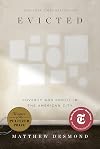
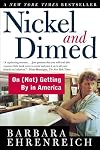
"Evicted meets Nickel and Dimed in Stephanie Land’s memoir about working as a maid, a beautiful and gritty exploration of poverty in America."
Having read both of those books, I knew this was one I wanted to read. Star studded tell-alls are of no interest to me. Instead I find myself invariably drawn to memoirs of everyday people. The struggles and the triumphs- real life.
Land finds herself pregnant just as she is about to apply to university to follow her dream of becoming show more a writer. That dream is sidetracked and Land ends up working as a maid to support her daughter.
Her struggles - financially, medically, mentally and physically - are captured in brutally honest prose. The reader is alongside as she navigates 'the system', her relationships and the anonymity of cleaning houses. But, just as affecting is the love she has for her daughter and her desire to follow her dream of becoming a writer.
Land's work made for addictive reading and is a testament to her tenacity. While she may have made choices that I would not have, I'm not here to judge. There is no way to 'rate' someone's life, but if pressed, I would give Maid is a five star read for Land's honesty is sharing her life story so far. show less
But, if you haven't heard of it, the publisher's blurb is a pretty concise descriptor:
"Evicted meets Nickel and Dimed in Stephanie Land’s memoir about working as a maid, a beautiful and gritty exploration of poverty in America."
Having read both of those books, I knew this was one I wanted to read. Star studded tell-alls are of no interest to me. Instead I find myself invariably drawn to memoirs of everyday people. The struggles and the triumphs- real life.
Land finds herself pregnant just as she is about to apply to university to follow her dream of becoming show more a writer. That dream is sidetracked and Land ends up working as a maid to support her daughter.
Her struggles - financially, medically, mentally and physically - are captured in brutally honest prose. The reader is alongside as she navigates 'the system', her relationships and the anonymity of cleaning houses. But, just as affecting is the love she has for her daughter and her desire to follow her dream of becoming a writer.
Land's work made for addictive reading and is a testament to her tenacity. While she may have made choices that I would not have, I'm not here to judge. There is no way to 'rate' someone's life, but if pressed, I would give Maid is a five star read for Land's honesty is sharing her life story so far. show less
Maid is one of those stories that people love to read to make themselves feel learned and liberal. Stephanie Land’s story is tragic, and there is no doubt that she had to overcome a lot in the name of survival. I want to love Maid and tout it as a valuable insight into our welfare system, which it is and yet is not. The thing is that Ms. Land is white, which means her experiences with government assistance and poverty are a whole hell of a lot different than someone else’s experience. Not once does Ms. Land recognize this fact as she tells her story. She does not acknowledge the fact that people are more willing to bargain with her or trust her in their homes because she is blond and she is white. She does not recognize the show more privilege that comes with white skin, and there is just one area where I find fault with the book.
At one point in time, Ms. Land mentions visiting her mother in France, and the statement struck me as so incongruous with her story that I stopped reading for the day. You see, Ms. Land mentions several times how her family has a history of struggling with poverty and how her parents couldn’t help her when her life fell apart because they had money problems of their own. Ms. Land also intimates that her money problems started early, that she always had one foot on the poverty line and relied on her boyfriend to keep her above the line. Throughout all this, she somehow finds a way to visit her mother in France, where she moved after Stephanie was out of the house and on her own. I grew up firmly entrenched in the middle class to two teachers. We were not poor; we went on vacations every year and could afford to eat out once in a while. But not once while I was growing up could my parents afford to fly to Europe. I know this one statement should not bother me in light of what Ms. Land shows regarding the assistance programs, but I still wonder how Ms. Land could afford that trip to France when she was working in coffee shops and bars and relying on her boyfriend to help with bills and rent. A little bit of sympathy at her situation dissolved upon reading that line, never to return.
I fear that people are going to treat Maid as they did Hillybilly Elegy, which means they are going to read it and consider themselves experts in all things welfare-related. It is a remarkable story, but it is not the only story. I would argue it is not the typical story in any fashion. Ms. Land, growing up to middle-class parents, has already had access to privileges most people in the welfare system will never have. That and the color of her skin means her experiences are not the same as a person of color or someone for whom English is a second language. That she does not explicitly identify these privileges bothers me, and the fact that Maid is gaining the buzz it already has bothers me even more. I can’t say that you shouldn’t read it, but I recommend you go in knowing its faults and that Ms. Land’s story, while tragic, is still not the typical story of someone on welfare. show less
At one point in time, Ms. Land mentions visiting her mother in France, and the statement struck me as so incongruous with her story that I stopped reading for the day. You see, Ms. Land mentions several times how her family has a history of struggling with poverty and how her parents couldn’t help her when her life fell apart because they had money problems of their own. Ms. Land also intimates that her money problems started early, that she always had one foot on the poverty line and relied on her boyfriend to keep her above the line. Throughout all this, she somehow finds a way to visit her mother in France, where she moved after Stephanie was out of the house and on her own. I grew up firmly entrenched in the middle class to two teachers. We were not poor; we went on vacations every year and could afford to eat out once in a while. But not once while I was growing up could my parents afford to fly to Europe. I know this one statement should not bother me in light of what Ms. Land shows regarding the assistance programs, but I still wonder how Ms. Land could afford that trip to France when she was working in coffee shops and bars and relying on her boyfriend to help with bills and rent. A little bit of sympathy at her situation dissolved upon reading that line, never to return.
I fear that people are going to treat Maid as they did Hillybilly Elegy, which means they are going to read it and consider themselves experts in all things welfare-related. It is a remarkable story, but it is not the only story. I would argue it is not the typical story in any fashion. Ms. Land, growing up to middle-class parents, has already had access to privileges most people in the welfare system will never have. That and the color of her skin means her experiences are not the same as a person of color or someone for whom English is a second language. That she does not explicitly identify these privileges bothers me, and the fact that Maid is gaining the buzz it already has bothers me even more. I can’t say that you shouldn’t read it, but I recommend you go in knowing its faults and that Ms. Land’s story, while tragic, is still not the typical story of someone on welfare. show less
"Poverty was like a stagnant pool of mud that pulled at our feet and refused to let go." from Maid by Stephanie Land
I'll be brutally honest, and you can "unfollow" me if you want, I don't care, but ever since Presidents Roosevelt and Johnson created social programs to help the poor there have been politicians determined to slash, limit, and end them. And one of their methods is to vilify the poor as blood-sucking, lazy, ignorant, "self-entitled" criminals who live off the hard earned tax dollars squeezed from hard-working, honest, salt-of-the-earth, red-blooded Americas.
I have known some of "those people," and yes, they sometimes made bad choices, but they also worked to improve their lives. Like my cousin who ran away at sixteen and show more returned, pregnant, without a high school degree. She was on welfare and food stamps. She also got a GED and learned to drive and found a job...which was eliminated by budget cuts. After floundering for some time, she found work again, and even love. Then died young of a horrible autoimmune disease.
Or the couple who worked abroad to teach English as a second language to pay off their school debts, then returned to America and could not find jobs. The wife returned to school for an advanced degree. She graduated after the economy tanked and still could not find work in her area. They relied on WIC when their child was born. They have lived in poverty their entire marriage, the woman working for ETS and online tutoring.
Stephanie Land had dreams, hoping some day to go to college. Her parents had split up, her mom's husband resentful and her dad broke because of the recession. She was self-supporting when she became pregnant. When she decided to keep her baby her boyfriend became abusive. She was driven to take her daughter and leave him.
And so began her descent into the world of homelessness, poverty, the red-tape web of government programs. She worked as a maid, even though she suffered from a pinched nerve and back pain and allergies. The pay was miserable, her travel expenses uncovered. She found housing that was inadequate, unsafe, and unhealthy. Black mold kept her daughter perpetually sick with sinus and ear infections.
I know about that. Our infant son was ill most of the year with allergies, sinus infections, ad ear infections. It made him fussy and overactive and every time he was sick it made his development lag. We were lucky. We could address the environmental causes. We found a specialist who treated him throughout his childhood.
Maid is Stephanie Land's story of those years when she struggled to provide for her daughter. She documents how hard it is to obtain assistance and even the knowledge of what aid is available, the everlasting exhaustion of having to work full time, taking her daughter to and from daycare, and raise her child on a razor-thin budget. All while cleaning the large homes of strangers.
And that is the other side of the book, the people who hire help at less than minimum wage, some who show consideration and others who like her invisible. How a maid knows more about her clients than they can imagine.
Land worked hard. Really hard. She had to. Finally, she was able to go to school and write this book. She crawled out of the mire. What is amazing is that anyone can escape poverty. You earn a few dollars more and you lose benefits.
Land is an excellent writer. She created scenes that broke my heart, such as when her mother and her new husband come to help Land move. Her mom suggests they go out to lunch, then expects Land to pay for the meal. Land had $10 left until the end of the month. Even knowing this, they accepted it. Then, her mom's husband complained Land acted 'entitled'. I was so angry! I felt heartbroken that Land and her daughter were shown so little charity.
I think about the Universal Basic Income idea that I have read about. How if Land received $1,000 a month she would have been able to provide her daughter with quality daycare or healthy housing. She would have been able to spend more time on her degree and work fewer weekends. She would have been off government assistance years sooner.
But that's not how the system works. Because we don't trust poor people to do the right thing. We don't trust them to want to have a better life. We don't believe they are willing to work hard--work at all.
Remember The Ghost of Christmas Present who shows Scrooge the children hiding under his robes, Ignorance and
Want? We have the power to end ignorance and want. We choose not to. Instead, we tell people to pull themselves up by their bootstraps, even when they are without shoes.
That's my rant. Yes, progressive liberal stuff. But also in the spirit of the Christ who told us that if we have two shirts, give one to the poor. The Christ who said not to judge other's faults and ignore your larger ones--judging being the larger one. The Christ who taught mercy to strangers.
Perhaps Land's memoir will make people take a second look at mothers on assistance. Under the cinders is a princess striving to blossom.
I received a free ebook from the publisher through NetGalley in exchange for a fair and unbiased review. show less
I'll be brutally honest, and you can "unfollow" me if you want, I don't care, but ever since Presidents Roosevelt and Johnson created social programs to help the poor there have been politicians determined to slash, limit, and end them. And one of their methods is to vilify the poor as blood-sucking, lazy, ignorant, "self-entitled" criminals who live off the hard earned tax dollars squeezed from hard-working, honest, salt-of-the-earth, red-blooded Americas.
I have known some of "those people," and yes, they sometimes made bad choices, but they also worked to improve their lives. Like my cousin who ran away at sixteen and show more returned, pregnant, without a high school degree. She was on welfare and food stamps. She also got a GED and learned to drive and found a job...which was eliminated by budget cuts. After floundering for some time, she found work again, and even love. Then died young of a horrible autoimmune disease.
Or the couple who worked abroad to teach English as a second language to pay off their school debts, then returned to America and could not find jobs. The wife returned to school for an advanced degree. She graduated after the economy tanked and still could not find work in her area. They relied on WIC when their child was born. They have lived in poverty their entire marriage, the woman working for ETS and online tutoring.
Stephanie Land had dreams, hoping some day to go to college. Her parents had split up, her mom's husband resentful and her dad broke because of the recession. She was self-supporting when she became pregnant. When she decided to keep her baby her boyfriend became abusive. She was driven to take her daughter and leave him.
And so began her descent into the world of homelessness, poverty, the red-tape web of government programs. She worked as a maid, even though she suffered from a pinched nerve and back pain and allergies. The pay was miserable, her travel expenses uncovered. She found housing that was inadequate, unsafe, and unhealthy. Black mold kept her daughter perpetually sick with sinus and ear infections.
I know about that. Our infant son was ill most of the year with allergies, sinus infections, ad ear infections. It made him fussy and overactive and every time he was sick it made his development lag. We were lucky. We could address the environmental causes. We found a specialist who treated him throughout his childhood.
Maid is Stephanie Land's story of those years when she struggled to provide for her daughter. She documents how hard it is to obtain assistance and even the knowledge of what aid is available, the everlasting exhaustion of having to work full time, taking her daughter to and from daycare, and raise her child on a razor-thin budget. All while cleaning the large homes of strangers.
And that is the other side of the book, the people who hire help at less than minimum wage, some who show consideration and others who like her invisible. How a maid knows more about her clients than they can imagine.
Land worked hard. Really hard. She had to. Finally, she was able to go to school and write this book. She crawled out of the mire. What is amazing is that anyone can escape poverty. You earn a few dollars more and you lose benefits.
Land is an excellent writer. She created scenes that broke my heart, such as when her mother and her new husband come to help Land move. Her mom suggests they go out to lunch, then expects Land to pay for the meal. Land had $10 left until the end of the month. Even knowing this, they accepted it. Then, her mom's husband complained Land acted 'entitled'. I was so angry! I felt heartbroken that Land and her daughter were shown so little charity.
I think about the Universal Basic Income idea that I have read about. How if Land received $1,000 a month she would have been able to provide her daughter with quality daycare or healthy housing. She would have been able to spend more time on her degree and work fewer weekends. She would have been off government assistance years sooner.
But that's not how the system works. Because we don't trust poor people to do the right thing. We don't trust them to want to have a better life. We don't believe they are willing to work hard--work at all.
Remember The Ghost of Christmas Present who shows Scrooge the children hiding under his robes, Ignorance and
Want? We have the power to end ignorance and want. We choose not to. Instead, we tell people to pull themselves up by their bootstraps, even when they are without shoes.
That's my rant. Yes, progressive liberal stuff. But also in the spirit of the Christ who told us that if we have two shirts, give one to the poor. The Christ who said not to judge other's faults and ignore your larger ones--judging being the larger one. The Christ who taught mercy to strangers.
Perhaps Land's memoir will make people take a second look at mothers on assistance. Under the cinders is a princess striving to blossom.
I received a free ebook from the publisher through NetGalley in exchange for a fair and unbiased review. show less
Stephanie Land's MAID (2019), a gift from my daughter, was, I've learned, a monster bestseller five years ago, now translated into several languages, and soon to be a Netflix film. I guess I missed all that hoopla somehow, but I'm very happy for the author, because the book itself, a memoir, is one of the saddest damn stories I've read in a long time. It chronicles her hardscrabble years of extreme poverty and barely scraping by as a single mom who cleaned houses for a living and lived in a tiny, mold-infested studio apartment with her toddler daughter, who was often sick from their substandard living conditions. There is much here too about the red tape of welfare and government programs for the poor - and it's not very flattering - as show more well as the less than sympathetic attitudes of people who are better off. Land is an excellent writer and never gives in to mawkish self-pity, but instead just tells it like it was, including how she sometimes had to just weep at the hopelessness of her situation. I winced my way through the whole thing, hoping against hope that things would improve for her. Did they? Read the book. It's a good one. Very highly recommended.
- Tim Bazzett, author of the memoir, BOOKLOVER show less
- Tim Bazzett, author of the memoir, BOOKLOVER show less
Members
- Recently Added By
Lists

Memoirs Heal the Soul
22 works; 1 member

Top Five Books of 2020
982 works; 350 members

Books recommended by Barack Obama
295 works; 28 members

Indie Next Picks
196 works; 4 members

GAL Book Club
75 works; 3 members

Hachette Book Group
152 works; 6 members

Barack Obama's Summer Reading List 2019
10 works; 2 members

Books Read in 2025
4,091 works; 97 members
Author Information

3 Works 1,901 Members
All Editions
Awards and Honors
Awards
Distinctions
Notable Lists
Series

Common Knowledge
- Canonical title
- Maid: Hard Work, Low Pay, and a Mother's Will to Survive
- Original title
- Maid: Hard Work, Low Pay, and a Mother's Will to Survive
- Original publication date
- 2019
- People/Characters
- Stephanie Land; Emilia "Mia"; Jamie; Travis; Lonnie; Pam (show all 8); Barefoot Bandit (Colton Harris Moore); Colton Harris Moore (Barefoot Bandit )
- Important places
- Port Townsend, Washington, USA; Anacortes, Washington, USA; Stanwood, Washington, USA; Mount Vernon, Washington, USA; Missoula, Montana, USA; Skagit Valley, Washington, USA (show all 7); Anchorage, Alaska, USA
- Related movies
- Maid (2021 | IMDb)
- Epigraph
- I've learned that making a living is not the same as making a life
—Maya Angelou. - Dedication
- For Mia:
Goodnight
I love you
See you in the
morning.
—Mom - First words
- My daughter learned to walk in a homeless shelter.
The price of admission requires that you abandon any stereotypes of domestic workers, single parents, and media-derived images of poverty you may be harboring. (Foreword) - Quotations
- Poverty was like a stagnant pond of mud that pulled at our feet and refused to let go.
- Last words
- (Click to show. Warning: May contain spoilers.)I guess they're in and of the same.
(Click to show. Warning: May contain spoilers.)Stephanie reminds us that they are out there in the millions, each heroic in her own way, waiting for us to listen. (Foreword) - Publisher's editor
- Trotman, Krishan
- Blurbers
- Gay, Roxane; Dublanica, Steve; Ruta, Domenica; Cahalan, Susannah; Obama, Barack; Ehrenreich, Barbara (show all 8); Yuknavitch, Lidia; Blower, Lisa
- Original language
- English
Classifications
Statistics
- Members
- 1,651
- Popularity
- 13,577
- Reviews
- 81
- Rating
- (3.63)
- Languages
- 8 — Chinese, English, French, German, Italian, Polish, Portuguese, Spanish
- Media
- Paper, Audiobook, Ebook
- ISBNs
- 26
- ASINs
- 4