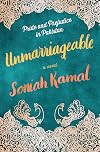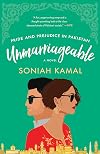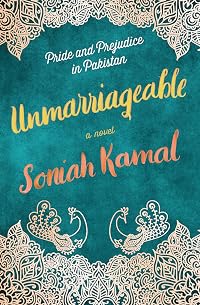
Unmarriageable
by Soniah Kamal
On This Page
Description
"In this retelling of Pride and Prejudice set in modern-day Pakistan, Alys Binat has sworn never to marry--until an encounter with one Mr. Darsee at a wedding makes her reconsider. A scandal and vicious rumor in the Binat family have destroyed their fortune and prospects for desirable marriages, but Alys, the second and most practical of the five Binat daughters, has found happiness teaching English literature to schoolgirls. Knowing that many of her students won't make it to graduation show more before dropping out to marry and start having children, Alys teaches them about Jane Austen and her other literary heroes and hopes to inspire them to dream of more. When an invitation arrives to the biggest wedding their small town has seen in years, Mrs. Binat excitedly sets to work preparing her daughters to fish for eligible--and rich--bachelors, certain that their luck is about to change. On the first night of the festivities, Alys's lovely older sister, Jena, catches the eye of one of the most eligible bachelors. But his friend Valentine Darsee is clearly unimpressed by the Binat family. Alys accidentally overhears his unflattering assessment of her, and quickly dismisses him and his snobbish ways. But as the days of lavish wedding parties unfold, the Binats wait breathlessly to see if Jena will land a proposal--and Alys begins to realize that Darsee's brusque manner may be hiding a very different man from the one she saw at first glance"-- show lessTags
Recommendations
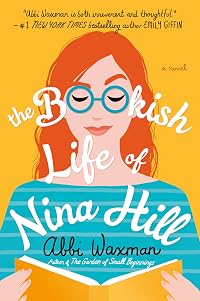
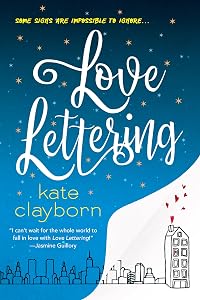
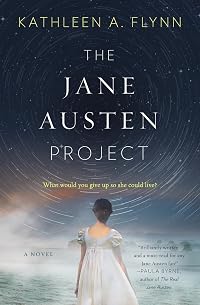
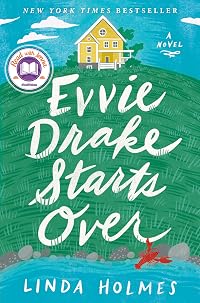




Member Recommendations
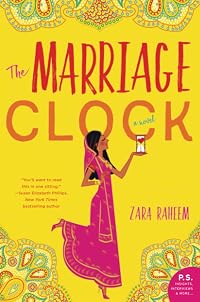
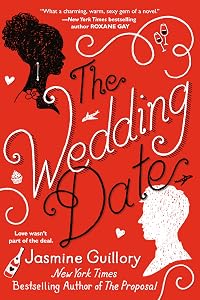
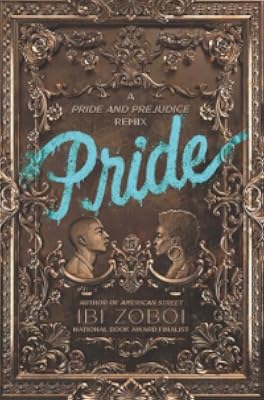
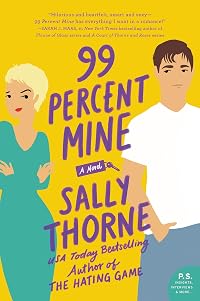
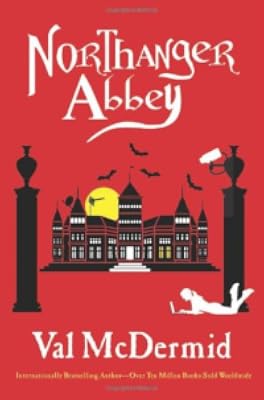
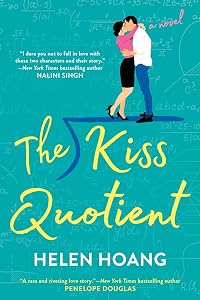
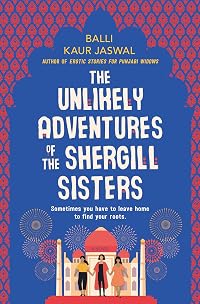
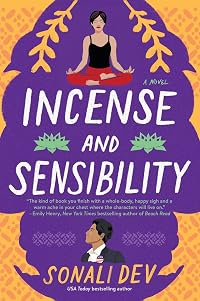
cbl_tn Both books are inspired by Austen's Pride & Prejudice and are set in Muslim communities.
Member Reviews
A vibrant read!
I so enjoyed this! Pride and Prejuidice reimagined in Pakistan! Could that be pulled off? Yes, Yes and Yes, most definately! The Binats and the Bennets are unbeatable!
To be brutally honest I quail before the plethora of Austen spin offs. I dislike them (and yet I have no problem with Holmsian off shoots Mmm!). I am so over them!
But "Unmarriageable" is just so different. Rich in cultural interactions, in social mores, in sharp questions beneath the surface of the story, and of characters and their behaviors that throw the original Austen directly into our world of today. So many comparisons of characters can be made, of social customs, of how the author has made the Austen concept work fabulously in this richly flavored show more novel.
These parallels between the Bennets and the Binats are brilliantly displayed, and to my mind given a new lease of life.
"Mr. Barkat “Bark” Binat and Mrs. Khushboo “Pinkie” Binat and their five daughters—Jenazba, Alysba, Marizba, Qittyara, and Lady—[temporarily] move from big-city Lahore to backwater Dilipabad" following a downturn of fortune. That was ten years ago. Alysba Binat (Elizabeth Bennet) is an incisive woman making her way as an English teacher of some talent, as is her sister Jena.
A society wedding is where the family are thrown into association with Fahad Bingla (Mr. Bingham), his sisters and his best friend and Darcy-like personage, Valentine Darsee.
I love the character of Sherry Looclus, Alys Binat's friend, loosely following the character of Elizabeth Bennet's best friend, Charlotte. Her reasons for marrying Farhat Kaleen, the Mr. Collins character are intelligently explained, and I could fully accept her reasoning.
The sharp exposé of Mr. Binat's fathering model in relationship to Mr. Bennet's is illuminating. As are the various, wives, daughters and the dastardly Wickaam. Indeed I could rave for pages with the various character comparisons. They are delightful and insightful. (I have to say I can see the movie playing out before my eyes.)
I particularly enjoyed Alys discovery of shared literary likes and discussions between herself and Darsee. The idea that Darsee puts forward that it's "up for debate whether it’s the nationality of the author or the geography of the book that determines its place in a country’s canon.” And Alys' reply, “a book and an author can belong to more than one country or culture. English came with the colonizers, but its literature is part of our heritage too, as is pre-partition writing.”
Another gem, “That book made me believe I could have a Pakistani identity inclusive of an English-speaking tongue. We’ve been forced to seek ourselves in the literature of others for too long.” Fascinating!
All this coupled with the vibrancy of a world most of us can only guess at, where the sense of color and smell is rampant and the social restrictions and practices as guarded as in Austen's day, perceptively written with a wonderfully understated sense of humor, makes for a brilliant read.
I must say I really think this would make a great book club addition.
A Ballantine Books ARC via NetGalley show less
I so enjoyed this! Pride and Prejuidice reimagined in Pakistan! Could that be pulled off? Yes, Yes and Yes, most definately! The Binats and the Bennets are unbeatable!
To be brutally honest I quail before the plethora of Austen spin offs. I dislike them (and yet I have no problem with Holmsian off shoots Mmm!). I am so over them!
But "Unmarriageable" is just so different. Rich in cultural interactions, in social mores, in sharp questions beneath the surface of the story, and of characters and their behaviors that throw the original Austen directly into our world of today. So many comparisons of characters can be made, of social customs, of how the author has made the Austen concept work fabulously in this richly flavored show more novel.
These parallels between the Bennets and the Binats are brilliantly displayed, and to my mind given a new lease of life.
"Mr. Barkat “Bark” Binat and Mrs. Khushboo “Pinkie” Binat and their five daughters—Jenazba, Alysba, Marizba, Qittyara, and Lady—[temporarily] move from big-city Lahore to backwater Dilipabad" following a downturn of fortune. That was ten years ago. Alysba Binat (Elizabeth Bennet) is an incisive woman making her way as an English teacher of some talent, as is her sister Jena.
A society wedding is where the family are thrown into association with Fahad Bingla (Mr. Bingham), his sisters and his best friend and Darcy-like personage, Valentine Darsee.
I love the character of Sherry Looclus, Alys Binat's friend, loosely following the character of Elizabeth Bennet's best friend, Charlotte. Her reasons for marrying Farhat Kaleen, the Mr. Collins character are intelligently explained, and I could fully accept her reasoning.
The sharp exposé of Mr. Binat's fathering model in relationship to Mr. Bennet's is illuminating. As are the various, wives, daughters and the dastardly Wickaam. Indeed I could rave for pages with the various character comparisons. They are delightful and insightful. (I have to say I can see the movie playing out before my eyes.)
I particularly enjoyed Alys discovery of shared literary likes and discussions between herself and Darsee. The idea that Darsee puts forward that it's "up for debate whether it’s the nationality of the author or the geography of the book that determines its place in a country’s canon.” And Alys' reply, “a book and an author can belong to more than one country or culture. English came with the colonizers, but its literature is part of our heritage too, as is pre-partition writing.”
Another gem, “That book made me believe I could have a Pakistani identity inclusive of an English-speaking tongue. We’ve been forced to seek ourselves in the literature of others for too long.” Fascinating!
All this coupled with the vibrancy of a world most of us can only guess at, where the sense of color and smell is rampant and the social restrictions and practices as guarded as in Austen's day, perceptively written with a wonderfully understated sense of humor, makes for a brilliant read.
I must say I really think this would make a great book club addition.
A Ballantine Books ARC via NetGalley show less
Soniah Kamal’s Unmarriageable is an warm story about sisterhood and friendship, as well as a love letter to Pride and Prejudice. The five Binat sisters live in Dilipabad, a small Pakistani town just across the Indian border from Amritsar (the setting of the Bollywood spinoff Bride and Prejudice. Is that not how everyone learns geography?). A family estrangement has left their branch struggling, unable to live as they used to, so the older girls teach English, while Mrs. Binat schemes about beautification to catch wealthy husbands. Teenage Lady flirts with everyone, Mari is a pedantic Quran reader, and youngest sister Qitty is chubby and forgotten. This has everything we love in P&P, with a distinctly Pakistani style.
Jena and Alys are show more both over 30, a successful updating of the Bennet sisters’ impoverished gentry background, especially since handsome Bungles is only 25. This is exactly what Bingley sisters and gossipy aunties will turn into a massive mismatch and social disaster, when it’s really a tiny obstacle for a loving marriage. The Binat sisters are English teachers at the local girls’ school, which is respectable if not impressive employment, even if Alys keeps getting scolded for running her mouth in class and leading her students to question their roles as wives-to-be.
Alys and her friends have discussions about literature in translation and colonialism. (So yes, I immediately requested all the books that Alys buys in Lahore from my library. Naturally.) There are also some comments on the joys of rereading Pride and Prejudice, which make this feel like a real love letter to Jane Austen, and Unmarriageable characters discuss their favorite Austen characters and Jane’s view of marriage. I particularly enjoyed when Annie, a chronically ill former model with a secret Nigerian boyfriend, talks about how mild and silent Anne de Burgh is. But, if you’ve read P&P, though, how do you trust a Jeorgeullah Wickaam? Alys, don’t be distracted by a handsome face!
The question of marriage and finances is a central part of Austen’s work, but I’m not sure how well the impoverished-family works as a plot device or character background right now. Current American morality sees poverty as a temporary setback to be overcome with hard work, and also considers laziness is an unforgivable personality failing. So, a poor young woman is no longer an unfortunate victim of circumstance, but a lazy taker. BOOTSTRAPS, BENNETS! Ugh. I kind of hate everything right now, and I double hate that our miserable news cycle leaks into my fiction reading.
Sherry Looclus, Alys’ coworker and friend, is even older and even more worried about money than the Binat girls. (OH! And Sir Lucas becomes Haji Looclus, a clever reimagining which took me a while to get. I just figured Haji was his first name, I didn’t realize he’d claimed the title of a Muslim who’s completed the Mecca pilgrimage.) Although it’s easy to see Mr. Collins as a ridiculous figure, we can also see how happy Sherry is to get out of her parents’ house (to fly the pigeon coop, maybe?), to mother her lovely step-children, and to have enough money that she can quit the girls’ school and work on her own projects. Of course she doesn’t have a love match, and Kaleen is still no Darsee, but you can see a partnership here.
Unmarriageable was such a great story that I forced myself to slow down reading it. I loved the revisions of familiar characters in a new setting. This novel is full of Pakistani flavor, but it’s still quite accessible to anyone with a gossipy auntie or a handsome crush. show less
Jena and Alys are show more both over 30, a successful updating of the Bennet sisters’ impoverished gentry background, especially since handsome Bungles is only 25. This is exactly what Bingley sisters and gossipy aunties will turn into a massive mismatch and social disaster, when it’s really a tiny obstacle for a loving marriage. The Binat sisters are English teachers at the local girls’ school, which is respectable if not impressive employment, even if Alys keeps getting scolded for running her mouth in class and leading her students to question their roles as wives-to-be.
Alys and her friends have discussions about literature in translation and colonialism. (So yes, I immediately requested all the books that Alys buys in Lahore from my library. Naturally.) There are also some comments on the joys of rereading Pride and Prejudice, which make this feel like a real love letter to Jane Austen, and Unmarriageable characters discuss their favorite Austen characters and Jane’s view of marriage. I particularly enjoyed when Annie, a chronically ill former model with a secret Nigerian boyfriend, talks about how mild and silent Anne de Burgh is. But, if you’ve read P&P, though, how do you trust a Jeorgeullah Wickaam? Alys, don’t be distracted by a handsome face!
The question of marriage and finances is a central part of Austen’s work, but I’m not sure how well the impoverished-family works as a plot device or character background right now. Current American morality sees poverty as a temporary setback to be overcome with hard work, and also considers laziness is an unforgivable personality failing. So, a poor young woman is no longer an unfortunate victim of circumstance, but a lazy taker. BOOTSTRAPS, BENNETS! Ugh. I kind of hate everything right now, and I double hate that our miserable news cycle leaks into my fiction reading.
Sherry Looclus, Alys’ coworker and friend, is even older and even more worried about money than the Binat girls. (OH! And Sir Lucas becomes Haji Looclus, a clever reimagining which took me a while to get. I just figured Haji was his first name, I didn’t realize he’d claimed the title of a Muslim who’s completed the Mecca pilgrimage.) Although it’s easy to see Mr. Collins as a ridiculous figure, we can also see how happy Sherry is to get out of her parents’ house (to fly the pigeon coop, maybe?), to mother her lovely step-children, and to have enough money that she can quit the girls’ school and work on her own projects. Of course she doesn’t have a love match, and Kaleen is still no Darsee, but you can see a partnership here.
Unmarriageable was such a great story that I forced myself to slow down reading it. I loved the revisions of familiar characters in a new setting. This novel is full of Pakistani flavor, but it’s still quite accessible to anyone with a gossipy auntie or a handsome crush. show less
I loved this book! Being a huge Pride and Prejudice fan, I am justifiably wary of retellings, but this is the best I've ever read. The major reason is that the author has set the novel in a modern culture that right now reflects all the major social issues in Regency England in terms of class, money, and the options open to women. As she uses Austen's story to continue to explore these issues, she introduces us to the wealth of Pakistani culture (oh, the food!!) and postcolonial issues as well for a rich, compelling and entertaining story.
I received a complimentary copy of this book through the Early Reviewers program.
I received a complimentary copy of this book through the Early Reviewers program.
 This review was written for LibraryThing Early Reviewers.
Soniah Kamal's retelling of Jane Austen's novel Pride and Prejudice (P and P) was an entertaining read. Pakistan and Austen's world share many of the same constraints on women--especially an emphasis on marrying well over for love and a total unacceptance of premarital sex.
In Unmarriageable, Elizabeth and Jane become Alys and Jena Binat, schoolteachers who have intelligence and beauty yet are spinsters in their early thirties. Jena is shy and sweet; Alys is an ardent feminist who pushes her students to think for themselves.
The younger sisters include the Muslim fundamentalist Mari, the precocious boy-crazy and fashion-obsessed Lady, and the unhappily overweight Qitty. The family is not of the best kind, for Mr. Binat was bilked out of show more his inheritance which brought downsizing in house and budget, and Mrs. Binat's grandmother is rumored to have been a prostitute.
Aly's friend Sherry is forty-one but still has hopes of 'grabbing' a husband and finally experiencing a sexual encounter with a man. Every evening Alys and Sherry meet in the local cemetery, and under the pretense of feeding the birds, enjoy a cigarette and a heart-to-heart talk.
Alys and Jena meet the well-to-do Bungles and Darsee at a wedding celebration. Bungles is obviously taken by Jena. But she won't make 'you-you' eyes at him for fear of being considered a slut. Alys and Darsee, of course, stumble through a series of misunderstandings and dislike.
Just reading about Pakistani wedding traditions is interesting. And the fashions! The food! Oh, how my mouth watered over eggplant in tomatoes, ginger chicken, seekh kabobs, naan, korma, and rose-flavored cake with a cup of chai.
The novel is not a rewriting of Austen's classic but does follow the plot line. We know what is going to happen. But I completely enjoyed this novel for on its own merits.
Kamal channels Austen's irony.
When Jena twists her ankle, Bungles carries her to the car and rushes to the clinic. Kamal writes, "The clinic was an excellent facility, as all facilities that carer to excellent people tend to be, because excellent people demand excellence, unlike those who are grateful for what they receive."
There is a lot of talk about literature. Book titles are dropped throughout many conversations. The characters often speak about Austen in an ironic twist.
Annie Benna dey Bagh comments that she found P and P "helpful in an unexpected way...I decided that, no matter how ill I got, I'd never turn or be turned into Anne de Bourgh."
"Thankfully, we don't live in a novel," Alys comments. And yet Sherry channels Charlotte Lucas in marrying for financial security although she does have the choice to be self-supporting.
Darsee and Alys agree on many points in these conversations about literature and Pakistan's colonial heritage.
"I believe, Alys said to Darsee, "A book and an author can belong to more than one country or culture. English came with the colonizers, but its literature is part of our heritage took as in pre-partition writing."
When Wickaam comes on the scene, English Literature teacher Alys is appalled by his preference that films are better than books. He is drop-dead gorgeous and spins his lies to cover his unsavory history.
Kamal includes loads of nods to Austen. Minor characters are named Thomas Fowle and Harris Bigg-Wither, real people in Jane's life.
Alys often parodies the famous opening line of P and P, such as "it was a truth universally acknowledged that people enter our lives in order to recommend reads."
Thankfully, a Goodreads win brought this book into my life! show less
In Unmarriageable, Elizabeth and Jane become Alys and Jena Binat, schoolteachers who have intelligence and beauty yet are spinsters in their early thirties. Jena is shy and sweet; Alys is an ardent feminist who pushes her students to think for themselves.
The younger sisters include the Muslim fundamentalist Mari, the precocious boy-crazy and fashion-obsessed Lady, and the unhappily overweight Qitty. The family is not of the best kind, for Mr. Binat was bilked out of show more his inheritance which brought downsizing in house and budget, and Mrs. Binat's grandmother is rumored to have been a prostitute.
Aly's friend Sherry is forty-one but still has hopes of 'grabbing' a husband and finally experiencing a sexual encounter with a man. Every evening Alys and Sherry meet in the local cemetery, and under the pretense of feeding the birds, enjoy a cigarette and a heart-to-heart talk.
Alys and Jena meet the well-to-do Bungles and Darsee at a wedding celebration. Bungles is obviously taken by Jena. But she won't make 'you-you' eyes at him for fear of being considered a slut. Alys and Darsee, of course, stumble through a series of misunderstandings and dislike.
Just reading about Pakistani wedding traditions is interesting. And the fashions! The food! Oh, how my mouth watered over eggplant in tomatoes, ginger chicken, seekh kabobs, naan, korma, and rose-flavored cake with a cup of chai.
The novel is not a rewriting of Austen's classic but does follow the plot line. We know what is going to happen. But I completely enjoyed this novel for on its own merits.
Kamal channels Austen's irony.
When Jena twists her ankle, Bungles carries her to the car and rushes to the clinic. Kamal writes, "The clinic was an excellent facility, as all facilities that carer to excellent people tend to be, because excellent people demand excellence, unlike those who are grateful for what they receive."
There is a lot of talk about literature. Book titles are dropped throughout many conversations. The characters often speak about Austen in an ironic twist.
Annie Benna dey Bagh comments that she found P and P "helpful in an unexpected way...I decided that, no matter how ill I got, I'd never turn or be turned into Anne de Bourgh."
"Thankfully, we don't live in a novel," Alys comments. And yet Sherry channels Charlotte Lucas in marrying for financial security although she does have the choice to be self-supporting.
Darsee and Alys agree on many points in these conversations about literature and Pakistan's colonial heritage.
"I believe, Alys said to Darsee, "A book and an author can belong to more than one country or culture. English came with the colonizers, but its literature is part of our heritage took as in pre-partition writing."
When Wickaam comes on the scene, English Literature teacher Alys is appalled by his preference that films are better than books. He is drop-dead gorgeous and spins his lies to cover his unsavory history.
Kamal includes loads of nods to Austen. Minor characters are named Thomas Fowle and Harris Bigg-Wither, real people in Jane's life.
Alys often parodies the famous opening line of P and P, such as "it was a truth universally acknowledged that people enter our lives in order to recommend reads."
Thankfully, a Goodreads win brought this book into my life! show less
“It is a truth universally acknowledged that a girl can go from pauper to princess or princess to pauper in the mere seconds it takes for her to accept a proposal.” – the opening sentence of PRIDE AND PREJUDICE by Jane Austen
This delightful Pakistani re-telling of PRIDE AND PREJUDICE starts out with ninth-grade teacher Alys Binat asking her female students to rewrite the opening sentence of PRIDE AND PREJUDICE. Their writings nakedly reveal their societal status and how they have been taught that marriage is their ultimate goal.
Alys’ heart sinks each year as her students, with their brilliant minds, never consider exploring the world and paving their own ways through life instead of seeing “marrying young and well” as their show more only options. Yet each year she uses the reading of Jane Austen’s PRIDE AND PREJUDICE to show how the mother and the protagonist start out with similar views and goals and where and why they begin to separate in those views.
Alys Binat says she will never marry but, like Elizabeth Bennett, life just did not turn out that way when Darsee entered her life. Kamal manipulated the characters’ names to somewhat match the name of the characters in the classic telling. Some of the nicknames were hilarious – Rum, Gin, Hammy, Dracula. I especially loved the characters of Sherry Looclus (Charlotte Lucas) and Farhat Kaleen (Mr. Collins). Sherry is the kind of friend you want by your side through good and bad. The story was utterly delightful and the writing impeccable.
Charming and funny with relatable characters, this unique re-telling of the classic story PRIDE AND PREJUDICE looks at love, sisterhood, class, and marriage with a fresh twist. Kamal provided awesome insight into human relationships, especially within the Binat family of five daughters and their parents. (“O’Connor, Austen, Alcott, Wharton. Characters’ emotions and situations are universally applicable across cultures, whether you’re wearing an empire dress, shalwar kurta, or kimono.”) Some conversations are pretty much universal, heard in families whatever the culture may be. Example: “Both of you, shut up,” Mrs. Binat said. “For God’s sake, is this why I went through your pregnancies and labor pains and nursed you both and gave myself stretch marks and saggy breasts? So that you can grow up and be bad sisters? How many times must I tell you: Be nice to each other, love each other, for at the end of the day, siblings are all you have.” Tell me you haven’t heard some version of that from your own mother.
I enjoyed the historical tidbits about the partitioning of Pakistan and India and the involvement of the English empire. I suspect she used much farce in her descriptions of modern-day Pakistani culture. A truly delightful story. I end with a quote from the book that I think should be highlighted: “We know that friends can be made anywhere and everywhere, regardless of race or religion.”
I received an Advance Review Copy of this book. All opinions are my own. show less
This delightful Pakistani re-telling of PRIDE AND PREJUDICE starts out with ninth-grade teacher Alys Binat asking her female students to rewrite the opening sentence of PRIDE AND PREJUDICE. Their writings nakedly reveal their societal status and how they have been taught that marriage is their ultimate goal.
Alys’ heart sinks each year as her students, with their brilliant minds, never consider exploring the world and paving their own ways through life instead of seeing “marrying young and well” as their show more only options. Yet each year she uses the reading of Jane Austen’s PRIDE AND PREJUDICE to show how the mother and the protagonist start out with similar views and goals and where and why they begin to separate in those views.
Alys Binat says she will never marry but, like Elizabeth Bennett, life just did not turn out that way when Darsee entered her life. Kamal manipulated the characters’ names to somewhat match the name of the characters in the classic telling. Some of the nicknames were hilarious – Rum, Gin, Hammy, Dracula. I especially loved the characters of Sherry Looclus (Charlotte Lucas) and Farhat Kaleen (Mr. Collins). Sherry is the kind of friend you want by your side through good and bad. The story was utterly delightful and the writing impeccable.
Charming and funny with relatable characters, this unique re-telling of the classic story PRIDE AND PREJUDICE looks at love, sisterhood, class, and marriage with a fresh twist. Kamal provided awesome insight into human relationships, especially within the Binat family of five daughters and their parents. (“O’Connor, Austen, Alcott, Wharton. Characters’ emotions and situations are universally applicable across cultures, whether you’re wearing an empire dress, shalwar kurta, or kimono.”) Some conversations are pretty much universal, heard in families whatever the culture may be. Example: “Both of you, shut up,” Mrs. Binat said. “For God’s sake, is this why I went through your pregnancies and labor pains and nursed you both and gave myself stretch marks and saggy breasts? So that you can grow up and be bad sisters? How many times must I tell you: Be nice to each other, love each other, for at the end of the day, siblings are all you have.” Tell me you haven’t heard some version of that from your own mother.
I enjoyed the historical tidbits about the partitioning of Pakistan and India and the involvement of the English empire. I suspect she used much farce in her descriptions of modern-day Pakistani culture. A truly delightful story. I end with a quote from the book that I think should be highlighted: “We know that friends can be made anywhere and everywhere, regardless of race or religion.”
I received an Advance Review Copy of this book. All opinions are my own. show less
This is a retelling of Pride and Prejudice in Pakistan in the early 2000s. Pakistan is, in many ways, an excellent setting for a modernized Pride and Prejudice. In most modernizations, Mrs. Bennet's (in this version, Mrs. Binat's) obsession with marriage comes across as horribly out of touch, and modernizers generally have a hard time figuring out what to do with Lydia's storyline which, without giving away spoilers[1], is hard to modernize without changing it completely. Thus, the setting is the strength of this adaptation because many of the details that are hard to modernize when set in, for example, the US come across as authentic.
Whenever I read an adaptation of P&P, I consider it successful if it teaches me something new about show more the original. In this case, what I learned is that Mrs. Binat/Bennet is, within her narrow sphere of experience and terrible tactical choices, right: marriage really is the best option for her daughters. Avoiding marriage may seem fine in the short run, but in a society that doesn't allow women real independence, marriage, for good or for ill, was probably the most practical option for most women. As much as we may regret it from a modern standpoint, a P&P that didn't end with Alys/Elizabeth getting married would likely be an unhappy ending for her in the end. And when we see that conclusion in a modern setting, we realize how tragic it is when women have no real choice but marriage. It's easier to overlook that when the setting is in the distant past.
Overall though, I still gave the book three stars because it was a good but straightforward modernization of P&P. For folks who haven't experienced too many adaptations, that's probably fine. It will probably read as fairly fresh. Thus, I blame myself more than the book for my overall, "that was good, but not spectacular" reaction.
One thing that did bug me is that Alys is an English teacher who is very familiar with P&P -- the novel opens with her teaching it -- and she never realizes that her story is Elizabeth Bennet's story, down to the details of her sisters and their fates. Acknowledging this too early would have broken the suspension of disbelief, but there was one point at the very end where she could have noticed the parallels without breaking the story. It's a silly thing to be annoyed over, but it does bug me. ¯_(ツ)_/¯
[1] Can you spoil P&P at this point? show less
Whenever I read an adaptation of P&P, I consider it successful if it teaches me something new about show more the original. In this case, what I learned is that Mrs. Binat/Bennet is, within her narrow sphere of experience and terrible tactical choices, right: marriage really is the best option for her daughters. Avoiding marriage may seem fine in the short run, but in a society that doesn't allow women real independence, marriage, for good or for ill, was probably the most practical option for most women. As much as we may regret it from a modern standpoint, a P&P that didn't end with Alys/Elizabeth getting married would likely be an unhappy ending for her in the end. And when we see that conclusion in a modern setting, we realize how tragic it is when women have no real choice but marriage. It's easier to overlook that when the setting is in the distant past.
Overall though, I still gave the book three stars because it was a good but straightforward modernization of P&P. For folks who haven't experienced too many adaptations, that's probably fine. It will probably read as fairly fresh. Thus, I blame myself more than the book for my overall, "that was good, but not spectacular" reaction.
One thing that did bug me is that Alys is an English teacher who is very familiar with P&P -- the novel opens with her teaching it -- and she never realizes that her story is Elizabeth Bennet's story, down to the details of her sisters and their fates. Acknowledging this too early would have broken the suspension of disbelief, but there was one point at the very end where she could have noticed the parallels without breaking the story. It's a silly thing to be annoyed over, but it does bug me. ¯_(ツ)_/¯
[1] Can you spoil P&P at this point? show less
I adored this! This may be my favorite retelling of Pride and Prejudice yet!! Set in Pakistan in 2000, Alys Binat and her older sister Jena are considered spinsters at the ages of 30 and 31. Since their family's "fall from grace" they've defied cultural norms by teaching at a local English speaking school. Single and teaching! Their mother is positively aghast but they need the extra income. When their family scores an invitation to the city's most anticipated wedding their mother is sure that they can find wealthy men. I could go on but really it's the exact same plot of Pride and Prejudice with different cultural markers, names, food, and modern day variations. I loved it. I would love if they made a Sense and Sensibility set in show more Pakistan. This was so much fun!! show less
This review was written for LibraryThing Early Reviewers.Members
- Recently Added By
Lists

Books Read in 2019
4,052 works; 110 members

Islam & the Middle East
127 works; 1 member
Author Information
3+ Works 546 Members
Awards and Honors
Notable Lists
Work Relationships
Is a retelling of
Common Knowledge
- Canonical title
- Unmarriageable
- Original publication date
- 2019-01-22
- People/Characters
- Alysba "Alys" Binat; Jenazba "Jena" Binat; Marizba "Mari" Binat; Qittyara "Qitty" Binat; Lady Binat; Mr. Barkat "Bark" Binat (show all 11); Mrs. Khushboo "Pinkie" Binat; Syeda Shireen "Sherry" Looclus; Fahad "Bungles" Bingla; Valentine Darsee; Jeorgeullah Wickaam
- Important places
- Dilipabad, Punjab, Pakistan
- Dedication
- For Mansoor Wasti,
friend, love, partner,
and
Baraaq, Indus, Miraage,
heart, soul, life - First words
- It is a truth universally acknowledged that a girl can go from pauper to princess or princess to pauper in the mere seconds it takes for her to accept a proposal.
- Quotations
- An unmarried woman advocating pursuits outside the house might as well be a witch spreading anarchy and licentiousness.
"But, Miss," Tahira said hesitantly, "what's the purpose of life without children?"
"The same purpose as there would be with children—to be a good human being and contribute to society."
"I don't believe it's for everyone. Marriage should be a part of life and not life."
"It is a truth universally acknowledged that a good girl ought to keep her mouth shut about whether she's been keeping her legs shut."
Mrs. Binat glowed as moneyed folk flitted around.
Valentine Darsee was handsome and he was wealthy, but obviously his upbringing had lacked classes on basic manners and etiquette: He was rude, he was disdainful, and he thought altogether too much of himself. (show all 8)
"I'll never be lonely,"—Alys gave a satisfied sigh— "because I'll always have books."
The clinic was an excellent facility, as all facilities that cater to excellent people tend to be, because excellent people demand excellence, unlike those who are grateful for what they receive. - Last words
- (Click to show. Warning: May contain spoilers.)It is a truth universally acknowledged, that a single man in possession of a good fortune, must be in want of a wife.
- Original language
- English
Classifications
Statistics
- Members
- 532
- Popularity
- 56,129
- Reviews
- 63
- Rating
- (3.74)
- Languages
- English
- Media
- Paper, Audiobook, Ebook
- ISBNs
- 16
- ASINs
- 3