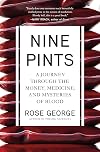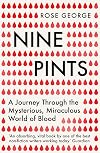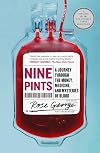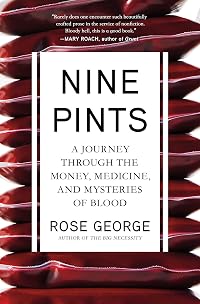
Nine Pints: A Journey Through the Money, Medicine, and Mysteries of Blood
by Rose George
On This Page
Description
Explores the science, traditions, and myths surrounding blood, from ancient bloodletting practices to the development of mass blood donations during the Blitz and from researchers working on synthetic blood to the lucrative business of plasma transfusions.Tags
Recommendations




Member Reviews
Баррель человеческой крови почти в полторы тысячи раз дороже барреля нефти. В отличие от запрещенной торговли органами этот бизнес вполне процветает. Известно о нем не так много, но британская журналистка Роуз Джордж проливает на него свет, делясь как деловыми подробностями, так и научными фактами о самой главной жидкости наших тел. Кстати, британскую кровь брать за границей особо не любят, ведь она show more должна быть взята у людей, родившихся после 1996 года, то есть находящихся вне подозрений относительно той памятной эпидемии коровьего бешенства, вызывавшей болезнь Крейтцфельдта — Якоба. Книга не ограничивается мировой торговлей донорской кровью и касается смежных бизнесов. Например, неожиданно закрытого (и непомерно прибыльного) рынка женских гигиенических средств, призванных с кровью ежемесячно бороться. Его объем оценивается в 23 млрд. долларов, и стартапов, желающих подрезать «крылышки» транснациональным гигантам, не убавляется. Национального героя Индии Муругу, успешно создавшего один такой, Unilever даже приглашал в Лондон для изучения его опыта. show less
Chapter 1 was a bit rambling and seemed more like an Introduction, but the following chapters were tighter focused and absolutely fascinating. Get a glass of wine, sit in your comfiest chair, and enjoy this fact-packed, easily-readable, leisurely tome. There are memorable images and colorful characters, abundant trivia, and sparkly-eyed humor if you take the time to savor what you are reading. The author writes in a way that made it hard for me to put the book down. Around any corner there could be, at turns, a poignant moment offset by a blunt, even brutal, statement. I learned, I was entertained, I delighted, and was repulsed. I was recommending this to my friends and acquaintances before I reached the end of Ch. 2. This is the best show more kind of reading experience and, admittedly, I enjoy these types of non-fiction works over fiction any day. Will be checking out other topics from this author, and obtaining the official published version.
[My honest review comes as a result of winning a free ARC from LibraryThing Early Reviewers]. show less
[My honest review comes as a result of winning a free ARC from LibraryThing Early Reviewers]. show less
 This review was written for LibraryThing Early Reviewers.
I would recommend this book to anyone who appreciates internet wormholes and an array of media writing. Pop science, biography, human interest, fearmongering, indignation, blog chatty—no matter which journalistic hook Rose George exercises in a chapter, her enjoyment researching Nine Pints comes through irrepressible. Engaging stream of info and anecdotes that ends on a feelgood note makes for a quick read.
This review was written for LibraryThing Early Reviewers.The first chapter of Nine Pints jumps about quite a bit: donating blood, Odysseus in Hades, Lance Armstrong’s blood doping, Medusa, blood libel, heart rate and blood types. A visit to a blood processing facility reveals some odd facts such as women’s plasma, because of hormones, is often green rather than yellow like men’s. Then it’s off to a hospital in India where relatives are expected to donate blood to replace blood given to family members.
The second chapter settles down with everything you ever wanted to know about a single slimy subject—leeches. George covers their historic use in medicine, how they used to be gathered and visits a modern leech supplier. The next chapter presents a discussion of voluntary versus paid show more blood donation and the beginning of the Emergency Blood Transfusion Service during World War II. All sorts of things were in short supply so modified milk bottles were used for storage and converted ice cream vans were used to transport the blood to hospitals. George also discusses hemophilia and Factor VIII and the efforts to prevent transmission of hepatitis, HIV and CJD (mad cow disease).
Just over half the population has an intimate connection with blood but menstruation taboos are almost universal. Women in Nepal must spend part of each month in a cramped menstrual hut because they are considered untouchable. The huts are worse than animal sheds and dangerous: snake attacks can be fatal and there are the “drunken men who conveniently forget about untouchability when it comes to rape.” It is well known that many girls in underdeveloped countries drop out of school when they reach puberty because they don’t have access to feminine hygiene supplies. I did not know that at this age some of those girls turn to prostitution, not to support a drug habit, but just to be able to afford sanitary napkins. Women in developed countries, of course, can afford to purchase such necessities but they are often taxed, sometimes at the luxury level (20% in the UK). George also mentions that many women’s prisons restrict access to sufficient feminine hygiene products forcing inmates to freebleed.
While George covers the money and medicine of the subtitle I would have liked to have learned more about blood itself and how it functions in the body. She does, however, in the last chapter, include vampires, young blood treatment to combat aging, Jehovah’s Witnesses and their objection to transfusions and the possibility of creating synthetic blood. The book has many interesting facts and is written for the layperson. When finished it will include Notes and an Index. show less
The second chapter settles down with everything you ever wanted to know about a single slimy subject—leeches. George covers their historic use in medicine, how they used to be gathered and visits a modern leech supplier. The next chapter presents a discussion of voluntary versus paid show more blood donation and the beginning of the Emergency Blood Transfusion Service during World War II. All sorts of things were in short supply so modified milk bottles were used for storage and converted ice cream vans were used to transport the blood to hospitals. George also discusses hemophilia and Factor VIII and the efforts to prevent transmission of hepatitis, HIV and CJD (mad cow disease).
Just over half the population has an intimate connection with blood but menstruation taboos are almost universal. Women in Nepal must spend part of each month in a cramped menstrual hut because they are considered untouchable. The huts are worse than animal sheds and dangerous: snake attacks can be fatal and there are the “drunken men who conveniently forget about untouchability when it comes to rape.” It is well known that many girls in underdeveloped countries drop out of school when they reach puberty because they don’t have access to feminine hygiene supplies. I did not know that at this age some of those girls turn to prostitution, not to support a drug habit, but just to be able to afford sanitary napkins. Women in developed countries, of course, can afford to purchase such necessities but they are often taxed, sometimes at the luxury level (20% in the UK). George also mentions that many women’s prisons restrict access to sufficient feminine hygiene products forcing inmates to freebleed.
While George covers the money and medicine of the subtitle I would have liked to have learned more about blood itself and how it functions in the body. She does, however, in the last chapter, include vampires, young blood treatment to combat aging, Jehovah’s Witnesses and their objection to transfusions and the possibility of creating synthetic blood. The book has many interesting facts and is written for the layperson. When finished it will include Notes and an Index. show less
This review was written for LibraryThing Early Reviewers.Interesting but not quite as engaging as Mary Roach, somehow. I'd still happily read George's other book about waste--but it was just another decent nonfiction book, to me.
Contents, since the chapter titles are completely useless and I have far too many quotes to include:
1. My Pint: The blood donation preparation process in the UK and elsewhere, plus an introduction to the basic elements of blood.
2. That Most Singular and Valuable Reptile: Leaches and bloodletting in medicine, past and present, including a trip to a leach farm. Interesting, but I felt confused about why this was an entire chapter--it seemed to stray a little far from the focus.
3. Janet and Percy: For me the only uplifting chapter--more than informative and not super show more depressing. Mixes a history of medical blood transfer in with the story of Janet Vaughan, an absolutely amazing woman ahead of her time, and Percy Oliver, who organized the first blood donation system, in London during the lead-up to WWII.
4. Blood Borne: Depressing chapter #1. AIDS, primarily in South Africa. Rapes are at a record high, men and girls both commonly have at least two partners, and many children are born with HIV.
5. The Yellow Stuff: Depressing chapter #2. Payments for plasma and the commercialization of blood components in Canada (via the U.S., of course). Tainted blood and the unaware people who die from the blood transfers they need.
6. Rotting Pickles: Depressing chapter #3. Menstruation and stigma against it, Nepalese cultures that require women to sleep in shacks during their periods, and disgustingly uninformed science relating to women's reproductive systems.
7. Nasty Cloths: A less depressing chapter about "feminine sanitary products" with particular focus on one man in India (Muruga, formally Arunachalam Muruganantham) who found a way to buck commercialization and ensure that women could make and get the pads they need.
8. Code Red: Blood use in surgery (in history and now), organized around an arrival at a London trauma hospital. Pretty short chapter.
9. Blood Like Guinness: A future-oriented chapter with a little bit of looking forward, a little bit of looking back. Touches on myths and religions as well as modern science. Ended somewhat abruptly as we hit the notes on page 289 out of 353.
Hard to believe we got through discussions of vampirism without finding out what happens if humans drink blood. Anything? Nothing?
I had tons of quotes marked, which is great, but I'd probably be in violation of copyright if I typed them up.
Anyway, definitely an interesting book, but it felt more like a collection of SciAm articles. So something that you can dip into and out of, maybe with a focus on whatever interests you. show less
Contents, since the chapter titles are completely useless and I have far too many quotes to include:
1. My Pint: The blood donation preparation process in the UK and elsewhere, plus an introduction to the basic elements of blood.
2. That Most Singular and Valuable Reptile: Leaches and bloodletting in medicine, past and present, including a trip to a leach farm. Interesting, but I felt confused about why this was an entire chapter--it seemed to stray a little far from the focus.
3. Janet and Percy: For me the only uplifting chapter--more than informative and not super show more depressing. Mixes a history of medical blood transfer in with the story of Janet Vaughan, an absolutely amazing woman ahead of her time, and Percy Oliver, who organized the first blood donation system, in London during the lead-up to WWII.
4. Blood Borne: Depressing chapter #1. AIDS, primarily in South Africa. Rapes are at a record high, men and girls both commonly have at least two partners, and many children are born with HIV.
5. The Yellow Stuff: Depressing chapter #2. Payments for plasma and the commercialization of blood components in Canada (via the U.S., of course). Tainted blood and the unaware people who die from the blood transfers they need.
6. Rotting Pickles: Depressing chapter #3. Menstruation and stigma against it, Nepalese cultures that require women to sleep in shacks during their periods, and disgustingly uninformed science relating to women's reproductive systems.
7. Nasty Cloths: A less depressing chapter about "feminine sanitary products" with particular focus on one man in India (Muruga, formally Arunachalam Muruganantham) who found a way to buck commercialization and ensure that women could make and get the pads they need.
8. Code Red: Blood use in surgery (in history and now), organized around an arrival at a London trauma hospital. Pretty short chapter.
9. Blood Like Guinness: A future-oriented chapter with a little bit of looking forward, a little bit of looking back. Touches on myths and religions as well as modern science. Ended somewhat abruptly as we hit the notes on page 289 out of 353.
Hard to believe we got through discussions of vampirism without finding out what happens if humans drink blood. Anything? Nothing?
I had tons of quotes marked, which is great, but I'd probably be in violation of copyright if I typed them up.
Anyway, definitely an interesting book, but it felt more like a collection of SciAm articles. So something that you can dip into and out of, maybe with a focus on whatever interests you. show less
This book was a series of essays in which each essay dealt with blood or some medical issue with blood. This format made for easy and interesting reading. The essays were all varied and didn't relate to each other, except that they had something to do with blood. There was an fascinating chapter on the establishment of the successful blood donation system in the U. K. that was fascinating medical, social, and cultural history. There was an interesting chapter on the tragic transmission of viruses through blood donations as well as one on the use of medical leeches in modern medicine. Who knew? For me the most interesting and unexpected chapter was the one on menstruation and the impact it has on society. This is a topic that is rarely show more tackled in a thoughtful way, and this essay proved to be the exception. It was thoughtful and yet passionate at the same time. It was medical, cultural, and economical. Economical in that the author dealt with the economic impact that this one fact of life has on the life of humans. She proves beyond doubt that the expense of supplies and the unwillingness of governments and business leaders to even talk about it costs money and most of that cost is passed onto the poorest of the people on this planet. In this essay they author introduced the reader to the "Pad Man of India" and his efforts to make the lives of women in India easier through the introduction of low cost menstrual supplies. The book was very grim in places, but was also full of light humor. I found it to be very readable and informative. show less
***NO SPOILERS***
(Full disclosure: book abandoned on page 145 [out of 289 pages].)
Nine pints of blood--or more visually arresting: one gallon plus one pint. That’s roughly how much is in the human body. It’s facts like these that author Rose George shared in Nine Pints--but only in chapter one. There’s only so much one can say about blood itself.
To fill out a book, George dedicated nine chapters to different sub-topics relating to blood in general. The sub-topics, however, are so disparate that this is, essentially, nine chapters that are the beginnings of nine separate books. To name a few, one chapter is on leeches, another on AIDS/HIV, another on hemophilia. This isn’t everyday information, and there’s much that’s show more fascinating. Leeches produce an anesthetic superior to anything scientists have been able to create. HIV sufferers now have to take only one pill to manage the illness, not eight, precisely timed pills a day. Knocking a knuckle causes “rush bleeding” in hemophiliacs followed by agonizing, debilitating pain. This is a dense, fact-heavy book that covers a lot of ground.
George obviously was enthusiastic about writing Nine Pints and researched each part extensively, but that can work against a science writer who isn’t careful. She included too much information and veered off on tangents, sometimes abandoning the topic of blood entirely.
In tone, Nine Pints swings from interesting to boring. Interesting sections are sharply focused and flow with a natural effortlessness. Boring sections are overlong, with the human element outweighed by the technical, factual, or historical.
Mary Roach, the cream of the crop among pop science writers, endorsed Nine Pints with excessive praise right on the cover. An endorsement from Roach is unsurprising; the topic seems just like one she'd write about. It may be unfair to compare George to Roach, but it’s hard not to when George has written about this, and her previous books have been about dirt and human feces. Maybe she wants to emulate Roach or maybe she doesn’t, but George can’t compare. She lacks Roach’s wittiness and gift for making nonfiction science page-turning entertainment. George took the more academic route. In and of itself that’s fine, but with Nine Pints, she wasted an opportunity to do something exciting with a subject many don’t want to read about. Nine Pints is educational for sure, but its drawbacks mean some in-depth articles on this subject would be a better choice. show less
(Full disclosure: book abandoned on page 145 [out of 289 pages].)
Nine pints of blood--or more visually arresting: one gallon plus one pint. That’s roughly how much is in the human body. It’s facts like these that author Rose George shared in Nine Pints--but only in chapter one. There’s only so much one can say about blood itself.
To fill out a book, George dedicated nine chapters to different sub-topics relating to blood in general. The sub-topics, however, are so disparate that this is, essentially, nine chapters that are the beginnings of nine separate books. To name a few, one chapter is on leeches, another on AIDS/HIV, another on hemophilia. This isn’t everyday information, and there’s much that’s show more fascinating. Leeches produce an anesthetic superior to anything scientists have been able to create. HIV sufferers now have to take only one pill to manage the illness, not eight, precisely timed pills a day. Knocking a knuckle causes “rush bleeding” in hemophiliacs followed by agonizing, debilitating pain. This is a dense, fact-heavy book that covers a lot of ground.
George obviously was enthusiastic about writing Nine Pints and researched each part extensively, but that can work against a science writer who isn’t careful. She included too much information and veered off on tangents, sometimes abandoning the topic of blood entirely.
In tone, Nine Pints swings from interesting to boring. Interesting sections are sharply focused and flow with a natural effortlessness. Boring sections are overlong, with the human element outweighed by the technical, factual, or historical.
Mary Roach, the cream of the crop among pop science writers, endorsed Nine Pints with excessive praise right on the cover. An endorsement from Roach is unsurprising; the topic seems just like one she'd write about. It may be unfair to compare George to Roach, but it’s hard not to when George has written about this, and her previous books have been about dirt and human feces. Maybe she wants to emulate Roach or maybe she doesn’t, but George can’t compare. She lacks Roach’s wittiness and gift for making nonfiction science page-turning entertainment. George took the more academic route. In and of itself that’s fine, but with Nine Pints, she wasted an opportunity to do something exciting with a subject many don’t want to read about. Nine Pints is educational for sure, but its drawbacks mean some in-depth articles on this subject would be a better choice. show less
This review was written for LibraryThing Early Reviewers.Members
- Recently Added By
Lists

Chronological 2019
12 works; 1 member

Top Five Books of 2019
387 works; 107 members

Books With Numbers in the Title
308 works; 13 members
Author Information

3+ Works 1,221 Members
Some Editions
Awards and Honors
Common Knowledge
- Original publication date
- 2018
- People/Characters
- Karim Brohi; Richard Carter; Eric Goemaere; William Harvey; Jesse Karmazin; Harvey Klein (show all 13); Karl Landsteiner; Arunachalam Muruganantham; Percy Lane Oliver; Carl Peters-Bond; Bethany Sawyer; Roy Sawyer; Janet Maria Vaughan
- Important places
- Saskatoon, Saskatchewan, Canada; Khayelitsha, South Africa; Cape Town, South Africa; Nepal; India; Filton, England (show all 8); London England; Wales, UK
- Epigraph
- Blood makes me feel so much better, and once I've had blood I want to play with my toys again.
-- Owen Porter, 10 - Dedication
- To the National Health Service
- First words
- There is a TV, but I watch my blood.
- Last words
- (Click to show. Warning: May contain spoilers.)Blood is not yet done teaching us what it can do. More wonder will come.
- Publisher's editor
- Barber, Laura (Portobello Books); Bradley, Kia (Portobello Books); Woods, Mandy (Portobello Books); Hocherman, Riva (Metropolitan Books)
- Blurbers
- Roach, Mary
- Original language
- English
Classifications
Statistics
- Members
- 379
- Popularity
- 82,858
- Reviews
- 29
- Rating
- (3.90)
- Languages
- English
- Media
- Paper, Audiobook, Ebook
- ISBNs
- 12
- ASINs
- 3