On This Page
Description
"A murder in Paris brings Commissaire Adamsberg out of the Icelandic mists of his previous investigation and unexpectedly into the region of Nîmes, where three old men have died of spider bites. The recluse has a sneaky attack, but is that enough to explain the deaths of these men, all killed by the same venom?At the National Museum of Natural History, Adamsberg meets a pensioner who tells him that two of the three octogenarians have known each other since childhood, when they lived in a show more local orphanage called The Mercy. There, they had belonged to a small group of violent young boys known as the "band of recluses." Adamsberg faces two obstacles: the third man killed by the same venom was not part of the "band of recluses," and the amount of spider venom necessary to kill doesn't add up.Yet after the Nîmes deaths, more members of the old band succumb to recluse bites, leading the commissaire to uncover the tragedy hidden behind the walls of the orphanage."--Publisher description. show lessTags
Recommendations






























Member Reviews
The recluse spider injects a particularly nasty venom into its prey, but European species don't have nearly enough of this poison to be dangerous to healthy humans. And in any case, living up to their name, they are not aggressive and tend to avoid human contact - very few people are ever bitten by them. So when three men in the South of France die of the effects of recluse spider bites within a short period of time, the web(*) is full of rumours and speculation - climate change, genetic mutation due to insecticides, ...? No crime has been reported, but all the same, Adamsberg's policeman's mind looks for criminal explanations to clusters of unexplained deaths, and his suspicions are reinforced when it turns out that at least two of the show more victims knew each other.
But not everyone in Adamsberg's team agrees with him, and the normally very loyal second-in-command Danglard is the loudest of the voices saying that this isn't a case, and should be left to the zoologists. But when has that sort of consideration ever stopped a fictional detective? Adamsberg presses on surreptitiously with a few volunteer colleagues, and soon finds himself navigating through very dense fogs of forensic and psychological uncertainty, and unearthing some very unpleasant crimes. The spiders are not the only kind of recluses involved here. And - not for the first time - it looks as though he will have to find the solution to the mystery somewhere in his own subconscious.
Definitely well up to the usual standard. Very black in places, but nicely paced so that there is always a bit of comic action in the murder team to relieve the tension when it threatens to get too heavy for the reader. The cat, La Boule, is back on top of the photocopier, there's a guest appearance by one of the Three Evangelists, there's a running joke about snowglobes, and an endless quantity of Béarnaise cabbage soup. What more could you want from a crime story?
---
(*) This ambiguity works in French as well, and Vargas has her fun with it. show less
But not everyone in Adamsberg's team agrees with him, and the normally very loyal second-in-command Danglard is the loudest of the voices saying that this isn't a case, and should be left to the zoologists. But when has that sort of consideration ever stopped a fictional detective? Adamsberg presses on surreptitiously with a few volunteer colleagues, and soon finds himself navigating through very dense fogs of forensic and psychological uncertainty, and unearthing some very unpleasant crimes. The spiders are not the only kind of recluses involved here. And - not for the first time - it looks as though he will have to find the solution to the mystery somewhere in his own subconscious.
Definitely well up to the usual standard. Very black in places, but nicely paced so that there is always a bit of comic action in the murder team to relieve the tension when it threatens to get too heavy for the reader. The cat, La Boule, is back on top of the photocopier, there's a guest appearance by one of the Three Evangelists, there's a running joke about snowglobes, and an endless quantity of Béarnaise cabbage soup. What more could you want from a crime story?
---
(*) This ambiguity works in French as well, and Vargas has her fun with it. show less
Definitely one of the series' best books. This one is about poisonous recluse spiders killing older men. Adamsberg investigates more aggressively than previous cases. Seems visiting Iceland has helped fine tune his focus.
As with other cases this one effects Adamsberg and his remarkably motley team on deeply personal levels. And brings about a much-needed reckoning between the two discordant factions of the team.
Vargas brilliantly balances her broad-based scientific and historic knowledge through the depths of human depravity to Adamsberg's understanding of human flaws. He may not solve cases fast enough but more importantly he is all heart and compassion. Vargas is a master at creating this amazing characterization of a police show more inspector that is believable and works well.
Excellent read. show less
As with other cases this one effects Adamsberg and his remarkably motley team on deeply personal levels. And brings about a much-needed reckoning between the two discordant factions of the team.
Vargas brilliantly balances her broad-based scientific and historic knowledge through the depths of human depravity to Adamsberg's understanding of human flaws. He may not solve cases fast enough but more importantly he is all heart and compassion. Vargas is a master at creating this amazing characterization of a police show more inspector that is believable and works well.
Excellent read. show less
A new Fred Vargas is always an event! My librarian friend knew to put a hold on it for me when the library placed their order, and we've been exchanging texts in the evenings as we both read it. A rash (pun intended) of deaths among elderly men in the south of France, attributed to mysteriously potent spider bites, gets the attention of Commissaire Adamsberg, for no very good reason. His team is puzzled, some actively resistant or even mutinous, including the stalwart Danglard. But Adamsberg, in his fey, wandering, eccentric (and sometimes annoying) way, begins a surreptitious investigation. Childhood traumas - the victims', their victims', and Adamsberg's own - are dragged into the present day, decades later. There is philosophic show more discussion of venomous animals, Magellan's voyages, blackbirds, pigeons, and garbure (for which I have found a recipe I will be trying). And as a special treat for fans of Vargas's other "Evangelist" mysteries, Mathieu (the prehistorian who eschews most clothing and lives in the basement), turns up to help answer some questions from the past. All delightful, all smart, moody, and woven with history, folklore and "bizarrerie." I will say I had picked out the perpetrator and motive by page 70, and was correct - but with Vargas it doesn't matter. You stay because you savor the world, the people, the weirdness, and the sheer fun of it. Enjoy! show less
This is number 11 in the Commissaire Adamsberg series, but it can be read as a standalone. It took me a little while to get acquainted with the various officers in Adamsberg’s squad. However, each has a distinct personality (and idiosyncrasies) and after a while, they feel like old friends.
When I began reading This Poison Will Remain, I wasn’t certain what to expect. Fortunately, in this case, I thoroughly enjoyed the book.
I always enjoy the dynamics of police procedurals: the different personalities and work habits, the various quirks, the rivalries and alliances, the way they pull together under their leader–or revolt. I have no idea if real life police investigators act like this, but it’s interesting to read in fiction. This show more book was no exception.
Adamsberg’s team features a man with an encyclopedic memory for minutiae, an IT genius with narcolepsy, an ichthyologist wannabe, and a junior officer who’s effective at making coffee and ineffective at everything else, and others. While Adamsberg is normally an effective leader, in this book his team is divided over whether they ought to investigate the recluse spider deaths at all. Vargas uses this conflict to crank up the tension but also in some surprising ways.
This whole book is a bit of a surprise. There are touches of humor throughout. (I applaud translator Siân Reynolds for her ability to translate Vargas’ words and make the funny quips and one-liners feel fresh and funny in English. That can’t be easy!)
While I did have a good idea who the killer was, the path Adamsberg takes to arrive at his discovery twists and turns, dead ends and detours, much like a real investigation would.
That’s a good thing, because otherwise we might be incredulous by the fantastical nature of the crime. This book features one of the oddest murder methods I’ve read: death by recluse spider.
Mind you, this isn’t the same recluse that’s native to North America. This type is the non-aggressive, solitary Mediterranean recluse. According to the spider expert–an insufferable, know-it-all prig–the victim would need to be bitten by at least 22 spiders in order to receive enough venom to die.
Yet three men have died. How did the killer do this?
While that’s an intriguing puzzle, it’s the discovery of the reasons for the murders that kept me reading. Vargas takes us to some dark places. An orphanage where the original “Band of Recluses” terrorized others. An archaeological dig that seems medieval in origin. Dark memories that plague the commissaire. An attic, and the dark spaces lurking in the human heart.
A word of warning: this book is not for the faint of heart. Spiders are featured prominently throughout the book and those with arachnophobia might want to stay away.
It’s worth noting, however, that humans are far worse predators than any spider could be. As evidenced by the murders and the reasons for them, humans turn on their own kind. Even small children aren’t safe, and Vargas provides ample evidence for this, too. Consider that a trigger alert.
Overall, I enjoyed this book and I’m interested in reading more of Fred Vargas’ work.
Note: I received a copy of This Poison Will Remain from Netgalley and Penguin Books in exchange for an honest review. show less
When I began reading This Poison Will Remain, I wasn’t certain what to expect. Fortunately, in this case, I thoroughly enjoyed the book.
I always enjoy the dynamics of police procedurals: the different personalities and work habits, the various quirks, the rivalries and alliances, the way they pull together under their leader–or revolt. I have no idea if real life police investigators act like this, but it’s interesting to read in fiction. This show more book was no exception.
Adamsberg’s team features a man with an encyclopedic memory for minutiae, an IT genius with narcolepsy, an ichthyologist wannabe, and a junior officer who’s effective at making coffee and ineffective at everything else, and others. While Adamsberg is normally an effective leader, in this book his team is divided over whether they ought to investigate the recluse spider deaths at all. Vargas uses this conflict to crank up the tension but also in some surprising ways.
This whole book is a bit of a surprise. There are touches of humor throughout. (I applaud translator Siân Reynolds for her ability to translate Vargas’ words and make the funny quips and one-liners feel fresh and funny in English. That can’t be easy!)
While I did have a good idea who the killer was, the path Adamsberg takes to arrive at his discovery twists and turns, dead ends and detours, much like a real investigation would.
That’s a good thing, because otherwise we might be incredulous by the fantastical nature of the crime. This book features one of the oddest murder methods I’ve read: death by recluse spider.
Mind you, this isn’t the same recluse that’s native to North America. This type is the non-aggressive, solitary Mediterranean recluse. According to the spider expert–an insufferable, know-it-all prig–the victim would need to be bitten by at least 22 spiders in order to receive enough venom to die.
Yet three men have died. How did the killer do this?
While that’s an intriguing puzzle, it’s the discovery of the reasons for the murders that kept me reading. Vargas takes us to some dark places. An orphanage where the original “Band of Recluses” terrorized others. An archaeological dig that seems medieval in origin. Dark memories that plague the commissaire. An attic, and the dark spaces lurking in the human heart.
A word of warning: this book is not for the faint of heart. Spiders are featured prominently throughout the book and those with arachnophobia might want to stay away.
It’s worth noting, however, that humans are far worse predators than any spider could be. As evidenced by the murders and the reasons for them, humans turn on their own kind. Even small children aren’t safe, and Vargas provides ample evidence for this, too. Consider that a trigger alert.
Overall, I enjoyed this book and I’m interested in reading more of Fred Vargas’ work.
Note: I received a copy of This Poison Will Remain from Netgalley and Penguin Books in exchange for an honest review. show less
Commissaire Jean-Baptiste Adamsberg, head of the Paris Serious Crimes Squad, is an eccentric individual whose "perplexing absentmindedness" and oblique process of reasoning drives his colleagues crazy. While most sleuths focus on looking for witnesses, following up leads, analyzing clues, and drawing inferences from postmortems, Adamsberg has a tendency to float on a cloud of whimsy and pursue "haphazard inquiries." Ironically, he proves to be the perfect man to tackle strange cases that might stymie other sleuths. A series of elderly men are dying, having been poisoned by the venom of recluse spiders. This makes little sense, since these arachnids are rare, reclusive (as their name indicates), and not very poisonous. Jean-Baptiste show more visits an expert on spiders to brush up on the topic. He also confers with his hard-working team and launches an investigation that will take him into uncharted territory. Adamsberg's specialty is thinking out of the box and understanding the vagaries of human nature.
Fred Vargas, in "This Poison Will Remain," translated from the French by Siân Reynolds, avoids the formulas that make most traditional thrillers so predictable. The majority of her characters are as offbeat as Adamsberg and in some cases, deeply troubled. To get from point A to point B, the author often takes a detour to point Z. The far-fetched plot involves an aptly named institution, "La Miséricorde Children's Home," that was once located outside Nimes, France. Approximately seven decades ago, a gang of sadistic boys viciously assaulted their fellow orphans. The commissaire suspects that a clever and ruthless avenger may be targeting these former hooligans for death.
Although it is suspenseful and has terrific descriptive writing, this novel requires a great deal of patience, since there are numerous passages in which the characters eat, drink, and chat endlessly. In addition, one must not only grow accustomed to Jean-Baptiste's odd mannerisms, but also accept the premise that he has an uncanny ability to look at situations from a skewed perspective that leads to astonishing breakthroughs. Not everyone will be fond of the book's peculiarities, such as its quirky cast, far-fetched plot, and bizarre conclusion. This work of fiction is compelling at times, but it may be too unconventional for the average reader. show less
Fred Vargas, in "This Poison Will Remain," translated from the French by Siân Reynolds, avoids the formulas that make most traditional thrillers so predictable. The majority of her characters are as offbeat as Adamsberg and in some cases, deeply troubled. To get from point A to point B, the author often takes a detour to point Z. The far-fetched plot involves an aptly named institution, "La Miséricorde Children's Home," that was once located outside Nimes, France. Approximately seven decades ago, a gang of sadistic boys viciously assaulted their fellow orphans. The commissaire suspects that a clever and ruthless avenger may be targeting these former hooligans for death.
Although it is suspenseful and has terrific descriptive writing, this novel requires a great deal of patience, since there are numerous passages in which the characters eat, drink, and chat endlessly. In addition, one must not only grow accustomed to Jean-Baptiste's odd mannerisms, but also accept the premise that he has an uncanny ability to look at situations from a skewed perspective that leads to astonishing breakthroughs. Not everyone will be fond of the book's peculiarities, such as its quirky cast, far-fetched plot, and bizarre conclusion. This work of fiction is compelling at times, but it may be too unconventional for the average reader. show less
I like reading about Adamsberg and his squad, and this installment of the series introduces some intra-squad conflict in the form of Danglard fomenting rebellion against Adamsberg’s (perhaps admittedly) wild-goose chase into these suspected murders by spider. I did inadvertently guess the murderer (although from an unrelated track), but the mechanics of the crimes felt a bit weird, more like a book murder than a real-life murder. And I can’t say I particularly lamented the murder victims, but I think Adamsberg felt the same way. Overall, this was a more successful reading experience than last time (I started it but set it aside in 2021).
Three old men die in quick succession, apparently bitten by poisonous spiders. But the bites are rarely if ever fatal so is there something more sinister going on?
I found some of the psychological musings most unlikely (arachnophobia has its origin in childhood sexual abuse, seriously?) but despite that I did manage to finger the culprit fairly early on.
I found some of the psychological musings most unlikely (arachnophobia has its origin in childhood sexual abuse, seriously?) but despite that I did manage to finger the culprit fairly early on.
Members
- Recently Added By
Published Reviews
ThingScore 100
De Franse thrillerschrijfster Fred Vargas heeft al een behoorlijk aantal boeken geschreven met de bijzondere commissaris Adamsberg in de hoofdrol die zonder uitzondering boeiend en origineel zijn. Een dodelijk venijn is het nieuwe deel in deze reeks. En ook nu weer slaagt Fred Vargas erin te verrassen en slaagt ze erin haar lezers mee te nemen in de bijzondere denkwereld van haar show more hoofdpersoon...lees verder > show less
added by Jordaan
Lists

Kirkus Starred Fiction Reviews of Books Published in 2019
411 works; 12 members

Books Read in 2018
4,360 works; 110 members

Books Read in 2019
4,052 works; 108 members

infjsarah's wishlist
408 works; 2 members
Author Information

68+ Works 15,352 Members
Some Editions
Awards and Honors
Awards
Distinctions
Series

Common Knowledge
- Canonical title
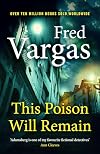
- This Poison Will Remain
- Original title
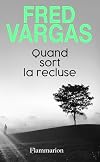
- Quand sort la recluse
- Original publication date
- 2017; 2018 (Nederlandse vertaling) (Nederlandse vertaling)
- Important places
- Nîmes, Languedoc-Roussillon, France
- Related movies*
- Quand Sort la Recluse (partie 1 | 2019 | IMDb); Quand Sort la Recluse (partie 2 | 2019 | IMDb)
- First words*
- Adamsberg zat op een rotsblok van de havendam te kijken hoe de vissers van Grimsey van hun dagelijkse tocht terugkwamen, vastmeerden en de netten omhoogtilden.
- Last words*
- (Click to show. Warning: May contain spoilers.)En Lucio had alleen maar gezegd: 'Je hebt geen keus, kerel.'
- Original language
- French
*Some information comes from Common Knowledge in other languages. Click "Edit" for more information.
Classifications
Statistics
- Members
- 533
- Popularity
- 55,736
- Reviews
- 27
- Rating
- (3.92)
- Languages
- 9 — Dutch, English, Finnish, French, German, Italian, Russian, Spanish, Swedish
- Media
- Paper, Audiobook, Ebook
- ISBNs
- 36
- ASINs
- 8