On This Page
Description
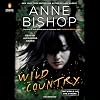
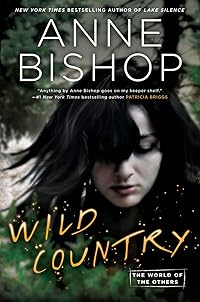
"In this powerful and exciting fantasy set in the world of Others series, humans and the shape-shifting Others will see whether they can live side by side... without destroying one another. There are ghost towns in the world--places where the humans were annihilated in retaliation for the slaughter of the shape-shifting Others. One of those places is Bennett, a town at the northern end of the Elder Hills--a town surrounded by the wild country. Now efforts are being made to resettle Bennett show more as a community where humans and Others live and work together. A young female police officer has been hired as the deputy to a Wolfgard sheriff. A deadly type of Other wants to run a human-style saloon. And a couple with four foster children--one of whom is a blood prophet--hope to find acceptance. But as they reopen the stores and the professional offices and start to make lives for themselves, the town of Bennett attracts the attention of other humans looking for profit. And the arrival of the outlaw Blackstone Clan will either unite Others and humans...or bury them all"-- show lessTags
Recommendations






Member Reviews
'Wild Country' surprised me. I'd expected a sort of Wild West version of The Others. I'd imagined a sort of 'High Noon' scenario with the Wolfgard Sheriff in a shoot-out with a gang of malevolent Intuit gamblers to decide who was going to run the town. In a way, I got that but with a few unexpected twists along the way.
One of the twists was that 'Wild Country', despite the high body count and the grim nature of the struggle for power, was filled with humour, much of it to do with the care and feeding of puppies. The humour wasn't just comic relief. It was one of the ways in which hope was introduced to the book. Seeing the Wolfgard Sheriff who hates humans for having slaughtered his family a year earlier in the failed Humans First And show more Last war against the others and his rookie-with-an-attitude female deputy squabble gently over the right way to raise of dog pup was emblematic of how the two species might find a way to live together peacefully.
Another unexpected part of the story was getting a closer look at how Intuits both in the Intuit farming community just outside Bennett and as part of the nomadic Blackstone Clan of gamblers and hustlers. We were shown a harder edge to both communities, which I felt made the Inuits easier to relate to than they were in the Meg books where I thought of them as Quakers with good instincts. Here we saw how different they are from the rest of humanity and how those differences have led to a need for self-reliance and self-protection.
If you've read the Meg books, then it's not surprising that women play a prominent role in shaping events in 'Wild Country'. What is surprising is how pragmatic and ruthless the women are. They're the ones who remain clear-eyed about the risk in the situation and they're the ones who take the hard decisions about who they're willing to kill to protect what they value. The men keep falling into old patterns of conflict, dancing towards combat in predictable steps as if under the power of a Wild West meme. They accept the conflict as inevitable but don't open their minds to all the options or consequences as they dance the familiar dance of challenge and combat. It's up to the women to be ruthless enough to bring things to an end.
The biggest difference between 'Wild Country' and the Wild West / Frontier Town stories that framed the expectations of many of the characters in one fundamental truth: for humans. there is no safety in the Wild Country.
What the women seem to realise and adapt to is that humans live by the sufferance of the Elders and the Elementals, types of Others who make the shifters and vampires seem only mildly threatening. The conflict over the control of Bennett is completely specious. There is no way that the humans could control Bennett. The Elders would exterminate them first. Even when the humans are coming to a town which is empty because, a year ago, The Others killed every child, woman and man who lived there, they lack either the courage or the imagination to take in the reality of their vulnerability. This sanity-preserving but survival-threatening refusal to look reality in the eye seems quite real to me. It reminds me of how we live with climate change. We know it's happening. We know our way of life is not sustainable. We can see the shortages of water and food and habitable land beginning to arrive but we work hard every day to distract ourselves from an unpalatable truth that, if acknowledged would make us feel helpless and afraid.
If the book has a message, I think it was: There is no safety in the Wild Country. Survival depends on accepting that, not denying it, and having the courage to adapt if you can and endure if you can't.
As always with Anne Bishop's books, 'Wild Country' was a fun read that quickly got me invested in the fates of a few key personalities, some of whom constantly misunderstood each other and all of whom were under threat from a big picture that they had yet to see.
I found the start of the book slow and a little disjointed. mostly because it shared a timeline with 'Etched In Bone' and aligning the two stories sometimes felt a little laboured, but things picked up once our female deputy arrived in town and started to bounce off the dominant wolf everything moved along nicely
I recommend the audiobook version of 'Wild Country'. Alexandra Harris' narration, which is unusual but powerful, has become a key part of my enjoyment of Anne Bishop's books. Click on the SoundCloud link below to hear a sample.
https://soundcloud.com/penguin-audio/wild-country-by-anne-bishop show less
He has teeth.
She has a gun.
They are the law.
Wild Country is the second in Anne Bishop's World of the Others series. Events in this story coincide with those in Etched in Bone and contains spoilers for the main plot in that book. While technically this book could be read out of order, I recommend reading Meg's series first . The events in Lake Silence have no bearing on Wild Country and either book could be read first without any problems.
All of my favorite elements from the previous Others books are all here, rearranged and tossed together in a story about life in a frontier town that is just being repopulated after the Great Predation in the main series. The new residents are truly in the wild country where human law is barely show more tolerated at and the Others have the final say in all things.
The story features an ensemble cast without any one person truly feeling like the main lead. It was very nice for Bishop to break her series mold and have several competent female pov's that work well with the Others. The new sheriff and deputy get plenty of page time and it's quite enjoyable reading how they figure out ways to work with each other that doesn't end with the human being eaten.
Easily my favorite part of these books is that Bishop writes the best comeuppance for bad guys. I know that no matter how horrible the bad guys behave or how heinous their crimes, decency will win out and the evil doers always meet a gloriously bloody end. It makes for satisfying and oddly cozy read. show less
She has a gun.
They are the law.
Wild Country is the second in Anne Bishop's World of the Others series. Events in this story coincide with those in Etched in Bone and contains spoilers for the main plot in that book. While technically this book could be read out of order, I recommend reading Meg's series first . The events in Lake Silence have no bearing on Wild Country and either book could be read first without any problems.
All of my favorite elements from the previous Others books are all here, rearranged and tossed together in a story about life in a frontier town that is just being repopulated after the Great Predation in the main series. The new residents are truly in the wild country where human law is barely show more tolerated at and the Others have the final say in all things.
The story features an ensemble cast without any one person truly feeling like the main lead. It was very nice for Bishop to break her series mold and have several competent female pov's that work well with the Others. The new sheriff and deputy get plenty of page time and it's quite enjoyable reading how they figure out ways to work with each other that doesn't end with the human being eaten.
Easily my favorite part of these books is that Bishop writes the best comeuppance for bad guys. I know that no matter how horrible the bad guys behave or how heinous their crimes, decency will win out and the evil doers always meet a gloriously bloody end. It makes for satisfying and oddly cozy read. show less
Ah, a return to the world of the Others, where pack law rules and humans are no longer the dominant species. This tale takes place mainly in the town of Bennet, out in the wild country, and during the same time period as the last book in the Simon and Meg series. (Simon and Meg
Trigger Warnings: sexual assault, rape, torture
Please excuse typos/name misspellings. Entered on screen reader.
Trigger Warnings:
Please excuse typos/name misspellings. Entered on screen reader.
This second book in the World of the Others is a Western complete with outlaws, cattle rustlers and con men. Bennett was one of the towns where the Others killed everyone in retaliation for members of Humans First killing terra indigene. However, it's position on the railroad and its role as a transportation hub means that the terra indigene don't want to lose it. Neither do the humans in the area that survived the purge.
Grandfather Erebus has put Tolya Sanguinati in charge. He has been working with Jesse Walker, an Intuit from Prairie Gold, to determine what kind of population they need to make the town viable. The Lakeside Courtyard has held some hiring fairs to find Intuits and Simple Life people to fill needed positions - ranch show more hands, doctors, lawyers, among others. But other people are taking a look at Bennett as an opportunity too.
Jana Paniccia isn't an Intuit or Simple Life but an anonymous phone call sends her to the Lakeside Courtyard looking for a job as a Deputy. She has faced all sorts of harassment to go through the Police Academy but can't find a job because she's a woman even though jobs are unfilled after the Great Predation. She has a chip on her shoulder, no real life experience, and a need to protect and serve even if it means working with Sheriff Virgil Wolfgard who has no reason to like humans.
Also there is Barbara Ellen Debany (Barb) who is an almost-vet and taking care of all the abandoned pets left in Bennett. Since her brother is one of the cops working with the Lakeside Courtyard, the Others take a special interest in her.
There are so many interesting characters in this one. From a family with same sex parents who have adopted four kids - a wolf, a coyote, a hawk, and a blood prophet - to a Harvester named Scythe who is running the local saloon. There's a family with a Skippy child who are looking for a place that accepts her. There is a member of the panthergard and his adopted human brother who is likely the son of a blood prophet.
Bennett is also becoming a magnet for a wide variety of outlaws. Parlen Blackstone is the head of an Intuit clan of gamblers and con men who have usually ridden the trains to keep them one step ahead of their victims. His daughter Abigail ran away from him three years earlier and has been hiding under a different persona in Prairie Gold. Her ability to sense which jewel can match with a person to bring them luck - or disaster - is a very unusual Intuit ability. I liked that the names of the outlaws hearkened back to the Wild West - the Bonneys, the Parkers.
I liked the bits of humor in the story too. Jana's new puppy and his toy Cowboy Bob added some lightness to a rather dark story and gave a chance to see how Others and humans can look at the same thing in two very different ways.
This was a story that didn't focus on one character. The focus seemed to me about trying to build a community made up of all varieties of humans and Others. It was about fighting for that community and that vision and the bumps along the way and the costs of trying for that vision. show less
Grandfather Erebus has put Tolya Sanguinati in charge. He has been working with Jesse Walker, an Intuit from Prairie Gold, to determine what kind of population they need to make the town viable. The Lakeside Courtyard has held some hiring fairs to find Intuits and Simple Life people to fill needed positions - ranch show more hands, doctors, lawyers, among others. But other people are taking a look at Bennett as an opportunity too.
Jana Paniccia isn't an Intuit or Simple Life but an anonymous phone call sends her to the Lakeside Courtyard looking for a job as a Deputy. She has faced all sorts of harassment to go through the Police Academy but can't find a job because she's a woman even though jobs are unfilled after the Great Predation. She has a chip on her shoulder, no real life experience, and a need to protect and serve even if it means working with Sheriff Virgil Wolfgard who has no reason to like humans.
Also there is Barbara Ellen Debany (Barb) who is an almost-vet and taking care of all the abandoned pets left in Bennett. Since her brother is one of the cops working with the Lakeside Courtyard, the Others take a special interest in her.
There are so many interesting characters in this one. From a family with same sex parents who have adopted four kids - a wolf, a coyote, a hawk, and a blood prophet - to a Harvester named Scythe who is running the local saloon. There's a family with a Skippy child who are looking for a place that accepts her. There is a member of the panthergard and his adopted human brother who is likely the son of a blood prophet.
Bennett is also becoming a magnet for a wide variety of outlaws. Parlen Blackstone is the head of an Intuit clan of gamblers and con men who have usually ridden the trains to keep them one step ahead of their victims. His daughter Abigail ran away from him three years earlier and has been hiding under a different persona in Prairie Gold. Her ability to sense which jewel can match with a person to bring them luck - or disaster - is a very unusual Intuit ability. I liked that the names of the outlaws hearkened back to the Wild West - the Bonneys, the Parkers.
I liked the bits of humor in the story too. Jana's new puppy and his toy Cowboy Bob added some lightness to a rather dark story and gave a chance to see how Others and humans can look at the same thing in two very different ways.
This was a story that didn't focus on one character. The focus seemed to me about trying to build a community made up of all varieties of humans and Others. It was about fighting for that community and that vision and the bumps along the way and the costs of trying for that vision. show less
The short version: Wild Country is All The Books in The Others series chopped then tossed together in a fruit salad. In other words, there's nothing that's new, but presentation is everything; it feels a bit fresher, more streamlined, and better paced. I've been trying to figure out if I could recommend people just read this book and skip the rest. Maybe.
Given that this contains All The Details from prior books,* I'll note that it fixes many of the shortcomings, particularly those in plot. Since I adored mail-delivering ponies, I didn't mind the endless details about such in Book One (Written in Red), but I don't blame people who do. All of that is shortened here. The villain scenario--believe me, I am spoiling nothing here--is show more essentially the same as in Book One to Five (I can't speak to Six, since I skipped it). Bishop doesn't believe in shades of grey, and inevitably her antagonists are greedy, abusive, misogynist, human-first people who kick kittens and puppies for fun. Non-people are never villains.
Narrative viewpoint wanders. It's limited third person, skipping from head to head so that Bishop can pretend to build some tension between the forces of Nature and those who wish to challenge/exploit it. I, being the impatient, shallow person that I am--get to some people-punishing, please--skipped the viewpoint of the Bad People. Plus, gross.
One of the things that keeps me coming back to the series is the idea of active, animate environmental reclamation. I read a LOT of apocalypse stories, ranging from disease, zombie, nuclear, environmental, but only Anne Bishop connects monsters with environment repair and envisions a nature that actively reclaims civilization. Of course, that's as far as her world-building goes. It's actually one of the most poorly thought-out worlds I've ever read that has made it past the self-published stage.
Bishop actually cracked me up because in the prologue, she thanked a number of people for their help with animal information. I'm not sure what 'information' they gave her that couldn't have been found in a first-grade primer. I mean, there was a canary that ate bird seed, some fighting dogs that went feral, some horses in a corral and some cattle that were killed. And two puppies. The rest of the time she explicitly states (almost word-for-word) that the terra indigene, while modeling themselves after a species of animal, are not actually that species, and thus have needs that species does not share. So I'm not sure what help her friends gave. That new puppies should have a crate? Get the runs if they eat raw antelope?
I wish people 'helping' her would have said, 'Anne, hey. How can you have localized computer networks with email and fax machines after the terra indigene wiped out 75% of humanity? How come you still have DVD players with new movies made by the terra indigene? Where are all the damn peeps mining your cobalt and platinum, and whose assembling your circuit boards in a sterile environment? But since you tell me you are limiting gas and there aren't very many people, and food resources are a little limited, where does the electricity to run the computers come from? And don't try to sell me an electric dam, because that still brings us back to a manufactured metals problem. And why are your Inuit people giving a damn about who the property heirs are for Bennett? Weren't the residents killed because they killed a bunch of terra indigene? Why are the Inuit worrying about possessions for the next-of-kin after a world-wide disaster? Don't you have a food shortage? Isn't 75% of the population wiped out? And where did all the people come from so fast to settle Bennett (see pop reduction)... but apparently none of the Blackstone Clan, that their numbers rival the terra indigene?"
Zombies are easier, really.
Ignoring all that, there's a sorta problematic thing with a person who likely has Down, who the wolves call a 'skippy' ('Skippy,' was a mentally challenged terra in an earlier book), and it's bizarre, given Bishop's other series, that there's an aside with a woman who likes "non-vanilla sex" (this is explicitly said) ends up... well. Not with a happy ending. And of course, there's the general thing that gender roles are pretty much 1950s, except gay men are cool.
So, flip the little switch in your brain that has to do with logic--just like you do in a zombie movie--and go along with it. Try to ignore the fact that Bishop's world logic isn't consistent. Just go with it. It's kind of a fun tale, lots of ups and downs, a weird sort of frontier theme happening, and sort of happy ever-afters, although I gotta say, I do think Bishop wasn't very kind to Virgil. I might buy the e-book version--if it's on sale.
*Seriously. A non-exhaustive list includes--and do you really think these are spoilers?--and all of these are brief: Air on a pony, "speak prophet and I will listen," review of what happens to male Cassandra sangres, stocking grocery stores, review of how email works, watching movies, reading books, color-changing hair, pizza delivery (because post-apocalypse, natch), train-riding, howling, encountering Elders, jokes about eating people, eating people, Inuit spidey-senses, women embarrassed by naked shapeshifting men. show less
Given that this contains All The Details from prior books,* I'll note that it fixes many of the shortcomings, particularly those in plot. Since I adored mail-delivering ponies, I didn't mind the endless details about such in Book One (Written in Red), but I don't blame people who do. All of that is shortened here. The villain scenario--believe me, I am spoiling nothing here--is show more essentially the same as in Book One to Five (I can't speak to Six, since I skipped it). Bishop doesn't believe in shades of grey, and inevitably her antagonists are greedy, abusive, misogynist, human-first people who kick kittens and puppies for fun. Non-people are never villains.
Narrative viewpoint wanders. It's limited third person, skipping from head to head so that Bishop can pretend to build some tension between the forces of Nature and those who wish to challenge/exploit it. I, being the impatient, shallow person that I am--get to some people-punishing, please--skipped the viewpoint of the Bad People. Plus, gross.
One of the things that keeps me coming back to the series is the idea of active, animate environmental reclamation. I read a LOT of apocalypse stories, ranging from disease, zombie, nuclear, environmental, but only Anne Bishop connects monsters with environment repair and envisions a nature that actively reclaims civilization. Of course, that's as far as her world-building goes. It's actually one of the most poorly thought-out worlds I've ever read that has made it past the self-published stage.
Bishop actually cracked me up because in the prologue, she thanked a number of people for their help with animal information. I'm not sure what 'information' they gave her that couldn't have been found in a first-grade primer. I mean, there was a canary that ate bird seed, some fighting dogs that went feral, some horses in a corral and some cattle that were killed. And two puppies. The rest of the time she explicitly states (almost word-for-word) that the terra indigene, while modeling themselves after a species of animal, are not actually that species, and thus have needs that species does not share. So I'm not sure what help her friends gave. That new puppies should have a crate? Get the runs if they eat raw antelope?
I wish people 'helping' her would have said, 'Anne, hey. How can you have localized computer networks with email and fax machines after the terra indigene wiped out 75% of humanity? How come you still have DVD players with new movies made by the terra indigene? Where are all the damn peeps mining your cobalt and platinum, and whose assembling your circuit boards in a sterile environment? But since you tell me you are limiting gas and there aren't very many people, and food resources are a little limited, where does the electricity to run the computers come from? And don't try to sell me an electric dam, because that still brings us back to a manufactured metals problem. And why are your Inuit people giving a damn about who the property heirs are for Bennett? Weren't the residents killed because they killed a bunch of terra indigene? Why are the Inuit worrying about possessions for the next-of-kin after a world-wide disaster? Don't you have a food shortage? Isn't 75% of the population wiped out? And where did all the people come from so fast to settle Bennett (see pop reduction)... but apparently none of the Blackstone Clan, that their numbers rival the terra indigene?"
Zombies are easier, really.
Ignoring all that, there's a sorta problematic thing with a person who likely has Down, who the wolves call a 'skippy' ('Skippy,' was a mentally challenged terra in an earlier book), and it's bizarre, given Bishop's other series, that there's an aside with a woman who likes "non-vanilla sex" (this is explicitly said) ends up... well. Not with a happy ending. And of course, there's the general thing that gender roles are pretty much 1950s, except gay men are cool.
So, flip the little switch in your brain that has to do with logic--just like you do in a zombie movie--and go along with it. Try to ignore the fact that Bishop's world logic isn't consistent. Just go with it. It's kind of a fun tale, lots of ups and downs, a weird sort of frontier theme happening, and sort of happy ever-afters, although I gotta say, I do think Bishop wasn't very kind to Virgil. I might buy the e-book version--if it's on sale.
*Seriously. A non-exhaustive list includes--and do you really think these are spoilers?--and all of these are brief: Air on a pony, "speak prophet and I will listen," review of what happens to male Cassandra sangres, stocking grocery stores, review of how email works, watching movies, reading books, color-changing hair, pizza delivery (because post-apocalypse, natch), train-riding, howling, encountering Elders, jokes about eating people, eating people, Inuit spidey-senses, women embarrassed by naked shapeshifting men. show less
I finished this one a while back but was having trouble reviewing.
While reading it, I was thoroughly caught up in the story (and it was a stay in seat until finished read).
But, like Lake Silence, it introduced more new characters. Oh, some familiar faces made an appearance. And some really fascinating new "others" were introduced.
I think it missed the 5-star mark for me because it was too brief to get as hooked on the characters as I did with The Others series.
I hope the next installment gives us more of the characters from these two books rather than a new main character. Even if not, I'm looking forward to more in this world so am continuing the series.
While reading it, I was thoroughly caught up in the story (and it was a stay in seat until finished read).
But, like Lake Silence, it introduced more new characters. Oh, some familiar faces made an appearance. And some really fascinating new "others" were introduced.
I think it missed the 5-star mark for me because it was too brief to get as hooked on the characters as I did with The Others series.
I hope the next installment gives us more of the characters from these two books rather than a new main character. Even if not, I'm looking forward to more in this world so am continuing the series.
Relative to the rest of the books in The Others universe, this one was 'meh'. But ONLY relative to the rest of the books. In general it's a great story and Bishop continues to create incredibly readable stories centered in a world where humans are resoundingly not an apex predator. Or, at least, not the apex predator.
This is the second book in the off-shoot series called "The World of The Others", but its placement on The Others Universe timeline puts it chronologically in front of the 1st book, Lake Silence; thankfully the author's note at the start explains this and that the events in this book take place simultaneously to events in the last book of the original series, book 5, Etched in Bone. Given that it's been a few years since I show more read Etched in Bone, I needed to re-read it first to reacquaint myself with the characters and events. Which then prompted a re-read of the entire series.
Wild Country is the story of the aftermath following the complete eradication of all the humans of Bennett, a small town in the western part of the continent (alternate universe, alternate names, but it's generally based on North America). The residents were members of the Humans First and Last League, and responsible for the wholesale slaughter of an entire Wolf pack. After the Others retaliated, they took back the land Bennett sits on, and went about re-creating the town, bringing in a mix of Others, Intuits (humans, but humans persecuted for their uncanny intuitiveness) and select humans, experimenting to see if they could create a more cooperative community.
I was engrossed in this storyline - some of my favorite non-lethal bits of these books is how Bishop shows these wildly differing life forms working together cooperatively, finding ways to respect the differences and keep the similarities working harmoniously. But then she went all Wild West on me and I've never been enamoured of the whole Wild West genre. The showdowns, the gunfights, the cattle rustlers... meh. I'm not saying that she didn't do a good job with it, only that it wasn't my jam, and towards the end it just lost me a little bit. It also felt a tiny bit like satire; like an homage that put a toe over the line and got a little silly.
Still, my bias is just that; a bias. Overall the story was great and kept me up, along with a taco dinner I made way too spicy, until 2.30am. I hope Anne Bishop's imagination is chock full of stories of The Others and their battles with the selfish gits that make up entirely too large a proportion of humanity, because I'm nowhere near tired of reading about them. show less
This is the second book in the off-shoot series called "The World of The Others", but its placement on The Others Universe timeline puts it chronologically in front of the 1st book, Lake Silence; thankfully the author's note at the start explains this and that the events in this book take place simultaneously to events in the last book of the original series, book 5, Etched in Bone. Given that it's been a few years since I show more read Etched in Bone, I needed to re-read it first to reacquaint myself with the characters and events. Which then prompted a re-read of the entire series.
Wild Country is the story of the aftermath following the complete eradication of all the humans of Bennett, a small town in the western part of the continent (alternate universe, alternate names, but it's generally based on North America). The residents were members of the Humans First and Last League, and responsible for the wholesale slaughter of an entire Wolf pack. After the Others retaliated, they took back the land Bennett sits on, and went about re-creating the town, bringing in a mix of Others, Intuits (humans, but humans persecuted for their uncanny intuitiveness) and select humans, experimenting to see if they could create a more cooperative community.
I was engrossed in this storyline - some of my favorite non-lethal bits of these books is how Bishop shows these wildly differing life forms working together cooperatively, finding ways to respect the differences and keep the similarities working harmoniously. But then she went all Wild West on me and I've never been enamoured of the whole Wild West genre. The showdowns, the gunfights, the cattle rustlers... meh. I'm not saying that she didn't do a good job with it, only that it wasn't my jam, and towards the end it just lost me a little bit. It also felt a tiny bit like satire; like an homage that put a toe over the line and got a little silly.
Still, my bias is just that; a bias. Overall the story was great and kept me up, along with a taco dinner I made way too spicy, until 2.30am. I hope Anne Bishop's imagination is chock full of stories of The Others and their battles with the selfish gits that make up entirely too large a proportion of humanity, because I'm nowhere near tired of reading about them. show less
Members
- Recently Added By
Lists

Books Read in 2019
4,052 works; 110 members

Books Read in 2021
5,361 works; 114 members
Author Information

38+ Works 34,862 Members
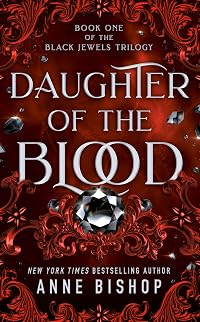
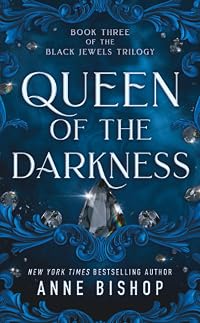
Anne Bishop is a fantasy writer, born in 1955. Her most noted work is the Black Jewels series. She won the Crawford Award in 2000 for the first three Black Jewels books, sometimes called the Black Jewels trilogy: Daughter of the Blood, Heir to the Shadows, and Queen of the Darkness. She started her writing career by publishing short stories. She show more went on to create several series. The Tir Alainn Trilogy and her third series The Landscapes of Ephemera. She is working on her next series The Others which contains the first three books, Written in Red, Murder of Crows, and Vision in Silver. In 2015, Vision in Silver made The New York Times Best Seller List. (Bowker Author Biography) show less
Some Editions
Awards and Honors
Series

Common Knowledge
- Canonical title
- Wild Country
- Original title
- Wild Country
- People/Characters
- Jana Paniccia; Jesse Walker; Tolya Sanguinati
- Important places
- Bennett
- Dedication
- For
Janet Chase
and
Jana Paniccia - First words
- Jana Paniccia followed the gravel paths through the memorial park
- Last words
- (Click to show. Warning: May contain spoilers.)We are here.
- Publisher's editor
- Sowards, Anne
- Original language
- English
Classifications
Statistics
- Members
- 496
- Popularity
- 60,995
- Reviews
- 31
- Rating
- (3.99)
- Languages
- English, French, Portuguese
- Media
- Paper, Audiobook, Ebook
- ISBNs
- 11
- ASINs
- 3