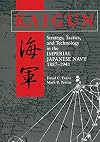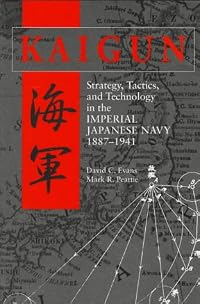
Kaigun: Strategy, Tactics, and Technology in the Imperial Japanese Navy, 1887-1941
by David C. Evans
On This Page
Description
One of the great spectacles of modern naval history is the Imperial Japanese Navy's instrumental role in Japan's rise from an isolationist feudal kingdom to a potent military empire stridently confronting, in 1941, the world's most powerful nation. Years of painstaking research and analysis of previously untapped Japanese-language resources have produced this remarkable history of the navy's dizzying development, tactical triumphs, and humiliating defeat. Unrivaled in its breadth of coverage show more and attention to detail, this important new study explores the foreign and indigenous influences on the navy's thinking about naval warfare and how to plan for it. Focusing primarily on the much-neglected period between the world wars, David C. Evans and Mark R. Peattie, two widely esteemed historians, persuasively explain how the Japanese failed to prepare properly for the war in the Pacific despite an arguable advantage in capability. show lessTags
Recommendations

























Member Recommendations
Member Reviews
When it comes to history books, there are good ones and there are great ones. And then there are a few that are truly groundbreaking in their ability to take a subject that has been studied before and address it with such insight that it changes fundamentally the way we think about it. This is one of those books. For in describing the development of the Imperial Japanese Navy from the late 19th century to the attack on Pearl Harbor David Evans and Mark Peattie offers readers a revolutionary look at the thinking and planning that defined the shape of the Pacific War (as the war against the United States and the European imperial powers is called in Japan) before its first shot was ever fired.
Perhaps one of the most surprising things show more about the Imperial Japanese Navy is how relatively late it was established, for in spite of being an island nation Japan had no naval arm. This changed after the Meiji Restoration, as Japan began to look outward for the first time in centuries. Quickly appreciating the importance of naval arms to national power, the Japanese created a naval force tasked with protecting its shores. Turning to the British the Japanese not only brought over advisers from there to train their officers but purchased many of its first vessels from its shipbuilders — a necessary step given the undeveloped state of Japanese industry at that time.
By the 1890s the Japanese possessed a small but respectable force, yet the navy still was junior to the army in both status and planning. This changed with Japan's wars of expansion, first with China in 1894-5, then with Russia ten years later. It was then that the Imperial Japanese Navy shifted from a coastal-defense role to one designed to project Japanese power in accordance with the dominant Western strategic thinking of that time. Japan's navy impressed observers with their performance in these two wars, especially with their defeat of the Russians. Here Evans and Peattie stress the importance of the battle of Tsushima both in establishing the navy's reputation and in defining its subsequent thinking. The clash was decisive in ending Russia's hopes for victory in the Russo-Japanese War, and — even more significantly — cemented the idea of the kantai kessen, or decisive battle, in Japanese naval thinking, which would define both the development of the IJN for the remainder of its existence and its conduct of the war against the United States forty years later.
This path was set virtually from the start. For the first decades of its existence Japanese naval strategists regarded regional powers — first China, then Russia — as their most likely opponents. Having defeated both countries, and with an alliance with Great Britain securely in place the United States now became the most likely opponent in a future war. Japan's response to international trends, from the arms races of the 1910s to the arms control treaties of the 1920s were shaped by this, as were ideas about warship design. This did not necessarily have to lead to war, but as Japan contemplated further expansion of its empire it always did so with an eye towards a possible challenge from the Americans, and prepared accordingly.
The result was a fleet designed to defeat the United States Navy in accordance with kantai kessen. Accepting that the United States would possess an unavoidable numerical advantage, the Japanese emphasized quality in naval design and the development of weapons such as the "Long Lance" torpedo and tactics such as night-time fighting that would offset the Americans' superior numbers. These were tested in maneuvers that sometimes cost lives, but resulted in a force which was ready to implement doctrine in practice when war came. The opportunity arose first in China in 1937; here Evans and Peattie stress the often underappreciated advantage four years of combat experience gave the IJN at the start of their conflict with the United States -- experience which the United States would offset only after months of bloody lessons in the South Pacific in 1942 and 1943.
Evans and Peattie conclude their book with a short chapter summarizing the impact of this development on Japan's conduct of the Pacific War. Yet the relative brevity of this section understates the value of this book for readers interested in the Japanese Navy's performance in the Second World War. This is by far the single best book in English on the history of the Imperial Japanese Navy, one that is likely to remain the definitive text on the subject and necessary reading for anyone who wants to learn about Japanese military history or the development of naval combat in the Pacific during the war. show less
Perhaps one of the most surprising things show more about the Imperial Japanese Navy is how relatively late it was established, for in spite of being an island nation Japan had no naval arm. This changed after the Meiji Restoration, as Japan began to look outward for the first time in centuries. Quickly appreciating the importance of naval arms to national power, the Japanese created a naval force tasked with protecting its shores. Turning to the British the Japanese not only brought over advisers from there to train their officers but purchased many of its first vessels from its shipbuilders — a necessary step given the undeveloped state of Japanese industry at that time.
By the 1890s the Japanese possessed a small but respectable force, yet the navy still was junior to the army in both status and planning. This changed with Japan's wars of expansion, first with China in 1894-5, then with Russia ten years later. It was then that the Imperial Japanese Navy shifted from a coastal-defense role to one designed to project Japanese power in accordance with the dominant Western strategic thinking of that time. Japan's navy impressed observers with their performance in these two wars, especially with their defeat of the Russians. Here Evans and Peattie stress the importance of the battle of Tsushima both in establishing the navy's reputation and in defining its subsequent thinking. The clash was decisive in ending Russia's hopes for victory in the Russo-Japanese War, and — even more significantly — cemented the idea of the kantai kessen, or decisive battle, in Japanese naval thinking, which would define both the development of the IJN for the remainder of its existence and its conduct of the war against the United States forty years later.
This path was set virtually from the start. For the first decades of its existence Japanese naval strategists regarded regional powers — first China, then Russia — as their most likely opponents. Having defeated both countries, and with an alliance with Great Britain securely in place the United States now became the most likely opponent in a future war. Japan's response to international trends, from the arms races of the 1910s to the arms control treaties of the 1920s were shaped by this, as were ideas about warship design. This did not necessarily have to lead to war, but as Japan contemplated further expansion of its empire it always did so with an eye towards a possible challenge from the Americans, and prepared accordingly.
The result was a fleet designed to defeat the United States Navy in accordance with kantai kessen. Accepting that the United States would possess an unavoidable numerical advantage, the Japanese emphasized quality in naval design and the development of weapons such as the "Long Lance" torpedo and tactics such as night-time fighting that would offset the Americans' superior numbers. These were tested in maneuvers that sometimes cost lives, but resulted in a force which was ready to implement doctrine in practice when war came. The opportunity arose first in China in 1937; here Evans and Peattie stress the often underappreciated advantage four years of combat experience gave the IJN at the start of their conflict with the United States -- experience which the United States would offset only after months of bloody lessons in the South Pacific in 1942 and 1943.
Evans and Peattie conclude their book with a short chapter summarizing the impact of this development on Japan's conduct of the Pacific War. Yet the relative brevity of this section understates the value of this book for readers interested in the Japanese Navy's performance in the Second World War. This is by far the single best book in English on the history of the Imperial Japanese Navy, one that is likely to remain the definitive text on the subject and necessary reading for anyone who wants to learn about Japanese military history or the development of naval combat in the Pacific during the war. show less
A good amount of personal memoirs and general histories have been written about the Asia-Pacific Theater of WW2, but a lot of the authoritative information is scattered among numerous books. Even fewer books examine the doctrinal and technological development of an East Asian navy. Evans and Peattie's Kaigun is a serious read, but worth the effort, and there is a massive amount of information contained in this doorstopper. To be sure, much of the information in this book can be found in earlier works, but this is one of the first works that contained it all in one place. Almost every book I've read on the Japanese Navy published after this book uses it as a reference.
While the title implies a heavily technical examination of the show more Imperial Japanese Navy (IJN), at its core Kaigun is really about the overall development of the IJN from its early beginnings to just before the start of the Pacific War in December of 1941. It traces the development of not only tactics and technology, but also of the people, doctrines, and thinking behind it. In short, by the time you're done with this tome, you'll have an extremely well-rounded understanding of why the IJN was the way it was. Not many books can do that.
This is a book that's definitely aimed at a scholar of military history. It contains extensive endnotes and a massive bibliography. If I have any criticism of the book, it's that if you're doing research on a particular topic related to the IJN, then you may end up jumping around the book to collate the information since it more or less is organized both chronologically and by topic.
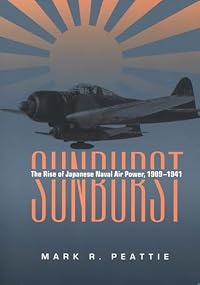
The only other thing this book lacks is a broader discussion of the development of Japanese naval aviation. However, that ended up being covered in a separate book by Mark Peattie titled "Sunburst" which is also worth reading (it was originally meant to be a part of Kaigun, but got too long).
Of all of the military history books I've read on the Imperial Japanese Navy, this is my absolute favorite. show less
While the title implies a heavily technical examination of the show more Imperial Japanese Navy (IJN), at its core Kaigun is really about the overall development of the IJN from its early beginnings to just before the start of the Pacific War in December of 1941. It traces the development of not only tactics and technology, but also of the people, doctrines, and thinking behind it. In short, by the time you're done with this tome, you'll have an extremely well-rounded understanding of why the IJN was the way it was. Not many books can do that.
This is a book that's definitely aimed at a scholar of military history. It contains extensive endnotes and a massive bibliography. If I have any criticism of the book, it's that if you're doing research on a particular topic related to the IJN, then you may end up jumping around the book to collate the information since it more or less is organized both chronologically and by topic.
The only other thing this book lacks is a broader discussion of the development of Japanese naval aviation. However, that ended up being covered in a separate book by Mark Peattie titled "Sunburst" which is also worth reading (it was originally meant to be a part of Kaigun, but got too long).
Of all of the military history books I've read on the Imperial Japanese Navy, this is my absolute favorite. show less
A Flawed Blueprint for Naval Superiority
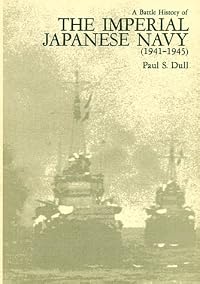
"Kaigun" traces the meteoric ascent of the Imperial Japanese Navy from its modest beginnings during the post-Tokugawa era to its apex at the outbreak of the Second World War. In order to obtain a comprehensive picture of how the Imperial Navy performed in the Pacific War, this book should be read in conjunction with Dull's "A Battle History of the Imperial Japanese Navy," and Peattie's "Sunburst: The Rise of the Japanese Naval Air Power, 1909-1941."
In its struggle to attain naval parity with the United States, its notional enemy during the interwar period, the Imperial Navy emphasized qualitative prowess over material superiority; this was highly evident in the development of Japanese naval show more doctrine, tactics and equipment. The Imperial Navy pioneered many innovations in weapons and tactics, such as the development of the oxygen-propelled torpedo, the use of destroyers in offensive operations, and employing midget submarines to offset the material superiority of the enemy. But masking these undeniably vital innovations were many fatal shortcomings. Truly, the devil was in the details, and the Imperial Navy ignored what may be considered the less glamorous but arguably equally important 'back-end' of naval operations. For instance, in a pre-Deming Japan, shipyard efficiency was abysmal, especially in view of the efficiency levels attained by US yards. In constructing one class of Japanese destroyers, the Japanese took one year on average to complete one vessel, while US shipyards turned out one destroyer every six months on average.
The Imperial Navy was fittingly proud of its elite core of naval professionals, which was highly instrumental in allowing the Navy to win two major naval engagements in the first thirty years of its existence. The careers of prime movers in the Navy such as Togo Heihachiro, Yamamoto Gombei and Sato Tetsutaro are discussed in the book.
However, the presence of the crème de la crème might have actually blinded the Navy to the fact that its recruitment policies were intrinsically flawed; its elitism allowed it to become complacent and to overlook the need for a sizeable body of naval reservists. When the Navy undertook Operation Hawaii, it was actually undermanned by approximately two thousand officers, according to a study cited in the book. The laundry list of shortcomings included logistics, intelligence, electronics, cryptography and so on.
For me, a novice in military history, the book held many surprises. Foremost among them is that the Combined Fleet attained glory in the Russo-Japanese War only after so many initial foibles. The preliminary maneuvers involving destroyers can be likened to a comedy of errors if not for the fact that night fighting is inherently difficult.
The tome has many illustrations and tables, making it useful for citations and referencing. However, sticklers for good information design would undoubtedly be perturbed with some of the graphs, because they appear to have been amateurishly formatted on Microsoft Excel. Despite its graphical quirks, "Kaigun" should be a valuable addition to a history collection, primarily because of its reliance on many Japanese-language sources.
(Posted in Amazon.com, November 26, 2003) show less
"Kaigun" traces the meteoric ascent of the Imperial Japanese Navy from its modest beginnings during the post-Tokugawa era to its apex at the outbreak of the Second World War. In order to obtain a comprehensive picture of how the Imperial Navy performed in the Pacific War, this book should be read in conjunction with Dull's "A Battle History of the Imperial Japanese Navy," and Peattie's "Sunburst: The Rise of the Japanese Naval Air Power, 1909-1941."
In its struggle to attain naval parity with the United States, its notional enemy during the interwar period, the Imperial Navy emphasized qualitative prowess over material superiority; this was highly evident in the development of Japanese naval show more doctrine, tactics and equipment. The Imperial Navy pioneered many innovations in weapons and tactics, such as the development of the oxygen-propelled torpedo, the use of destroyers in offensive operations, and employing midget submarines to offset the material superiority of the enemy. But masking these undeniably vital innovations were many fatal shortcomings. Truly, the devil was in the details, and the Imperial Navy ignored what may be considered the less glamorous but arguably equally important 'back-end' of naval operations. For instance, in a pre-Deming Japan, shipyard efficiency was abysmal, especially in view of the efficiency levels attained by US yards. In constructing one class of Japanese destroyers, the Japanese took one year on average to complete one vessel, while US shipyards turned out one destroyer every six months on average.
The Imperial Navy was fittingly proud of its elite core of naval professionals, which was highly instrumental in allowing the Navy to win two major naval engagements in the first thirty years of its existence. The careers of prime movers in the Navy such as Togo Heihachiro, Yamamoto Gombei and Sato Tetsutaro are discussed in the book.
However, the presence of the crème de la crème might have actually blinded the Navy to the fact that its recruitment policies were intrinsically flawed; its elitism allowed it to become complacent and to overlook the need for a sizeable body of naval reservists. When the Navy undertook Operation Hawaii, it was actually undermanned by approximately two thousand officers, according to a study cited in the book. The laundry list of shortcomings included logistics, intelligence, electronics, cryptography and so on.
For me, a novice in military history, the book held many surprises. Foremost among them is that the Combined Fleet attained glory in the Russo-Japanese War only after so many initial foibles. The preliminary maneuvers involving destroyers can be likened to a comedy of errors if not for the fact that night fighting is inherently difficult.
The tome has many illustrations and tables, making it useful for citations and referencing. However, sticklers for good information design would undoubtedly be perturbed with some of the graphs, because they appear to have been amateurishly formatted on Microsoft Excel. Despite its graphical quirks, "Kaigun" should be a valuable addition to a history collection, primarily because of its reliance on many Japanese-language sources.
(Posted in Amazon.com, November 26, 2003) show less
Ratings
Members
- Recently Added By
Lists

r/AskHistorians' Recommended Books
1,068 works; 17 members
Author Information
3 Works 258 Members
Awards and Honors
Common Knowledge
- Canonical title
- Kaigun: Strategy, Tactics, and Technology in the Imperial Japanese Navy, 1887-1941
- Original publication date
- 1997
- Original language
- English
Classifications
- Genres
- Nonfiction, History, General Nonfiction
- DDC/MDS
- 359.00952 — Society, Government, and Culture Public administration & military science Naval forces and warfare Biography; History By Place Asia Japan
- LCC
- VA653 .E93 — Naval Science Navies: Organization, distribution, naval situation Navies: Organization, distribution, naval situation Other regions or countries
- BISAC
Statistics
- Members
- 190
- Popularity
- 171,723
- Reviews
- 3
- Rating
- (4.40)
- Languages
- English
- Media
- Paper, Ebook
- ISBNs
- 5
- ASINs
- 1