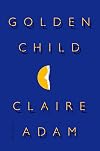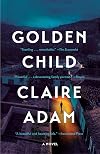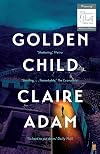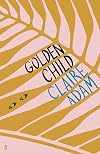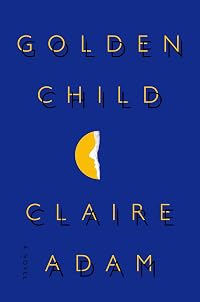
Golden Child
by Claire Adam
On This Page
Description
A deeply affecting debut novel set in Trinidad, following the lives of a family as they navigate impossible choices about scarcity, loyalty, and loveSHORTLISTED FOR THE DESMOND ELLIOTT PRIZE • "Golden Child is a stunning novel written with force and beauty. Though true to herself, Adam's work stands tall beside icons of her tradition like V.S. Naipaul."—Jennifer Clement, author of Gun Love
Rural Trinidad: a brick house on stilts surrounded by bush; a family, quietly surviving, just show more trying to live a decent life. Clyde, the father, works long, exhausting shifts at the petroleum plant in southern Trinidad; Joy, his wife, looks after the home. Their two sons, thirteen years old, wake early every morning to travel to the capital, Port of Spain, for school. They are twins but nothing alike: Paul has always been considered odd, while Peter is widely believed to be a genius, destined for greatness.
When Paul goes walking in the bush one afternoon and doesn't come home, Clyde is forced to go looking for him, this child who has caused him endless trouble already, and who he has never really understood. And as the hours turn to days, and Clyde begins to understand Paul's fate, his world shatters—leaving him faced with a decision no parent should ever have to make.
Like the Trinidadian landscape itself, Golden Child is both beautiful and unsettling; a resoundingly human story of aspiration, betrayal, and love.
Praise for Golden Child
"In fluid and uncluttered prose, Golden Child weaves an enveloping portrait of an insular social order in which the claustrophobic support of family and neighbors coexists with an omnipresent threat from the same corners."—The New York Times Book Review
"[A] powerful debut . . . a devastating family portrait—and a fascinating window into Trinidadian society."—People
"[An] emotionally potent debut novel . . . with a spare, evocative style, Adam (a Trinidad native) evokes the island's complexity during the mid-'80s, when the novel is mostly set: the tenuous relationship between Hindus like Clyde's family and the twins' Catholic schoolmaster, assassinations and abductions hyped by lurid media headlines, resources that attract carpetbagging oil companies but leave the country largely impoverished."—USA Today. show less
Tags
Recommendations



Member Reviews
This is a book that will break your heart. The author is from Trinidad and aptly describes both the poor and the rich sides of this locale. The homes all have dogs and barred windows for protection. The wealthier neighborhoods have security guards on site. Set sometime in the 1980s’s, Clyde and his wife, Joy live a very simple life. They live near the bush and often have to deal with their water shutting off. Their happiness is wrapped up in their twin sons, Peter and Paul. Peter is the “good” baby and Paul is “fussy” and has some issues. As they grow older, Peter is extremely smart working at genius levels but Paul has a knack for getting into trouble and is considered odd. Their mother wants the boys to stay in the same show more schools together so that Peter can help Paul. The miracle of this story is the boys are so close and watch out for each other and don’t let the attitudes of the adults around them pull them apart.
When the boys are thirteen, Paul goes walking in the bush one afternoon and doesn’t come back. Did he wander off and get lost, did he run away or has something more dangerous happened to him?
Most of the book takes place as Clyde tries to discover what has happened to his son. As he pieces together what has happened to Paul, he is forced to make an unimaginable choice. The author has done an incredible job capturing the nature of the crime ridden Trinidad as well as the family myths that they believe which allows them to act and make decisions they feel are right but that you, as the reader, are begging them not to! This is an incredibly well written book that you can’t stop reading even as you dread reading the last chapters. It will definitely stay with you for a very long time. While I thought this was a very worthwhile book, I wouldn’t be comfortable recommending to more sensitive readers. show less
When the boys are thirteen, Paul goes walking in the bush one afternoon and doesn’t come back. Did he wander off and get lost, did he run away or has something more dangerous happened to him?
Most of the book takes place as Clyde tries to discover what has happened to his son. As he pieces together what has happened to Paul, he is forced to make an unimaginable choice. The author has done an incredible job capturing the nature of the crime ridden Trinidad as well as the family myths that they believe which allows them to act and make decisions they feel are right but that you, as the reader, are begging them not to! This is an incredibly well written book that you can’t stop reading even as you dread reading the last chapters. It will definitely stay with you for a very long time. While I thought this was a very worthwhile book, I wouldn’t be comfortable recommending to more sensitive readers. show less
If you're a parent of more than one child, you have probably told at least one of your children that you don't have a favorite. But what if you did? What if one of your children has a potential that you don't see in another one? What if that child could get out of a bad or poor or dead-end situation, could excel? How much would you do for that child? What kind of sacrifice would you make? Could you, would you, make a Sophie's choice, sacrifice Beloved, be Abraham in the face of something larger than just your own wants and needs? Claire Adam has written just such a story in her novel Golden Child.
Clyde and Joy have twin thirteen year old sons named Peter and Paul. One night Paul, who has always been the less obedient, less present of show more the twins, doesn't come home. Angry and worried, his father stays up all night thinking on the trouble, large and small, this child has caused, planning how he wants to react when Paul finally does reappear. Except Paul doesn't reappear. The narrative then flips back in time to the birth of the boys. Peter's delivery is uncomplicated and easy while Paul was deprived of oxygen and the best guesses of the medical professionals witnessing his birth is that something is wrong with the baby. And so he grows up hearing that he is "slightly retarded," always knowing that Peter is incredibly smart, that Peter is something special, and is only held back because twins should stay together. Paul, meanwhile, struggles with school and with his image of himself, both in the shadow of his brother, who is always kind and caring with him, but also under the cloud of others' low expectations of his intelligence. Everything must be done to make sure that Peter reaches his potential; Paul's struggles are incidental. Their parents love both the boys but they cannot hide their loftier dreams for Peter as the boys grow. Then the narrative shifts once again to the days immediately following Paul's disappearance, showing not only what happened that night and those afterward, but also Clyde and Joy's decisions in the wake of this horrible situation.
The story is devastating on many levels, from the setting of crime ridden Trinidad to the familial jealousy and betrayal that drives the action. Adam has drawn a corrupt and scary Trinidad, a place rife with gossip, dangerous in what is said publicly, but also a place where people come together to try and offer help. She has captured the underhanded anger over inherited money and the strife it causes within a family if it is not seen to be shared evenly. The knowledge of the way society and politics work in this small island nation is eye opening, leaving no doubt that the book must end the way it does. As for the aptly named Peter and Paul, like their Biblical namesakes, they are each martyred in their own ways. The book is heavy and hard but it is exquisitely done. The framing structure of the novel makes the rising tension slacken at times, going from the worry of a missing child out all night to the day of their birth, but this is also an effective way of showing the reader the backstory on Clyde's perception of both of his sons. The third person narrative switches amongst Clyde, Paul, and Father Kavanagh, giving only a limited view of the family as a whole but this also effectively, narrowly focuses the story on a father facing an impossible choice, the gentle but unfavored child, and an outsider who tries but does not (can not?) understand. Most of the secondary characters are drawn very faintly, used primarily to show the deep and dangerous corruption in Trinidad except Father Kavanagh who seems mostly to be in the story to try and make Clyde see Paul differently and to be told exactly why Clyde's perception will never change. A novel of complex and tangled family dynamics, this is a heartbreaking story that will stay with the reader long after the last page has been turned. show less
Clyde and Joy have twin thirteen year old sons named Peter and Paul. One night Paul, who has always been the less obedient, less present of show more the twins, doesn't come home. Angry and worried, his father stays up all night thinking on the trouble, large and small, this child has caused, planning how he wants to react when Paul finally does reappear. Except Paul doesn't reappear. The narrative then flips back in time to the birth of the boys. Peter's delivery is uncomplicated and easy while Paul was deprived of oxygen and the best guesses of the medical professionals witnessing his birth is that something is wrong with the baby. And so he grows up hearing that he is "slightly retarded," always knowing that Peter is incredibly smart, that Peter is something special, and is only held back because twins should stay together. Paul, meanwhile, struggles with school and with his image of himself, both in the shadow of his brother, who is always kind and caring with him, but also under the cloud of others' low expectations of his intelligence. Everything must be done to make sure that Peter reaches his potential; Paul's struggles are incidental. Their parents love both the boys but they cannot hide their loftier dreams for Peter as the boys grow. Then the narrative shifts once again to the days immediately following Paul's disappearance, showing not only what happened that night and those afterward, but also Clyde and Joy's decisions in the wake of this horrible situation.
The story is devastating on many levels, from the setting of crime ridden Trinidad to the familial jealousy and betrayal that drives the action. Adam has drawn a corrupt and scary Trinidad, a place rife with gossip, dangerous in what is said publicly, but also a place where people come together to try and offer help. She has captured the underhanded anger over inherited money and the strife it causes within a family if it is not seen to be shared evenly. The knowledge of the way society and politics work in this small island nation is eye opening, leaving no doubt that the book must end the way it does. As for the aptly named Peter and Paul, like their Biblical namesakes, they are each martyred in their own ways. The book is heavy and hard but it is exquisitely done. The framing structure of the novel makes the rising tension slacken at times, going from the worry of a missing child out all night to the day of their birth, but this is also an effective way of showing the reader the backstory on Clyde's perception of both of his sons. The third person narrative switches amongst Clyde, Paul, and Father Kavanagh, giving only a limited view of the family as a whole but this also effectively, narrowly focuses the story on a father facing an impossible choice, the gentle but unfavored child, and an outsider who tries but does not (can not?) understand. Most of the secondary characters are drawn very faintly, used primarily to show the deep and dangerous corruption in Trinidad except Father Kavanagh who seems mostly to be in the story to try and make Clyde see Paul differently and to be told exactly why Clyde's perception will never change. A novel of complex and tangled family dynamics, this is a heartbreaking story that will stay with the reader long after the last page has been turned. show less
Spoilers ahead
Probably closer to 3.5 stars. This was a fairly short read and gave what I imagine is a glimpse into life in Trinidad (author is from Trinidad). It follows a family with two boys, one very bright and one that is not as bright and, from what I picked up on, was probably just dyslexic and couldn't get treatment. Long story short, the kid that isn't as bright is kidnapped and the father has to make a decision: does he use the money set aside to send the other son away to school to free his other child?
Seems like a simple answer if you're a parent, and if you are a parent reading this book be prepared to have your heart ripped out. It touches on masculinity, childhood, poverty, fatherhood, etc. It really is a good book but show more there wasn't a point where I LOVED it. Well written and gets to the point. I can see why it won awards. There is also kidnapping, rape, and murder. I didn't think it was gratuitous, but it is still there and it is hard to read. show less
Probably closer to 3.5 stars. This was a fairly short read and gave what I imagine is a glimpse into life in Trinidad (author is from Trinidad). It follows a family with two boys, one very bright and one that is not as bright and, from what I picked up on, was probably just dyslexic and couldn't get treatment. Long story short, the kid that isn't as bright is kidnapped and the father has to make a decision: does he use the money set aside to send the other son away to school to free his other child?
Seems like a simple answer if you're a parent, and if you are a parent reading this book be prepared to have your heart ripped out. It touches on masculinity, childhood, poverty, fatherhood, etc. It really is a good book but show more there wasn't a point where I LOVED it. Well written and gets to the point. I can see why it won awards. There is also kidnapping, rape, and murder. I didn't think it was gratuitous, but it is still there and it is hard to read. show less
An engrossing tale that starts with the disappearance of Paul Deyalsingh, a teen-age boy given to dreaming and wandering, unlike his studious, disciplined twin Peter. Nicknamed "Tarzan" because of his long hair, Paul has always lived in Peter's shadow - born second, with the umbilical cord wrapped around his neck, he was called "retarded" at birth and he and his parents have accepted this moniker as true. However, it is not and it takes the insistence of a priest at his private high school to challenge this. Paul is definitely learning-disabled, possibly dyslexic, and in the 1980s (?) rural Trinidad setting he is an enigma to all. We learn the family recently suffered a traumatic break-in despite burglar bars, watch dogs and a fence - show more this seems to be common for the community. When Paul doesn't come home, is it connected? It is possible he wandered off, it is possible he is out with a bad crowd, it is possible he is in trouble and it isn't until the end of the book that it is revealed and the book becomes a Sophie's Choice of impossible outcomes. Clyde, the father is hard-working, avoids trouble which in this crime-ridden, corrupt country is no easy task. The mother, Joy takes care of the house and boys and does some cooking to bring in extra needed income. They are poor, but not destitute. Peter wins a scholarship to a private high school in the distant city, but Paul must go too - Joy is adamant about keeping them together and "equal." For Peter this is a haven, but for Paul it is torture. The sacrifices the family makes to give their sons opportunity is inspiring, but also the crux of the conflict. Joy has some well-connected, successful relatives: an uncle who is a doctor, a brother who is a judge and another brother who married well, but as a result of the country's instability, these successes are no guarantee of safety or longevity. The uncle dies in a crash, the brother is murdered and the other brother sells out to the corrupt forces around him. What is so heartbreaking is that Clyde and Joy have tried so hard to do the right thing to ensure a better future for their sons, but their environment (politically and naturally) is against them. Much of the middle of the book looks at the familial relationships and gives some of Paul's point of view, and definitely delves into some of the culture of the country. "It is better to live without illusions." is Clyde's summation as he confronts the forces against him. This is an SJP (Sarah Jessica Parker) imprint at Hogarth - the latest in celebrity book supporters, which I didn't know until I finished it. I'm a little skeptical of the celebrity influence in general, but if it allows gems like this to come to light, there is a legit role for name-dropping/branding. show less
Golden Child is mostly a low steady simmer, of a read, leading to intense tortuous moments and ending with a deliberately ambiguous ending. Besides giving us a good tale that moves quickly, I think that our author, Claire Adam, intends this novel to be about the present and future of crime riddled Trinidad. It is also about the hopes, values, and dreams we place on being smart and being educated and what do we do with those who do not rise to the occasion.
Quotes: (page 83) “'You need a university education for those high-up jobs,' Rachel says. 'Physics, Chemistry, Engineering, that kind of thing.'
'Education,' Mousey says, nodding.
'But Philip is right,' Marilyn says. 'It's the foot in the door, that's what you need. And once you're show more in, you can work your way up.'”
(pages 128-129) “His voice is matter of fact. 'You should have done what Auntie Marilyn asked you to do, Paul,' he says. 'You;re not keeping up at school. The teachers are trying to help you, but they said to Mummy they're not making any headway. I can't help you. Mummy can't help you. Marilyn is trying to help you.'
Paul stares at Daddy, trying hard not to blink or to show anything.
'You might not be as bright as Peter,' Daddy continues. He's said this before: you might not be as bright as Peter, but that's ok! 'I've given you the same opportunities as him. I'm paying school fees at St. Anthony's for both of you. I didn't send him to the good school, and you to the other one. No, I am trying to treat you both the same. Your education is the most important thing.'”
(page 180) “Peter standing by the door, crouches down. Mummy sighs and gathers up her skirt to sit. The man looks at Paul, and Paul looks back at him. The man flicks the gun toward the floor. Paul hesitates. He's not sure if it's better to just meekly get down, or stand up to the man. But Mummy grabs his hand and tugs it, so he gives the man a cut-eye and gets down on the ground.”
(page 281) “'Come,' Peter says. He comes back, his rolled up trousers already darkened by sea water. 'Take my hand.' Behind him, the sky is glowing. Father Kavanagh reaches slowly toward him. And he sees now what Clyde has always seen---that, indeed, Peter is not one of us, that he is made of gold, pure gold.” show less
Quotes: (page 83) “'You need a university education for those high-up jobs,' Rachel says. 'Physics, Chemistry, Engineering, that kind of thing.'
'Education,' Mousey says, nodding.
'But Philip is right,' Marilyn says. 'It's the foot in the door, that's what you need. And once you're show more in, you can work your way up.'”
(pages 128-129) “His voice is matter of fact. 'You should have done what Auntie Marilyn asked you to do, Paul,' he says. 'You;re not keeping up at school. The teachers are trying to help you, but they said to Mummy they're not making any headway. I can't help you. Mummy can't help you. Marilyn is trying to help you.'
Paul stares at Daddy, trying hard not to blink or to show anything.
'You might not be as bright as Peter,' Daddy continues. He's said this before: you might not be as bright as Peter, but that's ok! 'I've given you the same opportunities as him. I'm paying school fees at St. Anthony's for both of you. I didn't send him to the good school, and you to the other one. No, I am trying to treat you both the same. Your education is the most important thing.'”
(page 180) “Peter standing by the door, crouches down. Mummy sighs and gathers up her skirt to sit. The man looks at Paul, and Paul looks back at him. The man flicks the gun toward the floor. Paul hesitates. He's not sure if it's better to just meekly get down, or stand up to the man. But Mummy grabs his hand and tugs it, so he gives the man a cut-eye and gets down on the ground.”
(page 281) “'Come,' Peter says. He comes back, his rolled up trousers already darkened by sea water. 'Take my hand.' Behind him, the sky is glowing. Father Kavanagh reaches slowly toward him. And he sees now what Clyde has always seen---that, indeed, Peter is not one of us, that he is made of gold, pure gold.” show less
Golden Child opens on Clyde, his wife Joy and their twin boys, Peter and Paul, living in a ramshackle house in rural Trinidad. Peter, the golden child, is considered intelligent with a bright future. Paul, the problem child, is considered soft in the head. One night Paul never comes home. Clyde is faced with tough the tough decisions he needs to make to find his son and keep his family safe.
Littered with interesting flashbacks, Golden Child builds a much deeper story than the brief few days in which it is mainly set. While I enjoyed reading the story for its peek into the life of rural Trinidad, it was at times slow moving. It is great in that it does not fit into the literary mold. Unfortunately, it is also depressing with almost no show more joyful moments. show less
Littered with interesting flashbacks, Golden Child builds a much deeper story than the brief few days in which it is mainly set. While I enjoyed reading the story for its peek into the life of rural Trinidad, it was at times slow moving. It is great in that it does not fit into the literary mold. Unfortunately, it is also depressing with almost no show more joyful moments. show less
Set in rural Trinidad, Golden Child, the debut novel by author Claire Adams tells the story of Clyde, Joy and their thirteen-year-old twin boys, Peter and Paul. Peter excels at school and is considered a genius by the family and his teachers. The family have placed all their hopes and dreams in him and have put money aside for his education. Paul, who was deprived of oxygen at birth, is considered slow by everyone from his parents to his teachers and has been seen as a source of trouble for the family since his birth. Then, one night, Paul, this troublesome child, goes out late and doesn't return. When a ransom note is received, the family is faced with an impossible decision.
I enjoyed this book quite a bit right up until the end. I show more finished it several weeks ago and I am still not sure how I feel about the ending. Being a parent is hard and we are faced with seemingly impossible decisions constantly but...well, all I can say, read the book and decide for yourself if you think Clyde made the right decision.
Thanks to Netgalley and Crown Publishing for the opportunity to read this book in exchange for an honest review show less
I enjoyed this book quite a bit right up until the end. I show more finished it several weeks ago and I am still not sure how I feel about the ending. Being a parent is hard and we are faced with seemingly impossible decisions constantly but...well, all I can say, read the book and decide for yourself if you think Clyde made the right decision.
Thanks to Netgalley and Crown Publishing for the opportunity to read this book in exchange for an honest review show less
Members
- Recently Added By
Lists

BBC's 100 Novels That Shaped Our World
100 works; 22 members
Author Information

2 Works 494 Members
Awards and Honors
Awards
Notable Lists
RUSA CODES Listen List (Listen-Alike – Listen-Alike to “The Girl with the Louding Voice: A Novel” by Abi Daré – 2021)
Common Knowledge
- Canonical title
- Golden Child
- Original publication date
- 2019
- People/Characters
- Clyde Deyalsingh; Joy Deyalsingh; Peter Deyalsingh; Paul Deyalsingh; Father Kavanagh
- Important places
- Trinidad
- Dedication
- For my parents
- First words
- Only Trixie is at the gate when he pulls up. She is sitting on her haunches staring at something across the road, her forelegs planted in front of her, solid as tree-stumps. Probably an iguana, Clyde thinks, or an agouti, j... (show all)udging by the look on her face.
- Last words
- (Click to show. Warning: May contain spoilers.)Peter is not one of us, that he is made of gold, pure gold. Father Kavanagh takes his hand, and he follows Peter as he steps through the water into the sea.
- Blurbers
- Clement, Jennifer (author of Gun Love) (author of Gun Love)
Classifications
Statistics
- Members
- 386
- Popularity
- 81,027
- Reviews
- 24
- Rating
- (3.53)
- Languages
- English, German, Portuguese (Portugal)
- Media
- Paper, Audiobook, Ebook
- ISBNs
- 21
- ASINs
- 6