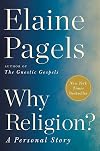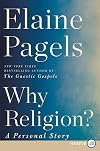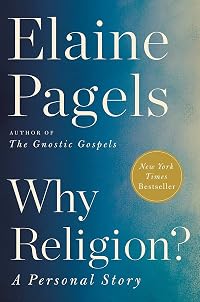
Why Religion?: A Personal Story
by Elaine Pagels
On This Page
Description
New York Times bestseller One of PW's Best Books of the Year One of Amazon's Best Books of the Month Why is religion still around in the twenty-first century? Why do so many still believe? And how do various traditions still shape the way people experience everything from sexuality to politics, whether they are religious or not? In Why Religion? Elaine Pagels looks to her own life to help address these questions. These questions took on a new urgency for Pagels when dealing with unimaginable show more loss--the death of her young son, followed a year later by the shocking loss of her husband. Here she interweaves a personal story with the work that she loves, illuminating how, for better and worse, religious traditions have shaped how we understand ourselves; how we relate to one another; and, most importantly, how to get through the most difficult challenges we face. Drawing upon the perspectives of neurologists, anthropologists, and historians, as well as her own research, Pagels opens unexpected ways of understanding persistent religious aspects of our culture. A provocative and deeply moving account from one of the most compelling religious thinkers at work today, Why Religion? explores the spiritual dimension of human experience. show lessTags
Recommendations





Member Reviews
It would be easy to get lost in theology, doctrine, and dogmas. But to do so, I believe, would mean missing an incredibly painful and poignant account of a mother and wife coping with nearly unfathomable loss. Pagels five-year-old son died of a rare condition, and a year later her husband died from a fall on a climbing outing. Ms. Pagels offers little in the way of answers, but a great deal in the tremendously honest and frantic grasping of a wounded soul. It is in that frightening struggle that strength, love, and hope are found.
I was familiar with the work of Elaine Pagels, and particularly knew her as the writer of The Gnostic Gospels. Since the publication of that book, she has been one of our foremost writers of religion. I was surprised, then, to learn that she had lost a son, who was born with a heart condition and died at age 6, and her husband, just a year later due to a hiking accident. This book attempts to make sense of it all. Much of the book is her story and personal spiritual exploration, with the deaths as a framework for the rest of her thinking. She looks at that fundamental question (Why?) square on. In the end, she makes peace with these events in her life, realizing that all of us experience suffering, and that bad things happen not because show more of personal failure, but just because they do. Religion helps with the suffering, as does science. A very brave book. show less
I have pretty much loved everything I have read by Elaine Pagels (and I think I've read most everything she has written), so what a joy to read this memoir where those works are set in the context of her own life. I have always loved her ability to make scholarship accessible, and this book gives such a beautiful, wrenching, unpretentious, honest portrayal of why and how it matters to her (and her readers).
In 1945, two years after Elaine Pagels was born in northern California, an Arab farmer on the other side of the world made a stunning discovery. In a cave near the village of Nag Hammadi in Egypt, he found a six-foot-long jar containing 52 secret texts. They were gospels in Coptic Egyptian, which presented mystical sayings, beliefs, and ideas of Jesus that were quite different from those found in the New Testament. Deemed heretical at the time of their transcription, the scripts were apparently buried by defiant monks, who’d been ordered by religious authorities to destroy them. About a millennium and a half later, Pagels, now a Harvard-trained religious scholar, would be part of a team who translated those texts. In 1989, she wrote a show more best-selling non-academic book which explores them. One reviewer, referring to Pagels, observed that women were “easily seduced by heresy”. Some readers sent personal letters damning Pagels to hell. Yes, preoccupation with textual purity and heresy remains alive and well in the modern age.
Early in Why Religion? Pagels explains that over the course of her career she has been regularly asked about the role of religion in her own life. Is she, for example, a believer? Or is her interest in religion purely academic? Why Religion? is a focused memoir which seeks to explain how and why Pagels was attracted to the discipline of religious studies, a very unconventional calling for a young woman coming of age in the 1960s (and one in which she encountered a fair bit of male chauvinism). She also addresses some of the ways in which religion and a sort of mysticism have given shape and meaning to a life marked by significant tragedy.
Pagels’s family of origin was repressive and not at all religious. Her mother, who was uncomfortable with both physical closeness and emotional displays, did sometimes take Elaine and her brother to the local Methodist church for Sunday school, but the children’s attendance was not a significant part of their lives. Pagels’s father, a research biologist, had traded his Calvinist upbringing for Darwinism. Passionately anti-religious, he was also given to unpredictable fits of rage, and his daughter learned early and then adhered to a code of silence. Being quiet was the only way to be safe. It is perhaps no wonder, then, that when she was 15, she was attracted to evangelical Christianity. Some high school friends were attending a Billy Graham “crusade” at a Palo Alto stadium. Pagels went along with them. Swept up in the emotional intensity of the experience, she found herself walking towards the alter, moved by Graham’s words to surrender herself to Jesus. She believed that if she were “born again”, she could break out of her family and “enter into the family of a heavenly father . . . [who] loved her unconditionally.”
Pagels’s parents were horrified. “Their reaction,” she writes, “secretly pleased me, confirming that I’d struck out to find a different world.” Hers was an atypical teenage rebellion; for several years during adolescence she attended an evangelical church once or twice weekly. However, when Paul, a young Jewish artist friend (from a different crowd) died tragically in a car crash, church members harshly pronounced that since he had been a Jew, he could only have gone to hell. Pagels was shocked. The exclusiveness and superiority of the group was exposed, and she broke permanently with evangelicalism. Her friend’s sudden death had left her not only grieving, but questioning, too: Where do the dead go, and how do we go on living when death is ever present and inevitable?
Around the same time, Pagels participated in a UCLA seminar on the sociology of mental illness, which also played a role in her decision to pursue religious studies. The course required students to make regular visits to Camarillo, a state psychiatric hospital. There she met a young Mormon who’d had a mental health crisis after he’d begun reading texts along the lines of The Origin of Species. These had filled him with “bad thoughts” that made him question the religion he’d been raised in. Pagels’s interest in the religious impulse and the early days of Christianity was further stimulated. She was particularly curious about the persistence of religion in an age of science.
In her memoir, Pagels considers major events in her own life through the lens of religion. One point that she hammers home is that the old stories, the myths of the Old and New Testaments, do not have to be accepted as the truth to exert an influence on even a fairly liberal person’s beliefs and behaviour. The stories of the Bible are repositories of the cultural codes of a nomadic sheep and goat-herding people, and we may not be aware of the degree to which they still govern modern attitudes. For instance, biblical texts reflect a culture that valued fertility and therefore condemned sexual activity of a non-procreative kind. Such views have echoed across the millennia and still impact modern attitudes to homosexuality.
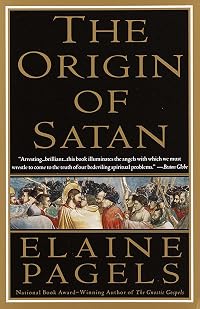
A discussion of the rage that is part of intense grief leads to a stimulating and fairly accessible discussion of the figure of Satan, who was invented, Pagels says, to deflect blame (about the injustices of life) from God. (The Ancient Greeks, she explains, had no need for Satan, since their prophets never claimed that the gods were unequivocally good. Buddhists, too, don’t wrestle much with “the problem of evil” for different reasons: for them, the most basic premise is that all life is suffering.) Biblical storytellers, however, chose not to blame God for disasters, but a member of his heavenly court instead: “a malicious trickster who throws obstacles into one’s path . . . to lure his targets toward danger and death.” He is a kind of psycho-religious construct, an “invisible antagonist” envisioned for millennia by people “bushwack[ing their way] through rough emotional terrain”. Pagels tells about one of her own powerful dreams featuring Satan—whom she doesn’t believe in—which she had the anxiety-ridden night before her son’s open-heart surgery.
Quite bravely for an academic, Pagels writes about the many spiritual experiences she has had during her lifetime. For many years Pagels and her first husband, Heinz, struggled with infertility. When she finally did have a son, Mark, quite late in life, the boy’s time would be cut short by untreatable congenital heart disease. Shortly after Mark’s death at the age of six and the adoption of two young children, Heinz, too, would die. Most of the mystical episodes Pagels recounts are related to her tragic personal losses. Before the deaths of her son and her husband, she had taken for granted that death was the end; her experiences challenged that assumption.
Pagels also touches on a number of other unusual experiences—including a controlled LSD “trip”, being the focus of a fertility ritual, and attending an Alcoholics Anonymous meeting where she recognized that willpower alone could not release her from alcohol’s anesthetic powers. Through the events of her own life she shows how religion meets the imaginative needs of humans, serves the significant irrationality within, and receives, contains, channels, and sometimes inflames some of our most intense emotions.
Pagels’s memoir took seven years to write. That doesn’t surprise me. For the most part, it is a rich, stimulating, and thoughtful work, simultaneously personal and scholarly. Unfortunately, in the last chapter, the personal is almost entirely abandoned for the academic. Pagels provides an analysis of The Book of Revelation and looks at the ways it has been used fairly recently in the War on Terror. Some of the epistles of Paul the Apostle and a few of the secret texts found at Nag Hammadi are also examined. The discussion might have been meaningful to me if I had some background knowledge of the material. I don’t, so it was pretty hard-going. I didn’t enjoy reading it, and I felt that Pagels was no longer telling the personal story promised in the subtitle of her memoir. I thought this was an unfortunate way to end a book that had otherwise melded the personal and the scholarly quite well.
Rating: 3.5 show less
Early in Why Religion? Pagels explains that over the course of her career she has been regularly asked about the role of religion in her own life. Is she, for example, a believer? Or is her interest in religion purely academic? Why Religion? is a focused memoir which seeks to explain how and why Pagels was attracted to the discipline of religious studies, a very unconventional calling for a young woman coming of age in the 1960s (and one in which she encountered a fair bit of male chauvinism). She also addresses some of the ways in which religion and a sort of mysticism have given shape and meaning to a life marked by significant tragedy.
Pagels’s family of origin was repressive and not at all religious. Her mother, who was uncomfortable with both physical closeness and emotional displays, did sometimes take Elaine and her brother to the local Methodist church for Sunday school, but the children’s attendance was not a significant part of their lives. Pagels’s father, a research biologist, had traded his Calvinist upbringing for Darwinism. Passionately anti-religious, he was also given to unpredictable fits of rage, and his daughter learned early and then adhered to a code of silence. Being quiet was the only way to be safe. It is perhaps no wonder, then, that when she was 15, she was attracted to evangelical Christianity. Some high school friends were attending a Billy Graham “crusade” at a Palo Alto stadium. Pagels went along with them. Swept up in the emotional intensity of the experience, she found herself walking towards the alter, moved by Graham’s words to surrender herself to Jesus. She believed that if she were “born again”, she could break out of her family and “enter into the family of a heavenly father . . . [who] loved her unconditionally.”
Pagels’s parents were horrified. “Their reaction,” she writes, “secretly pleased me, confirming that I’d struck out to find a different world.” Hers was an atypical teenage rebellion; for several years during adolescence she attended an evangelical church once or twice weekly. However, when Paul, a young Jewish artist friend (from a different crowd) died tragically in a car crash, church members harshly pronounced that since he had been a Jew, he could only have gone to hell. Pagels was shocked. The exclusiveness and superiority of the group was exposed, and she broke permanently with evangelicalism. Her friend’s sudden death had left her not only grieving, but questioning, too: Where do the dead go, and how do we go on living when death is ever present and inevitable?
Around the same time, Pagels participated in a UCLA seminar on the sociology of mental illness, which also played a role in her decision to pursue religious studies. The course required students to make regular visits to Camarillo, a state psychiatric hospital. There she met a young Mormon who’d had a mental health crisis after he’d begun reading texts along the lines of The Origin of Species. These had filled him with “bad thoughts” that made him question the religion he’d been raised in. Pagels’s interest in the religious impulse and the early days of Christianity was further stimulated. She was particularly curious about the persistence of religion in an age of science.
In her memoir, Pagels considers major events in her own life through the lens of religion. One point that she hammers home is that the old stories, the myths of the Old and New Testaments, do not have to be accepted as the truth to exert an influence on even a fairly liberal person’s beliefs and behaviour. The stories of the Bible are repositories of the cultural codes of a nomadic sheep and goat-herding people, and we may not be aware of the degree to which they still govern modern attitudes. For instance, biblical texts reflect a culture that valued fertility and therefore condemned sexual activity of a non-procreative kind. Such views have echoed across the millennia and still impact modern attitudes to homosexuality.
A discussion of the rage that is part of intense grief leads to a stimulating and fairly accessible discussion of the figure of Satan, who was invented, Pagels says, to deflect blame (about the injustices of life) from God. (The Ancient Greeks, she explains, had no need for Satan, since their prophets never claimed that the gods were unequivocally good. Buddhists, too, don’t wrestle much with “the problem of evil” for different reasons: for them, the most basic premise is that all life is suffering.) Biblical storytellers, however, chose not to blame God for disasters, but a member of his heavenly court instead: “a malicious trickster who throws obstacles into one’s path . . . to lure his targets toward danger and death.” He is a kind of psycho-religious construct, an “invisible antagonist” envisioned for millennia by people “bushwack[ing their way] through rough emotional terrain”. Pagels tells about one of her own powerful dreams featuring Satan—whom she doesn’t believe in—which she had the anxiety-ridden night before her son’s open-heart surgery.
Quite bravely for an academic, Pagels writes about the many spiritual experiences she has had during her lifetime. For many years Pagels and her first husband, Heinz, struggled with infertility. When she finally did have a son, Mark, quite late in life, the boy’s time would be cut short by untreatable congenital heart disease. Shortly after Mark’s death at the age of six and the adoption of two young children, Heinz, too, would die. Most of the mystical episodes Pagels recounts are related to her tragic personal losses. Before the deaths of her son and her husband, she had taken for granted that death was the end; her experiences challenged that assumption.
Pagels also touches on a number of other unusual experiences—including a controlled LSD “trip”, being the focus of a fertility ritual, and attending an Alcoholics Anonymous meeting where she recognized that willpower alone could not release her from alcohol’s anesthetic powers. Through the events of her own life she shows how religion meets the imaginative needs of humans, serves the significant irrationality within, and receives, contains, channels, and sometimes inflames some of our most intense emotions.
Pagels’s memoir took seven years to write. That doesn’t surprise me. For the most part, it is a rich, stimulating, and thoughtful work, simultaneously personal and scholarly. Unfortunately, in the last chapter, the personal is almost entirely abandoned for the academic. Pagels provides an analysis of The Book of Revelation and looks at the ways it has been used fairly recently in the War on Terror. Some of the epistles of Paul the Apostle and a few of the secret texts found at Nag Hammadi are also examined. The discussion might have been meaningful to me if I had some background knowledge of the material. I don’t, so it was pretty hard-going. I didn’t enjoy reading it, and I felt that Pagels was no longer telling the personal story promised in the subtitle of her memoir. I thought this was an unfortunate way to end a book that had otherwise melded the personal and the scholarly quite well.
Rating: 3.5 show less
Elaine Pagels has occasionally been the center of controversies around the early beliefs of the faith community we call Christian, but this book explains how she got interested in early non-canonical Christian writings. For that alone it would be an excellent book but Pagels opens up about her own life and the consolations she finds in religion, consolation that is mixed with sorrow both because of the personal tragedies she experienced and because of the rigidity and cluelessness of some believers when she needed compassion. This is a brave book, and a moving one.
I've loved [a:Elaine Pagels|14417372|Elaine Pagels|https://images.gr-assets.com/authors/1442955411p2/14417372.jpg] since some brilliant college professor (whose name I've forgotten) assigned [b:The Gnostic Gospels: A Startling Account of the Meaning of Jesus and the Origin of Christianity Based on Gnostic Gospels and Other Secret Texts|13055294|The Gnostic Gospels A Startling Account of the Meaning of Jesus and the Origin of Christianity Based on Gnostic Gospels and Other Secret Texts|Elaine Pagels|https://s.gr-assets.com/assets/nophoto/book/50x75-a91bf249278a81aabab721ef782c4a74.png|1167079] to my class. I was pretty atheist -- no, like radically anti-religion -- but examining these lost and heretical texts gave me new insight into why show more religion matters and why people fight over the interpretation of religious texts. Pagels has the rare gift of being able to place her scholarship in a personal frame and make really complex and nuanced thought accessible to a non-specialist audience. My one caveat is that she did live a life of incredible privilege and that is never really acknowledged. Mentally, I was tallying up the Manhattan apartment, the flights, the private schools and wondering how on earth even a dual-income couple could afford it all. But overall, a deep dive into a number of fascinating issues around the Bible, religion, and how this can inform a life of achievement, accomplishment, and no little tragedy. show less
In het memoir Waarom religie blijft (vertaald uit het Engelse origineel Why religion?) maakt de religiewetenschapper Elaine Pagels het heel persoonlijk, maar waarschijnlijk anders dan je verwacht. Redenen genoeg in haar jeugd en familie om überhaupt niets van religie of een keuze om christen te worden, werden gevolgd door persoonlijke tragedies, voor menigeen genoeg om het geloof vaarwel te zeggen. De moeite om kinderen te krijgen, een zeldzame longziekte van zoon Mark en een het fatale ongeluk op een bergwandeltocht van haar echtgenoot Heinz Pagel, brachten Elaine in diepe crises, terwijl de buitenwacht haar kent van haar bestseller De gnostische evangeliën (1979) en haar vervolgonderzoek.
In het memoir, waaraan ze zeven jaar schreef, show more pleit ze voor een persoonlijke zoektocht, binnen èn buiten de kaders van georganiseerde religie. Vooral de in 1947 gevonden geschriften in Nag Hammadi werpen een ander licht op de interpretatie van haar ervaringen. En passant krijgt de lezer de belangrijkste inzichten uit haar eerdere boeken, Beyond Belief (over het Evangelie van Thomas), Ketters en rechtgelovigen (over de kerkvaders die hun kudde voor onorthodoxe inzichten wilden behoeden), The Origin of Satan (de Nieuwtestamentische en latere inlegging van de strijd tussen goed en kwaad in Oudtestamentische verhalen), The Gnostic Paul (Paulus die in zijn brieven zinspeelt op mysteriën zonder ze zelf uit te leggen) en Het vreemdste bijbelboek (over Openbaringen).
Genezing van het hart vindt Pagels bij Jezus Christus met wie ze door de jaren heen een moeizame relatie had. Het zal naast het persoonlijk leed ook de worsteling van de wetenschapper zijn die op alle populaire en gangbare opvattingen van mainstream Christianity ook de uitzonderingen, alternatieven en inconsistenties in de geschriften en opvattingen van evangelisten, apostelen en kerkvaders kent. Ze komt tot de conclusie dat het lijden geen straf, maar een openbaring hoe mensen met elkaar verbonden zijn. In het lijden vinden we God en elkaar, worden we opgenomen in Zijn familie, mogen we verhalen delen met levensechte consequenties. show less
In het memoir, waaraan ze zeven jaar schreef, show more pleit ze voor een persoonlijke zoektocht, binnen èn buiten de kaders van georganiseerde religie. Vooral de in 1947 gevonden geschriften in Nag Hammadi werpen een ander licht op de interpretatie van haar ervaringen. En passant krijgt de lezer de belangrijkste inzichten uit haar eerdere boeken, Beyond Belief (over het Evangelie van Thomas), Ketters en rechtgelovigen (over de kerkvaders die hun kudde voor onorthodoxe inzichten wilden behoeden), The Origin of Satan (de Nieuwtestamentische en latere inlegging van de strijd tussen goed en kwaad in Oudtestamentische verhalen), The Gnostic Paul (Paulus die in zijn brieven zinspeelt op mysteriën zonder ze zelf uit te leggen) en Het vreemdste bijbelboek (over Openbaringen).
Genezing van het hart vindt Pagels bij Jezus Christus met wie ze door de jaren heen een moeizame relatie had. Het zal naast het persoonlijk leed ook de worsteling van de wetenschapper zijn die op alle populaire en gangbare opvattingen van mainstream Christianity ook de uitzonderingen, alternatieven en inconsistenties in de geschriften en opvattingen van evangelisten, apostelen en kerkvaders kent. Ze komt tot de conclusie dat het lijden geen straf, maar een openbaring hoe mensen met elkaar verbonden zijn. In het lijden vinden we God en elkaar, worden we opgenomen in Zijn familie, mogen we verhalen delen met levensechte consequenties. show less
Members
- Recently Added By
Lists

Books Read in 2020
4,379 works; 124 members
Author Information

32+ Works 15,530 Members
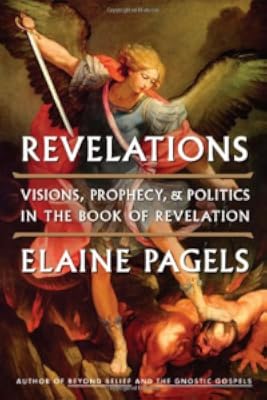
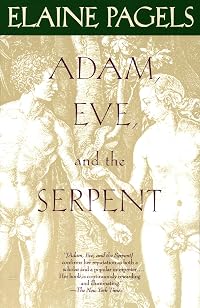
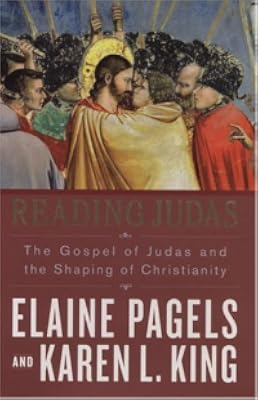
Elaine Pagels is the Harrington Spear Paine Professor of Religion at Princeton University. She is the recipient of a MacArthur Fellowship best known for her studies and writing on the Gnostic Gospels. Pagels graduated from Stanford University receiving a B.A. in 1964 and an M.A. in 1965. She received a Ph.D in religion from Harvard University in show more 1970. She is the author of The Gnostic Gospels (1979), which won the National Book Award (Religion 1980) and the National Book Critics Circle Award (Criticism 1979). Pagels is also the author of Adam, Eve and the Serpent (1988), The Origin of Satan (1995), Beyond Belief: The Secret Gospel of Thomas (2003), Reading Judas: The Gospel of Judas and the Shaping of Christianity (2007), and Revelations: Visions, Prophecy, and Politics in the Book of Revelation (2012). (Bowker Author Biography) show less
Some Editions
Common Knowledge
- Original publication date
- 2018
- People/Characters
- Elaine Pagels
- Dedication
- To Sarah and David
with love - First words
- "And what do you do?" asked a man at the crowded reception at the New York Academy of Sciences, where my husband, Heinz, a theoretical physicist, was director.
- Last words
- (Click to show. Warning: May contain spoilers.)However it happens, sometimes hearts do heal, through what I can only call grace.
- Publisher's editor
- Jason Epstein; Denise Oswald
Classifications
- Genres
- Religion & Spirituality, Biography & Memoir, Nonfiction, General Nonfiction
- DDC/MDS
- 270.092 — Religion History of Christianity History, geographic treatment, biography of Christianity History of Christianity Biography And History Biography
- LCC
- BL43 .P34 .A3 — Philosophy, Psychology and Religion Religions. Mythology. Rationalism Religions. Mythology. Rationalism Religion (General)
- BISAC
Statistics
- Members
- 438
- Popularity
- 70,043
- Reviews
- 18
- Rating
- (4.12)
- Languages
- English
- Media
- Paper, Audiobook, Ebook
- ISBNs
- 13
- ASINs
- 2