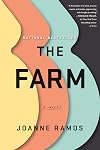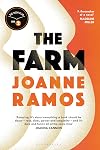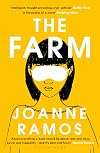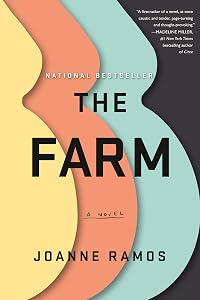
The Farm
by Joanne Ramos
On This Page
Description
NATIONAL BESTSELLER • Life is a lucrative business, as long as you play by the rules.Skimm Reads Pick • People Book of the Week • Belletrist Book Pick • “[Joanne] Ramos’s debut novel couldn’t be more relevant or timely.”—O: The Oprah Magazine
NAMED ONE OF THE BEST BOOKS OF THE YEAR BY Time • Glamour • Real Simple • Good Housekeeping • Marie Claire • Town & Country
Nestled in New York’s Hudson Valley is a luxury retreat boasting every amenity: organic meals, show more personal fitness trainers, daily massages—and all of it for free. In fact, you’re paid big money to stay here—more than you’ve ever dreamed of. The catch? For nine months, you cannot leave the grounds, your movements are monitored, and you are cut off from your former life while you dedicate yourself to the task of producing the perfect baby. For someone else.
Jane, an immigrant from the Philippines, is in desperate search of a better future when she commits to being a “Host” at Golden Oaks—or the Farm, as residents call it. But now pregnant, fragile, consumed with worry for her family, Jane is determined to reconnect with her life outside. Yet she cannot leave the Farm or she will lose the life-changing fee she’ll receive on the delivery of her child.
Gripping, provocative, heartbreaking, The Farm pushes to the extremes our thinking on motherhood, money, and merit and raises crucial questions about the trade-offs women will make to fortify their futures and the futures of those they love.
NOMINATED FOR THE NAACP IMAGE AWARD • LONGLISTED FOR THE CENTER FOR FICTION FIRST NOVEL PRIZE
“So many factors—gender, race, religion, class—may determine where you come down on the surrogacy debate. . . . Ramos plays with many of these notions in her debut novel, The Farm, which imagines what might happen were surrogacy taken to its high-capitalist extreme. . . . The stage is set for lively book chat.”—The New York Times Book Review (Editors’ Choice)
“A thrilling read.”—New York
“Grippingly realistic.”—Entertainment Weekly
“Brilliant.”—New York Post
“A provocative idea, and Ramos nails it . . . Crisp and believable, this smart debut links the poor and the 1 percent in a unique transaction that turns out to be mutually rewarding.”—People
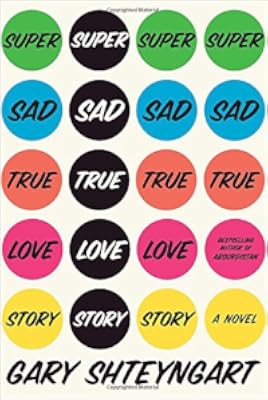
“Wow, Joanne Ramos has written the page-turner about immigrants chasing what’s left of the American dream. . . . Truly unforgettable.”—Gary Shteyngart, New York Times bestselling author of Super Sad True Love Story and Lake Success. show less
Tags
Recommendations






Member Reviews
Once it got going, it was really hard to put down, and I was hit at least a couple of times by the potential terrors of what might as well be everyday life. The way in which Ramos lets what I'll call evil play out as the stuff of a severely unequal world is even more excellent when combined with the fact that there's no easy ending here—and maybe no real justice, either. (As one character puts it, "Because nothing is going to change.") Also? A demonstration that practical attitudes often necessary for basic survival harbor quite a lot of complexities we'd rather not acknowledge.
The Baby Factory
A conglomerate establishes a farm around an hour or two north of New York City in the Hudson River Valley called Golden Oaks. Rather than a dairy operation, or an orchard, both of which can still be found in this part of New York, this farm turns out babies. These aren’t ordinary babies. They hatch from the fertilized eggs of some of the richest women and couples in the world. The majority of the women who carry and birth these babies are poor brown women. These women lead regimented, highly restricted lives while residents at Golden Oaks. Though treated well physically, they are often psychologically manipulated and threatened with monetary punishment if they break farm rules. A group of coordinators, nurses, show more dietitians, doctors, and administrators control every aspect of their lives while on the farm. The women make what seem like small fortunes to them, while the farm harvests millions in profits. It’s surrogacy for profit on an industrial scale.
If this strikes you as some near-future tale of dystopian America, of a natural human process commoditized by American capitalism run amok, a sort of The Handmaid’s Tale wherein women find themselves breeding stock at the hands of mammon worshipping men, and you can’t wait to get your hands on the book, wait. Wait, because this describes the backdrop of the book. Joanne Ramos’ novel is more about the plight of poor immigrant women trying to make it in modern America, the power of family, not just the nuclear variety, but the extended encompassing one of immigrant ethnic groups, in this case immigrant women. Whether you enjoy The Farm depends on what you are expecting. If it’s a dark dystopian novel, you might be disappointed. If, however, you are looking for a story filled with insight into another culture, a novel featuring women generally working together to protect themselves from the vicissitudes of the outside world, and at that a novel pretty much with only female characters, you’ll like The Farm.
The novel follows the life of Jane, a recent immigrant from the Philippines, and her older cousin Ate. They live in New York City, in a rundown apartment building in Queens, in which immigrants rent bunks in crowded rooms for $300 to $400 a month. These are the people who do the scut work in restaurants, retirement homes, where Jane works, who do all the things nobody else wants to, but stuff that needs doing to keep the city (and the country) functioning. Ate’s that rare breed of woman. She has learned a lot since landing in NYC years ago, especially about nannying and baby nursing and the needs and desires of the rich and upper middle class of the city. She imparts this knowledge to Jane, who struggles to support herself and her infant daughter Amalia. For a time Jane does well baby nursing, though always suffering mentally being separated from her daughter. When she acts on a grave error of judgment, she loses her baby nursing job. That’s when Ate hooks Jane up with Golden Oaks.
Jane joins a corps of women carrying babies for the rich and famous of the world, living in the restrictive panopticon (a word the author uses several times in the novel) of Golden Oaks. Here, readers meet the two other main characters of the novel, Reagan, a young educated woman from a well-off family dealing with issues, and Mae Yu, the ambitious administrator of Golden Oaks. As you might guess from a situation such as these women find themselves in, intrigue follows. This primarily stems from Jane’s desire to keep in touch with Amalia (residents live isolated from their loved ones for the duration of a pregnancy); Reagan’s search for purpose in her life and expression of her repressed rebellious self; and Mae’s thirst for recognition and advancement that leads her into making some ill-informed decisions with regard to Jane. Depending on who you are, you’ll find the machinations that follow either propulsive or a tad bit contrived. The saving grace here is the humanity of the women, even that of the calculating Mae, who this reader personally liked.
Take it to the beach and you won’t be disappointed. (P.S. Commercial surrogacy is illegal in New York State. In the U.S., surrogacy regulations vary by state, with many states having no regulations at all.) show less
A conglomerate establishes a farm around an hour or two north of New York City in the Hudson River Valley called Golden Oaks. Rather than a dairy operation, or an orchard, both of which can still be found in this part of New York, this farm turns out babies. These aren’t ordinary babies. They hatch from the fertilized eggs of some of the richest women and couples in the world. The majority of the women who carry and birth these babies are poor brown women. These women lead regimented, highly restricted lives while residents at Golden Oaks. Though treated well physically, they are often psychologically manipulated and threatened with monetary punishment if they break farm rules. A group of coordinators, nurses, show more dietitians, doctors, and administrators control every aspect of their lives while on the farm. The women make what seem like small fortunes to them, while the farm harvests millions in profits. It’s surrogacy for profit on an industrial scale.
If this strikes you as some near-future tale of dystopian America, of a natural human process commoditized by American capitalism run amok, a sort of The Handmaid’s Tale wherein women find themselves breeding stock at the hands of mammon worshipping men, and you can’t wait to get your hands on the book, wait. Wait, because this describes the backdrop of the book. Joanne Ramos’ novel is more about the plight of poor immigrant women trying to make it in modern America, the power of family, not just the nuclear variety, but the extended encompassing one of immigrant ethnic groups, in this case immigrant women. Whether you enjoy The Farm depends on what you are expecting. If it’s a dark dystopian novel, you might be disappointed. If, however, you are looking for a story filled with insight into another culture, a novel featuring women generally working together to protect themselves from the vicissitudes of the outside world, and at that a novel pretty much with only female characters, you’ll like The Farm.
The novel follows the life of Jane, a recent immigrant from the Philippines, and her older cousin Ate. They live in New York City, in a rundown apartment building in Queens, in which immigrants rent bunks in crowded rooms for $300 to $400 a month. These are the people who do the scut work in restaurants, retirement homes, where Jane works, who do all the things nobody else wants to, but stuff that needs doing to keep the city (and the country) functioning. Ate’s that rare breed of woman. She has learned a lot since landing in NYC years ago, especially about nannying and baby nursing and the needs and desires of the rich and upper middle class of the city. She imparts this knowledge to Jane, who struggles to support herself and her infant daughter Amalia. For a time Jane does well baby nursing, though always suffering mentally being separated from her daughter. When she acts on a grave error of judgment, she loses her baby nursing job. That’s when Ate hooks Jane up with Golden Oaks.
Jane joins a corps of women carrying babies for the rich and famous of the world, living in the restrictive panopticon (a word the author uses several times in the novel) of Golden Oaks. Here, readers meet the two other main characters of the novel, Reagan, a young educated woman from a well-off family dealing with issues, and Mae Yu, the ambitious administrator of Golden Oaks. As you might guess from a situation such as these women find themselves in, intrigue follows. This primarily stems from Jane’s desire to keep in touch with Amalia (residents live isolated from their loved ones for the duration of a pregnancy); Reagan’s search for purpose in her life and expression of her repressed rebellious self; and Mae’s thirst for recognition and advancement that leads her into making some ill-informed decisions with regard to Jane. Depending on who you are, you’ll find the machinations that follow either propulsive or a tad bit contrived. The saving grace here is the humanity of the women, even that of the calculating Mae, who this reader personally liked.
Take it to the beach and you won’t be disappointed. (P.S. Commercial surrogacy is illegal in New York State. In the U.S., surrogacy regulations vary by state, with many states having no regulations at all.) show less
I've classified this as sci-fi because it is dystopian-ish. But honestly how dystopian is it, really? It would not surprise me one bit if such a place as The Farm existed right now.
This novel explores reproduction and surrogacy, immigration (largely illegal), institutionalized racism, class divisions, and corporate control. And honestly, is The Farm itself really any different than contracted surrogacy as we know it?
What is The Farm? A corporate surrogacy center. A place that screens potential surrogates ("hosts") and matches them to parents ("clients")--parents who are very very wealthy and may or may not have fertility issues. They live out their pregnancies at the facility, with their every move tracked as their pregnancies show more progress, they are fed and monitored and have limited access to friends and family. Clients pay a premium for healthy surrogates who are carefully monitored, who exercise as prescribed, have an ideal diet, live in a safe and clean facility, have limited stressors, and who encourage the babies' brain development as prescribed. Most of the hosts are immigrants--from The Phillipines, Latin America, Poland. The clients are all very rich and come from around the world.
Jane Reyes is a Filipina who has landed here after losing a couple of other jobs. She is in this solely for the money (especially the large delivery bonus)--as a young single mother of a baby, with no support from her (ex?) husband, she is struggling. Her elderly cousin Ate agrees to watch the baby while Jane lives at The Farm. But being away from her daughter is harder than Jane expects. She was not really expecting the social aspects, the politics, the control, and the luxury unlike anything she has ever known. Mostly though, she misses her daughter.
I found this setting and the ideas interesting, though I would have preferred it to skew more dystopian, or to have explored the dystopian ideas within. I found the ending disappointing and didn't think it fit with the rest of the book. And what happened to the videos? Troy's plan? Negative publicity? All of these minor storylines--with a lot of potential--went nowhere. show less
This novel explores reproduction and surrogacy, immigration (largely illegal), institutionalized racism, class divisions, and corporate control. And honestly, is The Farm itself really any different than contracted surrogacy as we know it?
What is The Farm? A corporate surrogacy center. A place that screens potential surrogates ("hosts") and matches them to parents ("clients")--parents who are very very wealthy and may or may not have fertility issues. They live out their pregnancies at the facility, with their every move tracked as their pregnancies show more progress, they are fed and monitored and have limited access to friends and family. Clients pay a premium for healthy surrogates who are carefully monitored, who exercise as prescribed, have an ideal diet, live in a safe and clean facility, have limited stressors, and who encourage the babies' brain development as prescribed. Most of the hosts are immigrants--from The Phillipines, Latin America, Poland. The clients are all very rich and come from around the world.
Jane Reyes is a Filipina who has landed here after losing a couple of other jobs. She is in this solely for the money (especially the large delivery bonus)--as a young single mother of a baby, with no support from her (ex?) husband, she is struggling. Her elderly cousin Ate agrees to watch the baby while Jane lives at The Farm. But being away from her daughter is harder than Jane expects. She was not really expecting the social aspects, the politics, the control, and the luxury unlike anything she has ever known. Mostly though, she misses her daughter.
I found this setting and the ideas interesting, though I would have preferred it to skew more dystopian, or to have explored the dystopian ideas within. I found the ending disappointing and didn't think it fit with the rest of the book. And what happened to the videos? Troy's plan? Negative publicity? All of these minor storylines--with a lot of potential--went nowhere. show less
This is a well-written, intense story about a corporate enterprise called Golden Oaks that enlists ‘Host’ surrogates to carry and deliver infants for rich ‘Clients’. Many of the surrogates are young women of color with financial struggles and few options to get ahead. They are discovered/groomed by ‘Scouts’ who are recruiters used by the Golden Oaks management. The substantial financial compensation provided by Golden Oaks seems to blind the young women to the fine print in their contracts. The reality of the surveillance and physical/psychological control mechanisms of the place are just plain frightening to read about.
I went into this book thinking it would be a futuristic dystopian novel but then discovered that this show more story could be happening right now. Both the technology and the profit-driven scenarios are all too plausible and this made it all the more unnerving and chilling. The character studies of the young women, their family members, and the ambitious corporate woman running the Golden Oaks program are all very well done. There are many important themes in this novel – the lives and employment of immigrant women, the intensity and implicit sacrifices connected to a mother’s love for her children, the moral complexities of surrogacy, and especially the impact of class and racial divides in the US. show less
I went into this book thinking it would be a futuristic dystopian novel but then discovered that this show more story could be happening right now. Both the technology and the profit-driven scenarios are all too plausible and this made it all the more unnerving and chilling. The character studies of the young women, their family members, and the ambitious corporate woman running the Golden Oaks program are all very well done. There are many important themes in this novel – the lives and employment of immigrant women, the intensity and implicit sacrifices connected to a mother’s love for her children, the moral complexities of surrogacy, and especially the impact of class and racial divides in the US. show less
I have frequently seen The Farm referred to as a dystopian novel, but I’m not sure that’s entirely accurate. It feels both horrific in many ways, and also extraordinarily close to reality. The titular Farm is Golden Oaks surrogacy centre, where rich women who maybe can’t have children, but often just don’t want pregnancy to ruin their figure (or they somehow feel they don’t have the time to be pregnant) pay vast sums of money for other women – typically women from a poor background – to carry their child. The Farm monitors it’s hosts every move – by video feed, ‘wellbands’ – basically a GPS tracker, and checking of their post and emails. Personal phones and computers are confiscated, and any transgression of the show more Farm’s strict rules result in a financial penalty, whereby the hosts lose part of their payment.
Jane is a Filipino woman, short of money and in need of a job to support herself and her baby daughter, and the Farm seems a good way to do that. But being apart from her child while carrying the child of an anonymous client takes its toll.
The books raises questions surrounding race, class and exploitation, and while I found it an absorbing and interesting read, it made me very angry at times. That’s probably the point. I liked Jane and her friend Reagan, who features heavily in the book, while I was not so keen on Jane’s aunt Evelyn, or Mae Yu, who ran the Farm for an extortionate salary. But despite the moral ambiguity of Evelyn and Mae, they were represented as believable and nuanced characters, as indeed were most of the others in the story.
So no, I would not necessarily class this is as a dystopian novel, but if you do like books in that genre, I would recommend it. Either way, it was certainly a thought provoking and emotive read. show less
Jane is a Filipino woman, short of money and in need of a job to support herself and her baby daughter, and the Farm seems a good way to do that. But being apart from her child while carrying the child of an anonymous client takes its toll.
The books raises questions surrounding race, class and exploitation, and while I found it an absorbing and interesting read, it made me very angry at times. That’s probably the point. I liked Jane and her friend Reagan, who features heavily in the book, while I was not so keen on Jane’s aunt Evelyn, or Mae Yu, who ran the Farm for an extortionate salary. But despite the moral ambiguity of Evelyn and Mae, they were represented as believable and nuanced characters, as indeed were most of the others in the story.
So no, I would not necessarily class this is as a dystopian novel, but if you do like books in that genre, I would recommend it. Either way, it was certainly a thought provoking and emotive read. show less
The Farm offers a much needed window to observe those working for “the American dream,“ their hard choices, and the true costs.
A page-turner, but not necessarily a "thriller," that sneaks up on you with its tension and heart and hope in the face of terrible circumstances. I finished 4 days ago and I am still thinking about it. The commodification of women's bodies is not new, but Ramos presents this story with multiple POVs, the most powerful of which is working class immigrant mothers.
Please note: I've seen this shelved / tagged as dystopia -- I wholeheartedly disagree. Dystopia is defined as an "imagined" future. Check out https://www.growinggenerations.com/ where surrogates earn $58,500. Much of this book's science is current (to show more the best of my knowledge obviously). And everything these women, including and especially the immigrant mothers, experience is present day, happening every day, right now. It is not some imaginary future that might happen -- it is now, folks. show less
A page-turner, but not necessarily a "thriller," that sneaks up on you with its tension and heart and hope in the face of terrible circumstances. I finished 4 days ago and I am still thinking about it. The commodification of women's bodies is not new, but Ramos presents this story with multiple POVs, the most powerful of which is working class immigrant mothers.
Please note: I've seen this shelved / tagged as dystopia -- I wholeheartedly disagree. Dystopia is defined as an "imagined" future. Check out https://www.growinggenerations.com/ where surrogates earn $58,500. Much of this book's science is current (to show more the best of my knowledge obviously). And everything these women, including and especially the immigrant mothers, experience is present day, happening every day, right now. It is not some imaginary future that might happen -- it is now, folks. show less
Well, this one didn’t pan out as I expected. And I’m not sure how I feel about it.
So based on the description and hype around this book, I was expecting another dystopian story in the style of the “Handmaid’s Tale”. The more and more I read, the more it came to me that whoever is in charge of publicity for this book and I, have clearly read two different stories. I have a feeling I won’t be the only disappointed reader.
Not that I didn’t enjoy the story that is really there, though. The author does a great job in depicting life for Filipino immigrants, surrogates, and the stark disparity between the 1 percenters and the poor. There are certain situations that seem purely fictional in their outlandishness, but you as show more the reader just have a sinking suspicion that they are actually factual.
This novel could have been a great book. But when compared to others like it, it will remain unforgettable for me. The entire book hints at some underlying evil at “the farm” and yet nothing ever happens on that front. Several main characters that had entire chapters from their point of view are relegated to an aside in the epilogue, or never mentioned again.
I was also surprised by the epilogue but not in a good way. There is a time jump involved that involves happy endings for some of the main characters, and it came across as too forced for me, and I felt like it either should have been left out completely or written differently. show less
So based on the description and hype around this book, I was expecting another dystopian story in the style of the “Handmaid’s Tale”. The more and more I read, the more it came to me that whoever is in charge of publicity for this book and I, have clearly read two different stories. I have a feeling I won’t be the only disappointed reader.
Not that I didn’t enjoy the story that is really there, though. The author does a great job in depicting life for Filipino immigrants, surrogates, and the stark disparity between the 1 percenters and the poor. There are certain situations that seem purely fictional in their outlandishness, but you as show more the reader just have a sinking suspicion that they are actually factual.
This novel could have been a great book. But when compared to others like it, it will remain unforgettable for me. The entire book hints at some underlying evil at “the farm” and yet nothing ever happens on that front. Several main characters that had entire chapters from their point of view are relegated to an aside in the epilogue, or never mentioned again.
I was also surprised by the epilogue but not in a good way. There is a time jump involved that involves happy endings for some of the main characters, and it came across as too forced for me, and I felt like it either should have been left out completely or written differently. show less
Members
- Recently Added By
Lists

Favorite Science Fiction by Women Authors
737 works; 202 members

Best Feminist Literature
188 works; 26 members

Dystopian and Apocalyptic Literature
350 works; 74 members

Kirkus Starred Fiction Reviews of Books Published in 2019
411 works; 12 members

Books Read in 2020
4,379 works; 124 members

First Novels
373 works; 17 members

Titoli bestiali
67 works; 1 member

KayStJ's to-read list
1,616 works; 11 members

2022 To Read List
11 works; 2 members
Author Information

2 Works 923 Members
Some Editions
Awards and Honors
Awards
Distinctions
Notable Lists
Common Knowledge
- Canonical title
- The Farm
- Original title
- The Farm: A Novel
- Original publication date
- 2019-05-07
- People/Characters
- Jane Reyes; Amalia "Mali" Reyes; Evelyn "Ate" Arroyo; Angel Calapatia; Billy; Cherry (show all 22); Ted Carter; Cate Carter; Mae Yu; Ethan Yu; Eve; Lisa Raines; Leon; Dr. Meredith Wilde; Anya; Segundina; Callie; Troy; Jimmy Arroyo; Miguel Arroyo; Madame Deng; Victor Yu
- Important places
- New York, New York, USA; Elmhurst, Queens, New York, New York, USA; Bulacan, Philippines; Golden Oaks, Hudson Valley, New York, USA
- Dedication
- For my mother, Elvira Abad Ramos
- First words
- The emergency room is an assault.
- Quotations
- Because in America you only have to know how to make money. Money buys everything else.
"There's no bigger nightmare for a mother than not being able to protect her child..." - Last words
- (Click to show. Warning: May contain spoilers.)"The hardest!" cries Amalia. "The highest!"
- Blurbers
- Miller, Madeline; Shteyngart, Gary; Mackintosh, Sophie; Walker, Karen Thompson; Dalcher, Christina
- Original language
- English, US
- Canonical DDC/MDS
- 813.6
- Canonical LCC
- PS3618.A4754
Classifications
Statistics
- Members
- 919
- Popularity
- 29,130
- Reviews
- 66
- Rating
- (3.53)
- Languages
- 5 — English, Italian, Polish, Slovenian, Spanish
- Media
- Paper, Audiobook, Ebook
- ISBNs
- 30
- ASINs
- 4