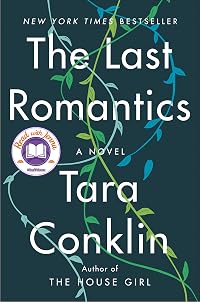
The Last Romantics
by Tara Conklin
On This Page
Description
From the New York Times–bestselling author of The House Girl comes a novel about our most precious and dangerous attachment: family.In the spring of 1981, the young Skinner siblings—fierce Renee, dreamy Caroline, golden boy Joe and watchful Fiona—lose their father to a heart attack and their mother to a paralyzing depression, events that thrust them into a period they will later call "the Pause." Caught between the predictable life they once led and an uncertain future that stretches show more before them, the siblings navigate the dangers and resentments of the Pause to emerge fiercely loyal and deeply connected. Two decades later, the Skinners find themselves again confronted with a family crisis that tests the strength of these bonds and forces them to question the life choices they've made and what, exactly, they will do for love.
Narrated nearly a century later by the youngest sibling, the renowned poet Fiona Skinner, The Last Romantics spans a lifetime. It's a story of sex and affection, sacrifice and selfishness, deeply held principles and dashed expectations, a lost engagement ring, a squandered baseball scholarship, unsupervised summers at the neighbourhood pond and an iconic book of love poems. But most of all it is the story of Renee, Caroline, Joe and Fiona: the ways they support each other, the ways they betray each other and the ways they knit back together bonds they have fractured.
In the vein of Commonwealth, Little Fires Everywhere and The Nest, this is a panoramic, tenderly insightful novel about one devoted, imperfect family. The Last Romantics is an unforgettable exploration of the responsibilities we bear both gracefully and unwillingly, and the all-important, ever-complex definition of love.
. show less
Tags
Recommendations

Member Reviews
There are events in life that shape people, forge them, become an integral piece of who they are. Sometimes these events are seemingly insignificant and other times they are clearly big, life-changing occasions. In Tara Conklin's newest novel, The Last Romantics, two of these huge, defining events happen back to back, leading inexorably toward an outcome and an ending that feels fated, determined by the past and written from the beginning.
Ellis Skinner was 34 when he died suddenly, leaving behind 4 children, ranging in age from 11 to 4, and a wife who had no idea of the dismal state of their finances until her dentist husband is gone. Mother Noni falls into an all consuming depression that lasts for years and that the children call The show more Pause, during which they must fend for themselves, running a little feral and solidifying each of them into the person she and he will grow to be as adults. Renee is the oldest, driven to take on the responsibility of her younger siblings, taking care of others before herself. Eight year old Caroline is the worrier, leaning into family, although not to her own family but to the Duffy crew the Skinner kids meet that first summer. Seven year old Joe is the golden child, beloved by everyone but whose troubles are either hidden, ignored, or explained away, leaving him searching for what he's missing, first through baseball and then through alcohol. And four year old Fiona, the baby of the family is the observer, coming to hold the family story close and finally to record it through her poetry, to give it voice. The children persevere and survive and eventually Noni comes out of her crushing depression but the siblings always wonder about her emotional resiliency and protect her from any unpleasantness until there is no way to protect her or their own hearts.
The story is framed, and occasionally interrupted, by celebrated poet Fiona Skinner at a reading in 2079, answering audience questions, one of which leads her to tell her family's story, continuing on even during a power outage that seems to stretch on and become slightly sinister. Fiona, now 102 years old and quite famous, narrates the majority of the story in the first person, slowly revealing long held secrets and highlighting the enduring bond that grew between the four Skinner siblings in the aftermath of their father's death and their mother's retreat. The narration occasionally shifts to third person when Conklin wants to show the reader a closer look at what is going on with the other three siblings that Fiona could not have known. The shifts are smooth but sometimes they are so subtle, it takes the reader a minute to adjust to the fact that the focus has changed.
The sibling relationships are the anchor of this novel. They are messy and sometimes frayed, but the strength of the Skinners' history with each other keeps them forever tethered no matter how far they may roam. The conceit of the future setting seems unnecessary as there are only small hints of the reality of life in 2079; the real story is that of Fiona's childhood into adulthood, perhaps even as far as middle age. The beginning is a little slow but the occasional allusions to further tragedy will keep the reader engaged in the story and invested in these flawed but oh so real feeling siblings. The end comes quickly, even as events come fast and furious, each sibling's life wrapped up in just a few sentences once Fiona has revealed what she has lived with for so long. Each character is scarred, perhaps not visibly like two of the minor characters, but marked nonetheless, forever carrying proof of the pain they endured but eventually allowing it to heal and be relegated to the past. This is a sensitive, well-written look at love, responsibility, addiction, mental health, and grief in a family fractured and mended over and over again and fans of sibling books and of families struggling but ultimately uniting will enjoy this for sure. show less
Ellis Skinner was 34 when he died suddenly, leaving behind 4 children, ranging in age from 11 to 4, and a wife who had no idea of the dismal state of their finances until her dentist husband is gone. Mother Noni falls into an all consuming depression that lasts for years and that the children call The show more Pause, during which they must fend for themselves, running a little feral and solidifying each of them into the person she and he will grow to be as adults. Renee is the oldest, driven to take on the responsibility of her younger siblings, taking care of others before herself. Eight year old Caroline is the worrier, leaning into family, although not to her own family but to the Duffy crew the Skinner kids meet that first summer. Seven year old Joe is the golden child, beloved by everyone but whose troubles are either hidden, ignored, or explained away, leaving him searching for what he's missing, first through baseball and then through alcohol. And four year old Fiona, the baby of the family is the observer, coming to hold the family story close and finally to record it through her poetry, to give it voice. The children persevere and survive and eventually Noni comes out of her crushing depression but the siblings always wonder about her emotional resiliency and protect her from any unpleasantness until there is no way to protect her or their own hearts.
The story is framed, and occasionally interrupted, by celebrated poet Fiona Skinner at a reading in 2079, answering audience questions, one of which leads her to tell her family's story, continuing on even during a power outage that seems to stretch on and become slightly sinister. Fiona, now 102 years old and quite famous, narrates the majority of the story in the first person, slowly revealing long held secrets and highlighting the enduring bond that grew between the four Skinner siblings in the aftermath of their father's death and their mother's retreat. The narration occasionally shifts to third person when Conklin wants to show the reader a closer look at what is going on with the other three siblings that Fiona could not have known. The shifts are smooth but sometimes they are so subtle, it takes the reader a minute to adjust to the fact that the focus has changed.
The sibling relationships are the anchor of this novel. They are messy and sometimes frayed, but the strength of the Skinners' history with each other keeps them forever tethered no matter how far they may roam. The conceit of the future setting seems unnecessary as there are only small hints of the reality of life in 2079; the real story is that of Fiona's childhood into adulthood, perhaps even as far as middle age. The beginning is a little slow but the occasional allusions to further tragedy will keep the reader engaged in the story and invested in these flawed but oh so real feeling siblings. The end comes quickly, even as events come fast and furious, each sibling's life wrapped up in just a few sentences once Fiona has revealed what she has lived with for so long. Each character is scarred, perhaps not visibly like two of the minor characters, but marked nonetheless, forever carrying proof of the pain they endured but eventually allowing it to heal and be relegated to the past. This is a sensitive, well-written look at love, responsibility, addiction, mental health, and grief in a family fractured and mended over and over again and fans of sibling books and of families struggling but ultimately uniting will enjoy this for sure. show less
The Last Romantics by Tara Conklin is the moving story of the family bonds that both save us and tear us asunder.
''...this is a story about the failures of love, and the Pause was the first." from The Last Romantics by Tara Conklin
Fiona Skinner, 102 years old and a renowned poet, returns to the podium for the first time in twenty-five years. A girl arises from the audience with a question: Who was Luna?
The Luna of Fiona's most famous poetry inspired women to name their daughters Luna. And this girl, named Luna, asks for her mother the question--who was Luna?
Fiona wrote the poem "a lifetime ago," "back when I was a romantic," she responds. The girl presses. And for the first time ever Fiona reveals the story of her family and the secret show more she has held in her heart for so long.
"Once upon a time," she begins, "there was a father and a mother and four children...and for a time they were happy."
And like Fiona's audience, enrapt, I was carried away by her story of the ways love carries us and fails us and how we turn from each other and how we carry each other. Her story of love's truth, it's bitterness and how it is the only thing that makes life endurable, and our deeply held illogical hope, which experience tells us is fantasy, that love can and will save us.
And that is all I am going to tell you. I still feel the warm heartache, the fullness and pressure in my chest, the awful truth I encountered in this fiction.
Look around at your beloved family, the people you have given yourselves to, the people who cut the deepest and brought the fullest healing, who made you strong and brought you to your knees. The people you endeavor to protect and save, the people you have lost and haunt you. And tell me--what is love?
I received an ARC from the publisher through NetGalley in exchange for a fair and unbiased review. show less
''...this is a story about the failures of love, and the Pause was the first." from The Last Romantics by Tara Conklin
Fiona Skinner, 102 years old and a renowned poet, returns to the podium for the first time in twenty-five years. A girl arises from the audience with a question: Who was Luna?
The Luna of Fiona's most famous poetry inspired women to name their daughters Luna. And this girl, named Luna, asks for her mother the question--who was Luna?
Fiona wrote the poem "a lifetime ago," "back when I was a romantic," she responds. The girl presses. And for the first time ever Fiona reveals the story of her family and the secret show more she has held in her heart for so long.
"Once upon a time," she begins, "there was a father and a mother and four children...and for a time they were happy."
And like Fiona's audience, enrapt, I was carried away by her story of the ways love carries us and fails us and how we turn from each other and how we carry each other. Her story of love's truth, it's bitterness and how it is the only thing that makes life endurable, and our deeply held illogical hope, which experience tells us is fantasy, that love can and will save us.
And that is all I am going to tell you. I still feel the warm heartache, the fullness and pressure in my chest, the awful truth I encountered in this fiction.
Look around at your beloved family, the people you have given yourselves to, the people who cut the deepest and brought the fullest healing, who made you strong and brought you to your knees. The people you endeavor to protect and save, the people you have lost and haunt you. And tell me--what is love?
I received an ARC from the publisher through NetGalley in exchange for a fair and unbiased review. show less
 This review was written for LibraryThing Early Reviewers.
This book owned me. Plain and simple.
From the first page, I felt that I was being told an intimate story by a unique storyteller. I felt like no one else would or could hear this story, only me. It was so rich, and so loving, and so happy/sad, and so complete/incomplete. I want to read it again already.
There is no way to completely describe the writing alone, let alone the combination of the perfect words and the perfect story. It is so touching. As Fiona told the story, sometimes I was her, and sometimes I was her sisters, and always I was feeling for all of them. I still am.
Read this book if you are human. You owe it to yourself.
Thank you to librarything.com and the publisher for my copy of this book.
From the first page, I felt that I was being told an intimate story by a unique storyteller. I felt like no one else would or could hear this story, only me. It was so rich, and so loving, and so happy/sad, and so complete/incomplete. I want to read it again already.
There is no way to completely describe the writing alone, let alone the combination of the perfect words and the perfect story. It is so touching. As Fiona told the story, sometimes I was her, and sometimes I was her sisters, and always I was feeling for all of them. I still am.
Read this book if you are human. You owe it to yourself.
Thank you to librarything.com and the publisher for my copy of this book.
This review was written for LibraryThing Early Reviewers.The Last Romantics by Tara Conklin is the kind of book that gets into your heart, and very nearly breaks it in the process. In this age of stories told by unreliable narrators with their thrilling domestic suspense and their big reveals it is refreshing to read “just a story” about regular people and their everyday lives. There is no giant drama, just the quiet drama of life, with all its ups and downs and joys and sadness.
But The Last Romantics isn’t really just a story. It’s a tale that grabs you from the very first page and won’t let go. Things can change in a moment – what seemed so good is now oh so bad. Life can be cruel. Four seemingly happy, innocent children, through no fault of theirs, have their perfect life show more pulled right out from under them. Their father suddenly dies, and nothing is the same after that. That perfect life, with the perfect parents and the perfect home, is no more. They are forced to move. And their mother stops being a mother. Their lives are forever changed.
The story is told from the perspective of Fiona, the youngest child. She has become a renowned poet, and at her first public appearance in 25 years, and at the age of 102, is asked about the inspiration for her iconic work. Her response is spellbinding and begins with the death of her father. It’s a sprawling tale of love and loss and betrayal, of how relationships are formed and destroyed, of how and why people become who they are, and of how family is always still family.
I received an advanced copy of The Last Romantics from the publisher William Morrow, but my opinions are my own and I was not required to provide a review. I found The Last Romantics to be fascinating, gripping, riveting. The writing is strong and the characters very well developed. You can’t help but get lost in their story. I will not soon forget The Last Romantics and highly recommend it. show less
But The Last Romantics isn’t really just a story. It’s a tale that grabs you from the very first page and won’t let go. Things can change in a moment – what seemed so good is now oh so bad. Life can be cruel. Four seemingly happy, innocent children, through no fault of theirs, have their perfect life show more pulled right out from under them. Their father suddenly dies, and nothing is the same after that. That perfect life, with the perfect parents and the perfect home, is no more. They are forced to move. And their mother stops being a mother. Their lives are forever changed.
The story is told from the perspective of Fiona, the youngest child. She has become a renowned poet, and at her first public appearance in 25 years, and at the age of 102, is asked about the inspiration for her iconic work. Her response is spellbinding and begins with the death of her father. It’s a sprawling tale of love and loss and betrayal, of how relationships are formed and destroyed, of how and why people become who they are, and of how family is always still family.
I received an advanced copy of The Last Romantics from the publisher William Morrow, but my opinions are my own and I was not required to provide a review. I found The Last Romantics to be fascinating, gripping, riveting. The writing is strong and the characters very well developed. You can’t help but get lost in their story. I will not soon forget The Last Romantics and highly recommend it. show less
A good family drama is like a pint of chocolate ice cream...just a spoonful...ok, maybe a small bowl...fine! Just give me the pint and a spoon!
I really didn’t mean to stay up way past my bedtime or get up early to keep reading, but once I started The Last Romantics I couldn’t stop. It has all the elements: tragedy for 4 siblings at a young age, parents not involved, one “star” sibling that will be the one who makes it...and then the twists and turns as they change completely in adulthood. Conklin sets it very much in the time period with references to 80s fashion, 90s pop culture, the start of the internet and social media and climate change. I’d recommend if you like Meg Wolitzer or Chloe Benjamin.
I really didn’t mean to stay up way past my bedtime or get up early to keep reading, but once I started The Last Romantics I couldn’t stop. It has all the elements: tragedy for 4 siblings at a young age, parents not involved, one “star” sibling that will be the one who makes it...and then the twists and turns as they change completely in adulthood. Conklin sets it very much in the time period with references to 80s fashion, 90s pop culture, the start of the internet and social media and climate change. I’d recommend if you like Meg Wolitzer or Chloe Benjamin.
The Last Romantics by Tara Conklin is a very highly recommended family drama.
Opening in 2079, Fiona Skinner is a 102-year-old poet who, during a rare public appearance, meets a young woman whose parents named her "Luna" after a woman mentioned in Fiona's world-famous work, "The Love Poem," written 75 years earlier. This Luna wants to know the story behind the real Luna, from the poem. This request requires a long story from Fiona, which makes up the bulk of the novel.
1981 marks the beginning of "the Pause" for the Skinner siblings. This is the year their father suddenly dies, leaving their mother, Noni, a young widow with four children. They move out of their beloved yellow house into a smaller, more modest home and Noni falls into a show more paralyzing depression that lasts three years. At the beginning of the Pause, the children were 4-year-old Fiona, 7-year-old Joe, 8-year-old Caroline, and 11-year-old Renee. While Noni stays in her bedroom for days at a time, the Skinner children must fend for themselves, which creates a powerful bond between them. Noni eventually reclaims her parental responsibility, but the Pause deeply impacted the whole family with reverberations into adulthood. Noni comes out of it as a much more militant woman, wary of men and any dependence upon them.
Fiona serves as the omniscient narrator for the story of her family and how their traumatic childhood continued to be the root of issues which followed them into adulthood. The sibling most damaged by the Pause was Joe, but all of them suffer from consequences and approach adulthood quite differently. Renee is driven and focused as she pursues a medical career. Caroline marries early and is devoted to her professor husband and their children without considering her own desires. Fiona has a mindless job at a nonprofit called ClimateSenseNow! while secretly writing a blog detailing her sexual encounters. Joe has problems with addiction that are basically ignored or quietly handled by the family.
The writing is exceptional and the compelling story of the Skinner family will hold your attention throughout the novel. The early trauma from the Pause and the on-going family saga is gripping enough without framing the engrossing parts of the story with hints of a climate changed future. Actually, the chapters set in 2079 serve only as a distraction from the real story. All the oblique references to a dystopian future and climate change are never adequately addressed. These chapters become a structural problem that only serves to detract from the real story. It would have behooved Conklin to find a better venue for Fiona to relate the story of her family. The Last Romantics held my attention, in spite of the structural problems of looking back from the future to tell the story. I enjoyed the narrative immensely, but would go to 4.5 on a rating based on the 2079 chapters framing the real story.
Disclosure: My review copy was courtesy of HarperCollins.
http://www.shetreadssoftly.com/2019/02/the-last-romantics.html show less
Opening in 2079, Fiona Skinner is a 102-year-old poet who, during a rare public appearance, meets a young woman whose parents named her "Luna" after a woman mentioned in Fiona's world-famous work, "The Love Poem," written 75 years earlier. This Luna wants to know the story behind the real Luna, from the poem. This request requires a long story from Fiona, which makes up the bulk of the novel.
1981 marks the beginning of "the Pause" for the Skinner siblings. This is the year their father suddenly dies, leaving their mother, Noni, a young widow with four children. They move out of their beloved yellow house into a smaller, more modest home and Noni falls into a show more paralyzing depression that lasts three years. At the beginning of the Pause, the children were 4-year-old Fiona, 7-year-old Joe, 8-year-old Caroline, and 11-year-old Renee. While Noni stays in her bedroom for days at a time, the Skinner children must fend for themselves, which creates a powerful bond between them. Noni eventually reclaims her parental responsibility, but the Pause deeply impacted the whole family with reverberations into adulthood. Noni comes out of it as a much more militant woman, wary of men and any dependence upon them.
Fiona serves as the omniscient narrator for the story of her family and how their traumatic childhood continued to be the root of issues which followed them into adulthood. The sibling most damaged by the Pause was Joe, but all of them suffer from consequences and approach adulthood quite differently. Renee is driven and focused as she pursues a medical career. Caroline marries early and is devoted to her professor husband and their children without considering her own desires. Fiona has a mindless job at a nonprofit called ClimateSenseNow! while secretly writing a blog detailing her sexual encounters. Joe has problems with addiction that are basically ignored or quietly handled by the family.
The writing is exceptional and the compelling story of the Skinner family will hold your attention throughout the novel. The early trauma from the Pause and the on-going family saga is gripping enough without framing the engrossing parts of the story with hints of a climate changed future. Actually, the chapters set in 2079 serve only as a distraction from the real story. All the oblique references to a dystopian future and climate change are never adequately addressed. These chapters become a structural problem that only serves to detract from the real story. It would have behooved Conklin to find a better venue for Fiona to relate the story of her family. The Last Romantics held my attention, in spite of the structural problems of looking back from the future to tell the story. I enjoyed the narrative immensely, but would go to 4.5 on a rating based on the 2079 chapters framing the real story.
Disclosure: My review copy was courtesy of HarperCollins.
http://www.shetreadssoftly.com/2019/02/the-last-romantics.html show less
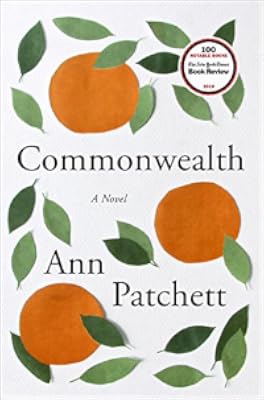
This review was written for LibraryThing Early Reviewers.I was thrilled to win this novel in an online giveaway from William Morrow. When I first began reading THE LAST ROMANTICS, I felt whispers of similarity to COMMONWEALTH, by Ann Patchett, the novel against which I measured all others for a while a couple years ago. I thought, hmmm....multiple siblings, a singular event that reverberates throughout their lives, and prose that I simply fell into and never wanted to leave. But, as I read more of this wonderful novel, I began to appreciate it on its own merit. First of all, it starts in the year 2079, and then goes backwards into the 1970's, and then forward again towards the end, and this was done very well. Secondly, there is a significant mystery that the author takes the whole book to show more unravel, making the pace of the novel compelling. She also leaves little hints of things to come that create feelings of dread, but also eagerness to figure out what is to come. Like COMMONWEALTH, once I began THE LAST ROMANTICS I got lost in the narrative, completely unaware of anything going on around me - and I didn't want to be bothered with sleep, which felt completely unnecessary so long as I was reading this story!
When their father dies suddenly, and their mother falls into a years-long depression, 4 young children must survive without parental care or authority, and the ramifications of these two significant events are beautifully and poignantly described in this richly textured novel that held me completely in its thrall. This, this is what reading is all about, for me. I highly recommend. show less
When their father dies suddenly, and their mother falls into a years-long depression, 4 young children must survive without parental care or authority, and the ramifications of these two significant events are beautifully and poignantly described in this richly textured novel that held me completely in its thrall. This, this is what reading is all about, for me. I highly recommend. show less
Members
- Recently Added By
Lists

Books Read in 2019
4,052 works; 110 members

Read with Jenna
91 works; 2 members
Author Information

5+ Works 3,062 Members
Tara Conklin received a BA in history from Yale University, a JD from New York University School of Law, and a Master of Law and Diplomacy from the Fletcher School at Tufts University. Before becoming a full-time author, she worked as a litigator in the New York and London offices of a corporate law firm. Her short fiction has appeared in The show more Bristol Prize Anthology and Pangea: An Anthology of Stories from Around the Globe. Her debut novel, The House Girl, was published in 2013. (Bowker Author Biography) show less
Awards and Honors
Awards
Distinctions
Read with Jenna (2019-03 – 2019)
Common Knowledge
- Canonical title
- The Last Romantics
- Original publication date
- 2019
- People/Characters*
- Fiona; Joe; Caroline; Renée; Antonia - Noni
*Some information comes from Common Knowledge in other languages. Click "Edit" for more information.
Classifications
Statistics
- Members
- 1,153
- Popularity
- 21,804
- Reviews
- 83
- Rating
- (3.67)
- Languages
- English, German
- Media
- Paper, Audiobook, Ebook
- ISBNs
- 25
- ASINs
- 5
