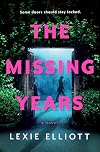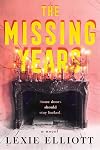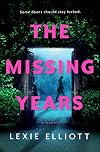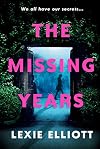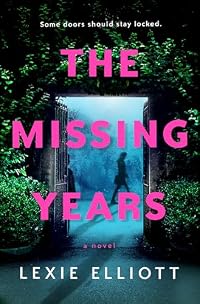
The Missing Years
by Lexie Elliott
On This Page
Description
Ailsa Calder has inherited half of a house. The other half belongs to a man who disappeared without a trace twenty-seven years ago--her father. Leaving London behind to settle the inheritance from her mother's estate, Ailsa returns to her childhood home, nestled among the craggy peaks of the Scottish Highlands, joined by the half-sister who's almost a stranger to her. Ailsa can't escape the claustrophobic feeling that the house itself is watching her-- as if her past hungers to consume her. show more She also can't ignore how the neighborhood animals refuse to set foot within the gates of the garden. When the first nighttime intruder shows up, Ailsa fears that the manor's careless rugged beauty could cost her everything. show lessTags
Recommendations









Member Reviews
Ailsa Calder and her half sister go to stay at The Manse. Ailsa has inherited half the house as her mother has died, the other half belongs to her father. The only thing is that Ailsa's father disappeared twenty seven years ago which did cause a bit of a scandal.
This book had so much which I enjoy. The Manse is in the Scottish Highlands, in a small village where everybody know each other. As with all small towns and old houses each have their secrets.
The Manse for me was the heart of the story. The author did a good job in creating a house with character. Is the house haunted ? It does have all the characteristics of a haunted house, and even when some of the happenings are explained there is still doubt.
The bulk of the story revolves show more around Ailsa and the disappearance of her father. Along the way Ailsa meets a group of people and is left not knowing who she can trust. The story builds slowly without losing interest until the final reveal, which did make sense. I didn't guess who but I did have an inkling why.
This book was quite enjoyable and for me it was all about the house. I loved the creepiness and the bumps in the night. This book is a thriller with a supernatural element, or is it.
I would read more by this author as I enjoyed the story. Thank you to the publisher via Readers First for the opportunity to read and review the book. show less
This book had so much which I enjoy. The Manse is in the Scottish Highlands, in a small village where everybody know each other. As with all small towns and old houses each have their secrets.
The Manse for me was the heart of the story. The author did a good job in creating a house with character. Is the house haunted ? It does have all the characteristics of a haunted house, and even when some of the happenings are explained there is still doubt.
The bulk of the story revolves show more around Ailsa and the disappearance of her father. Along the way Ailsa meets a group of people and is left not knowing who she can trust. The story builds slowly without losing interest until the final reveal, which did make sense. I didn't guess who but I did have an inkling why.
This book was quite enjoyable and for me it was all about the house. I loved the creepiness and the bumps in the night. This book is a thriller with a supernatural element, or is it.
I would read more by this author as I enjoyed the story. Thank you to the publisher via Readers First for the opportunity to read and review the book. show less
Ailsa Calder has just inherited half of her childhood home, an estate known as the Manse in Scotland. The other half is owned by her father who has been missing for over 25 years. Legally she can’t do anything with the property until her father is found, except live there, which is what she decides to do.
THE MISSING YEARS is a quiet suspense novel. Ailsa’s return to the Manse isn’t celebrated by all she comes in contact with, and odd occurrences keep happening in and around the house. The heart of the book is the mystery of her father’s disappearance, the toll it’s taken on her over the years, and what answers the eerie old manor home can give her.
I enjoyed the setting most of all, the house full of secrets and memories, show more standing among “the craggy peaks of the Scottish Highlands.” Sounds amazing and gothic! On the flip side, I was hoping for a faster pace and more twists. Though the build up was slow, the ending was wild.
Disclosure: I received a copy of this book from the publisher through NetGalley in exchange for an honest review. show less
THE MISSING YEARS is a quiet suspense novel. Ailsa’s return to the Manse isn’t celebrated by all she comes in contact with, and odd occurrences keep happening in and around the house. The heart of the book is the mystery of her father’s disappearance, the toll it’s taken on her over the years, and what answers the eerie old manor home can give her.
I enjoyed the setting most of all, the house full of secrets and memories, show more standing among “the craggy peaks of the Scottish Highlands.” Sounds amazing and gothic! On the flip side, I was hoping for a faster pace and more twists. Though the build up was slow, the ending was wild.
Disclosure: I received a copy of this book from the publisher through NetGalley in exchange for an honest review. show less
When Ailsa Calder’s mother dies she inherits half a house in the Scottish Highlands; the other half belongs to her father, a man who had disappeared without trace twenty-seven years earlier. When she makes enquiries about selling The Manse she discovers that she cannot do so before applying to the Scottish Courts for a “Presumption of Death”, an order which would allow for transfer of ownership to her. With no wish to permanently settle in the home she and her mother left when she was seven years old, she reluctantly leaves London to settle her mother’s estate. She’s accompanied by Carrie, the much younger half-sister she’s never taken the time to get to know, partly because college, and then her career took their respective show more lives in different directions. Carrie is an actress whose latest role is in a play at a theatre in Edinburgh so both sisters hope that by spending time together as they mourn their mother’s death they will be able to forge a closer bond.
When Ailsa see the house again for the fist time since childhood she is struck not just by how large and forbidding its three storeyed, turreted “grand baronial style” is, but how it seems that it is always watching her. The sense of claustrophobia she feels is almost overwhelming and, when she encounters the first night-time intruder, she feels there is a malign presence which threatens not only her peace of mind, but possibly even her life. These feeling increase incrementally when she discovers how animals avoid setting foot in the garden, when time itself appears to be warped, when she begins to realise that local people seem to know more about the house, and her missing father, than she does. As her buried memories of the early years she spent in the house slowly emerge into consciousness, albeit initially in a random and rather indistinct way, she is increasingly able to start to piece together some of her family history.
I found this a highly atmospheric story and very quickly found myself immersed not only in Ailsa’s search for the truth, but also in her increasing fears about the strange events which were occurring in the house. The author created an evocatively dark, creepy and spooky atmosphere, so much so that there were moments when I felt I should be checking that all my doors and windows were securely locked! The “modern-gothic” nature of the story-telling was very effectively maintained throughout and I thought that the author managed the rather slow, but nevertheless relentless, build up of tension in a very impressive way, gradually adding the small snippets of information which would eventually build to create a credible explanation for all the strange occurrences . Each of her characters was well-drawn and even when some initially appeared to be minor players in the drama, the gradually revealed secrets showed that they played a much more significant role in the development of the story. The one “character” which never felt minor was The Manse and its central presence in the story added to the sense of imminent threat which permeated the storytelling. I found it satisfying that the plotting contained enough red-herrings, and twists to keep me guessing about the outcome until quite close to the end!
I was particularly impressed with the way in which the author captured Ailsa’s desperate need to discover why her father disappeared so suddenly when she was such a young child. She did this by introducing each chapter of the book with Ailsa’s different fantasies about how, and where, he might have spent the intervening years – the imagined scenarios were impressively creative, adding a credible dimension to Ailsa’s need to understand his desertion of her.
I loved how the author so evocatively captured not only the nature of the Scottish Highlands, but also the claustrophobic atmosphere of small, isolated communities, with inhabitants who carry the secrets of the past and use these as powerful “weapons” to intimidate and control.
Last year I had enjoyed the author’s debut novel, “The French Girl” and wondered whether her second novel would prove as engaging – I was pleased to discover that it did! Although very different, some of the themes the two books have in common are the slow, well-controlled build-up to the denouement, excellent characterisations and the presence of an “other-worldly”, rather spooky aspect to the story telling. It will be interesting to see whether her future novels follow a similar format – I look forward to finding out!
My thanks to Corvus and Readers First for a copy of this book in exchange for an honest review. show less
When Ailsa see the house again for the fist time since childhood she is struck not just by how large and forbidding its three storeyed, turreted “grand baronial style” is, but how it seems that it is always watching her. The sense of claustrophobia she feels is almost overwhelming and, when she encounters the first night-time intruder, she feels there is a malign presence which threatens not only her peace of mind, but possibly even her life. These feeling increase incrementally when she discovers how animals avoid setting foot in the garden, when time itself appears to be warped, when she begins to realise that local people seem to know more about the house, and her missing father, than she does. As her buried memories of the early years she spent in the house slowly emerge into consciousness, albeit initially in a random and rather indistinct way, she is increasingly able to start to piece together some of her family history.
I found this a highly atmospheric story and very quickly found myself immersed not only in Ailsa’s search for the truth, but also in her increasing fears about the strange events which were occurring in the house. The author created an evocatively dark, creepy and spooky atmosphere, so much so that there were moments when I felt I should be checking that all my doors and windows were securely locked! The “modern-gothic” nature of the story-telling was very effectively maintained throughout and I thought that the author managed the rather slow, but nevertheless relentless, build up of tension in a very impressive way, gradually adding the small snippets of information which would eventually build to create a credible explanation for all the strange occurrences . Each of her characters was well-drawn and even when some initially appeared to be minor players in the drama, the gradually revealed secrets showed that they played a much more significant role in the development of the story. The one “character” which never felt minor was The Manse and its central presence in the story added to the sense of imminent threat which permeated the storytelling. I found it satisfying that the plotting contained enough red-herrings, and twists to keep me guessing about the outcome until quite close to the end!
I was particularly impressed with the way in which the author captured Ailsa’s desperate need to discover why her father disappeared so suddenly when she was such a young child. She did this by introducing each chapter of the book with Ailsa’s different fantasies about how, and where, he might have spent the intervening years – the imagined scenarios were impressively creative, adding a credible dimension to Ailsa’s need to understand his desertion of her.
I loved how the author so evocatively captured not only the nature of the Scottish Highlands, but also the claustrophobic atmosphere of small, isolated communities, with inhabitants who carry the secrets of the past and use these as powerful “weapons” to intimidate and control.
Last year I had enjoyed the author’s debut novel, “The French Girl” and wondered whether her second novel would prove as engaging – I was pleased to discover that it did! Although very different, some of the themes the two books have in common are the slow, well-controlled build-up to the denouement, excellent characterisations and the presence of an “other-worldly”, rather spooky aspect to the story telling. It will be interesting to see whether her future novels follow a similar format – I look forward to finding out!
My thanks to Corvus and Readers First for a copy of this book in exchange for an honest review. show less
When Ailsa inherits a manse in rural Scotland, she discovers that until her estranged father can be either found or pronounced presumed dead, she only owns half the estate. With no other option, Ailsa moves into the manse with hopes of a quick turnover so she can get back to London and her job in news broadcasting.
However, generations of enmity and superstition surround the house, and Ailsa discovers that small towns don't forget the past as quickly as she may have hoped.
I absolutely love the mood and mystery of this book, it is full of Gothic tension and surreal beauty. The characters are phenomenal and the setting is deeply effective. The constant question of whether or not there is something supernatural happening kept me on my show more toes, looking for clues and hidden details. The concept of a house being a character as well as a setting is a time-honoured Gothic technique, but Elliott brought new life to an old idea, mixing the classic with the contemporary. The creepy elements were expertly written. Elliott didn't push the limits too far, keeping the tone consistent and classy even as the dark threat closes around Ailsa and her friends.
There is also a touch of quirkiness in this book which is incredibly enjoyable. The paragraphs between each chapter describing different ideas of where Ailsa's father might be now, for instance. The author has a whimsical side which she uses conservatively, creating the correct balance of witty and deadly serious.
The characters were all very well developed and thought through, and each of them drew my interest in a very realistic way. They felt like people I might meet in a new place, like people I have met in various situations, relatable but not boring. I enjoyed the end-of-youth wistfulness that Ailsa was going through, realising that she was past the age of romantic flings and recklessness with a touch of sadness. She handles her new situation with admirable grace, trusting herself as far as she can, but also adapting to the fact that she may not know herself as well as she once thought.
The wrap-up of this novel was fantastic, with some exciting twists as well as lots of tied up ends, but just enough ambiguity to leave you excited and conspiratorially sure that you know what happened. Overall, I loved it! 5 Stars. show less
However, generations of enmity and superstition surround the house, and Ailsa discovers that small towns don't forget the past as quickly as she may have hoped.
I absolutely love the mood and mystery of this book, it is full of Gothic tension and surreal beauty. The characters are phenomenal and the setting is deeply effective. The constant question of whether or not there is something supernatural happening kept me on my show more toes, looking for clues and hidden details. The concept of a house being a character as well as a setting is a time-honoured Gothic technique, but Elliott brought new life to an old idea, mixing the classic with the contemporary. The creepy elements were expertly written. Elliott didn't push the limits too far, keeping the tone consistent and classy even as the dark threat closes around Ailsa and her friends.
There is also a touch of quirkiness in this book which is incredibly enjoyable. The paragraphs between each chapter describing different ideas of where Ailsa's father might be now, for instance. The author has a whimsical side which she uses conservatively, creating the correct balance of witty and deadly serious.
The characters were all very well developed and thought through, and each of them drew my interest in a very realistic way. They felt like people I might meet in a new place, like people I have met in various situations, relatable but not boring. I enjoyed the end-of-youth wistfulness that Ailsa was going through, realising that she was past the age of romantic flings and recklessness with a touch of sadness. She handles her new situation with admirable grace, trusting herself as far as she can, but also adapting to the fact that she may not know herself as well as she once thought.
The wrap-up of this novel was fantastic, with some exciting twists as well as lots of tied up ends, but just enough ambiguity to leave you excited and conspiratorially sure that you know what happened. Overall, I loved it! 5 Stars. show less
Fans of Alfred Hitchcock will revel in the story of The Missing Years by Lexie Elliott. A weave of mystery and terror, the story follows Ailsa Calder on her journey back to her childhood home in Scotland. Upon her mother’s recent death, Ailsa inherits half of the house known as the Manse. The other half of the house belongs to Ailsa’s father who mysteriously disappeared twenty-seven years earlier. In order to settle the inheritance, Ailsa must return to Scotland.
Accompanied by her half-sister Carrie, Ailsa leaves her job in London along with her erstwhile partner before she finally sets eyes on the Manse which is nestled amidst the craggy peaks of the Scottish Highlands. This trip is meant to accomplish two things: have her father show more declared legally dead – no trace of him has ever been found – and to bond with the half-sister she barely knows. But upon her arrival, Ailsa can’t shake the feeling that the house is watching her every move and trying to communicate with her.
From the very first night, things begin to go wrong. A nighttime intruder answers some of Ailsa’s questions but leaves her with even more. Why is the girl Fiona fixated on the house? And why does Fiona have so much trouble keeping track of time?
Is there a meaning behind the thuds and bumps that the house seems to create? And was that really a person or just a shadow that Ailsa spies in her attic? Why won’t animals come onto the property? And why do the town’s residents seem to blame Ailsa for the actions of her father and mother?
The suspense builds steadily as the clues are revealed until the final moment when Ailsa realizes that her very life is in danger.
The Missing Years is the second book by author Lexie Elliott, her first being The French Girl. While this type of story is not my usual reading fare, I thoroughly enjoyed it. It kept my interest from page one. The characters are strong and multi-faceted as they should be for this type of story. Fans of Stephen King will like this one as will any reader who enjoys a good mystery. This reviewer has now put Lexie Elliott on my to-be-read list as a promising author. show less
Accompanied by her half-sister Carrie, Ailsa leaves her job in London along with her erstwhile partner before she finally sets eyes on the Manse which is nestled amidst the craggy peaks of the Scottish Highlands. This trip is meant to accomplish two things: have her father show more declared legally dead – no trace of him has ever been found – and to bond with the half-sister she barely knows. But upon her arrival, Ailsa can’t shake the feeling that the house is watching her every move and trying to communicate with her.
From the very first night, things begin to go wrong. A nighttime intruder answers some of Ailsa’s questions but leaves her with even more. Why is the girl Fiona fixated on the house? And why does Fiona have so much trouble keeping track of time?
Is there a meaning behind the thuds and bumps that the house seems to create? And was that really a person or just a shadow that Ailsa spies in her attic? Why won’t animals come onto the property? And why do the town’s residents seem to blame Ailsa for the actions of her father and mother?
The suspense builds steadily as the clues are revealed until the final moment when Ailsa realizes that her very life is in danger.
The Missing Years is the second book by author Lexie Elliott, her first being The French Girl. While this type of story is not my usual reading fare, I thoroughly enjoyed it. It kept my interest from page one. The characters are strong and multi-faceted as they should be for this type of story. Fans of Stephen King will like this one as will any reader who enjoys a good mystery. This reviewer has now put Lexie Elliott on my to-be-read list as a promising author. show less
Oh, you lovely, lovely book. I pretty much loved this story from the very start and that love didn’t wane the entire time it took me to read.
Ailsa was a heartfelt protagonist I could get behind and root for. Carrie too. And almost all the other characters, as well. Nobody was one dimensional. They were all very, very human. Delightfully human. And I couldn’t guess ANY of it. The twists and turns were perfectly exhilarating and shocking for me and I LOVED that. My mouth was literally hanging open during certain scenes.
Yes yes yes to everything about this novel. Including the Scottish accents and words. Also the English words Lexie Elliott used — what a vocabulary. This was both a deeply pleasurable and an educational read.
A show more fantastic, atmospheric, five star, spooky Scottish castle read which totally shined (shone?) for me. show less
Ailsa was a heartfelt protagonist I could get behind and root for. Carrie too. And almost all the other characters, as well. Nobody was one dimensional. They were all very, very human. Delightfully human. And I couldn’t guess ANY of it. The twists and turns were perfectly exhilarating and shocking for me and I LOVED that. My mouth was literally hanging open during certain scenes.
Yes yes yes to everything about this novel. Including the Scottish accents and words. Also the English words Lexie Elliott used — what a vocabulary. This was both a deeply pleasurable and an educational read.
A show more fantastic, atmospheric, five star, spooky Scottish castle read which totally shined (shone?) for me. show less
The Missing Years from Lexie Elliott is a wonderful story full of interesting, and mostly likable, characters coupled with a nice mix of interaction and introspection.
We are told and experience enough of the characters to form strong opinions while also having enough hidden to keep us second guessing what we think of them. Not so much along a like/dislike line but just about the types of people they are. Of course, some of those initial perspectives prove to be wrong, or at least not totally correct. The character study aspect of the novel, and the manse is in many ways a character itself, is both part of what propels the mystery as well as simply being an enjoyable part of reading the novel.
This is not a particularly fast-paced story, show more you won't be propelled forward by constant action so much as compelled forward by your own curiosity. For some, this might be a weakness but for me, this is just what I like. Be prepared, like reading any story that takes place in an area with a widely acknowledged dialect written by an author seeking authenticity, there is some (not a lot like I have seen some comment on) heavy Scottish/Highland dialect from a couple of the characters in particular. For US readers, think about reading a book that takes place in a rural area of the deep south as an example. If you make the effort in the first few pages to get used to it it quickly just becomes another element of the story.
Probably the thing that I liked the most was the way Ailsa both acknowledged her fears while also rationalizing them so they would be manageable. We all have that ongoing internal conversation where we talk ourselves down from overreacting to things we don't immediately understand. Here, as in life, we sometimes should pay more attention to the mystery and less to the rational (possible) explanation. But I enjoyed how she would explain things away, only to have them crop back up.
I would recommend this to readers who enjoy character driven suspense/psychological mysteries. If you enjoyed The French Girl from Elliott you'll likely enjoy this one as well. I preferred her first one but not by a significant amount.
Reviewed from a copy made available by the publisher via Edelweiss. show less
We are told and experience enough of the characters to form strong opinions while also having enough hidden to keep us second guessing what we think of them. Not so much along a like/dislike line but just about the types of people they are. Of course, some of those initial perspectives prove to be wrong, or at least not totally correct. The character study aspect of the novel, and the manse is in many ways a character itself, is both part of what propels the mystery as well as simply being an enjoyable part of reading the novel.
This is not a particularly fast-paced story, show more you won't be propelled forward by constant action so much as compelled forward by your own curiosity. For some, this might be a weakness but for me, this is just what I like. Be prepared, like reading any story that takes place in an area with a widely acknowledged dialect written by an author seeking authenticity, there is some (not a lot like I have seen some comment on) heavy Scottish/Highland dialect from a couple of the characters in particular. For US readers, think about reading a book that takes place in a rural area of the deep south as an example. If you make the effort in the first few pages to get used to it it quickly just becomes another element of the story.
Probably the thing that I liked the most was the way Ailsa both acknowledged her fears while also rationalizing them so they would be manageable. We all have that ongoing internal conversation where we talk ourselves down from overreacting to things we don't immediately understand. Here, as in life, we sometimes should pay more attention to the mystery and less to the rational (possible) explanation. But I enjoyed how she would explain things away, only to have them crop back up.
I would recommend this to readers who enjoy character driven suspense/psychological mysteries. If you enjoyed The French Girl from Elliott you'll likely enjoy this one as well. I preferred her first one but not by a significant amount.
Reviewed from a copy made available by the publisher via Edelweiss. show less
Members
- Recently Added By
Lists

Books Read in 2019
4,052 works; 108 members
Author Information

4 Works 936 Members
Awards and Honors
Common Knowledge
- Original publication date
- 2019
- People/Characters
- Ailsa Calder
- Important places
- Scotland, UK
- Dedication
- For my sisters, Tor and Hels. And, always and forever, for Matt, Cameron and Zachary.
- First words
- My father is living happily in Australia with a lady called Sarah.
- Last words
- (Click to show. Warning: May contain spoilers.)The Manse will always be watching us.
- Publisher's editor
- Donovan, Kerry
- Original language
- English
Classifications
Statistics
- Members
- 254
- Popularity
- 126,625
- Reviews
- 15
- Rating
- (3.58)
- Languages
- English
- Media
- Paper, Audiobook, Ebook
- ISBNs
- 11
- ASINs
- 2