On This Page
Description
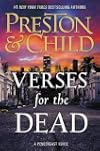
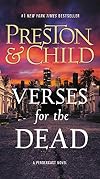
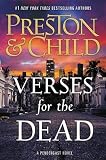
In this #1 New York Times bestseller, FBI Agent Pendergast reluctantly teams up with a new partner to investigate a rash of Miami Beach murders . . . only to uncover a deadly conspiracy that spans decades.After an overhaul of leadership at the FBI's New York field office, A. X. L. Pendergast is abruptly forced to accept an unthinkable condition of continued employment: the famously rogue agent must now work with a partner.
Pendergast and his new colleague, junior agent Coldmoon, are show more assigned to investigate a rash of killings in Miami Beach, where a bloodthirsty psychopath is cutting out the hearts of his victims and leaving them with cryptic handwritten letters at local gravestones. The graves are unconnected save in one bizarre way: all belong to women who committed suicide.
But the seeming lack of connection between the old suicides and the new murders is soon the least of Pendergast's worries. Because as he digs deeper, he realizes the brutal new crimes may be just the tip of the iceberg: a conspiracy of death that reaches back decades. show less
Tags
Recommendations




Member Reviews
Verses for the Dead, Douglas Preston and Lincoln Child’s eighteenth novel featuring FBI Special Agent Aloysius Pendergast, begins with Assistant Director in Charge Walter Pickett taking over the FBI’s New York Field Office after Longstreet’s death in the previous novel. Pickett, a by-the-book type, dislikes Pendergast’s unorthodox methods and the tendency for his perps to end up deceased, so he sends Pendergast to investigate a possible prospective serial killer in Miami while assigning him a partner, Special Agent Coldmoon, ostensibly to follow standard FBI procedure, but also to report back on Pendergast.
They travel to Miami, where a killer calling himself Mister Brokenhearts is taking his victims’ hearts and placing them on show more the graves of suicides. Pendergast believes the key to these crimes is to investigate the link between the suicides, as well as weather or not they actually killed themselves, but he finds resistance from Pickett who believes Pendergast is ignoring the current crimes to look into ephemera. Coldmoon has to negotiate his belief that an agent should be loyal to their partner with Pickett’s expectation that he will curtail Pendergast’s eccentricities and help Pickett to remove Pendergast from the New York Field Office.
While Preston and Child’s inclusion of Coldmoon is an important step toward diversifying this series, the character falls into tokenism at times as his Lakota heritage becomes his sole defining trait. In offering insight into Coldmoon, Preston and Child have this professional law enforcement officer compare CSU investigators in their protective gear to ancestral spirits (110) and later connect the sight of a shooting star to Wakan Tanka spirits (125). In a series like Tony Hillerman’s Leaphorn and Chee novels, such details would help with world-building, but here they seem designed to continually remind the reader of Coldmoon’s Native American heritage while detracting from the opportunity to show him as a more well-rounded character. Occasionally, they engage with his conflict of interest between Pickett and Pendergast, but almost every scene from his perspective includes a moment of tokenism.
Overall, the novel itself is one of the best Pendergast standalone stories. Perhaps in a continuation of research from their 2013 novel White Fire, Preston and Child include a scene where Pendergast demonstrates his investigative ability and wins over a recalcitrant local officer by doing his best Sherlock Holmes impression, only to conclude, “Poor Conan Doyle got it all wrong: Sherlock Holmes used the process of induction – not deduction” (pg. 29). The narrative is tighter than in the previous novel, City of Endless Night, and the secondary characters compelling enough that one hopes they make appearances in future novels. show less
They travel to Miami, where a killer calling himself Mister Brokenhearts is taking his victims’ hearts and placing them on show more the graves of suicides. Pendergast believes the key to these crimes is to investigate the link between the suicides, as well as weather or not they actually killed themselves, but he finds resistance from Pickett who believes Pendergast is ignoring the current crimes to look into ephemera. Coldmoon has to negotiate his belief that an agent should be loyal to their partner with Pickett’s expectation that he will curtail Pendergast’s eccentricities and help Pickett to remove Pendergast from the New York Field Office.
While Preston and Child’s inclusion of Coldmoon is an important step toward diversifying this series, the character falls into tokenism at times as his Lakota heritage becomes his sole defining trait. In offering insight into Coldmoon, Preston and Child have this professional law enforcement officer compare CSU investigators in their protective gear to ancestral spirits (110) and later connect the sight of a shooting star to Wakan Tanka spirits (125). In a series like Tony Hillerman’s Leaphorn and Chee novels, such details would help with world-building, but here they seem designed to continually remind the reader of Coldmoon’s Native American heritage while detracting from the opportunity to show him as a more well-rounded character. Occasionally, they engage with his conflict of interest between Pickett and Pendergast, but almost every scene from his perspective includes a moment of tokenism.
Overall, the novel itself is one of the best Pendergast standalone stories. Perhaps in a continuation of research from their 2013 novel White Fire, Preston and Child include a scene where Pendergast demonstrates his investigative ability and wins over a recalcitrant local officer by doing his best Sherlock Holmes impression, only to conclude, “Poor Conan Doyle got it all wrong: Sherlock Holmes used the process of induction – not deduction” (pg. 29). The narrative is tighter than in the previous novel, City of Endless Night, and the secondary characters compelling enough that one hopes they make appearances in future novels. show less
Considering how much I disliked Pendergast book #17 ("City of Endless Night"), I went into this #18 with much trepidation, worried that Preston & Child had finally reached the end of their ability to write good Pendergast books anymore. Lo and behold, I actually enjoyed this book (although I had trouble getting into it at first). However, it feels completely different from all other Pendergast books. For aficionados of this series, don't expect #18 to be a full-on Pendergast novel. It's as if Pendergast is still slowly regaining his personality (which was completely and annoyingly AWOL in book #17).
In "Verses for the Dead," Pendergast, always one to operate alone, finds himself saddled with a partner as a condition of continued show more employment. Pendergast and his new partner Agent Coldmoon are assigned to investigate a series of murders in Miami. The killer cuts out the hearts of his victims and leaves them, along with handwritten notes, on local gravestones.
The case itself, while a little slow getting going, is interesting and gets more intriguing as the book progresses. I enjoyed the plot. The odd thing about this book is that it could have been written with any other protagonist in Pendergast's place, and it would have read the same. In other words, the distinctiveness of Pendergast's personality and singular behavior was absent. It's as if this book were written in its entirety with another protagonist, and then as an afterthought Preston & Child decided to make the protagonist Pendergast so that it could be considered part of the Pendergast series. In reality, it should have had a different protagonist and been billed as a standalone novel. None of the characters from previous Pendergast novels was present -- Lieutenant D'Agosta was hardly even mentioned; Proctor and Constance appear only in the very beginning, as if thrown in only to connect this book to previous Pendergast books, and never reappear.
When I finished the book, I got the feeling that it might have been written by someone else -- a ghostwriter, maybe? -- because it did not have the feel of the earlier Pendergast books. The few times that Pendergast's quirkiness strains to make an appearance in #18, it felt like a different author trying to imitate how Preston & Child might write Pendergast. Similarly, I kept waiting for Pendergast and Coldmoon to clash as a result of Pendergast's unconventional investigative ways. It never happened. Such an odd feeling to the book.
I still gave this book 4 stars because I did enjoy it at face value. It just wasn't a Pendergast book in the truest sense. show less
In "Verses for the Dead," Pendergast, always one to operate alone, finds himself saddled with a partner as a condition of continued show more employment. Pendergast and his new partner Agent Coldmoon are assigned to investigate a series of murders in Miami. The killer cuts out the hearts of his victims and leaves them, along with handwritten notes, on local gravestones.
The case itself, while a little slow getting going, is interesting and gets more intriguing as the book progresses. I enjoyed the plot. The odd thing about this book is that it could have been written with any other protagonist in Pendergast's place, and it would have read the same. In other words, the distinctiveness of Pendergast's personality and singular behavior was absent. It's as if this book were written in its entirety with another protagonist, and then as an afterthought Preston & Child decided to make the protagonist Pendergast so that it could be considered part of the Pendergast series. In reality, it should have had a different protagonist and been billed as a standalone novel. None of the characters from previous Pendergast novels was present -- Lieutenant D'Agosta was hardly even mentioned; Proctor and Constance appear only in the very beginning, as if thrown in only to connect this book to previous Pendergast books, and never reappear.
When I finished the book, I got the feeling that it might have been written by someone else -- a ghostwriter, maybe? -- because it did not have the feel of the earlier Pendergast books. The few times that Pendergast's quirkiness strains to make an appearance in #18, it felt like a different author trying to imitate how Preston & Child might write Pendergast. Similarly, I kept waiting for Pendergast and Coldmoon to clash as a result of Pendergast's unconventional investigative ways. It never happened. Such an odd feeling to the book.
I still gave this book 4 stars because I did enjoy it at face value. It just wasn't a Pendergast book in the truest sense. show less
I am a fan. I have a number of the Preston & Child books. They make you think. Sometimes they help your imagination turn something ordinary into something sinister. So when I see a new one on the shelves of a book store, well, it's really hard - scratch that, impossible to not pick it up.
Verses for the Dead is another Agent Pendergast story. This one picks up with Pendergast having a new supervisor who just doesn't see things the same way. So he is paired with another FBI agent and they are tasked with solving another case.
Verses for the Dead has a lot of twists and turns and takes you to multiple locales across the USA. Recently I was in Miami Beach, and the bulk of the story is set in this city. So it was interesting to conjure images show more in my mind of where the characters could have been.
Many of the other Agent Pendergast series take you on a journey, leading you down a path towards what you think will be some sort of supernatural, mind-bending solution.
Not here. This is a fantastically well-written piece of work that suggests alternatives, guesswork, logic, and yep, a couple of excellent twists that get you.
While there are connections to the other Agent Pendergast books, Verses for the Dead easily stands alone, and is enjoyable even if it is the first you've read. But be warned: after reading this, you'll want to go and find the other ones and dig deep. show less
Verses for the Dead is another Agent Pendergast story. This one picks up with Pendergast having a new supervisor who just doesn't see things the same way. So he is paired with another FBI agent and they are tasked with solving another case.
Verses for the Dead has a lot of twists and turns and takes you to multiple locales across the USA. Recently I was in Miami Beach, and the bulk of the story is set in this city. So it was interesting to conjure images show more in my mind of where the characters could have been.
Many of the other Agent Pendergast series take you on a journey, leading you down a path towards what you think will be some sort of supernatural, mind-bending solution.
Not here. This is a fantastically well-written piece of work that suggests alternatives, guesswork, logic, and yep, a couple of excellent twists that get you.
While there are connections to the other Agent Pendergast books, Verses for the Dead easily stands alone, and is enjoyable even if it is the first you've read. But be warned: after reading this, you'll want to go and find the other ones and dig deep. show less
After an overhaul of leadership at the FBI's New York field office, A. X. L. Pendergast is abruptly forced to accept an unthinkable condition of continued employment: the famously rogue agent must now work with a partner.
Pendergast and his new colleague, junior agent Coldmoon, are assigned to investigate a rash of killings in Miami Beach, where a bloodthirsty psychopath is cutting out the hearts of his victims and leaving them with cryptic handwritten letters at local gravestones. The graves are unconnected save in one bizarre way: all belong to women who committed suicide.
But the seeming lack of connection between the old suicides and the new murders is soon the least of Pendergast's worries. Because as he digs deeper, he realizes the show more brutal new crimes may be just the tip of the iceberg: a conspiracy of death that reaches back decades. show less
Pendergast and his new colleague, junior agent Coldmoon, are assigned to investigate a rash of killings in Miami Beach, where a bloodthirsty psychopath is cutting out the hearts of his victims and leaving them with cryptic handwritten letters at local gravestones. The graves are unconnected save in one bizarre way: all belong to women who committed suicide.
But the seeming lack of connection between the old suicides and the new murders is soon the least of Pendergast's worries. Because as he digs deeper, he realizes the show more brutal new crimes may be just the tip of the iceberg: a conspiracy of death that reaches back decades. show less
Those that have followed the Pendergast series know that he is an extraordinary individual with almost supernatural talents for seeing what is hidden in a case. A man who likes to work alone he is forced to accept a partner to aid in his investigation into suicides that may actually be murders in Florida. I really thought that agent Coldmoon...a Locoda Indian...might be the perfect accompaniment to Pendergast. Although an exact opposite...together they are a team to be reckoned with. As the other 17 books were, this one is an equally exciting adventure with the master of investigation.
Decent plot line but I think I enjoy the interaction of characters more sometimes. Like Pendergast but the addition of agent Coldmoon was a nice tough. I hope they stay together but that remains to be seen. Good read. Fast read, as usual. They keep chapters short and tug you into the next chapter. The authors do decent research for their novels, but I do wish they would stop dealing in stereotypes for newspaper reporters. I get the feeling they actually have no respect for reporters, even though they play an important role in the plot.
I bought "Verses for the Dead" because Rene Auberjonois performed the narration, and he had just passed away. He created characters that came to life, and his performance in "Verses for the Dead" was no exception.
Verses for the Dead was the first time I met FBI Special Agent Pendergast, even though this is the 18th book in the series. I wouldn't say I liked him, but I liked how his mind worked. Authors Douglas Preston and Lincoln Child created people, not characters. The end of the novel was astonishing and filled with compassion. A compassion that Rene Auberjonois brought through so clearly I will never forget it.
Verses for the Dead was the first time I met FBI Special Agent Pendergast, even though this is the 18th book in the series. I wouldn't say I liked him, but I liked how his mind worked. Authors Douglas Preston and Lincoln Child created people, not characters. The end of the novel was astonishing and filled with compassion. A compassion that Rene Auberjonois brought through so clearly I will never forget it.
Members
- Recently Added By
Lists

Books Read in 2019
4,052 works; 108 members

Kirkus Starred Fiction Reviews of Books Published in 2018
330 works; 3 members

mom
729 works; 1 member

Books Read in 2022
5,164 works; 113 members

Books Read in 2023
5,547 works; 145 members
Author Information

114+ Works 85,549 Members
Douglas Jerome Preston was born on May 20, 1956 in Cambridge, Massachusetts. He received a B.A. in English literature from Pomona College in 1978. His career began at the American Museum of Natural History, where he worked as an editor and writer from 1978 to 1985. He also was a lecturer in English at Princeton University. He became a full-time show more writer of both fiction and nonfiction books in 1986. Many of his fiction works are co-written with Lincoln Child including Relic, Riptide, Thunderhead, The Wheel of Darkness, Cemetery Dance, and Gideon's Corpse. His nonfiction works include Dinosaurs in the Attic; Cities of Gold: A Journey Across the American Southwest in Pursuit of Coronado; Talking to the Ground; and The Royal Road. He has written for numerous magazines including The New Yorker; Natural History; Harper's; Smithsonian; National Geographic; and Travel and Leisure. He became a New York Times Best Selling author with his titles Two Graves and Crimson Shores which he co-wrote with Lincoln Child, and his titles White Fire, The Lost Island Blue Labyrinth and The Lost City of the Monkey God. (Bowker Author Biography) show less

91+ Works 78,079 Members
Lincoln Child was born in Westport, Connecticut in 1957. He received a degree in English from Carleton College in Northfield, Minnesota. After graduation, he obtained a position as an editorial assistant at St. Martin's Press and eventually became a full editor in 1984. He left St. Martin's Press in 1987 for a job at MetLife and began writing. show more Child has co-written numerous books with Douglas Preston including Relic, White Fire, Cold Vengeance, Riptide, Thunderhead, The Wheel of Darkness, Cemetery Dance, Gideon's Corpse, Blue Labyrinth, and Two Graves. In 2003, he published his first solo novel entitled Utopia. His other solo works include Death Match, Deep Storm, Terminal Freeze, The Third Gate, and The Forgotten Room. (Bowker Author Biography) show less
Series

Work Relationships
Is abridged in
Common Knowledge
- Canonical title
- Verses for the Dead
- Original publication date
- 2018-12-31
- People/Characters
- Aloysius Pendergast; Armstrong Coldmoon; Walter Pickett; Dr. Charlotte Fauchet; Mr. Brokenhearts; Gordon Grove (show all 7); Roger Smithback
- Important places
- Miami, Florida, USA; Miami Beach, Florida, USA; Miami-Dade County, Florida, USA
- Dedication
- Lincoln Child dedicates this book to his daughter, Veronica;
Douglas Preston dedicates this book to Gussie and Joe Stanislaw - First words
- ISABELLA GUERRERO—KNOWN to her friends and fellow bridge club members as Iris—made her way demurely through the palms of Bayside Cemetery.
Classifications
Statistics
- Members
- 994
- Popularity
- 26,217
- Reviews
- 31
- Rating
- (3.92)
- Languages
- 8 — Chinese, Dutch, English, Finnish, French, German, Italian, Spanish
- Media
- Paper, Audiobook, Ebook
- ISBNs
- 40
- ASINs
- 11