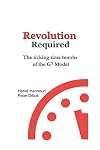
Revolution Required: The ticking time bombs of the G7 Model
by Hervé Hannoun
On This Page
Description
Trust in public policy makers and public institutions is eroding. People sense that something is wrong with the way the political and economic elites in the G7 countries are discharging their responsibilities. This manifesto argues that the finely tuned antenna of people are right: the current trajectory of policies in the G7 countries is leading straight into a systemic crisis. It shows how key policies are irresponsible, whether in the domains of monetary and macro policies, or in the show more areas of climate change and defence. But these policies are presented as being in the public interest. The mainstream media present news that purport to show that all is well, while independent and critical views receive little coverage. In terms of policy-making, the world has turned up-side down within a few years. Heretical views of five years ago have become mainstream; mainstream analysis of yesterday is seen as not "getting it". The manifesto makes the case for a revolution in thinking if the march of the doomsday clock towards midnight is to be stopped. It advocates the transition from the reckless G7 model to an "economy for the common good". A model today seen as utopia - but that might soon become a categorical imperative. show lessMember Reviews
What is the G7? Although the focus of the book, this group is never enumerated. It consists of Canada, Germany, France, Italy, Japan, the United Kingdom, and the United States. This group represents 62% of global wealth, and 46% of GDP. The group first convened surrounding the 1973 oil crisis. It notably excludes other major economic players today, such as Russia and China.
The book was authored by two economists intimately familiar with the global financial system, in part, due to their time at the Bank for International Settlements.
The book covers a lot of concerning trends, such as increasing militarization even in "peace time," quantitative easing and the accompanying explosion in monetary supply, a fossil-fuels centric economy, and show more increasing nationalism.
All of this is leading towards catastrophic climate change, World War III, and a financial collapse greater than what we saw in 2008 (which could even be beginning now).
Although the book is prescient, it doesn't conclude with a comprehensive plan for how we are to address these issues. There's the admission that our political and economic systems have failed us, but not a lot about what kinds of paradigm shifts might have the capacity to bring us through to the other side.
If you're fascinated with the fundamentals of global economics, you'll find this an engaging read. show less
The book was authored by two economists intimately familiar with the global financial system, in part, due to their time at the Bank for International Settlements.
The book covers a lot of concerning trends, such as increasing militarization even in "peace time," quantitative easing and the accompanying explosion in monetary supply, a fossil-fuels centric economy, and show more increasing nationalism.
All of this is leading towards catastrophic climate change, World War III, and a financial collapse greater than what we saw in 2008 (which could even be beginning now).
Although the book is prescient, it doesn't conclude with a comprehensive plan for how we are to address these issues. There's the admission that our political and economic systems have failed us, but not a lot about what kinds of paradigm shifts might have the capacity to bring us through to the other side.
If you're fascinated with the fundamentals of global economics, you'll find this an engaging read. show less
Members
- Recently Added By
Lists

La Bibliothèque Mediapart de l’économie
62 works; 1 member
Author Information
1 Work 1 Member
Classifications
- BISAC
Statistics
- Members
- 1
- Popularity
- 8,782,913
- Reviews
- 1
- Rating
- (3.00)
- Languages
- English
- Media
- Paper
- ISBNs
- 1