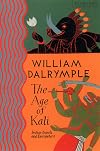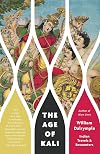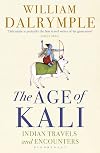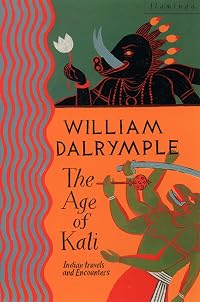
The Age of Kali: Indian Travels and Encounters
by William Dalrymple
On This Page
Description
William Dalrymple, who wrote so magically about India in 'City of Djinns', returns to the country in a series of remarkable essays. Featured in its pages are 15-year-old guerrilla girls and dowager Maharanis; flashy Bombay drinks parties and violent village blood feuds; a group of vegetarian terrorists intent on destroying India's first Kentucky Fried Chicken outlet; and a palace where port and cigars are still carried to guests on a miniature silver steam train. Dalrymple meets such figures show more as Imran Khan and Benazir Bhutto; he witnesses the macabre nightly offering to the bloodthirsty goddess Parashakti - She Who Is Seated on a Throne of Five Corpses; he experiences caste massacres in the badlands of Bihar and dines with a drug baron on the North-West Frontier; he discovers such oddities as the terrorist apes of Jaipur and the shrine where Lord Krishna is said to make love every night to his 16,108 wives and 64,732 milkmaids. 'The Age of Kali' is the fourth fascinating volume from the author of 'In Xanadu', 'City of Djinns' and 'From the Holy Mountain'. show lessTags
Recommendations




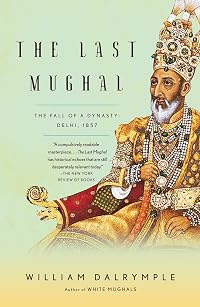
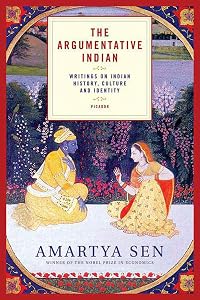
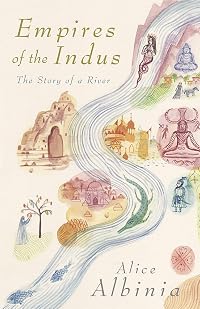
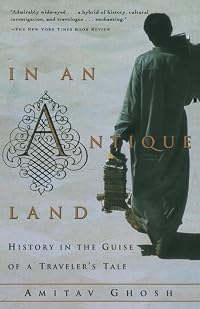




Member Recommendations

Member Reviews
Very readable travel book. Lots of interesting facts and titbits. Each chapter is devoted to a topic and most of those have to do with the deteriorating political scene in Bihar and UP, the debilitating caste system and other depressing but interesting subjects. In any other country these conditions would have led to revolution but for some reason the Indians grin and bare it.
The author has rubbed shoulders with a diverse set of people, Aristocrats, Politicians, Bourgeois, Proletariat. Former princes, intellectuals, thugs, the really down and out, including a virtual who's who of this part of the world. Imran Khan, Benazir Bhutto, Shoba De, Vijayraje Scindia, elements of the LTTE among others.
This is not your normal feel good, lovey show more dovey tourist book. He has exposed the virtual anarchy that goes for politics in Northern India and Pakistan. Some of the readings are truly grim and does not bode well for that part of the world. I only pray that this cancer is limited to that area and does not spread to the rest of the country. More importantly the people should band together to root out this cancer and the only way I see that happening is through some revolution.
In parts of UP and Bihar the exact conditions prevail as did in pre-revolution France and USSR which is a very autocratic and landed gentry in the form of landlords and the true have nots in the form of landless peasants or serfs who are forever bonded to their landlords. The whole family is bonded, the children receive no education and hence there is no light at the end of the tunnel for these people.
Bourgeios? Forget it, they have all fled this hell long ago. More frightening is this total anarchy where the roles of Politician, Thug/Murderer/Mafia Don and Policeman are totally interchangeable. A total breakdown of the entire system. The only way I see this change is through a revolution. The naxalite and maoist movements may be pre-cursors to this and I can only see this gaining momentum and exploding into some sort of full scale civil war and/or revolution. show less
The author has rubbed shoulders with a diverse set of people, Aristocrats, Politicians, Bourgeois, Proletariat. Former princes, intellectuals, thugs, the really down and out, including a virtual who's who of this part of the world. Imran Khan, Benazir Bhutto, Shoba De, Vijayraje Scindia, elements of the LTTE among others.
This is not your normal feel good, lovey show more dovey tourist book. He has exposed the virtual anarchy that goes for politics in Northern India and Pakistan. Some of the readings are truly grim and does not bode well for that part of the world. I only pray that this cancer is limited to that area and does not spread to the rest of the country. More importantly the people should band together to root out this cancer and the only way I see that happening is through some revolution.
In parts of UP and Bihar the exact conditions prevail as did in pre-revolution France and USSR which is a very autocratic and landed gentry in the form of landlords and the true have nots in the form of landless peasants or serfs who are forever bonded to their landlords. The whole family is bonded, the children receive no education and hence there is no light at the end of the tunnel for these people.
Bourgeios? Forget it, they have all fled this hell long ago. More frightening is this total anarchy where the roles of Politician, Thug/Murderer/Mafia Don and Policeman are totally interchangeable. A total breakdown of the entire system. The only way I see this change is through a revolution. The naxalite and maoist movements may be pre-cursors to this and I can only see this gaining momentum and exploding into some sort of full scale civil war and/or revolution. show less
Very readable travel book. Lots of interesting facts and titbits. Each chapter is devoted to a topic and most of those have to do with the deteriorating political scene in Bihar and UP, the debilitating caste system and other depressing but interesting subjects. In any other country these conditions would have led to revolution but for some reason the Indians grin and bare it.
The author has rubbed shoulders with a diverse set of people, Aristocrats, Politicians, Bourgeois, Proletariat. Former princes, intellectuals, thugs, the really down and out, including a virtual who's who of this part of the world. Imran Khan, Benazir Bhutto, Shoba De, Vijayraje Scindia, elements of the LTTE among others.
This is not your normal feel good, lovey show more dovey tourist book. He has exposed the virtual anarchy that goes for politics in Northern India and Pakistan. Some of the readings are truly grim and does not bode well for that part of the world. I only pray that this cancer is limited to that area and does not spread to the rest of the country. More importantly the people should band together to root out this cancer and the only way I see that happening is through some revolution.
In parts of UP and Bihar the exact conditions prevail as did in pre-revolution France and USSR which is a very autocratic and landed gentry in the form of landlords and the true have nots in the form of landless peasants or serfs who are forever bonded to their landlords. The whole family is bonded, the children receive no education and hence there is no light at the end of the tunnel for these people.
Bourgeios? Forget it, they have all fled this hell long ago. More frightening is this total anarchy where the roles of Politician, Thug/Murderer/Mafia Don and Policeman are totally interchangeable. A total breakdown of the entire system. The only way I see this change is through a revolution. The naxalite and maoist movements may be pre-cursors to this and I can only see this gaining momentum and exploding into some sort of full scale civil war and/or revolution. show less
The author has rubbed shoulders with a diverse set of people, Aristocrats, Politicians, Bourgeois, Proletariat. Former princes, intellectuals, thugs, the really down and out, including a virtual who's who of this part of the world. Imran Khan, Benazir Bhutto, Shoba De, Vijayraje Scindia, elements of the LTTE among others.
This is not your normal feel good, lovey show more dovey tourist book. He has exposed the virtual anarchy that goes for politics in Northern India and Pakistan. Some of the readings are truly grim and does not bode well for that part of the world. I only pray that this cancer is limited to that area and does not spread to the rest of the country. More importantly the people should band together to root out this cancer and the only way I see that happening is through some revolution.
In parts of UP and Bihar the exact conditions prevail as did in pre-revolution France and USSR which is a very autocratic and landed gentry in the form of landlords and the true have nots in the form of landless peasants or serfs who are forever bonded to their landlords. The whole family is bonded, the children receive no education and hence there is no light at the end of the tunnel for these people.
Bourgeios? Forget it, they have all fled this hell long ago. More frightening is this total anarchy where the roles of Politician, Thug/Murderer/Mafia Don and Policeman are totally interchangeable. A total breakdown of the entire system. The only way I see this change is through a revolution. The naxalite and maoist movements may be pre-cursors to this and I can only see this gaining momentum and exploding into some sort of full scale civil war and/or revolution. show less
The Age of Kali is a grim book that paints a horrid picture of a decadent India and the subcontinent in general. What was once a seat of one of the greatest civilizations in world is now slowly decaying riddled with corruption, crime, casteism, superstition, communal hatred and apathy of its populace as world enters the Age of Kali, last epoch in the cycle of universe when gods are in deep slumber and the annihilation of human race is nearing.
Providing an excellent guide to Indian subcontinent through the 1990s, in this travelogue William Dalrymple probes into the region’s problems and unravels the forces that have shaped them. These make for a very interesting read because Dalrymple leaves no stone unturned to complete his story and show more in some instances even risking his life to do so. He unveils an India where past co-exists with the present with often bizarre and sometimes horrifying practices being followed till today. From the badlands of Bihar where caste based politics has made the region rife with crime and the man behind it all: Lalu Prasad Yadhav to Rajasthan’s infamous Bhaveri Devi rape case where an agent of progress is gang raped for preventing a child marriage, from another of Rajasthan’s horrifying incident of Sati sacrifice that may have the complicity of an entire village to Kerala where exorcism is practiced and believed by even a highly qualified engineer, from the communal hatred fostered by the demolition of Babri masjid and the Krishna-loving motherly Rajmata who may have had hand in it to Sri Lanka where a two millennia old conflict between Tamil and Sinhalese people still rages on and has turned gruesome giving rise to terrorism, from Bangalore where people are slow and even hostile to the change to Goa where the indigenous population is still wary of Indians Dalrymple writes about it all in his lucid style which is interspersed with humour even in the most serious and possibly dangerous of situations.
The chapters on Pakistan and the North-West frontier were particularly interesting as Dalrymple unravels the region’s history right from the time of Alexander’s invasion and the majesty of the Gandhara era to present day where centuries of warfare has made bloodshed a part of daily life. In this book he takes you on a journey through both time and space and unfolds a subcontinent as seen never before even by the insiders. I just wish he had made an excursion into the Kashmir and the North East too for that would have made the book a complete guide on India.
After reading the book though, one might feel not much hope is left for Indian society which is fast descending into chaos. But a decade and a half since the book came out India has managed to bounce back and is doing surprisingly well, though many of the problems described by Dalrymple still plague the country. The sati is gone but superstition still rears its dirty head every now and then, casteism is still a part and parcel of daily life in the country, communal riots have become rarer but still an air of mistrust exists between the Hindus and Muslims and corruption has become so rampant that it has led to a country-wide revolution. But despite all this India still manages to not only survive but also thrive. Burdened by the weight of history and a million problems the country trudges on towards progress and is poised to become a major superpower in the 21st century.
Age of Kali provides an unbiased view of the subcontinent from the eyes of an outsider. show less
Providing an excellent guide to Indian subcontinent through the 1990s, in this travelogue William Dalrymple probes into the region’s problems and unravels the forces that have shaped them. These make for a very interesting read because Dalrymple leaves no stone unturned to complete his story and show more in some instances even risking his life to do so. He unveils an India where past co-exists with the present with often bizarre and sometimes horrifying practices being followed till today. From the badlands of Bihar where caste based politics has made the region rife with crime and the man behind it all: Lalu Prasad Yadhav to Rajasthan’s infamous Bhaveri Devi rape case where an agent of progress is gang raped for preventing a child marriage, from another of Rajasthan’s horrifying incident of Sati sacrifice that may have the complicity of an entire village to Kerala where exorcism is practiced and believed by even a highly qualified engineer, from the communal hatred fostered by the demolition of Babri masjid and the Krishna-loving motherly Rajmata who may have had hand in it to Sri Lanka where a two millennia old conflict between Tamil and Sinhalese people still rages on and has turned gruesome giving rise to terrorism, from Bangalore where people are slow and even hostile to the change to Goa where the indigenous population is still wary of Indians Dalrymple writes about it all in his lucid style which is interspersed with humour even in the most serious and possibly dangerous of situations.
The chapters on Pakistan and the North-West frontier were particularly interesting as Dalrymple unravels the region’s history right from the time of Alexander’s invasion and the majesty of the Gandhara era to present day where centuries of warfare has made bloodshed a part of daily life. In this book he takes you on a journey through both time and space and unfolds a subcontinent as seen never before even by the insiders. I just wish he had made an excursion into the Kashmir and the North East too for that would have made the book a complete guide on India.
After reading the book though, one might feel not much hope is left for Indian society which is fast descending into chaos. But a decade and a half since the book came out India has managed to bounce back and is doing surprisingly well, though many of the problems described by Dalrymple still plague the country. The sati is gone but superstition still rears its dirty head every now and then, casteism is still a part and parcel of daily life in the country, communal riots have become rarer but still an air of mistrust exists between the Hindus and Muslims and corruption has become so rampant that it has led to a country-wide revolution. But despite all this India still manages to not only survive but also thrive. Burdened by the weight of history and a million problems the country trudges on towards progress and is poised to become a major superpower in the 21st century.
Age of Kali provides an unbiased view of the subcontinent from the eyes of an outsider. show less
It seems strange reading The Age of Kali now. Written as contemporary reportage in the mid- to late-1990s many of the events and personalities he covers have moved to centre stage while others have faded into obscurity.
Dalrymple is a brilliant writer and he has clearly immersed himself in India and all its chaotic glory. He seeks out fascinating stories; and by talking to people from all levels of this intensely stratified society he creates vivid pictures of events, issues and personalities that have shaped its recent history.
The best chapters illuminate and anticipate the momentous changes still underway in Indian society, which most other commentators are only now beginning to notice and come to terms with. However, the book doesn't show more feel cohesive or complete. I found myself wanting to know more of the history and background; and yearned for him to fill in the gaps between these individual stories.
The problem is that all the material had already been published in various newspapers and magazines and while many of the pieces have been reworked or expanded for the book, they still display off-putting variations in tone and style which make it far more disjointed than I felt it should be. The pieces for Tatler and Condé Naste Traveller sit uneasily alongside the more in-depth and interesting work for Granta and The Observer. show less
Dalrymple is a brilliant writer and he has clearly immersed himself in India and all its chaotic glory. He seeks out fascinating stories; and by talking to people from all levels of this intensely stratified society he creates vivid pictures of events, issues and personalities that have shaped its recent history.
The best chapters illuminate and anticipate the momentous changes still underway in Indian society, which most other commentators are only now beginning to notice and come to terms with. However, the book doesn't show more feel cohesive or complete. I found myself wanting to know more of the history and background; and yearned for him to fill in the gaps between these individual stories.
The problem is that all the material had already been published in various newspapers and magazines and while many of the pieces have been reworked or expanded for the book, they still display off-putting variations in tone and style which make it far more disjointed than I felt it should be. The pieces for Tatler and Condé Naste Traveller sit uneasily alongside the more in-depth and interesting work for Granta and The Observer. show less
http://nhw.livejournal.com/861712.html
The Age of Kali, to be honest, is a bit disappointing. First off because of the form - it is a collection of pieces written for different journals at different times in the 1990s, and there is occasional repetition from one piece to the next, with no overall guiding structure. Second, because of this, the book lacks any synthesising introduction or conclusion, apart from a page at the very beginning explaining the concept of the Age of Kali, the Kali Yuga.
Having said that, what you are left with is a series of very readable, vivid, in-depth essays on particular places, personalities or events; we start with sectarian violence in Bihar, and end with the Bhutto family. The book is mainly about India, show more but there are excursions also to Sri Lanka, Réunion, and of course Pakistan. (But for some reason not Bangladesh.) And India is, of course, a fascinating subject, about which I learnt almost everything I know as a result of reading Kipling, Rushdie, and Ian McDonald's River of Gods.
However, what comes across from Dalrymple's account is an India descending into terminal anarchy and violence, where the old days of the Raj are much missed and the new world is uncertain and probably a Bad Thing. The book is nine years old now, and India doesn't actually seem to have disintegrated into anarchy, or even into the statelets foreseen by Ian McDonald in his novel, so I have to wonder how fair the picture painted actually is. And I am dubious about the fact that almost the only aspect of British rule which Dalrymple criticises is that it ended. show less
The Age of Kali, to be honest, is a bit disappointing. First off because of the form - it is a collection of pieces written for different journals at different times in the 1990s, and there is occasional repetition from one piece to the next, with no overall guiding structure. Second, because of this, the book lacks any synthesising introduction or conclusion, apart from a page at the very beginning explaining the concept of the Age of Kali, the Kali Yuga.
Having said that, what you are left with is a series of very readable, vivid, in-depth essays on particular places, personalities or events; we start with sectarian violence in Bihar, and end with the Bhutto family. The book is mainly about India, show more but there are excursions also to Sri Lanka, Réunion, and of course Pakistan. (But for some reason not Bangladesh.) And India is, of course, a fascinating subject, about which I learnt almost everything I know as a result of reading Kipling, Rushdie, and Ian McDonald's River of Gods.
However, what comes across from Dalrymple's account is an India descending into terminal anarchy and violence, where the old days of the Raj are much missed and the new world is uncertain and probably a Bad Thing. The book is nine years old now, and India doesn't actually seem to have disintegrated into anarchy, or even into the statelets foreseen by Ian McDonald in his novel, so I have to wonder how fair the picture painted actually is. And I am dubious about the fact that almost the only aspect of British rule which Dalrymple criticises is that it ended. show less
Very interesting read, a series of articles on India, Pakistan, Sri Lanka and Reunion. They are grouped together in themes, which makes it a good book to dip into or to read in a oner. I particularly recommend Caste Wars, Up the Tiger Path, Imran Khan: Out for a Duck.
Dalrymple,s writing syle is a delight to read. He lived in Delhi and travelled the subcontinent immersing himself in Politics past and present as well as the social cohesion and mores of this large complex society.
Members
- Recently Added By
Author Information

37+ Works 12,607 Members
William Dalrymple wrote the highly acclaimed British best-seller In Xanadu when he was twenty-two. It won the 1990 Yorkshire Post Best First Work Award and a Scottish Arts Council Spring Book Award; it was also shortlisted for the John Llewelyn Rhys Memorial Prize. His second book, City of Djinns, won the 1994 Thomas Cook Travel Book Award and the show more Sunday Times Young British Writer of the Year Award. From the Holy Mountain was awarded the Scottish Arts Council Autumn Book Award for 1997; it was also shortlisted for the 1998 Thomas Cook Award, the John Lewelyn Rhys Memorial Prize, and the Duff Cooper Prize. A collection of his essays on India, The Age of Kali, was published in 1998. Dalrymple is a fellow of the Royal Society of Literature and of the Royal Asiatic Society and in 2002 was awarded the Mungo Park Medal by the Royal Scottish Geographic Society for his "outstanding contribution to travel literature." He is married to the artist Olivia Fraser, and they have three children. They now divide their time between London and Delhi show less
Awards and Honors
Series
Belongs to Publisher Series
Common Knowledge
- Original publication date
- 1991
- Important places
- India
- Dedication
- To Jock who the saw point long before I did
- First words
- The Age of Kali is a collection of peripatetic essays, a distillation of ten years' travel around the Indian subcontinent.
Classifications
- Genres
- Travel, Nonfiction, General Nonfiction, Religion & Spirituality
- DDC/MDS
- 915.40452 — History & geography Geography & travel Geography of and travel in Asia India and neighboring south Asian countries Travel; guidebooks 1971– 1977-1999
- LCC
- DS421 .D25 — History of Europe, Asia, Africa and Oceania Asia History of Asia India (Bharat)
- BISAC
Statistics
- Members
- 888
- Popularity
- 30,292
- Reviews
- 12
- Rating
- (3.99)
- Languages
- 5 — English, French, Italian, Norwegian (Bokmål), Polish
- Media
- Paper, Ebook
- ISBNs
- 18
- ASINs
- 6