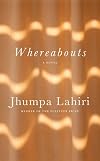
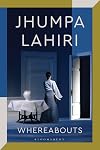
Whereabouts
by Jhumpa Lahiri
On This Page
Description
"A marvelous new novel from the Pulitzer Prize winning author of The Lowland and Interpreter of Maladies--her first in nearly a decade. Exuberance and dread, attachment and estrangement: in this novel, Jhumpa Lahiri stretches her themes to the limit. The woman at the center wavers between stasis and movement, between the need to belong and the refusal to form lasting ties. The city she calls home, an engaging backdrop to her days, acts as a confidant: the sidewalks around her house, parks, show more bridges, piazzas, streets, stores, coffee bars. We follow her to the pool she frequents and to the train station that sometimes leads her to her mother, mired in a desperate solitude after her father's untimely death. In addition to colleagues at work, where she never quite feels at ease, she has girl friends, guy friends, and "him," a shadow who both consoles and unsettles her. But in the arc of a year, as one season gives way to the next, transformation awaits. One day at the sea, both overwhelmed and replenished by the sun's vital heat, her perspective will change. This is Jhumpa Lahiri's first novel she wrote in Italian and translated into English. It brims with the impulse to cross barriers. By grafting herself onto a new literary language, Lahiri has pushed herself to a new level of artistic achievement"-- show lessTags
Recommendations




































Member Reviews
''We stop in the middle and look at the wall that flanks the river, and the shadows of pedestrians cast on its surface. They look like skittish ghosts advancing in a row, obedient souls passing from one realm to another. The bridge is flat and yet it's as if the figures - vaporous shapes against the solid wall - are walking uphill, always climbing. They're like inmates who proceed, silently, toward a dreadful end.''
A nameless city in Italy. A nameless woman who wanders its streets, observing, remembering, waiting. Its citizens are shadows, their actions a constant disappointment. When companionship offers nothing but an acute feeling of loneliness, being ALONE is the appropriate choice.
One of the most enticing, poignant novels I've ever show more read.
''My sleep grows lighter and then it abandons me entirely. I wait until someone, anyone, drives by. The thoughts that come to roost in my head in those moments are always the gloomiest, also the most precise. That silence, combined with the black sky, takes hold over me until the first light returns and dispels those thoughts, until I hear the presence of lives passing by along the road below me.'' show less
A nameless city in Italy. A nameless woman who wanders its streets, observing, remembering, waiting. Its citizens are shadows, their actions a constant disappointment. When companionship offers nothing but an acute feeling of loneliness, being ALONE is the appropriate choice.
One of the most enticing, poignant novels I've ever show more read.
''My sleep grows lighter and then it abandons me entirely. I wait until someone, anyone, drives by. The thoughts that come to roost in my head in those moments are always the gloomiest, also the most precise. That silence, combined with the black sky, takes hold over me until the first light returns and dispels those thoughts, until I hear the presence of lives passing by along the road below me.'' show less
In Jhumpa Lahiri’s brief, enigmatic, profoundly ruminative novel, Whereabouts, a woman of middle age contemplates her life of solitude in an unnamed European city. She is an academic and writer who teaches and attends conferences. She often reflects on her unhappy childhood, her mother’s frightening rages, her father’s emotional absence and passive indifference to her suffering. But mostly she observes her surroundings—the people, buildings, and attractions that form the world of her everyday experience—and strives to extract meaning from her presence among these things; or from—one might venture—the puzzling fact of her existence at the specific time and place in which she finds herself. In therapy, she derives little show more relief from disclosure—indeed she seems to feel that her participation in these sessions is insufficient and perhaps fraudulent. She is intensely aware of herself among other people—friends, neighbours, colleagues, strangers—and sometimes finds the need to respond to them something of a burden. On the other hand, she has no difficulty interacting and is fully capable of taking pleasure from those interactions. But she withdraws without regret, makes no secret of her preference for her own company, finds consolation in the seclusion that awaits her at home, and consciously avoids relationships that involve emotional commitment or intimacy. Lahiri’s unnamed narrator seems to aspire to a life of pure intellect—she is culturally refined, appreciates art and beauty; she likes to immerse herself in abstract ideas and concepts. She keeps herself apart, but countering this is her storyteller’s fascination with human behaviour: the obvious delight she takes in describing or speculating on the circumstances of other peoples’ lives. Still, she recognizes the void in her life and is restlessly, persistently searching. Her voice is coolly lyrical, its rhythms mesmerizing. The narrative tone is elegiac, steeped in melancholy. The story, such as it is, follows her through a year in a life of stoic separateness. Whereabouts is a quietly powerful novel, one that creeps up on the reader with its subtle layering of experience and impressions to create a haunting portrait of a woman who resides by herself in a city surrounded by people: alone but apparently not lonely. show less
In Whereabouts, we spend about a year in the life of an unnamed, middle-aged woman living in a large Italian city, also unnamed. Told in a series of 46 very short vignettes, the novella draws the portrait of a person thoroughly committed to preserving her solitude. She is unmarried, apparently by choice, and all of her relationships—friends, lovers past and present, parents, professional colleagues at the university where she works—have a distinct fleeting quality to them, as if getting involved with people beyond a cursory level is something she either cannot or prefers not to do. Although we get a few hints from her upbringing that might explain her feelings, there is really no structure to the story so what we are left with is a show more moving, but sad, mosaic of an existence that a lot of people would consider to be very lonely.
It is worth noting that this book has a fascinating history in itself. Although born in London to Bengali parents and raised in the United States, celebrated author Jhumpa Lahiri wrote and first published this story in Italian under the title Dove Mi Trovo. What Whereabouts represents then is the English language version of that earlier work. Interestingly, Lahiri herself did the translation, which was a curious choice that begs the question why she did not write it in English to begin with. That is not an idle notion because it is really impossible for the English-speaking reader to know exactly how faithfully this new version compares to the original work. For instance—and forgive my relatively basic command of Italian here—I would have translated the book’s title to be mean something closer to “Where I Find Myself” or “Where I Am”, which conveys a far less subtle meaning than the one the author chose.
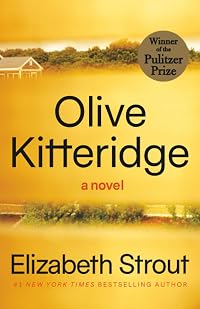
I definitely came away with a mixed impression of this work. On one hand, Lahiri is a brilliant writer who has crafted some amazing thoughts and images that added up to an affecting glimpse into the mind of a person who is at once incredibly strong and emotionally frail. Offsetting that, however, was the lack of anything resembling a plot that would have given a context to all of the angst and sorrow. As I was reading the novella, I found myself thinking of Elizabeth Hardwick’s marvelous Sleepless Nights (and even Elizabeth Strout’s Olive Kitteridge), which covered similar ground in a far more compelling way. So, while there is always much to savor in Lahiri’s prose, this is not a book that compares to the best of her previous work. I only wish I could improve my Italian enough to read it in the way the author originally intended. show less
It is worth noting that this book has a fascinating history in itself. Although born in London to Bengali parents and raised in the United States, celebrated author Jhumpa Lahiri wrote and first published this story in Italian under the title Dove Mi Trovo. What Whereabouts represents then is the English language version of that earlier work. Interestingly, Lahiri herself did the translation, which was a curious choice that begs the question why she did not write it in English to begin with. That is not an idle notion because it is really impossible for the English-speaking reader to know exactly how faithfully this new version compares to the original work. For instance—and forgive my relatively basic command of Italian here—I would have translated the book’s title to be mean something closer to “Where I Find Myself” or “Where I Am”, which conveys a far less subtle meaning than the one the author chose.
I definitely came away with a mixed impression of this work. On one hand, Lahiri is a brilliant writer who has crafted some amazing thoughts and images that added up to an affecting glimpse into the mind of a person who is at once incredibly strong and emotionally frail. Offsetting that, however, was the lack of anything resembling a plot that would have given a context to all of the angst and sorrow. As I was reading the novella, I found myself thinking of Elizabeth Hardwick’s marvelous Sleepless Nights (and even Elizabeth Strout’s Olive Kitteridge), which covered similar ground in a far more compelling way. So, while there is always much to savor in Lahiri’s prose, this is not a book that compares to the best of her previous work. I only wish I could improve my Italian enough to read it in the way the author originally intended. show less
““Solitude: it's become my trade. As it requires a certain discipline, it's a condition I try to perfect. And yet it plagues me, it weighs on me in spite of my knowing it so well.””
This is the third Jhumpa Lahiri book I’ve read, and the first that’s a novel and not a collection of short stories. Unlike the other books, this one was originally written in Italian and translated into English by Lahiri herself. An impressive feat in itself that reminded me of this popular meme:
The other stories by Lahiri I’d read before were focused on Indian immigrants in the U.S. with tight and fixed narratives. This story focuses on an Italian middle-aged woman native to her town, living alone, and who works as a scholar; and strays in show more episodic observations stirred by the various environments she’s in. So it’s interesting to observe that those stories with immigrating characters remain centered while this one which deals with a native drifts, and this could be a mere coincidence, inconsequential, and nothing but a pattern my mind picked on while reading, but it would be interesting if the choice was intentional.
Multiple reviews of this book mention Rachel Cusk and Sigrid Nunez, which makes sense as all three writers have stories following the quotidian observations, thoughts, recalling of female protagonists, with loose plots or rather plots that don’t follow the conventional rules of plot--which dictate that each action leads to another and then another, all of which finally leads to the denouement. And like those books it's been compared to, and the Jhumpa Lahiri’s previous ones I’ve read, this one draws beautifully on that which a life contains: its share of childhood baggage that clings through adulthood, the feeling of emptiness and sadness often experienced, fraught human relationships, the curiosity and sadness that comes with witnessing the lives of those who are both familiar and strangers to us, including our own. A short and beautiful book. show less
This is the third Jhumpa Lahiri book I’ve read, and the first that’s a novel and not a collection of short stories. Unlike the other books, this one was originally written in Italian and translated into English by Lahiri herself. An impressive feat in itself that reminded me of this popular meme:
The other stories by Lahiri I’d read before were focused on Indian immigrants in the U.S. with tight and fixed narratives. This story focuses on an Italian middle-aged woman native to her town, living alone, and who works as a scholar; and strays in show more episodic observations stirred by the various environments she’s in. So it’s interesting to observe that those stories with immigrating characters remain centered while this one which deals with a native drifts, and this could be a mere coincidence, inconsequential, and nothing but a pattern my mind picked on while reading, but it would be interesting if the choice was intentional.
Multiple reviews of this book mention Rachel Cusk and Sigrid Nunez, which makes sense as all three writers have stories following the quotidian observations, thoughts, recalling of female protagonists, with loose plots or rather plots that don’t follow the conventional rules of plot--which dictate that each action leads to another and then another, all of which finally leads to the denouement. And like those books it's been compared to, and the Jhumpa Lahiri’s previous ones I’ve read, this one draws beautifully on that which a life contains: its share of childhood baggage that clings through adulthood, the feeling of emptiness and sadness often experienced, fraught human relationships, the curiosity and sadness that comes with witnessing the lives of those who are both familiar and strangers to us, including our own. A short and beautiful book. show less
NPR
Whereabouts offers a muted portrait of urban solitude marked by an undercurrent of longing. Lahiri's narrator, who deliberately fills her quiet life with routines and rituals, writes, "Solitude: it's become my trade. As it requires a certain discipline, it's a condition I try to perfect."
Seriously how smart is this author who has already written Pulitzer Prize books and now has decided to write in Italian and then translate her own work into English. That being said, I enjoyed this episodic and observational novel about a 40 something-year-old professor of writing who lives in a town not named but probably Rome and who internalizes her feelings about many of the observations she encounters in her life. The story takes place in the show more course of about a year, and there are not many big plot events except for a possible romantic encounter with a married man of a friend of hers and that friendship is binding enough to prevent any occurrence of impropriety. Besides that we see her relationships with her neighbors, her butcher, her baker and a niece who visits. Mostly we hear about her own misgivings about roads not taken or pursuits not endeavored into. show less
Whereabouts offers a muted portrait of urban solitude marked by an undercurrent of longing. Lahiri's narrator, who deliberately fills her quiet life with routines and rituals, writes, "Solitude: it's become my trade. As it requires a certain discipline, it's a condition I try to perfect."
Seriously how smart is this author who has already written Pulitzer Prize books and now has decided to write in Italian and then translate her own work into English. That being said, I enjoyed this episodic and observational novel about a 40 something-year-old professor of writing who lives in a town not named but probably Rome and who internalizes her feelings about many of the observations she encounters in her life. The story takes place in the show more course of about a year, and there are not many big plot events except for a possible romantic encounter with a married man of a friend of hers and that friendship is binding enough to prevent any occurrence of impropriety. Besides that we see her relationships with her neighbors, her butcher, her baker and a niece who visits. Mostly we hear about her own misgivings about roads not taken or pursuits not endeavored into. show less
'I hear the babble of people as they chatter, on and on. I'm amazed at our impulse to express ourselves, explain ourselves, tell stories to one another.'
Originally written in Italian and now translated by the author herself, 'Whereabouts' reads as a diary, a series of entries over the course of a year as a woman lives her life in an Italian city. From going to a restaurant, the doctor's clinic, a stationery store, these small vignettes of a life are in themselves unremarkable, but are so perfectly described in sparse yet lyrical prose that the whole effect becomes mesmerising. We observe a life in action, where the small moments of interaction with friends and colleagues, the slightest gesture of a stranger opening a napkin, a visit to show more the swimming pool, all offer glimpses into her life. And as the narrator gradually reveals more of her past life, we learn to understand her position as a bystander, an observer.
If you like your books with action, pace and adventure, please move on. This is a book to savour, where every word matters and what is left unsaid is often more important than what is said, A quiet, reflective book that shows Lahiri as an extraordinary writer, this gets a very big 5 stars from me. show less
Originally written in Italian and now translated by the author herself, 'Whereabouts' reads as a diary, a series of entries over the course of a year as a woman lives her life in an Italian city. From going to a restaurant, the doctor's clinic, a stationery store, these small vignettes of a life are in themselves unremarkable, but are so perfectly described in sparse yet lyrical prose that the whole effect becomes mesmerising. We observe a life in action, where the small moments of interaction with friends and colleagues, the slightest gesture of a stranger opening a napkin, a visit to show more the swimming pool, all offer glimpses into her life. And as the narrator gradually reveals more of her past life, we learn to understand her position as a bystander, an observer.
If you like your books with action, pace and adventure, please move on. This is a book to savour, where every word matters and what is left unsaid is often more important than what is said, A quiet, reflective book that shows Lahiri as an extraordinary writer, this gets a very big 5 stars from me. show less
This book was just what I needed! I was looking for a thoughtful book with interconnected chapters rather than a book with a storyline. Told in first person, by an unnamed middle-aged woman, living in an unnamed European city, it is recollections of her daily life. The narrator is more of a melancholy person that a cheerful person. The 46 short chapters are her observations of people she meets. It is a sad book but Lahari’s prose is so elegant and so subtle the reader is immersed in this woman’s life. Normally, I don’t like books with unnamed narrators, but this narrator could be any of us.
Members
- Recently Added By
Lists

Anticipated 2021 Reads
231 works; 7 members

Books Read in 2022
5,168 works; 114 members

Books Read in 2021
5,361 works; 114 members
Author Information

59+ Works 39,556 Members
Jhumpa Lahiri was born in London, England on July 11, 1967. She received a B.A. in English literature from Barnard College in 1989, and a M.A. in English, a M.A. in Creative Writing, a M.A. in Comparative Studies in Literature and the Arts, and a Ph.D. in Renaissance Studies from Boston University. Lahiri taught creative writing at Boston show more University and the Rhode Island School of Design. Her debut work, Interpreter of Maladies, won the Pulitzer Prize for fiction in 2000. She has also won the PEN/Hemmingway Award, an O. Henry Award, The New Yorker's best debut of the year award, and an Addison Metcalf award. Her other works include The Namesake, which was made into a movie in 2007, Unaccustomed Earth, and The Lowland, which won 2015 DSC Prize for South Asian Literature. (Bowker Author Biography) show less
Some Editions
Awards and Honors
Awards
Distinctions
Series
Belongs to Publisher Series
Common Knowledge
- Canonical title
- Whereabouts
- Original title
- Dore Mi Trovo
- Original publication date
- 2018-08-30; 2021-04-27 (English) (English)
- Important places
- Italy
- Epigraph
- Ad ogni mutamento di posto io provo una grande enorme tristezza. Non maggiore quando lascio un luogo cui si connettono dei recordi o dei dolori e piaceri. È il mutamento stesso che m'agita come il liquido in un vaso che scos... (show all)so s'intorbida.
—Italo Svevo, Saggi e Pagine Sparse
Every time my surroundings change I feel enormous sadness. It's not greater when I leave a place tied to memories, grief, or happiness. It's the change itself that unsettles me, just as liquid in a jar turns cloudy when you s... (show all)hake it.
—Italo Svevo, Essays and Uncollected Writings - First words
- In the mornings after breakfast I walk past a small marble plaque propped against the high wall flanking the road. I never knew the man who died.
- Quotations
- We realized that we were two survivors, and in the end we felt like partners in a crime. Each revelation was devastating. Everything she said. And yet, even as my life shattered in pieces, I felt as if I were finally coming u... (show all)p for air.
Solitude: it's become my trade. As it requires a certain discipline, it's a condition I try to perfect.
In spite of how she's clung to me over the years my point of view doesn't interest her, and this gulf between us has taught me what solitude really means. - Original language
- italian
Classifications
- Genres
- Fiction and Literature, General Fiction
- DDC/MDS
- 813.54 — Literature & rhetoric American literature in English American fiction in English 1900-1999 1945-1999
- LCC
- PQ5984 .L34 .D6813 — Language and Literature French, Italian, Spanish and Portuguese literatures Italian literature Regional, provincial, local, etc.
- BISAC
Statistics
- Members
- 966
- Popularity
- 27,360
- Reviews
- 56
- Rating
- (3.72)
- Languages
- 6 — Dutch, English, Finnish, German, Italian, Spanish
- Media
- Paper, Audiobook, Ebook
- ISBNs
- 29
- ASINs
- 6