On This Page
Description
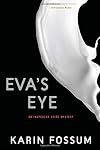
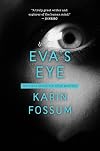
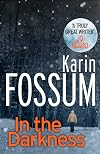
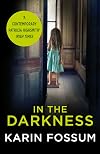
Eva Magnus and her daughter are out walking by the river when a man's body floats to the water's surface. Eva goes to call the police, but when she reaches the phone, she dials another number altogether. The police find the body anyway. Inspector Sejer and his team quickly determine that the man, Egil, died in a violent attack. But Egil has been missing for months, and the trail to his killer is cold. It's as puzzling as another unsolved case on Sejer's desk, the murder of a prostitute, show more found dead just before Egil went missing. Sejer sets to work piecing together these two impossible cases. It's not long before he realizes that they aren't as separate as they previously seemed. show lessTags
Recommendations
















Member Reviews
Eva is walking by the river one afternoon when a body floats to the surface of the icy water. She tells her daughter to wait patiently while she calls the police, but when she reaches the phone box Eva dials another number altogether. The dead man, Egil, has been missing for months, and it doesn't take long for Inspector Sejer and his team to establish that he was the victim of a very violent killer.
But the trail has gone cold.
It's as puzzling as another unsolved case on Sejer's desk: the murder of a prostitute who was found dead just before Egil went missing.
While Sejer is trying to piece together the fragments of a seemingly impossible case, Eva gets a phone call late one night. A stranger speaks and then swiftly hangs up. Eva looks show more out into the darkness and listens. All is quiet...
"The trouble with loving Scandinavian crime fiction is that often the books in any particular series will suffer from TOOO syndrome – translated out of order".
However the Konrad Sejer series suffers less than most - I have read them in totally random order, as in whatever was available from work and can’t say that it made much difference.
Sejer is such a “nice” person; none of the maverick, issues with authority, angst ridden policing for him. No, he is old-fashioned, traditional, polite to women and children and his biggest vice is one hand rolled cigarette in the evening whilst sipping a whisky and petting his dog. He understands things are never black and white and why people are driven to horrendous violence and murder through desperation or sheer bad judgement/luck.
All her stories begin simply enough but the threads become more twisted and tangled, the exquisitely drawn characters leap off the page and into your mind.
Fossum’s novels have a haunting rather melancholy quality that stay with you as you ponder the “what would I have done” scenarios – but they are always believable.
The mood of this brilliant series can be summed up in this following quote from In The Darkness; Eva and her father are talking about why good people can do bad things:
But the trail has gone cold.
It's as puzzling as another unsolved case on Sejer's desk: the murder of a prostitute who was found dead just before Egil went missing.
While Sejer is trying to piece together the fragments of a seemingly impossible case, Eva gets a phone call late one night. A stranger speaks and then swiftly hangs up. Eva looks show more out into the darkness and listens. All is quiet...
"The trouble with loving Scandinavian crime fiction is that often the books in any particular series will suffer from TOOO syndrome – translated out of order".
However the Konrad Sejer series suffers less than most - I have read them in totally random order, as in whatever was available from work and can’t say that it made much difference.
Sejer is such a “nice” person; none of the maverick, issues with authority, angst ridden policing for him. No, he is old-fashioned, traditional, polite to women and children and his biggest vice is one hand rolled cigarette in the evening whilst sipping a whisky and petting his dog. He understands things are never black and white and why people are driven to horrendous violence and murder through desperation or sheer bad judgement/luck.
All her stories begin simply enough but the threads become more twisted and tangled, the exquisitely drawn characters leap off the page and into your mind.
Fossum’s novels have a haunting rather melancholy quality that stay with you as you ponder the “what would I have done” scenarios – but they are always believable.
The mood of this brilliant series can be summed up in this following quote from In The Darkness; Eva and her father are talking about why good people can do bad things:
‘It’s a sort of threshold they cross’ he said pensively. ‘I wonder what it is, what it means. Why some people overstep it, and others could never dream of doing so.’show less
‘Everyone can” Eva said. ‘It’s circumstances which dictate. And they don’t step over either – they stray over. They don’t see it until they’re on the other side, and then it’s too late.’
Eva Magnus and her seven-year-old daughter Emma are walking by the river when they see a body in the water. Eva, who is an artist and a single mother, heads for the nearest payphone, telling her daughter she is calling the police. Instead she calls her father and makes small talk, pretending to her daughter that she's called the police. Then she and her daughter head for McDonald's as if nothing happened. When the police arrive, alerted by another person, it doesn’t take long for Inspector Sejer and his team to establish that the dead man, Egil Einarsson, was stabbed to death. He had been missing for months but by now the trail has gone cold. Inspector Sejer finds it almost as mysterious as the other unsolved case he is working on, show more the murder of a known prostitute, Maja Durban, found dead just before Egil went missing.
Sejer’s investigations leads us back to Eva and her strange reaction to the corpse, as well as a mysterious note left by the dead man. The investigation keeps pushing Sejer back to Eva and he eventually brings her in for questioning. What follows then is a complete change in the narrative. The events leading up to the murder begin to unfold and take up the majority of the book, told in a third-person narrative flashback, to a time when the two murder victims were still alive. The story is written in an intense way, filled with seemingly unrelated threads.
I've had the Inspector Sejer series on my TBR list for a long, long time and for some reason I just have never started it. Maybe it's because I have so many other series underway and didn't feel like I could add another, but I've been making a terrible mistake. Sejer is fascinating due to his sheer ordinariness. He's a conservative, middle-aged widower who is patient and a good listener. He's a great detective, simply because he refuses to give up. I'm pushing this series right to the top and can't wait to read the next one. show less
Sejer’s investigations leads us back to Eva and her strange reaction to the corpse, as well as a mysterious note left by the dead man. The investigation keeps pushing Sejer back to Eva and he eventually brings her in for questioning. What follows then is a complete change in the narrative. The events leading up to the murder begin to unfold and take up the majority of the book, told in a third-person narrative flashback, to a time when the two murder victims were still alive. The story is written in an intense way, filled with seemingly unrelated threads.
I've had the Inspector Sejer series on my TBR list for a long, long time and for some reason I just have never started it. Maybe it's because I have so many other series underway and didn't feel like I could add another, but I've been making a terrible mistake. Sejer is fascinating due to his sheer ordinariness. He's a conservative, middle-aged widower who is patient and a good listener. He's a great detective, simply because he refuses to give up. I'm pushing this series right to the top and can't wait to read the next one. show less
Eva Magnus and her seven-year-old daughter Emma are walking by the river when they see a body in the water. Eva, who is an artist and a single mother, heads for the nearest payphone, telling her daughter she is calling the police. Instead she calls her father and makes small talk, pretending to her daughter that she's called the police. Then she and her daughter head for McDonald's as if nothing happened. When the police arrive, alerted by another person, it doesn’t take long for Inspector Sejer and his team to establish that the dead man, Egil Einarsson, was stabbed to death. He had been missing for months but by now the trail has gone cold. Inspector Sejer finds it almost as mysterious as the other unsolved case he is working on, show more the murder of a known prostitute, Maja Durban, found dead just before Egil went missing.
Sejer’s investigations leads us back to Eva and her strange reaction to the corpse, as well as a mysterious note left by the dead man. The investigation keeps pushing Sejer back to Eva and he eventually brings her in for questioning. What follows then is a complete change in the narrative. The events leading up to the murder begin to unfold and take up the majority of the book, told in a third-person narrative flashback, to a time when the two murder victims were still alive. The story is written in an intense way, filled with seemingly unrelated threads.
I've had the Inspector Sejer series on my TBR list for a long, long time and for some reason I just have never started it. Maybe it's because I have so many other series underway and didn't feel like I could add another, but I've been making a terrible mistake. Sejer is fascinating due to his sheer ordinariness. He's a conservative, middle-aged widower who is patient and a good listener. He's a great detective, simply because he refuses to give up. I'm pushing this series right to the top and can't wait to read the next one. show less
Sejer’s investigations leads us back to Eva and her strange reaction to the corpse, as well as a mysterious note left by the dead man. The investigation keeps pushing Sejer back to Eva and he eventually brings her in for questioning. What follows then is a complete change in the narrative. The events leading up to the murder begin to unfold and take up the majority of the book, told in a third-person narrative flashback, to a time when the two murder victims were still alive. The story is written in an intense way, filled with seemingly unrelated threads.
I've had the Inspector Sejer series on my TBR list for a long, long time and for some reason I just have never started it. Maybe it's because I have so many other series underway and didn't feel like I could add another, but I've been making a terrible mistake. Sejer is fascinating due to his sheer ordinariness. He's a conservative, middle-aged widower who is patient and a good listener. He's a great detective, simply because he refuses to give up. I'm pushing this series right to the top and can't wait to read the next one. show less
I have often bemoaned the fact that American publishers have the annoying tendency to release European mystery series books out of order. This was done in the case of Karin Fossum's excellent Inspector Sejer series. Eight books were published before Eva's Eye, which is actually the first. For once I'm glad that they weren't published in the proper sequence. Konrad Sejer is one of my favorite police officers, but if I had been introduced to him with this book, I doubt if I would have continued with the series.
The reason for this is because Eva's Eye has everything to do with the character of Eva Magnus and little to do with Konrad Sejer. Everything revolves around Eva's eye: her art (in which Sejer seems to be the only person who sees show more something meaningful), her young daughter Emma, how Eva views her life... everything. Eva Magnus is a fascinating character who grabs the focus of the book and runs away with it. As is also seen in The Murder of Harriet Krohn, Fossum seems to like to focus on a different character from time to time.
In comparison Konrad Sejer is merely interesting. If I'd read this book first, I would have admired Fossum's characterization of the title character and given a passing nod to Sejer's determination to solve these two puzzling cases-- but there just didn't seem to be enough about this oftentimes brilliant man to warrant my coming back for more.
All this makes it sound as though I did not enjoy the book. On the contrary-- I enjoyed it a lot. As the story gradually unfolds and I learned how deeply involved Eva is in every facet, I had to know more about this self-absorbed woman. At book's end I could only shake my head in disbelief (and admiration) at how well Fossum put this intricate plot together. And-- having already become familiar with Sejer, his personality and his deductive methods-- I could only admire him, too. I'm just glad I didn't read this book first. show less
The reason for this is because Eva's Eye has everything to do with the character of Eva Magnus and little to do with Konrad Sejer. Everything revolves around Eva's eye: her art (in which Sejer seems to be the only person who sees show more something meaningful), her young daughter Emma, how Eva views her life... everything. Eva Magnus is a fascinating character who grabs the focus of the book and runs away with it. As is also seen in The Murder of Harriet Krohn, Fossum seems to like to focus on a different character from time to time.
In comparison Konrad Sejer is merely interesting. If I'd read this book first, I would have admired Fossum's characterization of the title character and given a passing nod to Sejer's determination to solve these two puzzling cases-- but there just didn't seem to be enough about this oftentimes brilliant man to warrant my coming back for more.
All this makes it sound as though I did not enjoy the book. On the contrary-- I enjoyed it a lot. As the story gradually unfolds and I learned how deeply involved Eva is in every facet, I had to know more about this self-absorbed woman. At book's end I could only shake my head in disbelief (and admiration) at how well Fossum put this intricate plot together. And-- having already become familiar with Sejer, his personality and his deductive methods-- I could only admire him, too. I'm just glad I didn't read this book first. show less
At last, the first of the Inspector Sejer series has appeared in English, and what a terrific beginning it is. I have read anything of Karin Fossum's that I have been able to find in translation, and this is one of her very best. Like the other novels in this series, "Eva's Eye" is more a psychological thriller than a standard police procedural, though Inspector Sejer is a very convincing detective. Ms. Fossum combines the best of the thriller genre -- a driving plot that keeps those pages turning -- with a skils of character development, emotional involvement, and pure good writing that one would normally associate with "literary" fiction. A real delight.
The book opens with two seemingly unrelated murders - a woman found dead in her apartment, and miles away, a man has washed up into the river. Eva Marie Magnus, however, lies at the center of this plot. She and her daughter discover the man’s body, but rather than report it to the police, she makes a different call and takes her daughter out for a meal. Though Eva’s perspective is central to the novel, it is actually Inspector Sejer who is the series’ lead character - and it is easy to see why. He is an intriguing, caring and genuinely kindly man.
The plot moves forwards and then backwards in time, but this convoluted chronology works well as the full story unravels. It’s an interesting novel but does rely on some rather show more extraordinary coincidences. There are some abrupt and rather unfortunate shifts in perspective that disrupts the flow of the narrative. But, this serves an intriguing beginning to the series and I am looking forward to reading the next novel in the series. show less
The plot moves forwards and then backwards in time, but this convoluted chronology works well as the full story unravels. It’s an interesting novel but does rely on some rather show more extraordinary coincidences. There are some abrupt and rather unfortunate shifts in perspective that disrupts the flow of the narrative. But, this serves an intriguing beginning to the series and I am looking forward to reading the next novel in the series. show less
This is actually her first book in this series, but the last to be translated here. Seemed sort of funny to be reading a book where his grandson is a baby, after reading the series and seeing him grow up, that took a bit getting used to. But I have to say I really enjoyed this story, she spent alot of time on her characters and the reader can tell. It was not as dark, and abrupt as some of her later ones, but regardless the lady can write.
Members
- Recently Added By
Published Reviews
Until now, Canadian readers assumed that the marvelous Fossum series featuring Norwegian Inspector Konrad Sejer began with Don’t Look Back, published in English in 2004. But it turns out that In the Darkness was the real Sejer debut, written in 1993 and translated just last year. The new book comes as a surprise but also, alas, as a disappointment. The Sejer we’ve come to welcome is subtle show more and likeable. In In the Darkness, he’s not quite either. Fossum was a beginning writer back then, not one who had found her bearings, and though this version of Sejer has all the right trappings, he seems outsized and awkward. show less
added by VivienneR
Lists

Scandinavian Crime Fiction
224 works; 37 members

Top Five Books of 2013
1,562 works; 715 members

Reading List - Scandinavian Fiction
134 works; 3 members

Best Norwegian Crime Novels
49 works; 1 member

Fiction with Women's Names in the Title
378 works; 15 members

Books Read in 2016
4,666 works; 199 members

Books With Body Parts in the Title
153 works; 9 members
Author Information

51+ Works 10,431 Members
Some Editions
Awards and Honors
Awards
Series

Belongs to Publisher Series
Serie Piper (2705)
Work Relationships
Common Knowledge
- Canonical title
- In the Darkness
- Original title
- Evas øye
- Alternate titles
- Eva's Eye; In the Darkness
- Original publication date
- 1995; 1997 (Germany) (Germany)
- People/Characters
- Konrad Sejer; Eva Marie Magnus; Emma Magnus; Maja Durban; Egil Einarsson; Jorun Einarsson (show all 10); Jan Henry Einarsson; Markus Larsgård; Peter Fredrik Ahron (Peddik); Karlsen
- Important places
- Drammen, Norway; Hardangervidda, Norway (Hardanger Plateau)
- Related movies
- Evas øye (1999 | IMDb)
- Dedication
- To my father
- First words
- It was a Wendy house.
- Last words
- (Click to show. Warning: May contain spoilers.)But instinctively, as if at some given signal, they both quickened their steps.
- Original language
- Norwegian
- Disambiguation notice
- English translation - 'Eva's Eye' (US) published as 'In the Darkness' (UK)
Classifications
- Genres
- Fiction and Literature, Mystery
- DDC/MDS
- 839.82 — Literature & rhetoric German & related literatures Other Germanic literatures Danish and Norwegian literatures Norwegian literature
- LCC
- PT8951.16 .O735 .E8313 — Language and Literature German, Dutch and Scandinavian literatures Norwegian literature Individual authors or works 1961-2000
- BISAC
Statistics
- Members
- 817
- Popularity
- 33,803
- Reviews
- 41
- Rating
- (3.53)
- Languages
- 14 — Danish, Dutch, English, Finnish, French, German, Icelandic, Norwegian (Bokmål), Norwegian, Polish, Portuguese, Russian, Spanish, Swedish
- Media
- Paper, Audiobook, Ebook
- ISBNs
- 73
- ASINs
- 17