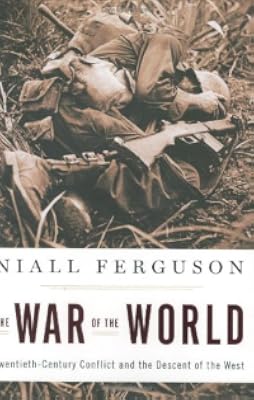
The War of the World: Twentieth-Century Conflict and the Descent of the West
by Niall Ferguson
On This Page
Description
"The film considers the unparalleled stretch of violence during the 20th century as a single, unrelenting 'war of the world' that began with Japan's invasion of Russia in 1904 and continued through the Korean War all the way to an ongoing 'Third Word's War'"--Container.Tags
Recommendations


Member Reviews
War of the World served very well as an introduction to the first half of the last century, specifically from the standpoint of conflict and genocide. The prevalence, origin, and supporting conditions of ethnic cleansing were very plainly laid out, serving as a clear framework around which to build a Historical outlook.
The sections on the Russian Revolution and Stalinist Russia, and World War I were particularly enlightening. WWII was also covered in depth, but I found those topics a review of what public education and the History Channel drill into everyone -- with the exception of covering the Japanese involvement before and during, that was new.
What struck me as most interesting was that over six hundred pages of in depth History show more went by without a single area turning into a slog. Ferguson knew just how much time to spend on each piece before moving on.
The only slight I have is the premise, that genocidal conflict is tied to financial volatility, isn't strongly supported by the evidence presented. The specific regions affected by the conflict do not stand out as prominently volatile in comparison to other regions where ethnic cleansing did not break out. show less
The sections on the Russian Revolution and Stalinist Russia, and World War I were particularly enlightening. WWII was also covered in depth, but I found those topics a review of what public education and the History Channel drill into everyone -- with the exception of covering the Japanese involvement before and during, that was new.
What struck me as most interesting was that over six hundred pages of in depth History show more went by without a single area turning into a slog. Ferguson knew just how much time to spend on each piece before moving on.
The only slight I have is the premise, that genocidal conflict is tied to financial volatility, isn't strongly supported by the evidence presented. The specific regions affected by the conflict do not stand out as prominently volatile in comparison to other regions where ethnic cleansing did not break out. show less
This is a big book! Essentially a history of WW2, but looking more at the big picture, at patterns. Some concrete details to make the pattern clear, but then lots of statistics too. There's a grand theory here to provide a thread... empires just coming off their peak, economic instability, and ethnic diversity at the block by block level, turning into neighbor against neighbor, families against themselves. But really the thread of theory is not enough to carry the weight of the facts, or I couldn't fit it all together anyway. But the theory does give a perspective, a way to organize the facts. It works well enough for that.
People treating other people as sub-human. That seems like the new feature of 20th Century brutality. Hmmm. That'd show more be another angle that would be useful here, that Ferguson doesn't bring in, not that I recall. Philosophers have remarked on Mass Man... Dostoevsky and the existentialists... how ideology somehow aligns people in any crazy direction... perhaps it's mass media, radio, TV...
The Epilog discusses events since WW2. Yeah Western Europe has been pretty peaceful, but the Balkans, Rwanda, Cambodia... crazy ideological ethnic slaughter has hardly slowed. Strange, the book was published in 2006, but there is no mention of bin Laden and al Qaeda.... but the book must have been pretty far along by then...
This book doesn't really answer anything. The explanatory framework really just makes more coherent the real questions. Yeah another monster here... one statistic, in the WW2 timeframe, the USA produced 75% of world petroleum. Ferguson does not look at the big picture of resource depletion. We have moved largely from empires to a global society. As this whole network crumbles... it is sure hard to be optimistic... if this kind of mechanized slaughter is the wave we are caught up in... it has yet to crest... show less
People treating other people as sub-human. That seems like the new feature of 20th Century brutality. Hmmm. That'd show more be another angle that would be useful here, that Ferguson doesn't bring in, not that I recall. Philosophers have remarked on Mass Man... Dostoevsky and the existentialists... how ideology somehow aligns people in any crazy direction... perhaps it's mass media, radio, TV...
The Epilog discusses events since WW2. Yeah Western Europe has been pretty peaceful, but the Balkans, Rwanda, Cambodia... crazy ideological ethnic slaughter has hardly slowed. Strange, the book was published in 2006, but there is no mention of bin Laden and al Qaeda.... but the book must have been pretty far along by then...
This book doesn't really answer anything. The explanatory framework really just makes more coherent the real questions. Yeah another monster here... one statistic, in the WW2 timeframe, the USA produced 75% of world petroleum. Ferguson does not look at the big picture of resource depletion. We have moved largely from empires to a global society. As this whole network crumbles... it is sure hard to be optimistic... if this kind of mechanized slaughter is the wave we are caught up in... it has yet to crest... show less
For many, World War II is the ultimate story of the West and its triumph over evil; however, Ferguson rather incongruously at first glance postulates the bloody 20th Century as the decline of the West. This is not an easy thesis to digest but Ferguson attempts to prove his point by examining the racial theories of the 20th Century. He seeks to avoid common explanations that have arisen from Marxism, economic determinism, and popular histories of the period. Accumulating a massive amount of data, Ferguson notes that the period fostered better health, longevity, but also created a world where business interests and bloated, powerful governments were needed to manage their globe-encircling economies. The upshot of all this development is show more volatility. Volatility engenders conflict.
Ferguson has a detailed and involved thesis that may get buried in the mass of detail he has accumulated. It is however worth a serious read since he is offering an opposing and stimulating alternative to the ordinary understanding that the West progressively dominated the world increasingly throughout the 20th Century. show less
Ferguson has a detailed and involved thesis that may get buried in the mass of detail he has accumulated. It is however worth a serious read since he is offering an opposing and stimulating alternative to the ordinary understanding that the West progressively dominated the world increasingly throughout the 20th Century. show less
Wanna bring someone down—give them this big guy. A two-day read chronicling last century’s continuous violence; on big and small scales; from bayonets and billy-clubs to ten-ton, air-dropped terror; with a viciousness that overwhelms all other sentiments; lead by neighbors turned thug and condoned by others with eyes shut and pretending they are keeping their noses clean.
Ferguson blames the 20th century killing spree on three things (see intro, page xli) driven by change from multi-ethnic empires into attempts for race-pure nation states. If you think we live in happy la-la land read this and think about how to keep century 21 from taking the same route.
Ferguson blames the 20th century killing spree on three things (see intro, page xli) driven by change from multi-ethnic empires into attempts for race-pure nation states. If you think we live in happy la-la land read this and think about how to keep century 21 from taking the same route.
The War of the World is a massive undertaking, Ferguson's attempt to determine why the twentieth century was both the world's bloodiest even though it fostered the most advances in quality of life. In an enormous synthesis of hundreds of scholarly works and primary sources, Ferguson takes his reader on a grand tour of the earth from before the First World War and takes it to 9/11. The themes he deduces from his analysis of all this material can be simmered down to two. (1) The amazing, breakneck-paced advances in the technological and business world, the market, which fostered better health, longevity, and the like also created a world where business interests and bloated, powerful governments were needed to manage the globe-encircling show more economies - in short, technology and bureaucracy engendered the rise of totalitarianism, sort of a mechanized absolutism that Louis XIV or Catherine the Great could only dream of. (2) The breakdown of multi-ethnic empires, which, Ferguson contends, tended to promote peace between ethnic minorities, coupled with the concomitant economic disruptions during their break-ups led to ethnic violence and genocide. Usually this was preceded by significant intermarriage between members of ethnic groups (often majority-minority pairings) and social integration into the larger society.
You put these two things together and you get volatility - to say the least. What is the result of this? The West is losing to the East - and by East he means specifically China, Japan, and the Middle East, but mainly China. The subtitle to the American edition is "Twentieth-Century Conflict and the Descent of the West." He gets the point across that the West ain't what it used to be, but not as clear in proving, to me at least, that this means the East will win. Ferguson, who could be called a historian of empires, if anything, I'm sure sees similarities between nineteenth-century British subsidization of the US economy and twentieth-century subsidization of China's. This is a cause for concern. The decline of Western birthrates, the economic problems that will come upon an aging, declining Europe full of lazy socialists will lead to economic and then social anarchy. Ethnic violence (Europe is still fractured by ethnicity and now full of Muslims of all races and cultures) will likely ensue. What does this all mean? Who knows. Ferguson sees the twentieth-century as one big ongoing war, at least until 1953 and the end of the Korean Conflict (saying this wasn't really like the Cold War conflicts that followed). His assessment that the West really didn't win the Second World War is convincing - it's hard to say the good guys won and the bad guys lost when one of the "good guys" was Stalin. That and even the UK and US, in my opinion the two greatest and most benevolent nations (empires) in the history of the world, resorted to what could be called war crimes (Dresden, Tokyo, etc. - ask Curtis LeMay).
But perhaps I am saying too much about this book. More generally: the content is wonderful; Ferguson's writing is clear, lucid, and engaging; new ways to look at things and intriguing bits of trivia pop up left and right. I recommend this book for any historian, especially those interested in the two named world wars. Some problems. Ferguson's thesis is a bit lost in all the fun, and perhaps unproven by the end of it all. His epilogue does not reiterate his introduction, but gives an incomplete history of the Cold War. Naturally, though he begrudgingly (and perhaps insultingly) mentions Thatcher (Ferguson is a Scot), he fails to mention Reagan and his impact on ending the Cold War. No biggie. He contends that the so-called Cold War was, in fact, nothing but inter-ethnic conflict under a different rubric as the European empires withdrew from their colonies. Unfortunately, he doesn't dwell on this enough to prove his point. His post-1989 examples too are given short shrift, and, lastly, he can't really place Islamic terrorism in his mold.
To finish, the content footnotes (using *, †, and ‡) are neat and informative but the small-print, back of the book, "354 'marriage...' This Book" style endnotes is annoying. I hate this new-fangled style of notes that popular presses seem to be adopting. But what can I do, being a lowly history Ph.D. student? show less
You put these two things together and you get volatility - to say the least. What is the result of this? The West is losing to the East - and by East he means specifically China, Japan, and the Middle East, but mainly China. The subtitle to the American edition is "Twentieth-Century Conflict and the Descent of the West." He gets the point across that the West ain't what it used to be, but not as clear in proving, to me at least, that this means the East will win. Ferguson, who could be called a historian of empires, if anything, I'm sure sees similarities between nineteenth-century British subsidization of the US economy and twentieth-century subsidization of China's. This is a cause for concern. The decline of Western birthrates, the economic problems that will come upon an aging, declining Europe full of lazy socialists will lead to economic and then social anarchy. Ethnic violence (Europe is still fractured by ethnicity and now full of Muslims of all races and cultures) will likely ensue. What does this all mean? Who knows. Ferguson sees the twentieth-century as one big ongoing war, at least until 1953 and the end of the Korean Conflict (saying this wasn't really like the Cold War conflicts that followed). His assessment that the West really didn't win the Second World War is convincing - it's hard to say the good guys won and the bad guys lost when one of the "good guys" was Stalin. That and even the UK and US, in my opinion the two greatest and most benevolent nations (empires) in the history of the world, resorted to what could be called war crimes (Dresden, Tokyo, etc. - ask Curtis LeMay).
But perhaps I am saying too much about this book. More generally: the content is wonderful; Ferguson's writing is clear, lucid, and engaging; new ways to look at things and intriguing bits of trivia pop up left and right. I recommend this book for any historian, especially those interested in the two named world wars. Some problems. Ferguson's thesis is a bit lost in all the fun, and perhaps unproven by the end of it all. His epilogue does not reiterate his introduction, but gives an incomplete history of the Cold War. Naturally, though he begrudgingly (and perhaps insultingly) mentions Thatcher (Ferguson is a Scot), he fails to mention Reagan and his impact on ending the Cold War. No biggie. He contends that the so-called Cold War was, in fact, nothing but inter-ethnic conflict under a different rubric as the European empires withdrew from their colonies. Unfortunately, he doesn't dwell on this enough to prove his point. His post-1989 examples too are given short shrift, and, lastly, he can't really place Islamic terrorism in his mold.
To finish, the content footnotes (using *, †, and ‡) are neat and informative but the small-print, back of the book, "354 'marriage...' This Book" style endnotes is annoying. I hate this new-fangled style of notes that popular presses seem to be adopting. But what can I do, being a lowly history Ph.D. student? show less
This history is epic in both scope and breadth. In an interesting and readable story, the author offers political, economic, and financial analysis. In general, he alters our perception of the twentieth century and the conflicts that shaped a large portion of it.
Prefixed by a strange rant about race but from then on it's completely engrossing. Seamlessly covers the wars and their aftermath. Nothing is sanitised, unless you're a psychopath, this will be a hard and depressing read.
Members
- Recently Added By
Lists

THE WAR ROOM
813 works; 24 members
Author Information

60+ Works 18,034 Members
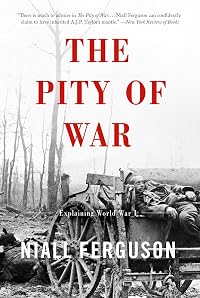
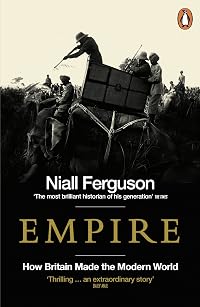
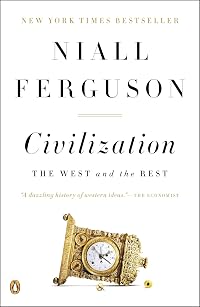
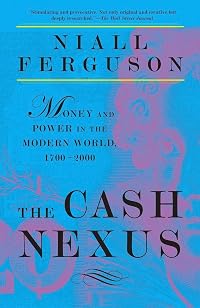
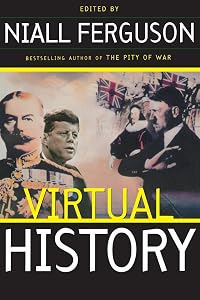
Niall Ferguson was born April 18, 1964, in Glasgow. He is a Scottish historian. He specializes in financial and economic history as well as the history of empire. He is the Laurence A. Tisch Professor of History at Harvard University and the William Ziegler Professor of Business Administration at Harvard Business School. His books include Paper show more and Iron: Hamburg Business and German Politics in the Era of Inflation 1897-1927 (1993), Virtual History: Alternatives and Counterfactuals (1997), The Pity of War: Explaining World War One (1998), The World's Banker: The History of the House of Rothschild (1998), The Cash Nexus: Money and Power in the Modern World, 1700-2000 (2001), Empire: The Rise and Demise of the British World Order and the Lessons for Global Power (2003), Colossus: The Rise and Fall of the American Empire (2004), The War of the World: Twentieth-Century Conflict and the Descent of the West (2006) and The Ascent of Money: A Financial History of the World (2008), Civilization: The West and the Rest (2011) , The Great Degeneration: How Institutions Decay and Economies Die, and The Square and the Tower: Networks and Power, from the Freemasons to Facebook. (Bowker Author Biography) show less
Some Editions
Awards and Honors
Awards
Distinctions
Work Relationships
Common Knowledge
- Original publication date
- 2006
- Important events
- World War II
- Related movies
- The War of the World (2006 | IMDb)
Classifications
Statistics
- Members
- 1,759
- Popularity
- 12,496
- Reviews
- 17
- Rating
- (3.90)
- Languages
- 10 — Chinese, Czech, Dutch, English, Estonian, German, Hungarian, Italian, Portuguese, Spanish
- Media
- Paper, Audiobook, Ebook
- ISBNs
- 27
- UPCs
- 2
- ASINs
- 11