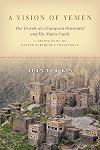
A Vision of Yemen: The Travels of a European Orientalist and His Native Guide, A Translation of Hayyim Habshush's Travelogue
by Alan Verskin
On This Page
Description
In 1869, Hayyim Habshush, a Yemeni Jew, accompanied the European orientalist Joseph Halévy on his archaeological tour of Yemen. Twenty years later, Habshush wrote A Vision of Yemen, a memoir of their travels, that provides a vivid account of daily life, religion, and politics. More than a simple travelogue, it is a work of trickster-tales, thick anthropological descriptions, and reflections on Jewish–Muslim relations. At its heart lies the fractious and intimate relationship between the show more Yemeni coppersmith and the "enlightened" European scholar and the collision between the cultures each represents. The book thus offers a powerful indigenous response to European Orientalism. This edition is the first English translation of Habshush's writings from the original Judeo-Arabic and Hebrew and includes an accessible historical introduction to the work. The translation maintains Habshush's gripping style and rich portrayal of the diverse communities and cultures of Yemen, offering a potent mixture of artful storytelling and cultural criticism, suffused with humor and empathy. Habshush writes about the daily lives of men and women, rich and poor, Jewish and Muslim, during a turbulent period of war and both Ottoman and European imperialist encroachment. With this translation, Alan Verskin recovers the lost voice of a man passionately committed to his land and people. show lessTags
Member Reviews
The French orientalist Joseph Halévy visited Yemen in 1869-1870, travelling in parts of the country no Westerner had got to since Roman times, and came back with a huge collection of transcriptions of Sabaean inscriptions that revolutionised the study of the ancient history of the Arabian peninsula.
Twenty years later, another traveller, the Austrian Eduard Glaser, also collecting Sabaean inscriptions in Yemen, met a man called Hayîm Habshûsh, a Jewish coppersmith and antiquary from Sana'a, who told him that he had accompanied Halévy on all his travels in the interior of Yemen, and assisted him by copying inscriptions, but that Halévy had expunged him from the published record of his travels. Glaser encouraged Habshûsh to write show more down the story of the journey from his own point of view. Obviously it's a rare and fascinating thing to have an account of an orientalist expedition from the local's point-of-view, but Glaser was possibly more interested in the chance of annoying his academic rival. But he was also very interested in getting an example of a written text by a Yemeni Jew for linguistic analysis: we see this when he interrupts Habshûsh about a quarter of the way though to tell him off for writing in classical Hebrew; Habshûsh switches to his everyday language of Arabic written in Hebrew characters (and also changes from giving dates withJewish-style year numbers to Islamic ones!). Glaser doesn't seem to have done anything with Habshûsh's manuscript, and it remained unpublished until S.D. Goitein published a Hebrew version in 1939.
Habshûsh is a gloriously eccentric, rambling narrator, who keeps straying off the track of his journey with Halévy to give us apparently random background information about the customs of the people he's travelling amongst, or recounting anecdotes which have some vague relevance to those people, their ancestors, or their descendants. It's a very sitting-around-the-fire sort of story, it's no good being impatient and trying to skip ahead. Especially since the manuscript seems to be incomplete (or unfinished) - it just tails off a little before Halévy and Habshûsh get back to Sana'a. You have to sit back and enjoy the detail, which actually tells you quite a lot about the complexities of life in Yemen, especially about the relations between Arabs and Jews.
A lot of what Habshûsh tells us was obviously almost as strange to him, a city dweller who rarely ventured out of Sana'a, as it is to us. Jews had a client-status in Yemeni society, rather like women and slaves - they were not allowed to carry arms to defend themselves, and had to pay protection money to a tribal leader who would take it as a matter of honour to avenge any wrong done to them. The fine (blood-money) for killing a Jew or a woman was four times higher than that for killing an Arab warrior. Habshûsh seems to have mixed feelings about Ottoman rule - in some ways it made society more orderly and protected Jews against the arbitrary rapaciousness of tribal leaders, but in other ways it messed up the clientage system by making Jews pay taxes to the state and taking away the protector's sense of obligation.
Halévy and Habshûsh have all sorts of adventures on their travels - they are robbed, taken for spies, djinns, or witches, imprisoned, they suffer hunger and thirst in the desert, have to deal with snakes and scorpions, but they also meet with a lot of kindness from strangers who are sometimes even worse off than they are. Jewish solidarity and the Arab tradition of hospitality are obviously both very important. As is the ritualised sharing of news between travellers (which both T.E. Lawrence and Wilfred Thesiger discuss at length in their books) - Habshûsh finally seems to lose his patience with Halévy when they are rushing back to Sana'a and Halévy tells him that they have no time to spare to stop and gossip with everyone they meet. This is a simply unthinkable breach of desert protocol!
It's fun to try to match up Habshûsh's account with Halévy's, but I didn't get very far with this. There are only a very small number of incidents that they both describe - and of course they have strikingly different versions, since Halévy does all his own negotiating, exploring, fighting and transcribing in his version, whilst in Habshûsh the honoured maître is so conspicuous and clumsy a foreigner that he can barely go out in public without starting a riot, and it's Habshûsh who has to do everything for him, especially scrambling up mountains in search of bits of stone with Sabaean characters on them. (And it's a nightmare trying to match-up the places they visit, since the two books use different conventions for romanising Arab names.)
I don't suppose there's any actual evidence after this length of time to prove which of them was stretching the truth - they both have something to gain from a bit of self-glorification, but Halévy's motivation to lie is probably stronger, since he can't have anticipated that Habshûsh would ever get to tell his version. One obvious reason to write Habshûsh out of the story is that travelling with a Jewish companion and staying with Jewish people puts Halévy's own Jewishness in the centre of the story, something that he probably would have wanted to play down as far as possible in the France of the 1870s. On the other hand, Habshûsh comes across as a colourful storyteller, not a precise witness. And if we were really being devil's advocate - what's to prove that Glaser didn't make the whole thing up as a joke? (OK, I'm sure someone must have checked that...)
Obviously, the academic world of the 21st century has a strong motivation to dig up voices like Habshûsh's, who give the orientalised a chance to speak for themselves, so it's not unreasonable to assume that he's been given a bit more benefit of the doubt than he's really entitled to. Fortunately, we don't have to decide on this, and can simply enjoy his text for what it is, a great story of adventure in distant lands, told from a rather unusual perspective. show less
Twenty years later, another traveller, the Austrian Eduard Glaser, also collecting Sabaean inscriptions in Yemen, met a man called Hayîm Habshûsh, a Jewish coppersmith and antiquary from Sana'a, who told him that he had accompanied Halévy on all his travels in the interior of Yemen, and assisted him by copying inscriptions, but that Halévy had expunged him from the published record of his travels. Glaser encouraged Habshûsh to write show more down the story of the journey from his own point of view. Obviously it's a rare and fascinating thing to have an account of an orientalist expedition from the local's point-of-view, but Glaser was possibly more interested in the chance of annoying his academic rival. But he was also very interested in getting an example of a written text by a Yemeni Jew for linguistic analysis: we see this when he interrupts Habshûsh about a quarter of the way though to tell him off for writing in classical Hebrew; Habshûsh switches to his everyday language of Arabic written in Hebrew characters (and also changes from giving dates withJewish-style year numbers to Islamic ones!). Glaser doesn't seem to have done anything with Habshûsh's manuscript, and it remained unpublished until S.D. Goitein published a Hebrew version in 1939.
Habshûsh is a gloriously eccentric, rambling narrator, who keeps straying off the track of his journey with Halévy to give us apparently random background information about the customs of the people he's travelling amongst, or recounting anecdotes which have some vague relevance to those people, their ancestors, or their descendants. It's a very sitting-around-the-fire sort of story, it's no good being impatient and trying to skip ahead. Especially since the manuscript seems to be incomplete (or unfinished) - it just tails off a little before Halévy and Habshûsh get back to Sana'a. You have to sit back and enjoy the detail, which actually tells you quite a lot about the complexities of life in Yemen, especially about the relations between Arabs and Jews.
A lot of what Habshûsh tells us was obviously almost as strange to him, a city dweller who rarely ventured out of Sana'a, as it is to us. Jews had a client-status in Yemeni society, rather like women and slaves - they were not allowed to carry arms to defend themselves, and had to pay protection money to a tribal leader who would take it as a matter of honour to avenge any wrong done to them. The fine (blood-money) for killing a Jew or a woman was four times higher than that for killing an Arab warrior. Habshûsh seems to have mixed feelings about Ottoman rule - in some ways it made society more orderly and protected Jews against the arbitrary rapaciousness of tribal leaders, but in other ways it messed up the clientage system by making Jews pay taxes to the state and taking away the protector's sense of obligation.
Halévy and Habshûsh have all sorts of adventures on their travels - they are robbed, taken for spies, djinns, or witches, imprisoned, they suffer hunger and thirst in the desert, have to deal with snakes and scorpions, but they also meet with a lot of kindness from strangers who are sometimes even worse off than they are. Jewish solidarity and the Arab tradition of hospitality are obviously both very important. As is the ritualised sharing of news between travellers (which both T.E. Lawrence and Wilfred Thesiger discuss at length in their books) - Habshûsh finally seems to lose his patience with Halévy when they are rushing back to Sana'a and Halévy tells him that they have no time to spare to stop and gossip with everyone they meet. This is a simply unthinkable breach of desert protocol!
It's fun to try to match up Habshûsh's account with Halévy's, but I didn't get very far with this. There are only a very small number of incidents that they both describe - and of course they have strikingly different versions, since Halévy does all his own negotiating, exploring, fighting and transcribing in his version, whilst in Habshûsh the honoured maître is so conspicuous and clumsy a foreigner that he can barely go out in public without starting a riot, and it's Habshûsh who has to do everything for him, especially scrambling up mountains in search of bits of stone with Sabaean characters on them. (And it's a nightmare trying to match-up the places they visit, since the two books use different conventions for romanising Arab names.)
I don't suppose there's any actual evidence after this length of time to prove which of them was stretching the truth - they both have something to gain from a bit of self-glorification, but Halévy's motivation to lie is probably stronger, since he can't have anticipated that Habshûsh would ever get to tell his version. One obvious reason to write Habshûsh out of the story is that travelling with a Jewish companion and staying with Jewish people puts Halévy's own Jewishness in the centre of the story, something that he probably would have wanted to play down as far as possible in the France of the 1870s. On the other hand, Habshûsh comes across as a colourful storyteller, not a precise witness. And if we were really being devil's advocate - what's to prove that Glaser didn't make the whole thing up as a joke? (OK, I'm sure someone must have checked that...)
Obviously, the academic world of the 21st century has a strong motivation to dig up voices like Habshûsh's, who give the orientalised a chance to speak for themselves, so it's not unreasonable to assume that he's been given a bit more benefit of the doubt than he's really entitled to. Fortunately, we don't have to decide on this, and can simply enjoy his text for what it is, a great story of adventure in distant lands, told from a rather unusual perspective. show less
Ratings
Members
- Recently Added By
Lists

Books Read in 2018
4,360 works; 110 members
Author Information
3 Works 25 Members
Alan Verskin received his Ph.D. from Princeton University. He has taught at Macalester College and Columbia University. He is presently an assistant professor in the Department of History at the University of Rhode Island. Most recently, he has published Oppressed in the Land? Fatwas on Muslims Living under Non-Muslim Rule from the Middle Ages to show more the Present (Markus Wiener Publishers, 2013). show less
Awards and Honors
Classifications
- Genres
- Nonfiction, Travel, History, Biography & Memoir, Sociology
- DDC/MDS
- 953.3 — History & geography History of Asia West Asian; Yemen, Kuwait, Saudi Arabia Yemen
- LCC
- DS247 .Y42 .H313 — History of Europe, Asia, Africa and Oceania Asia History of Asia Arabian Peninsula. Saudi Arabia Local history and description
- BISAC
Statistics
- Members
- 7
- Popularity
- 2,748,205
- Reviews
- 1
- Rating
- (3.75)
- Languages
- English, French
- Media
- Paper, Ebook
- ISBNs
- 3