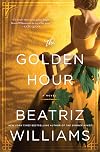
The Golden Hour
by Beatriz Williams
On This Page
Description
"The Bahamas, 1941. Newly-widowed Leonora "Lulu" Randolph arrives in Nassau to investigate the Governor and his wife for a New York society magazine. After all, American readers have an insatiable appetite for news of the Duke and Duchess of Windsor, that glamorous couple whose love affair nearly brought the British monarchy to its knees five years earlier. What more intriguing backdrop for their romance than a wartime Caribbean paradise, a colonial playground for kingpins of ill-gotten show more empires? Or so Lulu imagines. But as she infiltrates the Duke and Duchess's social circle, and the powerful cabal that controls the islands' political and financial affairs, she uncovers evidence that beneath the glister of Wallis and Edward's marriage lies an ugly-and even treasonous-reality. In fact, Windsor-era Nassau seethes with spies, financial swindles, and racial tension, and in the middle of it all stands Benedict Thorpe: a scientist of tremendous charm and murky national loyalties. Inevitably, the willful and wounded Lulu falls in love. Then Nassau's wealthiest man is murdered in one of the most notorious cases of the century, and the resulting coverup reeks of royal privilege. Benedict Thorpe disappears without a trace, and Lulu embarks on a journey to London and beyond to unpick Thorpe's complicated family history: a fateful love affair, a wartime tragedy, and a mother from whom all joy is stolen."--Publisher. show lessTags
Recommendations





Member Reviews
This is a lovely read, a dessert of a book.
I have read several of Beatriz Williams' books, and she was on my must read list after the first one. Her writing is sincere, flowing, smooth, wonderful. This book is certainly no exception.
It had me loving the protagonist after the first page. I loved several people before this book was done. The situations and the surroundings are so well described that you feel you actually packed your suitcase and went there. The characters are people you talk to after you close the book (finally) to go to sleep. I love the style it is written in, with two voices sharing chapters, one after the other.
I learned historical things reading the book as well as enjoying the read. There was romance, intrigue, show more heartache, an urgency to hurry and see what was going to happen next as well as a need to slow it down and read every nuance of every sentence.
Loved it...as will you.
My copy was provided to me by Librarything.com and the publisher and for that I thank them. show less
I have read several of Beatriz Williams' books, and she was on my must read list after the first one. Her writing is sincere, flowing, smooth, wonderful. This book is certainly no exception.
It had me loving the protagonist after the first page. I loved several people before this book was done. The situations and the surroundings are so well described that you feel you actually packed your suitcase and went there. The characters are people you talk to after you close the book (finally) to go to sleep. I love the style it is written in, with two voices sharing chapters, one after the other.
I learned historical things reading the book as well as enjoying the read. There was romance, intrigue, show more heartache, an urgency to hurry and see what was going to happen next as well as a need to slow it down and read every nuance of every sentence.
Loved it...as will you.
My copy was provided to me by Librarything.com and the publisher and for that I thank them. show less
 This review was written for LibraryThing Early Reviewers.
Full disclosure: I am a sucker for well-done, intelligent historical fiction, so when a book is all that, I am transported and invested from cover to cover. This book had all of that. Set in two time periods — just before and during WWI and during WWII — in several countries — Switzerland, Germany, England, Scotland, the Bahamas, and south Florida — Ms. Willams weaves the stories of two grand, tragic love affairs into an historical, unflattering portrait of the Duke and Duchess of Windsor, Edward and the woman he married, Wallis Simpson, thereby abdicating the crown of England. The plot has plenty of fresh twists, the characters are vivid and multi-dimensional, and the prose is lovely and lively. The narrator of the WWII-era show more parts, Lulu, is a plain-talking, tough but tender, modern American women thrown into this largely British life, and who would be at home in a black-and-white spy thriller. Delightful. show less
If I could give this book more than five stars, I would do so. It’s that good. It is well-written with beautiful descriptions, but not too much, and interesting characters whom I felt like I knew personally. My favorite part of the book, however, is how Beatriz Williams skillfully weaves together two seemingly parallel plot lines that ultimately crossover in a beautifully satisfying ending. Pure literary genius.
When I first read the synopsis, I assumed that the Duke and Duchess of Windsor would occupy the role of protagonists in the novel. Happily, I was wrong. While their presence is very much evident in the storyline, they are background characters who act as catalysts for setting certain events in motion. Also, by remaining in the show more background, they don’t overshadow the main characters like celebrities attending a school play. Lulu, Benedict, Elfriede, and Wilfred roam freely though the story in the light of their own making.
I must mention the dedication page: “To women and men everywhere who live with depression. You are loved. You are needed. The night will pass.” One of the main characters suffers from depression, and just as this dedication offers hope at the beginning of the book, Williams portrays it with a touching empathy that maintains this hopefulness through to the end of the story.
I highly recommend this book to anyone who wants to get lost in a good story. I’m thankful I won the ARC in a Goodreads giveaway, or otherwise I might not have discovered this richly satisfying and mesmerizing novel on my own. show less
When I first read the synopsis, I assumed that the Duke and Duchess of Windsor would occupy the role of protagonists in the novel. Happily, I was wrong. While their presence is very much evident in the storyline, they are background characters who act as catalysts for setting certain events in motion. Also, by remaining in the show more background, they don’t overshadow the main characters like celebrities attending a school play. Lulu, Benedict, Elfriede, and Wilfred roam freely though the story in the light of their own making.
I must mention the dedication page: “To women and men everywhere who live with depression. You are loved. You are needed. The night will pass.” One of the main characters suffers from depression, and just as this dedication offers hope at the beginning of the book, Williams portrays it with a touching empathy that maintains this hopefulness through to the end of the story.
I highly recommend this book to anyone who wants to get lost in a good story. I’m thankful I won the ARC in a Goodreads giveaway, or otherwise I might not have discovered this richly satisfying and mesmerizing novel on my own. show less
As its title suggests, The Golden Hour is doused in the shimmering, golden charm of the 1940s Bahamas, and shadowed with the political intrigue and tense race relations of the time.
I was absolutely enthralled by this plot, the writing, the setting, everything!
Lulu, a journalist who would’ve otherwise been forced to pack her bags and head back to the States with her tail and ink pen between her legs, instead makes her living packaging the high society life of the Duke and Duchess and selling it to readers as “The Lady of Nassau.” Granted access into the intimate goings-on of the banished royals, Lulu sees the stains that those meticulously positioned Union Jack pillows are meant to conceal 🇬🇧. Betrayal, treason, show more murder—all of these secrets hit Lulu personally when her (spy) husband goes missing, taken as a prisoner of war.
As Lulu risks her life to save Thorpe, she learns about the complicated, pained, beautiful, and scattered family that he comes from.
Told from two alternating perspectives and multiple timelines, this novel—with its glittering wits, poignant romances, and family intricacies—delights on every page.
Seriously. I want to live at the Prince George hotel in Nassau, heading toward my trusty bartender at 6 pm, people-watching while he whips me up a rum punch cocktail?!?! “So [begins Lulu’s] twentieth night in Nassau. Now pay attention” (Williams 38). And, God help you, when Beatriz Williams starts spinning a narrative (or three), you better sit up and pay that attention in full. show less
I was absolutely enthralled by this plot, the writing, the setting, everything!
Lulu, a journalist who would’ve otherwise been forced to pack her bags and head back to the States with her tail and ink pen between her legs, instead makes her living packaging the high society life of the Duke and Duchess and selling it to readers as “The Lady of Nassau.” Granted access into the intimate goings-on of the banished royals, Lulu sees the stains that those meticulously positioned Union Jack pillows are meant to conceal 🇬🇧. Betrayal, treason, show more murder—all of these secrets hit Lulu personally when her (spy) husband goes missing, taken as a prisoner of war.
As Lulu risks her life to save Thorpe, she learns about the complicated, pained, beautiful, and scattered family that he comes from.
Told from two alternating perspectives and multiple timelines, this novel—with its glittering wits, poignant romances, and family intricacies—delights on every page.
Seriously. I want to live at the Prince George hotel in Nassau, heading toward my trusty bartender at 6 pm, people-watching while he whips me up a rum punch cocktail?!?! “So [begins Lulu’s] twentieth night in Nassau. Now pay attention” (Williams 38). And, God help you, when Beatriz Williams starts spinning a narrative (or three), you better sit up and pay that attention in full. show less
I'm going to the Bahamas in July, so naturally my main takeaway from this is to not go to the Bahamas in July.
I enjoyed this book (it has a Kate Morton-esque style, if that's your thing), but it felt a little jumbled/confusing at times, and Lulu was a likeable but distant protagonist. It was hard for me to get in her head for some reason. Luckily that didn't detract from my overall enjoyment too much.
I enjoyed this book (it has a Kate Morton-esque style, if that's your thing), but it felt a little jumbled/confusing at times, and Lulu was a likeable but distant protagonist. It was hard for me to get in her head for some reason. Luckily that didn't detract from my overall enjoyment too much.
While I enjoyed this book for the most part and I always like Williams' writing style, there are a couple of things about her books in general that are getting tiresome for me, which were evident while reading this one. The alternating timeline trend in historical fiction is getting really old and gimmicky, in my opinion. I've really enjoyed it in some of Williams' books (A Hundred Summers), but it's not necessary in every book, including this one. I also feel like Williams overuses the trope "I love you so I have to have your babies!" too much, especially in this one where it was dangerous and life-threatening for the character to have babies. There were also some loose ends that didn't get tied up or explained very well.
Good phrases and insights throughout; hallmarks of good writing. The well-placed observation. I had a hard time getting a handle on Lulu; her time before coming to the Bahamas. I think that could have been sharper and the info revealed a little earlier. When it is though, things are at first surprising then shocking. Lulu is one cold, calculating person.
For me it was hard to figure how the two timelines would join up. When they finally did it was pretty much the end of the book. It’s satisfying, but a bit of a stretch. I felt the romance angle was played a bit too hard - there is a lot of sex and a lot of longing and pining. It made for a prolonged story that blunted the more dire elements of the plot.
Most of that revolves around the show more ex-King of England and his wife Wallis. Characterized as the most romantic relationship on earth, Williams portrays them as more practical and disappointed in their calculations. I know very little about them or if they really were Nazi sympathizers and arranged Sir Harry Oakes’s death, but that’s very much implied here. And since that crime hasn’t been solved to this day, and that the Duke never held another post for the government, maybe it’s true. Maybe he was just incompetent. Either way it was a nice device to weave a plot around. I don’t read a lot of WWII fiction and I’m glad I made an exception for this although I think it could have used some trimming. show less
For me it was hard to figure how the two timelines would join up. When they finally did it was pretty much the end of the book. It’s satisfying, but a bit of a stretch. I felt the romance angle was played a bit too hard - there is a lot of sex and a lot of longing and pining. It made for a prolonged story that blunted the more dire elements of the plot.
Most of that revolves around the show more ex-King of England and his wife Wallis. Characterized as the most romantic relationship on earth, Williams portrays them as more practical and disappointed in their calculations. I know very little about them or if they really were Nazi sympathizers and arranged Sir Harry Oakes’s death, but that’s very much implied here. And since that crime hasn’t been solved to this day, and that the Duke never held another post for the government, maybe it’s true. Maybe he was just incompetent. Either way it was a nice device to weave a plot around. I don’t read a lot of WWII fiction and I’m glad I made an exception for this although I think it could have used some trimming. show less
This review was written for LibraryThing Early Reviewers.Members
- Recently Added By
Lists

Kirkus Starred Fiction Reviews of Books Published in 2019
411 works; 12 members

Books Read in 2019
4,052 works; 110 members
Author Information

35+ Works 10,810 Members
Beatriz Williams is a graduate of Stanford University with an MBA from Columbia. She is a USA Today and New York Times bestselling author of A Hundred Summers, The Secret Life of Violet Grant, Along the Infinite Sea, A Certain Age, and The Summer Wives. (Bowker Author Biography)
Some Editions
Awards and Honors
Distinctions
Common Knowledge
- Canonical title
- The Golden Hour
- Original publication date
- 2019
- Important places
- Nassau, Bahamas; Scotland; Switerzland; Florida, USA; Germany
Classifications
Statistics
- Members
- 625
- Popularity
- 46,623
- Reviews
- 39
- Rating
- (3.70)
- Languages
- English
- Media
- Paper, Audiobook, Ebook
- ISBNs
- 15
- ASINs
- 5