
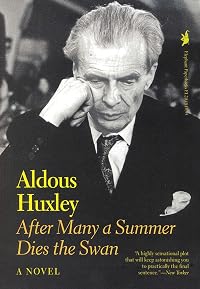
After Many a Summer Dies the Swan
by Aldous Huxley 
On This Page
Description
A Hollywood millionaire with a terror of death, whose personal physician happens to be working on a theory of longevity-these are the elements of Aldous Huxley's caustic and entertaining satire on man's desire to live indefinitely. With his customary wit and intellectual sophistication, Huxley pursues his characters in their quest for the eternal, finishing on a note of horror. "This is Mr. Huxley's Hollywood novel, and you might expect it to be fantastic, extravagant, crazy and show more preposterous. It is all that, and heaven and hell too....It is the kind of novel that he is particularly the master of, where the most extraordinary and fortuitous events are followed by contemplative little essays on the meaning of life....The story is outrageously good."—New York Times. "A highly sensational plot that will keep astonishing you to practically the final sentence."—The New Yorker. "Mr. Huxley's elegant mockery, his cruel aptness of phrase, the revelations and the ingenious surprises he springs on the reader are those of a master craftsman; Mr. Huxley is at the top of his form." —London Times Literary Supplement.. show less
Tags
Recommendations











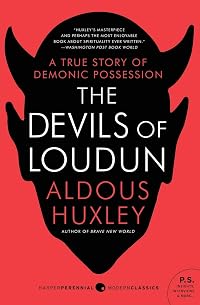

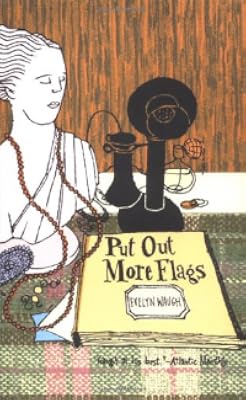
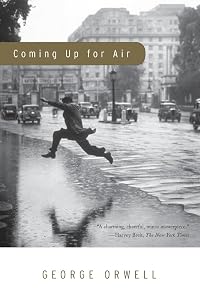

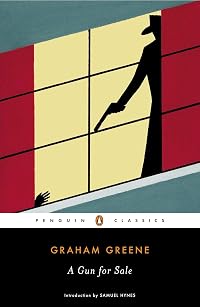
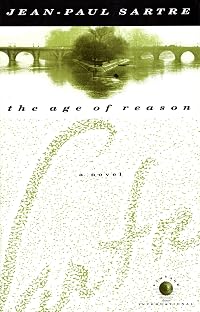


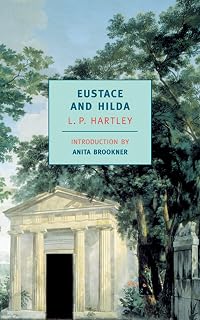


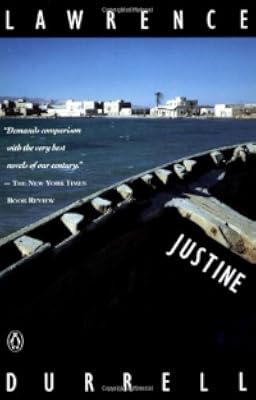


Member Recommendations
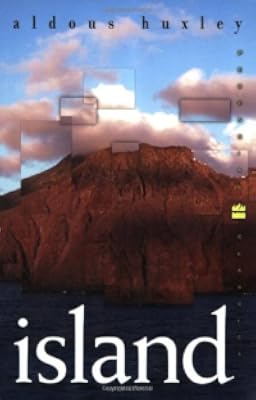
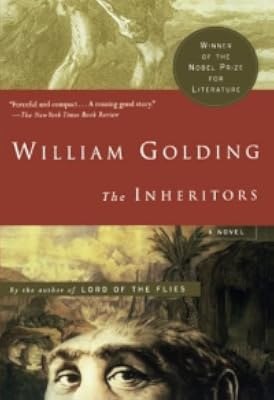
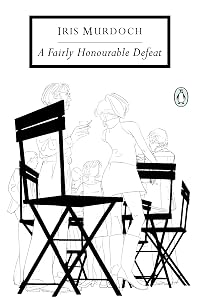
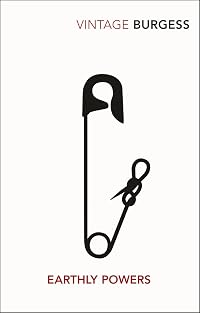
SnootyBaronet The protagonist of "A Single Man" discusses "After Many A Summer" with his students.
Jarandel Similar introduction of a speculative/fantastical premise as a device for observing and criticizing the writer's present reality.

PghDragonMan How much of your humanity are you willing to give up to live forever?
SnootyBaronet Both poke fun at Southern California mortuaries.

Member Reviews
Jeremy Pordage is an English archivist who takes a job working for Jo Stoyte, a millionaire Californian who collects valuable objects without much knowledge about or interest in them. Stoyte's latest acquisition is something called the Hauberk papers, and Pordage is thrilled to get to go through them, cataloging and delving into the papers of some family of English earls. He's thrilled at the job, but the surroundings and people prove to be a bit beyond what he might have expected to deal with. Stoyte is having a relationship with a young woman named Virginia, also called The Baby. She, in turn, is irresistible to Stoyte's doctor, Dr. Obispo, and Obispo's assistant Peter. Rounding out the cast of characters is Mr. Propter, a neighbor. show more
As is usually the case with Huxley's work, an entertaining story overlays an exploration of human attitudes and philosophies. The fear of death and the question of how to spend one's life are at the bottom of it all. Stoyte is terrified of dying, and Obispo and Pete are working to find ways to prolong human life. Unexpectedly, Pordage comes across a diary that may shed some light on the research Obispo is doing. Many more twists and turns occur in the plot, and much philosophizing is done by various characters, and it's really up to the reader how deeply he wants to explore each character's position. That's what I like about this book; it's easily read as just a mildly diverting and sometimes absurd story with a side of the meaning of life. But if you want, it can also make you think about your own feelings about death and what makes life worth living.
Recommended for: philosophers who don't take themselves too seriously, people who wonder about the wisdom of eternal life.
Quote: "Mr. Stoyte had a peculiar hatred for the ragged hordes of transients on whom he depended for the harvesting of his crops, a hatred that was more than the rich man's ordinary dislike of the poor. Not that he didn't experience that complex mixture of fear and physical disgust, of stifled compassion and shame transformed by repression into chronic exasperation." show less
As is usually the case with Huxley's work, an entertaining story overlays an exploration of human attitudes and philosophies. The fear of death and the question of how to spend one's life are at the bottom of it all. Stoyte is terrified of dying, and Obispo and Pete are working to find ways to prolong human life. Unexpectedly, Pordage comes across a diary that may shed some light on the research Obispo is doing. Many more twists and turns occur in the plot, and much philosophizing is done by various characters, and it's really up to the reader how deeply he wants to explore each character's position. That's what I like about this book; it's easily read as just a mildly diverting and sometimes absurd story with a side of the meaning of life. But if you want, it can also make you think about your own feelings about death and what makes life worth living.
Recommended for: philosophers who don't take themselves too seriously, people who wonder about the wisdom of eternal life.
Quote: "Mr. Stoyte had a peculiar hatred for the ragged hordes of transients on whom he depended for the harvesting of his crops, a hatred that was more than the rich man's ordinary dislike of the poor. Not that he didn't experience that complex mixture of fear and physical disgust, of stifled compassion and shame transformed by repression into chronic exasperation." show less
In many ways I like this book better than Brave New World, a book I stand by unreservedly. A satirical and philosophical exploration of futility, mortality, and enlightenment set in Huxley's very modern stereotype of the Southern California of the 1930s, it made me want to read both his spiritual book, The Perennial Philosophy, and Mike Davis's book on LA, City of Quartz. Some reviewers seem to think it is too dated to get 5 stars now, but I would argue (although I'm not going to get into it here) that considering when a work was written is critical in evaluating it, even if that means overlooking many elements that might seem quaint, even naive, to contemporary readers. We are talking about a book published in 1939, after all.
This book is a somewhat odd mash-up of satire and philosophical lecture. On the one hand, we have an uber rich old man, Jo Stoyte, who lives in a castle in the San Fernando Valley. He owns a bank, a cemetery, an oil company… his home is reminiscent of Hearst Castle, filled with every modern convenience and stuffed with art from around the world bought with no plan or passion. His very young live in girlfriend is called The Baby. He also has a live in physician, Obispo, who has no redeeming qualities, (I do wonder where he got his degree) to watch over him, give him testosterone shots, and do research on extending the human life span. At the beginning of the story a British scholar, Jeremy Pordage, arrives, to work on the crates and show more crates of documents from the Hauberk family- this seems at first to have no bearing on the story, but in the end, it very much does. The other main characters are Peter, Obispo’s young, innocent assistant, and Mr. Propter, who does not live in the castle. While the other characters are the satire of capitalism, lechery, conspicuous consumption, Forest Lawn type cemeteries, and the fear of death, Propter is the moral and philosophical force. And, sadly, while the rest of the story is pretty amusing- and horrific in places- Propter is as dry as a mummy’s fart. He’s a noble person- he helps out the migrant workers (remember, this is during the Depression), is working on a way for people to be self-sufficient, and is against the kind of wealth aggregation that Stoyte represents- but he does not serve to advance the plot at all. It’s like Huxley couldn’t decide what kind of book to write, so he wrote them both and did not blend them elegantly at all. Four stars. show less
This starts out as a very interesting study of the strange types of people who populated (actually still populate) Los Angeles. There are the rich and the beautiful and the power-hungry and the naïve and the dust-bowlers and the philosophers. This is the story of a rich man trying to extend his life forever with the help of a doctor who should not be trusted. The millionaire has a young girlfriend that is the center of attention to a number of other gentlemen. And there is much lying and two-facedness and other things that are to be expected of a tale that takes a look at the black-hearted soul of LA.
But the promising start quickly trails off into speeches and pontifications that, while obviously making the points Huxley wants made, do show more so in such a pedantic and verbose way that – well, I just don’t care. Of course, this is Huxley’s style, and the style he was going for. But I much prefer being shown without as much telling. show less
But the promising start quickly trails off into speeches and pontifications that, while obviously making the points Huxley wants made, do show more so in such a pedantic and verbose way that – well, I just don’t care. Of course, this is Huxley’s style, and the style he was going for. But I much prefer being shown without as much telling. show less
Extraordinary and inspired novel containing some of his sharpest satire, this time aimed at America -- the opening segment featuring an hallucinatory car ride through southern California is perfectly realized. Stated first edition first printing. Publishers dust jacket in good + condition, unclipped $2.50 price, nicks/chips to edges, closed tear to front panel, crease to back panel. Owner name on ffep, boards straight, sharp. Originally titled After Many A Summer as initially released in the United Kingdom.
Story of America's superficiality & a Hollywood millionaire fearful of imminent death (the secret to eternal life is discovered in the chemistry of a carp), who decides to extend his life despite discovering the cost of acquiring show more apelike features. Written shortly after the author's relocating from England to California. The title is taken from Tennyson's poem Tithonus, about a Greek mythology figure whom Aurora gave eternal life but not eternal youth. The book received the 1939 James Tait Black Memorial Prize for fiction. show less
Story of America's superficiality & a Hollywood millionaire fearful of imminent death (the secret to eternal life is discovered in the chemistry of a carp), who decides to extend his life despite discovering the cost of acquiring show more apelike features. Written shortly after the author's relocating from England to California. The title is taken from Tennyson's poem Tithonus, about a Greek mythology figure whom Aurora gave eternal life but not eternal youth. The book received the 1939 James Tait Black Memorial Prize for fiction. show less
Standard fare for Huxley here, make fun of various types of people, put in a selection of philosophical musings, and make sure there is some sort of human interest - a love triangle or an affair or something tragic, not forgetting the usual good measures of irony and snobbery. This time it's the Americans he has us sniggering at, and he does it rather well, despite this book being written nearly 70 years ago, they have the same brash and uncultured stereotype today, (sorry to any Americans reading this, I'm sure you're not all like that). The plot was somewhat predictable, and the ending ridiculous and not as amusing as the opening. Throughout the story there is a plot running about aging and time, and I'm sure he borrowed some of his show more ideas from the work his brother did with with the Axolotl, (a pedomorphic salamander). I didn't quite enjoy this as much as Eyeless in Gaza, or Antic Hay, but it was no effort at all to get through it and it was enjoyable enough. show less
Mrs. Pordage, The Araucarias, Woking, England," he wrote, smiling a little as he did so. The exquisite absurdity of that address was a standing source of amusement. 'The Araucarias, Woking'. His mother, when she bought the house, had wanted to change the name, as being too ingenuously middle-class, too much like a joke by Hilaire Belloc. 'But that's the beauty of it,' he had protested. 'That's the charm.' And he had tried to make her see how utterly right it would be for them to live at such an address. The deliciously comic incongruity between the name of the house and the nature of its occupants! And what a beautiful, topsy -turvy appositeness in the fact that Oscar Wilde's old friend, the witty and cultured Mrs. Pordage, should write show more her sparkling letters from The Araucarias, and that from these same Araucarias, these Araucarias, mark you, at Woking, should come the works of mingled scholarship and curiously rarefied wit for which her son had gained his reputation. Mrs. Pordage had almost instantly seen what he was driving at. No need, thank goodness, to labour your points where she was concerned. You could talk entirely in hints and anacoluthons; she could be relied on to understand. The Araucarias had remained The Araucarias.
The story starts with the arrival of a pretentious (see above!) academic at the Californian castle of Joseph Stoyte, who has employed him to work on the Hauberk Papers, 27 packing cases of manuscripts that he bought at auction. He finds himself working for an immensely rich man, an art collector and a philistine, a bully and a philanthropist, an ageing cemetery owner who hates and fears the idea of his own death. Stoyte also employs two scientists to search for a way to prolong human life, and when Dr Obispo realises that there may be a clue to an anti-ageing in the diary of a member of the Hauberk family, it paves the way for a shocking discovery.
Although I read a lot of Aldous Huxley's novels when I was at university, I don't think that this was one of them, as I would definitely have remembered the clever use of a particular biological concept that was mentioned on my course. show less
The story starts with the arrival of a pretentious (see above!) academic at the Californian castle of Joseph Stoyte, who has employed him to work on the Hauberk Papers, 27 packing cases of manuscripts that he bought at auction. He finds himself working for an immensely rich man, an art collector and a philistine, a bully and a philanthropist, an ageing cemetery owner who hates and fears the idea of his own death. Stoyte also employs two scientists to search for a way to prolong human life, and when Dr Obispo realises that there may be a clue to an anti-ageing in the diary of a member of the Hauberk family, it paves the way for a shocking discovery.
Although I read a lot of Aldous Huxley's novels when I was at university, I don't think that this was one of them, as I would definitely have remembered the clever use of a particular biological concept that was mentioned on my course. show less
Members
- Recently Added By
Lists

Anthony Burgess 99 Post War Novels
99 works; 7 members

The Works of Aldous Huxley
49 works; 1 member

Books We Love to Reread
688 works; 296 members
Author Information

286+ Works 104,759 Members
Aldous Huxley was born on July 26, 1894, in Surrey, England, into a distinguished scientific and literary family; his grandfather was the noted scientist and writer, T.H. Huxley. Following an eye illness at age 16 that resulted in near-blindness, Huxley abandoned hope of a career in medicine and turned instead to literature, attending Oxford show more University and graduating with honors. While at Oxford, he published two volumes of poetry. Crome Yellow, his first novel, was published in 1927 followed by Antic Hay, Those Barren Leaves, and Point Counter Point. His most famous novel, Brave New World, published in 1932, is a science fiction classic about a futuristic society controlled by technology. In all, Huxley produced 47 works during his long career, In 1947, Huxley moved with his family to southern California. During the 1950s, he experimented with mescaline and LSD. Doors of Perception and Heaven and Hell, both works of nonfiction, were based on his experiences while taking mescaline under supervision. In 1959, Aldous Huxley received the Award of Merit for the Novel from the American Academy of Arts and Letters. He died on November 22, 1963. (Bowker Author Biography) show less
Aldous Huxley has a Legacy Library. Legacy libraries are the personal libraries of famous readers, entered by LibraryThing members from the Legacy Libraries group.
Some Editions
Awards and Honors
Series
Belongs to Publisher Series
Work Relationships
Common Knowledge
- Canonical title*
- After many a summer dies the swan
- Original title
- After Many a Summer
- Alternate titles
- After Many a Summer Dies the Swan (in USA) (in USA)
- Original publication date
- 1939
- People/Characters*
- Jeremy Pordage
- First words
- It had all been arranged by telegram: Jeremy Pordage was to look out for a coloured chauffeur in a grey uniform with a carnation in his button-hole; and the coloured chauffeur was to look out for a middle-aged Englishman carr... (show all)ying the Poetical Works of Wordsworth. In spite of the crowds at the station, they found one another without difficulty.
- Quotations
- Pleasure cannot be shared; like Pain, it can only be experienced or inflicted, and when we give pleasure to our Lovers or bestow Charity upon the Needy, we do so, not to gratify the object of our Benevolence, but only ourselv... (show all)es. For the Truth is that we are kind for the same reason as we are cruel, in order that we may enhance the sense of our own Power.
- Last words
- (Click to show. Warning: May contain spoilers.)Dr. Obispo went on looking at him in silence; then threw back his head and started to laugh again.
- Original language*
- Inglés
- Canonical DDC/MDS
- 813.6
- Canonical LCC
- PS3601.B739
- Disambiguation notice
- Title taken from [Tithonus], Alfred, Lord Tennyson
*Some information comes from Common Knowledge in other languages. Click "Edit" for more information.
Classifications
Statistics
- Members
- 1,325
- Popularity
- 18,090
- Reviews
- 15
- Rating
- (3.63)
- Languages
- 11 — Danish, Dutch, English, French, German, Italian, Polish, Portuguese, Russian, Spanish, Swedish
- Media
- Paper, Ebook
- ISBNs
- 29
- UPCs
- 1
- ASINs
- 49