On This Page
Description
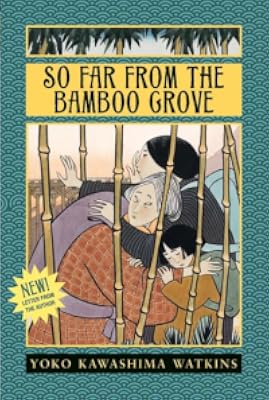
A fictionalized autobiography in which eleven-year-old Yoko escapes from Korea to Japan with her mother and sister at the end of World War II.Tags
Recommendations



Member Reviews
This book was a hard read, and yet I could not put it down. I say it was a hard read due to how Yoko Kawashima held nothing back, and therefore made me as a reader feel panic, pain, and hope for her and her family. One of the things I loved the most about this book is the language that included so much detail and immersed me into the story, like “All those sick people looked pale as ghosts in the oily, smelly, dark freight car” (p.40). I could see the train, and I could imagine the smell, which brought me closer to the Kawashimas. I also loved the plot, because despite how horrible it is, it is a true story that needs to be told. I think the story was told without bashing any nationality, which I find very admirable considering what show more Yoko went through. In many ways, I think this is a the story's lesson. People are more than their race, nationality, gender, etc. Like the Korean Lees and the Kims that were kind to the Japanese Kawashimas, and the Japanese school girls that were mean to Yoko, their race did not define how they would treat others. In the heart of it all, I think this book is about kindness, strength, and hope, which is a valuable lesson for any child. show less
I had mixed feelings about "So Far from the Bamboo Grove". I thought that the message of the story was an important one to tell and that it would be a good tool to teach students about World War II without the class feeling like a boring history lesson. One of the messages is showing how powerful a one-sided story can be—how easily we can be influenced when we hear very little from the other perspective. The second message teaches empathy, respect and love for those you care for and who care for you, no matter the circumstance; Yoko and her family must abandon everything they’ve ever known to seek refuge from persecution and through it all, they never lost sight of what is most important. Yoko feels empathy and love for Corporal show more Matsumura in the hospital and it grows as their relationship develops; she feels empathy and respect for Mr. Naido and wants to help him improve his speech impediment. All of these aspects of the book are not lost on me, however it was hard for me to imagine a 10 year old reading this text and being able to comprehend the underlying messages beneath the gore. The journey that Yoko, her mother and her sister go on is ridden with horrific killings, rape and neglect of basic human rights—they are exposed to things that no one should ever have to see. Watkins does not spare the reader many details and I believe that most students will have a hard time looking beyond these parts or understanding what they meant for the characters. It was difficult for me, as a 20-year-old to read some of it and I would be afraid that a 5th grade class would need a lot of guidance through it. I am not saying that I think students should be sheltered from learning about difficult subjects and I certainly do not think that ignoring the history of our world because it is scary is the right thing to do but I believe the recommended age should be increased to a middle and high school level. show less
While I personally loved this book, I do not think it would be fitting for all school-aged readers. The story follows a Japanese family as they must leave their homes to avoid being robbed and murdered by Koreans during the end of World War II. It was expertly written, full of detail and suspense, especially during the parts where Yoko, Ko, and Mother are traveling through the forests to get to a safer land. My criticism for why I would be hesitant for young readers to have this book comes from the rape, murder, and death throughout this book. Scenes of mothers throwing themselves off of trains, young girls getting raped in bathrooms, and senseless killings fill the pages of this book. There would definitely need to be a consideration show more of the maturity level of students before allowing this as a classroom book. The message of "better things to come' and making a new life for yourself are very relatable for readers, even though the story as a whole might not be. After mother passes, Yoko and Ko work tirelessly to ensure that they have the money they need to stay alive and well. Their perseverance helps them to stay positive and to eventually come back into contact with their brother, which ends the book beautifully. I would strongly recommend this book for high-school and adult readers, but would be more hesitant to provide it for upper middle school readers. show less
"So Far from the Bamboo Grove" tells two parallel stories of the Kawashima family, consisting of Yoko, the narrator, Ko, her sister, Hideyo, her brother, and her Mother. The Kawashimas are a Japanese military family stationed in Nanam, close to the northernmost border of the then unified Korea, at the end of World War II. Germany has surrendered, the Japanese are about to be nuked by America, and their power in Korea is being usurped by a Communist rebellion.
The story beings on the precipice of disaster for the Kawashima family. Life is still relatively normal, though they must constantly plan for an imminent escape from their home. Yoko, and her family, make friends with an injured military officer through a child's dance routine. But show more then the inevitable happens and the Japanese are done in Korea. The Kawashima family must escape in the dead of night to avoid possible torture, rape, and execution at the hands of the Korean usurpers and Russian backers. However, the escape party only includes Yoko, Ko, and their mother. Hideyo is miles away, working in a munitions facility, if I recall. And their father, a high ranking military officer, never makes an appearance and is presumed dead.
The trio leave instructions for Hideyo to meet them in Seoul, hundreds of miles south. By grace of the military officer they befriended, Colonel Matsumura, they are able to board a hospital train bound for Seoul. During the trip they deal with death - bodies of adults and children alike are thrown from the train for disposal, as there is no time for a proper burial - sickness, newborns, and Communists. The trip is abruptly stopped when air raids destroy the plain and the Kawashimas are forced to walk.
During their arduous trip to Seoul, and then further to Pusan, awaiting a ferry back to mainland Japan, the Kawashima family is struck with hardship that is almost incomprehensible to me. They must find a hidden safe place to sleep during the day, as they travel at night, hope desperately to find a source of water in which to bathe, wash clothers, and replenish supplies, and ration food. Then there is the scene in which the three happen upon Korean soldiers raping an innocent woman, and it would seem as though they were next to meet such a fate. But, an air raid, seemingly decreed by providence, kills the soldiers, dazes both Ko and her mother, but Yoko is injured by shrapnel.
Upon reaching Seoul, the family makes camp in the train station for days, awaiting Hideyo's arrival. They eat what they can, including garbage, and last as long as they can. Eventually, they are hurried off to Pusan, to escape to the safety of Japan. They then board a boat and arrive at a port in Fukuoka, Japan, and subsequently travel to Kyoto, once again setting camp at the train station. At each stop the family leave notes for Hideyo signalling their next destination.
The mother enters the girls in school Yoko in middle school and Ko in high education, and attempts to find her own parents. Finding the area decimated by war, and he parents dead the Mother returns to the Kyoto train station to her daughters and promptly dies, from what I can only gather is stress and illness from their journey. Yoko and Ko are luckily enough to find a family that allows them to live in a room above a warehouse. They make money by selling trinkets Ko creates, and living a meager life, still rooting through garbage bins on occasion. However, they are surprised to find that a quilt their mother carries a hidden pocket containing a substantial sum of money - to the destitute that is - that they vow to save.
Yoko continues with school and is treated poorly due to her poverty and refugee status. She makes friends with the stuttering janitor, who she helps learn to speak more fluidly, and he provides her with supplies he finds lying around. Eventually she learns of an essay competition with a large cash prize. Yoko writes about her treatment in school and actually wins the contest. This not only brings money, but hatred from fellow students and administrators, as it was essentially smack talk. But, this allows the aforementioned Colonel Matsumura to find the girls and reconecct, offering them some help.
Hideyo, one the other hand, barely escapes the factory - with 3 friends - as it is burning to the ground. He goes home and discovers the note left by his family. He and his friends begin their trek across more than entire present day country, and while they don't have to fear the same type of sexual violence seen by his family, he is still in mortal peril for almost the entire trip.
The group splits in Seoul, as Hideyo goes his own way. Alone, he coincidentally ventures towards Pusan, having missed the fact that his family carved a message in the station posts. Eventually, physically exhausted, Hideyo collapses on the outskirts of a farm house. The family takes him in and cares for him, and help him to resupply for the remainder of his journey. He makes it to Pusan, sees the signs left for him by his family. After sailing to Japan he finds more signs, that his sisters both ventured to place every weekend, that leads to a happy reunion between the three.
I very much enjoyed this book, and it stood out to me for a very particular reason. Often, we read stories about people escaping persecution, like this one. But this is a new twist. These people suffering atrocities, and fighting for their lives in a hostile land...while they are oppressed, were previously the oppressors. It's like reading a story about a family of Tories trying to get back to Britain at the end of the American Revolution. It begs the question, "When do the oppressors become the oppressed?" And also, "Can such a switch happen in the same generation?" as I'm sure many of those Koreans felt entirely justified in their actions.
These are probably the big questions I would concentrate upon if I were to design a lesson around this book. It's a bit of a long read for the target audience, though the language is a bit simplified. I would want my students to concentrate on what it means to be oppressed and where the line is drawn when it comes to justifiable retribution. Should it be peaceful, is violence ever necessary, if so, what is the line where violence is justifiable? Questions like these. I would also love to include articles detailing the two sides, like works about both Gandhi and the Bolsheviks. show less
The story beings on the precipice of disaster for the Kawashima family. Life is still relatively normal, though they must constantly plan for an imminent escape from their home. Yoko, and her family, make friends with an injured military officer through a child's dance routine. But show more then the inevitable happens and the Japanese are done in Korea. The Kawashima family must escape in the dead of night to avoid possible torture, rape, and execution at the hands of the Korean usurpers and Russian backers. However, the escape party only includes Yoko, Ko, and their mother. Hideyo is miles away, working in a munitions facility, if I recall. And their father, a high ranking military officer, never makes an appearance and is presumed dead.
The trio leave instructions for Hideyo to meet them in Seoul, hundreds of miles south. By grace of the military officer they befriended, Colonel Matsumura, they are able to board a hospital train bound for Seoul. During the trip they deal with death - bodies of adults and children alike are thrown from the train for disposal, as there is no time for a proper burial - sickness, newborns, and Communists. The trip is abruptly stopped when air raids destroy the plain and the Kawashimas are forced to walk.
During their arduous trip to Seoul, and then further to Pusan, awaiting a ferry back to mainland Japan, the Kawashima family is struck with hardship that is almost incomprehensible to me. They must find a hidden safe place to sleep during the day, as they travel at night, hope desperately to find a source of water in which to bathe, wash clothers, and replenish supplies, and ration food. Then there is the scene in which the three happen upon Korean soldiers raping an innocent woman, and it would seem as though they were next to meet such a fate. But, an air raid, seemingly decreed by providence, kills the soldiers, dazes both Ko and her mother, but Yoko is injured by shrapnel.
Upon reaching Seoul, the family makes camp in the train station for days, awaiting Hideyo's arrival. They eat what they can, including garbage, and last as long as they can. Eventually, they are hurried off to Pusan, to escape to the safety of Japan. They then board a boat and arrive at a port in Fukuoka, Japan, and subsequently travel to Kyoto, once again setting camp at the train station. At each stop the family leave notes for Hideyo signalling their next destination.
The mother enters the girls in school Yoko in middle school and Ko in high education, and attempts to find her own parents. Finding the area decimated by war, and he parents dead the Mother returns to the Kyoto train station to her daughters and promptly dies, from what I can only gather is stress and illness from their journey. Yoko and Ko are luckily enough to find a family that allows them to live in a room above a warehouse. They make money by selling trinkets Ko creates, and living a meager life, still rooting through garbage bins on occasion. However, they are surprised to find that a quilt their mother carries a hidden pocket containing a substantial sum of money - to the destitute that is - that they vow to save.
Yoko continues with school and is treated poorly due to her poverty and refugee status. She makes friends with the stuttering janitor, who she helps learn to speak more fluidly, and he provides her with supplies he finds lying around. Eventually she learns of an essay competition with a large cash prize. Yoko writes about her treatment in school and actually wins the contest. This not only brings money, but hatred from fellow students and administrators, as it was essentially smack talk. But, this allows the aforementioned Colonel Matsumura to find the girls and reconecct, offering them some help.
Hideyo, one the other hand, barely escapes the factory - with 3 friends - as it is burning to the ground. He goes home and discovers the note left by his family. He and his friends begin their trek across more than entire present day country, and while they don't have to fear the same type of sexual violence seen by his family, he is still in mortal peril for almost the entire trip.
The group splits in Seoul, as Hideyo goes his own way. Alone, he coincidentally ventures towards Pusan, having missed the fact that his family carved a message in the station posts. Eventually, physically exhausted, Hideyo collapses on the outskirts of a farm house. The family takes him in and cares for him, and help him to resupply for the remainder of his journey. He makes it to Pusan, sees the signs left for him by his family. After sailing to Japan he finds more signs, that his sisters both ventured to place every weekend, that leads to a happy reunion between the three.
I very much enjoyed this book, and it stood out to me for a very particular reason. Often, we read stories about people escaping persecution, like this one. But this is a new twist. These people suffering atrocities, and fighting for their lives in a hostile land...while they are oppressed, were previously the oppressors. It's like reading a story about a family of Tories trying to get back to Britain at the end of the American Revolution. It begs the question, "When do the oppressors become the oppressed?" And also, "Can such a switch happen in the same generation?" as I'm sure many of those Koreans felt entirely justified in their actions.
These are probably the big questions I would concentrate upon if I were to design a lesson around this book. It's a bit of a long read for the target audience, though the language is a bit simplified. I would want my students to concentrate on what it means to be oppressed and where the line is drawn when it comes to justifiable retribution. Should it be peaceful, is violence ever necessary, if so, what is the line where violence is justifiable? Questions like these. I would also love to include articles detailing the two sides, like works about both Gandhi and the Bolsheviks. show less
This historical fiction portrays a very raw and traumatic experience from an 11 year old's perspective. Interestingly, this book is intended for ages 10 and up, however I believe closer to 13-14 and up would be more appropriate due to the graphic and more mature events that occur in the story. Regardless, this book had three very provoking and intriguing aspects to it. First, Yoko's absence of detail during the serious moments in the story were an interesting choice to make, making the reader come up with their own understanding or idea of what really happened. Secondly, the story is primarily in first person from Yoko’s experience, however some chapters switch to a third person perspective focused on Hideyo who is apart from Yoko and show more the rest of the family. So, it is as if it is still in Yoko’s POV, but watching over him. Gives it a slight ominous feel. Third, this is a story about the Japanese and the Korean during World War II. When the American bombed Hiroshima and Nagasaki, in the story it is mentioned a little as possible, as if emphasizing the end of the war rather than remarking on the American involvement there. What I find interesting is that I’m recalling in my grade school days is how I learned about this part of history from the American perspective, whereas this story gives me a whole new perspective. I thoroughly enjoyed this book, as it reminds me of my grandparents who were children during WWII in the Philippines. show less
In my opinion, this was one of the best chapter books that I have ever written. There are many reasons that I feel this way.
For starters, the characters were very well developed. Obviously, the characters portrayed very realistic details and emotions, seeing that the story follows the journey that the author had to undergo as her family attempted and succeeded in escaping from Korea. The book uses cruel details of events that occurred in order to successfully give the reader an image of what the characters were seeing and going through. The author uses excellent word choice in allowing the reader to see exactly what she did. To feel exactly what she felt. To experience what she experienced.
I feel that the main character is very show more relatable to readers of any age, but more relatable to young readers. The main character is eleven years old. She experiences events which almost all eleven year olds have not even come close to experiencing. However, the author develops these characters enough that the reader can sense when things become uncomfortable or fearful. An example of this is the loss of Yokos mother. Although many children at the age of eleven still have their mother, they are able to understand the emotions that would go along with such a tragic event. Those feelings of loss and loneliness. Feeling helpless as you can sit and watch the world continue on without the one person who has gotten you through all of your life. Even at my age, I felt a connection with Yoko. Although I am fortunate enough to still have my mother in my life, I know many who have lost theirs. It is a hard concept to grasp and perhaps the true depth of the event is hard to understand for a young reader, but they are still able to understand how it may feel.
I feel that the book pushes readers to open their minds to other viewpoints. As an American student, we were taught that the Japanese were the enemy during World War II. The country of America has also had wars with the country of Korea (The Korean War). This book shows that the actions of one country does not depict the actions of all of its citizens. It forces the reader to understand opposing viewpoints, and how people from other countries can't be represented as a while. The book is written from the viewpoint of a Japanese family escaping Korea. However, Hideyo (Yoko's older brother) mentions how his neighbors were Koreans, but also were always good friends to his family. In the story, once Hideyo arrived home to notice that his family had left, he went to his Korean neighbors house. Once arriving, he was deeply upset at the sight of their murder. This shows that not all Koreans can be represented by those of the communist Koreans.
I feel the main idea of this book was to portray a different viewpoint of World War II. The story follows Yoko's family as they escape from Korea during the end of World War II. However, I believe that the larger theme which takes place in this story is about survival and the importance of family. The challenges that Yoko and her family had to endure have no comparison to anything that 99.9% of people ever had to encounter. Yet through all of the challenges, the story successfully depicts how important family is during hard times. If not for her mother and sister, Yoko would not have survived these times. If not for the thought of finding his family and being reunited, Hideyo may have never escaped from Korea also. This is a very good book and although I feel it may have been written with some bias, it definitely was one of the best books that I have ever read. show less
For starters, the characters were very well developed. Obviously, the characters portrayed very realistic details and emotions, seeing that the story follows the journey that the author had to undergo as her family attempted and succeeded in escaping from Korea. The book uses cruel details of events that occurred in order to successfully give the reader an image of what the characters were seeing and going through. The author uses excellent word choice in allowing the reader to see exactly what she did. To feel exactly what she felt. To experience what she experienced.
I feel that the main character is very show more relatable to readers of any age, but more relatable to young readers. The main character is eleven years old. She experiences events which almost all eleven year olds have not even come close to experiencing. However, the author develops these characters enough that the reader can sense when things become uncomfortable or fearful. An example of this is the loss of Yokos mother. Although many children at the age of eleven still have their mother, they are able to understand the emotions that would go along with such a tragic event. Those feelings of loss and loneliness. Feeling helpless as you can sit and watch the world continue on without the one person who has gotten you through all of your life. Even at my age, I felt a connection with Yoko. Although I am fortunate enough to still have my mother in my life, I know many who have lost theirs. It is a hard concept to grasp and perhaps the true depth of the event is hard to understand for a young reader, but they are still able to understand how it may feel.
I feel that the book pushes readers to open their minds to other viewpoints. As an American student, we were taught that the Japanese were the enemy during World War II. The country of America has also had wars with the country of Korea (The Korean War). This book shows that the actions of one country does not depict the actions of all of its citizens. It forces the reader to understand opposing viewpoints, and how people from other countries can't be represented as a while. The book is written from the viewpoint of a Japanese family escaping Korea. However, Hideyo (Yoko's older brother) mentions how his neighbors were Koreans, but also were always good friends to his family. In the story, once Hideyo arrived home to notice that his family had left, he went to his Korean neighbors house. Once arriving, he was deeply upset at the sight of their murder. This shows that not all Koreans can be represented by those of the communist Koreans.
I feel the main idea of this book was to portray a different viewpoint of World War II. The story follows Yoko's family as they escape from Korea during the end of World War II. However, I believe that the larger theme which takes place in this story is about survival and the importance of family. The challenges that Yoko and her family had to endure have no comparison to anything that 99.9% of people ever had to encounter. Yet through all of the challenges, the story successfully depicts how important family is during hard times. If not for her mother and sister, Yoko would not have survived these times. If not for the thought of finding his family and being reunited, Hideyo may have never escaped from Korea also. This is a very good book and although I feel it may have been written with some bias, it definitely was one of the best books that I have ever read. show less
This book is moral sewage.
Yoko Watkins gives us a fictionalized account of her family's escape from North Korea at the end of World War II. However, she narrowly limits the historical setting and plot and avoids the moral issues surrounding her family's presence in Korea in the first place. Her family was in Korea as part of the Japanese imperial drive to conquer of Korea, China, the Pacific and even the western US. They were driven by a race based state religion that saw the Japanese Emperor as being a god and the Japanese as being a superior race destined to rule the world. We may never know the exact extent of Yoko's family's direct or indirect involvement in Japanese war atrocities but this context of history and morality must not show more be ignored.
Living in North Korea, Yoko's father worked to enforce Japanese imperialist plans of carrying out cultural genocide (http://www.cgs.c.u-tokyo.ac.jp/workshops_e/w_2004_02_23_e.html) through attempted eradication of Korean language, history, and forced adoption ofJapanese names, etc.. According to R.J. Rummel's “Statistics of Democide: Genocide and Mass Murder Since 1990”, 5.4 million Koreans were conscripted into forced labor and shipped all over Russia, China, Japan. Hundreds of thousands, if not millions, died under murderous working conditions and untold millions were never repatriated. Their descendants still live in remote areas of Russia, China and constitute the largest minority population in Japan living through what the UN Human Rights Rapporteur described as "deep and profound racism" (http://news.bbc.co.uk/2/hi/asia-pacific/4671687.stm). The Japanese also conscripted an estimated 100,00 to 200,000 teenage girls and women into forced sexual slavery for its military (http://www.nytimes.com/1995/04/06/news/06iht-book_4.html?scp=9&sq=comfort%20women&st=cse).
Manchuria, where Yoko's father worked, was the location of Unit 731 where innocent Korean and Chinese civilians were used to conduct medical experiments. Vivasections were performed on pregnant women and men without anesthesia. Biological weapons were tested on human subjects. These weapons were even used on the US (http://www.nytimes.com/2000/12/21/world/japanese-veteran-testifies-in-war-atrocity-lawsuit.html?scp=5&sq=unit%20731&st=nyt&pagewanted=all, http://www.nytimes.com/1995/03/18/opinion/the-crimes-of-unit-731.html?pagewanted....
While Yoko herself may be a victim of history, a retelling of her story that sidesteps these historical and moral issues is a distortion of historical reality and morally irresponsible. We cannot be lulled into false naivety by being enamored by just the well-written narrative. This book is morally analogous to an escape story of a Nazi administrator's family living in Birkenow-Auschwitz trying to return to Germany while freed Jews and Poles exact cruel revenge on innocent Nazi families.
If a hypothetical book told this story from a Nazi family's perspective in a sympathetic and compelling way, should it be taught to middle school children? Such a proposal would only be imaginable if there were grave, serious deliberations about all relevant social, historical, moral issues surrounding the book and a clear driving educational purpose. The suggestion should be rejected outright if the historical and moral context of Nazi atrocities was simply ignored, poorly known or even whitewashed.
Similar considerations MUST be had with Yoko Watkins' book! Teaching such material to our children without proper awareness, let alone a deep and profound understanding, is a distortion of history and inexcusable moral irresponsibility. The fact that Yoko Watkins' book is being taught as a heroic escape narrative is born out of a lack of requisite understanding of East Asian history. Giving the author the honor of speaking to our children where this historical distortion and moral irresponsibility is perpetuated only furthers the travesty.
There are no bamboo groves in the region of Korea where Yoko Watkins lived. There were no communist soldiers in North Korea. Repatriation of Japanese families occurred under military protection (http://web.archive.org/web/20070214033854/http://issue.media.daum.net/yokostory/200701/18/yonhap/v15423403.html). If there's anything to be salvaged from the tragedies of wars is for humanity to learn its past mistakes. This book can only portray Yoko and her family in a protagonist light by side stepping the history and morality behind her story. These are very things that should not be ignored from history.
If the full truth and proper treatment of Yoko Watkins' real story cannot be properly conveyed to middle school children, teaching of her book should also be reconsidered. There are far richer and valuable books out there that can be taught in place of Yoko Watkins' book. There is no reason to tread on morally questionable grounds and create the possibility of hurting Korean-American families. show less
Yoko Watkins gives us a fictionalized account of her family's escape from North Korea at the end of World War II. However, she narrowly limits the historical setting and plot and avoids the moral issues surrounding her family's presence in Korea in the first place. Her family was in Korea as part of the Japanese imperial drive to conquer of Korea, China, the Pacific and even the western US. They were driven by a race based state religion that saw the Japanese Emperor as being a god and the Japanese as being a superior race destined to rule the world. We may never know the exact extent of Yoko's family's direct or indirect involvement in Japanese war atrocities but this context of history and morality must not show more be ignored.
Living in North Korea, Yoko's father worked to enforce Japanese imperialist plans of carrying out cultural genocide (http://www.cgs.c.u-tokyo.ac.jp/workshops_e/w_2004_02_23_e.html) through attempted eradication of Korean language, history, and forced adoption ofJapanese names, etc.. According to R.J. Rummel's “Statistics of Democide: Genocide and Mass Murder Since 1990”, 5.4 million Koreans were conscripted into forced labor and shipped all over Russia, China, Japan. Hundreds of thousands, if not millions, died under murderous working conditions and untold millions were never repatriated. Their descendants still live in remote areas of Russia, China and constitute the largest minority population in Japan living through what the UN Human Rights Rapporteur described as "deep and profound racism" (http://news.bbc.co.uk/2/hi/asia-pacific/4671687.stm). The Japanese also conscripted an estimated 100,00 to 200,000 teenage girls and women into forced sexual slavery for its military (http://www.nytimes.com/1995/04/06/news/06iht-book_4.html?scp=9&sq=comfort%20women&st=cse).
Manchuria, where Yoko's father worked, was the location of Unit 731 where innocent Korean and Chinese civilians were used to conduct medical experiments. Vivasections were performed on pregnant women and men without anesthesia. Biological weapons were tested on human subjects. These weapons were even used on the US (http://www.nytimes.com/2000/12/21/world/japanese-veteran-testifies-in-war-atrocity-lawsuit.html?scp=5&sq=unit%20731&st=nyt&pagewanted=all, http://www.nytimes.com/1995/03/18/opinion/the-crimes-of-unit-731.html?pagewanted....
While Yoko herself may be a victim of history, a retelling of her story that sidesteps these historical and moral issues is a distortion of historical reality and morally irresponsible. We cannot be lulled into false naivety by being enamored by just the well-written narrative. This book is morally analogous to an escape story of a Nazi administrator's family living in Birkenow-Auschwitz trying to return to Germany while freed Jews and Poles exact cruel revenge on innocent Nazi families.
If a hypothetical book told this story from a Nazi family's perspective in a sympathetic and compelling way, should it be taught to middle school children? Such a proposal would only be imaginable if there were grave, serious deliberations about all relevant social, historical, moral issues surrounding the book and a clear driving educational purpose. The suggestion should be rejected outright if the historical and moral context of Nazi atrocities was simply ignored, poorly known or even whitewashed.
Similar considerations MUST be had with Yoko Watkins' book! Teaching such material to our children without proper awareness, let alone a deep and profound understanding, is a distortion of history and inexcusable moral irresponsibility. The fact that Yoko Watkins' book is being taught as a heroic escape narrative is born out of a lack of requisite understanding of East Asian history. Giving the author the honor of speaking to our children where this historical distortion and moral irresponsibility is perpetuated only furthers the travesty.
There are no bamboo groves in the region of Korea where Yoko Watkins lived. There were no communist soldiers in North Korea. Repatriation of Japanese families occurred under military protection (http://web.archive.org/web/20070214033854/http://issue.media.daum.net/yokostory/200701/18/yonhap/v15423403.html). If there's anything to be salvaged from the tragedies of wars is for humanity to learn its past mistakes. This book can only portray Yoko and her family in a protagonist light by side stepping the history and morality behind her story. These are very things that should not be ignored from history.
If the full truth and proper treatment of Yoko Watkins' real story cannot be properly conveyed to middle school children, teaching of her book should also be reconsidered. There are far richer and valuable books out there that can be taught in place of Yoko Watkins' book. There is no reason to tread on morally questionable grounds and create the possibility of hurting Korean-American families. show less
Members
- Recently Added By
Published Reviews
ThingScore 75
Admirably told and absorbing.
added by ArrowStead
Presents a perspective of World War II rarely seen.
added by ArrowStead
Lists

Banned Books Week 2014
268 works; 63 members

Children's Literature, Briefly Historical Fiction Reading List
44 works; 4 members

Childhood: Books for or about children in different cultures around the wor
345 works; 17 members

The Story of the World: Activity Book Four: The Modern Age
333 works; 2 members

B-B to Get
131 works; 1 member
Author Information

6+ Works 1,236 Members
Awards and Honors
Awards
Series

Work Relationships
Has as a student's study guide
Has as a teacher's guide
Common Knowledge
- Canonical title
- So Far from the Bamboo Grove
- People/Characters
- Yoko
- Important places
- Korea; Japan
- Important events
- World War II
- Dedication
- To Catherine Woolley, who journeyed with me through the harsh time I could not have relived alone, my heartfelt gratitude.
- First words
- It was almost midnight on July 29, 1945, when my mother, my elder sister Ko, and I, carrying as many of our belongings as we could on our backs, fled our home in its bamboo grove, our friends, and our town, Nanam, in northern... (show all) Korea, forever.
- Last words
- (Click to show. Warning: May contain spoilers.)And each star that sparkled was like great fireworks in the enormous sky for the gladness of our reunion.
Classifications
- Genres
- Fiction and Literature, Tween
- DDC/MDS
- 808.88 — Literature & rhetoric Literature, rhetoric & criticism Rhetoric and collections of literary texts from more than two literatures Literature Collections Collections of miscellaneous writings
- LCC
- PZ7 .W3235 .S — Language and Literature Fiction and juvenile belles lettres Fiction and juvenile belles lettres Juvenile belles lettres
- BISAC
Statistics
- Members
- 967
- Popularity
- 27,318
- Reviews
- 176
- Rating
- (3.85)
- Languages
- English
- Media
- Paper, Ebook
- ISBNs
- 13
- ASINs
- 5