
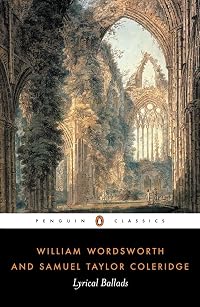
Lyrical Ballads
by William Wordsworth, Samuel Taylor Coleridge
On This Page
Description
When it was first published, Lyrical Ballads enraged the critics of the day: Wordsworth and Coleridge had given poetry a voice, one decidedly different to that which had been voiced before. This acclaimed Routledge Classics edition offers the reader the opportunity to study the poems in their original contexts as they appeared to Coleridge's and Wordsworth's contemporaries, and includes some of their most famous poems, including Coleridge's Rime of the Ancyent Marinere.Tags
Recommendations








Member Reviews
Mixed feelings about this well-known book. Lyrical Ballads, originally published in 1798, is still regarded as the clarion call of the British Romantic movement. And I understand why: the evocation of natural beauty, sometimes in an inspired-spiritual form, speaks volumes. This collection contains numerous compelling examples of this. But this work offers much more, in very different directions. I had the impression that Coleridge's – limited – contributions emphasized a more gothic aspect. And that Wordsworth's poems are much more appealing, fresher in form as well. I also read the preface (by Wordsworth) to the 1800 edition, which does discuss formal aspects in great detail (the text is truly dense): a departure from earlier show more strict formal requirements and a greater connection to everyday language. Much of this is recognizable in the poems, often with a refreshing effect. But in some cases, Wordsworth lapses into very simplistic language, into childish-sounding stories. So not everything still appeals more than two centuries later, and that is logical. show less
This is one of the foundational volumes of poetry in the English language. So it's subversive and dangerous. Read at your own risk!
The first edition of Wordsworth’s and Coleridge’s Lyrical Ballads was published on this day in 1798. A historic moment in poetry, it is the high-water mark of perhaps the most famous collaboration and friendship in literary history. The two remained close for another decade, but the fault lines were by then well established. Dorothy Wordsworth took up much of her brother’s emotional life, and after Wordsworth married (on this day in 1802) there was even less room for Coleridge. This became especially clear when Coleridge attempted to live in the same house with the other three, while maintaining his old, opium-fueled pattern of wild plans and dark moods. The poetic record shows the strain: in 1807, while Coleridge was publicly show more proclaiming his love and need for “O Friend! My comforter and guide! show less
Of course these are wonderful. If only he'd died a little younger, like a good lyric poet . . .
"...To sum up a general opinion of the second volume, I do not feel any one poem in it so forcibly as the 'Ancient Marinere, the Mad Mother, and the Lines at Tintern Abbey in the first. I could, too, have wished the Critical Preface had appeared in a separate treatise. All its dogmas are true and just, and most of them new, as criticism. But they associate a 'diminishing' idea with the poems which follow, as having been written for 'experiment' on the public taste, more than having sprung (as they must have done) from living and daily circumstances." Lamb's letter to William Wordsworth, Jan. 30, 1801.
A collection of poems which was first published in 1798. Some of the poems were easy to follow, others more difficult, but in either case, I can't see what makes them so well thought of.
mixed bag.
Members
- Recently Added By
Published Reviews
With the advent of the Information Superhighway, cell-phones, and other Digital Now-signifiers, we have an entered an era in which all reality is virtual. Poets who give serious thought to the why of their craft are faced w/ a dilemma: how to create poems in the Wordsworthian manner (i.e. real language of people) when technology has outmoded the Romantic model that still dictates so much show more serious poetry. Language poetry schematized a new model — oblique, skewered, post-modern. This model was a useful innovation that has, in roughly thirty years time, grown stale & somewhat irrelevant. Poets, & what’s left of their audience, still want the Wordsworthian model to hold. They want feeling to be relevant & language to enact a mimesis of interior (real) processes.
The problem is, that if we acknowledge a central virtual quality to modern life, real language may be an impossibility.
So, we can’t depend completely on Wordsworth anymore. For the creation of virtual poetry, it will be necessary for the poet to internalize things ordinarily seen as epitomizing crassness & “low” reality — like McDonald’s. As one sits in McDonald’s circa 2005, it becomes clear that agile minds are working to keep the corporate axles greased — minds from which it is possible to learn. Hanging in the window, a large picture advertising chicken strips; a young African-American male dangling one in front of parted lips, beaming; inscribed on the blank space above his head, a motto: “I’m lovin’ it”. This is obviously rhetorical, in that the “I” here is general & universalized. “I” is all of us, in the contented bliss of a chicken-strip meal. So, McDonald’s is subtle enough to posit an “I” that really means “you”. How many poets left in America can say the same? How many poets are so subtle, so engaged, so virtual that their “I’s” resonate as “yous”? Poets want a perpetual striking of Wordsworth’s bell; they still believe in “real language” (even Language poets inherently must believe before they deconstruct); their “I’s” stay isolate, separate, derelict. Let’s set up a small chart & enumerate exactly the binary being portrayed here:
Wordsworth (language/ real men)
gender-specific, un-PC (language/ men)
static/ abstract “I”
definitely serious-intentioned
McDonald’s (I’m lovin’ it)
gender-neutral, PC (I)
In medias res
moderately serious
Immediately it becomes apparent that the McDonald’s ad execs are, on some level, more linguistically sharp than us, the poets. Their motto is PC, active, & moderately serious, where Wordsworth is sexist, static, & excessively serious. What I’m calling for is a poetics equal parts Wordsworth & McDonald’s. Post-modernists would resolve this binary tension by making a mockery of it (especially the Wordsworth half), in an attempt to reinforce an ethos of “virtuality” or “nothing real”. Though reality has grown to be (arguably) virtual, I am looking for an earnest attempt to implement both sides of this binary, the Wordsworth & the McDonald’s, the “I” that’s “I” & the “I” that’s “you”, the static & the active, definite & moderate seriousness. This does not preclude irony & slant; rather, they become a tool to express underlying profundities. What’s needed to achieve balance is Negative Rhetopoeiac Capability. That is, a poem must attempt to straddle the Wordsworth/ McDonald’s binary without irritably grasping after rhetorical reason, or making a mockery of either side. This ensures a poetics both actively virtual & substantially real.
Some of these Frank O’Hara lines are illustrative of successful work in this vein:
I go back where I came from to 6th Avenue
and the tobacconist in the Ziegfeld Theatre and
casually ask for a carton of Gauloises and a carton
of Picayunes, and a NEW YORK POST with
her face on it
(‘The Day Lady Died’)
... and Leroi comes in
and tells me Miles Davis was clubbed 12
times last night outside BIRDLAND by a cop
a lady asks us for a nickel for a terrible
disease but we don’t give her one we
don’t like terrible diseases...
(‘Personal Poem’)
O’Hara’s conversational diction fulfills Wordsworth binary-end, even as his affirmative, ebullient voice veers into “I’m lovin’ it” territory (in medias res, active, performative). This is “serious ephemeral” poetry, using Pop Culture references as quotidian signifiers that nevertheless have substantial internal (“felt”) relevance. O’Hara, though he skirts post-modern (or “Pop”) territory, does not make a mockery of anything — he’s kidding, but he isn’t, he’s at McDonald’s reading Wordsworth, he is where we want to be.
O’Hara’s oeuvre as a whole is useful, because O’Hara has a key “Wordsworth McDonald’s” quality that most serious poets lack — “charm”. His poems, in their moderately serious/ actively engaging tenor, are charming. Why wouldn’t Wordsworth at McDonald’s be charming? Can you imagine the Bard of Tintern Abbey reckoning a “Solitary Milkshake”, finding himself overwhelmed by a spontaneously felt Big Mac? O’Hara’s charm comes from unexpected juxtapositions charged w/ feeling. He is, in this sense, a good Wordsworthian — but he lives in the present moment, always. Dualism is manifested as whim. Modern signifiers are internalized, processed, felt.
So, McDonald’s has led us from Wordsworth to Frank O’Hara, who was virtual before virtual became real. He instinctively navigated a Mannerist-space that has yet to be pursued by a substantial number of serious poets (who perhaps mistrust his merely moderate seriousness). Yet, poets who lean & cling to Wordsworthian “reality” can often be heard complaining about lack of interest. Poets who want to achieve something real in this day & age really have no choice but to get Mannerist. Mannerism is differentiated from Pop (and the post-modern ethos that followed in its’ wake) in this way — Pop is a Campbell’s Soup can, Mannerism is a Campbell’s Soup can held by Michelangelo’s David. Mannerism includes Formal Rigor, depth, gravitas (Wordsworth virtues) along with spontaneous, active, Pop-based signifiers and imagery (McDonald’s).
Claiming an essential virtuality to modern life needs some justification. What I mean to say is that image/ technology-saturation has become so rampant in Western society that even those of us who’d like to lead pure, uncluttered, Wordsworth-style existences have cell-phones, use the Internet, watch TV & movies, etc. Cell-phone communication seems particularly distressing, substituting expedience for intimacy (transpiring as it does while we are “multi-tasking”), breaking down boundaries (anyone w/ our number can reach us anytime, so long as we keep our phones on), often poisoning our relationship to the Now by taking us out of the present moment.
So, imagine — one is at a dinner party, adjourned to the living room to watch (if we are lucky) something by Cocteau or Godard. Our cell-phone rings; we’re expecting an important (perhaps career-related) call; we answer. We are living in three realms — dinner party, Cocteau, cell-phone — at once.
These situations have become familiar and common to most of us. They happen all the time, and they (for me at least) have added up to a feeling of alienation from the essential presence of the Now. This is especially pertinent for city-dwellers. The unreality/ virtual component goes way up, it’s hard to feel solid with a flux not only in the outside world but in one’s hand-bag and one’s computer. When I speak of an encroachingly preponderant virtual world, that’s what I mean.
Poets must address this situation precisely. When Wordsworth, in the preface to Lyrical Ballads, spoke of “gross stimulants” contaminating mass aesthetic judgment, could he even have fathomed our current level of emotional dispossession and image-centered “savage torpor”? I’m all for a poetry that confronts this head-on by using some of it! The architect Robert Venturi says, “Viva Mannerism that richly acknowledges ambiguity and inconsistency in a complex and contradictory time.” Maybe we could go so far as to call O’Hara a “Mannerist” — his exaggerated reactions and humor, his implicit ethos of “mess is more”. McDonald’s “I’m lovin’ it” also has the essential Mannerist hyperbolizing spirit. Wordsworth, the sober, steady philosophe, was obviously no Mannerist — but why not keep some of his level-headed piety regarding art’s pleasure-giving, insight-shedding mission, his emotion-cherishing mind?
To me, it’s a question of letting in. Don’t write off McDonald’s for its’ Mannerist modernity or Wordsworth for his Romantic self-absorption — rather, let them both in equally, so that what we produce is contemporary and durable, Mannerist and tradition-preserving, face-to-face intimate and cell-phone expedient. O’Hara was, as far as I can tell, the greatest master at absorbing modernity-signifiers in such a way that he represented them without condescension, and with a loving eye. This has obvious ties to Warhol, Pop-art in general, Rauschenberg’s Combine-paintings, etc. Mannerism, however, has grounding in tradition that Pop lacks. Pop did away with the past in embracing glossy surfaces; Mannerism wants the glossy surface and the earthy depth. It’s an impossibly ambitious stratagem for a new urban poetics — but why not? show less
The problem is, that if we acknowledge a central virtual quality to modern life, real language may be an impossibility.
So, we can’t depend completely on Wordsworth anymore. For the creation of virtual poetry, it will be necessary for the poet to internalize things ordinarily seen as epitomizing crassness & “low” reality — like McDonald’s. As one sits in McDonald’s circa 2005, it becomes clear that agile minds are working to keep the corporate axles greased — minds from which it is possible to learn. Hanging in the window, a large picture advertising chicken strips; a young African-American male dangling one in front of parted lips, beaming; inscribed on the blank space above his head, a motto: “I’m lovin’ it”. This is obviously rhetorical, in that the “I” here is general & universalized. “I” is all of us, in the contented bliss of a chicken-strip meal. So, McDonald’s is subtle enough to posit an “I” that really means “you”. How many poets left in America can say the same? How many poets are so subtle, so engaged, so virtual that their “I’s” resonate as “yous”? Poets want a perpetual striking of Wordsworth’s bell; they still believe in “real language” (even Language poets inherently must believe before they deconstruct); their “I’s” stay isolate, separate, derelict. Let’s set up a small chart & enumerate exactly the binary being portrayed here:
Wordsworth (language/ real men)
gender-specific, un-PC (language/ men)
static/ abstract “I”
definitely serious-intentioned
McDonald’s (I’m lovin’ it)
gender-neutral, PC (I)
In medias res
moderately serious
Immediately it becomes apparent that the McDonald’s ad execs are, on some level, more linguistically sharp than us, the poets. Their motto is PC, active, & moderately serious, where Wordsworth is sexist, static, & excessively serious. What I’m calling for is a poetics equal parts Wordsworth & McDonald’s. Post-modernists would resolve this binary tension by making a mockery of it (especially the Wordsworth half), in an attempt to reinforce an ethos of “virtuality” or “nothing real”. Though reality has grown to be (arguably) virtual, I am looking for an earnest attempt to implement both sides of this binary, the Wordsworth & the McDonald’s, the “I” that’s “I” & the “I” that’s “you”, the static & the active, definite & moderate seriousness. This does not preclude irony & slant; rather, they become a tool to express underlying profundities. What’s needed to achieve balance is Negative Rhetopoeiac Capability. That is, a poem must attempt to straddle the Wordsworth/ McDonald’s binary without irritably grasping after rhetorical reason, or making a mockery of either side. This ensures a poetics both actively virtual & substantially real.
Some of these Frank O’Hara lines are illustrative of successful work in this vein:
I go back where I came from to 6th Avenue
and the tobacconist in the Ziegfeld Theatre and
casually ask for a carton of Gauloises and a carton
of Picayunes, and a NEW YORK POST with
her face on it
(‘The Day Lady Died’)
... and Leroi comes in
and tells me Miles Davis was clubbed 12
times last night outside BIRDLAND by a cop
a lady asks us for a nickel for a terrible
disease but we don’t give her one we
don’t like terrible diseases...
(‘Personal Poem’)
O’Hara’s conversational diction fulfills Wordsworth binary-end, even as his affirmative, ebullient voice veers into “I’m lovin’ it” territory (in medias res, active, performative). This is “serious ephemeral” poetry, using Pop Culture references as quotidian signifiers that nevertheless have substantial internal (“felt”) relevance. O’Hara, though he skirts post-modern (or “Pop”) territory, does not make a mockery of anything — he’s kidding, but he isn’t, he’s at McDonald’s reading Wordsworth, he is where we want to be.
O’Hara’s oeuvre as a whole is useful, because O’Hara has a key “Wordsworth McDonald’s” quality that most serious poets lack — “charm”. His poems, in their moderately serious/ actively engaging tenor, are charming. Why wouldn’t Wordsworth at McDonald’s be charming? Can you imagine the Bard of Tintern Abbey reckoning a “Solitary Milkshake”, finding himself overwhelmed by a spontaneously felt Big Mac? O’Hara’s charm comes from unexpected juxtapositions charged w/ feeling. He is, in this sense, a good Wordsworthian — but he lives in the present moment, always. Dualism is manifested as whim. Modern signifiers are internalized, processed, felt.
So, McDonald’s has led us from Wordsworth to Frank O’Hara, who was virtual before virtual became real. He instinctively navigated a Mannerist-space that has yet to be pursued by a substantial number of serious poets (who perhaps mistrust his merely moderate seriousness). Yet, poets who lean & cling to Wordsworthian “reality” can often be heard complaining about lack of interest. Poets who want to achieve something real in this day & age really have no choice but to get Mannerist. Mannerism is differentiated from Pop (and the post-modern ethos that followed in its’ wake) in this way — Pop is a Campbell’s Soup can, Mannerism is a Campbell’s Soup can held by Michelangelo’s David. Mannerism includes Formal Rigor, depth, gravitas (Wordsworth virtues) along with spontaneous, active, Pop-based signifiers and imagery (McDonald’s).
Claiming an essential virtuality to modern life needs some justification. What I mean to say is that image/ technology-saturation has become so rampant in Western society that even those of us who’d like to lead pure, uncluttered, Wordsworth-style existences have cell-phones, use the Internet, watch TV & movies, etc. Cell-phone communication seems particularly distressing, substituting expedience for intimacy (transpiring as it does while we are “multi-tasking”), breaking down boundaries (anyone w/ our number can reach us anytime, so long as we keep our phones on), often poisoning our relationship to the Now by taking us out of the present moment.
So, imagine — one is at a dinner party, adjourned to the living room to watch (if we are lucky) something by Cocteau or Godard. Our cell-phone rings; we’re expecting an important (perhaps career-related) call; we answer. We are living in three realms — dinner party, Cocteau, cell-phone — at once.
These situations have become familiar and common to most of us. They happen all the time, and they (for me at least) have added up to a feeling of alienation from the essential presence of the Now. This is especially pertinent for city-dwellers. The unreality/ virtual component goes way up, it’s hard to feel solid with a flux not only in the outside world but in one’s hand-bag and one’s computer. When I speak of an encroachingly preponderant virtual world, that’s what I mean.
Poets must address this situation precisely. When Wordsworth, in the preface to Lyrical Ballads, spoke of “gross stimulants” contaminating mass aesthetic judgment, could he even have fathomed our current level of emotional dispossession and image-centered “savage torpor”? I’m all for a poetry that confronts this head-on by using some of it! The architect Robert Venturi says, “Viva Mannerism that richly acknowledges ambiguity and inconsistency in a complex and contradictory time.” Maybe we could go so far as to call O’Hara a “Mannerist” — his exaggerated reactions and humor, his implicit ethos of “mess is more”. McDonald’s “I’m lovin’ it” also has the essential Mannerist hyperbolizing spirit. Wordsworth, the sober, steady philosophe, was obviously no Mannerist — but why not keep some of his level-headed piety regarding art’s pleasure-giving, insight-shedding mission, his emotion-cherishing mind?
To me, it’s a question of letting in. Don’t write off McDonald’s for its’ Mannerist modernity or Wordsworth for his Romantic self-absorption — rather, let them both in equally, so that what we produce is contemporary and durable, Mannerist and tradition-preserving, face-to-face intimate and cell-phone expedient. O’Hara was, as far as I can tell, the greatest master at absorbing modernity-signifiers in such a way that he represented them without condescension, and with a loving eye. This has obvious ties to Warhol, Pop-art in general, Rauschenberg’s Combine-paintings, etc. Mannerism, however, has grounding in tradition that Pop lacks. Pop did away with the past in embracing glossy surfaces; Mannerism wants the glossy surface and the earthy depth. It’s an impossibly ambitious stratagem for a new urban poetics — but why not? show less
added by FuntimePress
Lists

Tonikat reading completed on Librarything journals
329 works; 2 members

100 Books to Read in a Lifetime (That Are Older Than 200 Years)
415 works; 175 members

Jones & Newman: Best Horror Books Further Recommended Reading
577 works; 4 members

How to Read a Book's Recommended Reading List
309 works; 10 members

Greatest Books, allegedly
484 works; 9 members

In Our Time books
4,934 works; 2 members
Author Information

544+ Works 11,600 Members

514+ Works 14,149 Members
Born in Ottery St. Mary, England, in 1772, Samuel Taylor Coleridge studied revolutionary ideas at Cambridge before leaving to enlist in the Dragoons. After his plans to start a communist society in the United States with his friend Robert Southey, later named poet laureate of England, were botched, Coleridge instead turned his attention to show more teaching and journalism in Bristol. Coleridge married Southey's sister-in-law Sara Fricker, and they moved to Nether Stowey, where they became close friends with William and Dorothy Wordsworth. From this friendship a new poetry emerged, one that focused on Neoclassic artificiality. In later years, their relationship became strained, partly due to Coleridge's moral collapse brought on by opium use, but more importantly because of his rejection of Wordworth's animistic views of nature. In 1809, Coleridge began a weekly paper, The Friend, and settled in London, writing and lecturing. In 1816, he published Kubla Kahn. Coleridge reported that he composed this brief fragment, considered by many to be one of the best poems ever written lyrically and metrically, while under the influence of opium, and that he mentally lost the remainder of the poem when he roused himself to answer an ill-timed knock at his door. Coleridge's The Rime of the Ancient Mariner, Christabel, and his sonnet Ozymandias are all respected as inventive and widely influential Romantic pieces. Coleridge's prose works, especially Biographia Literaria, were also broadly read in his day. Coleridge died in 1834. (Bowker Author Biography) show less
Some Editions
Awards and Honors
Notable Lists
Series
Belongs to Publisher Series
Work Relationships
Is contained in
Contains
Has as a student's study guide
Common Knowledge
- Canonical title
- Lyrical Ballads
- Original publication date
- 1798; 1800 (2nd ed) (2nd ed); 1802 (3rd ed) (3rd ed)
- People/Characters
- The Ancient Mariner
- Important places
- Tintern Abbey, Wales
- Related movies
- Pandaemonium (2000 | IMDb)
- First words
- It is the honourable characteristic of Poetry that its materials are to be found in every subject which can interest the human mind. - Advertisement
Argument: How a Ship having passed the Line was driven to Storms to the cold Country towards the South Pole; and how from thence she made her course to the tropical Latitude of the Great Pacific Ocean; and of the strange thin... (show all)gs that befell; and in what manner the Ancyent Marinere came back to his own Country. - Last words
- (Click to show. Warning: May contain spoilers.)... Nor wilt thou then forget / That after many wanderings, many years / Of absence, these steep woods and lofty cliffs, / And this green pastorial landscape, were to me / More dear, both for themselves, and for thy sake.
Classifications
Statistics
- Members
- 1,293
- Popularity
- 18,734
- Reviews
- 13
- Rating
- (4.02)
- Languages
- 5 — Dutch, English, Italian, Multiple languages, Spanish
- Media
- Paper, Audiobook, Ebook
- ISBNs
- 67
- UPCs
- 1
- ASINs
- 29