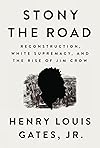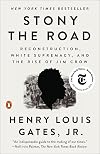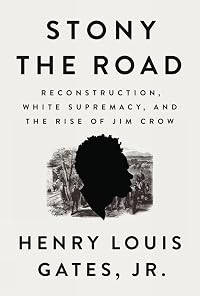
Stony the Road: Reconstruction, White Supremacy, and the Rise of Jim Crow
by Henry Louis Jr Gates
On This Page
Description
A profound new rendering of the struggle by African-Americans for equality after the Civil War and the violent counter-revolution that resubjugated them, as seen through the prism of the war of images and ideas that have left an enduring racist stain on the American mind.The abolition of slavery in the aftermath of the Civil War is a familiar story, as is the civil rights revolution that transformed the nation after World War II. But the century in between remains a mystery: if emancipation show more sparked "a new birth of freedom" in Lincoln's America, why was it necessary to march in Martin Luther King, Jr.'s America? In this new book, Henry Louis Gates, Jr., one of our leading chroniclers of the African-American experience, seeks to answer that question in a history that moves from the Reconstruction Era to the "nadir" of the African-American experience under Jim Crow, through to World War I and the Harlem Renaissance.
Through his close reading of the visual culture of this tragic era, Gates reveals the many faces of Jim Crow and how, together, they reinforced a stark color line between white and black Americans. Bringing a lifetime of wisdom to bear as a scholar, filmmaker, and public intellectual, Gates uncovers the roots of structural racism in our own time, while showing how African Americans after slavery combatted it by articulating a vision of a "New Negro" to force the nation to recognize their humanity and unique contributions to America as it hurtled toward the modern age.
The story Gates tells begins with great hope, with the Emancipation Proclamation, Union victory, and the liberation of nearly 4 million enslaved African-Americans. Until 1877, the federal government, goaded by the activism of Frederick Douglass and many others, tried at various turns to sustain their new rights. But the terror unleashed by white paramilitary groups in the former Confederacy, combined with deteriorating economic conditions and a loss of Northern will, restored "home rule" to the South. The retreat from Reconstruction was followed by one of the most violent periods in our history, with thousands of black people murdered or lynched and many more afflicted by the degrading impositions of Jim Crow segregation.
An essential tour through one of America's fundamental historical tragedies, Stony the Road is also a story of heroic resistance, as figures such as W. E. B. Du Bois and Ida B. Wells fought to create a counter-narrative, and culture, inside the lion's mouth. As sobering as this tale is, it also has within it the inspiration that comes with encountering the hopes our ancestors advanced against the longest odds.
*Includes a Bonus PDF of images from the book.. show less
Tags
Recommendations


Member Reviews
The day I finished this book, I read a news story about an effort to interpret one of the Reconstruction acts to favor a corporation over communities of African-Americans, bringing home the message of Gates's book: African-Americans have had to struggle throughout their history, but particularly since the end of the Civil War, against white supremacist and racist acts, images and words which seek to keep them subordinate not only to whites but to corporate needs. Some of the impact, a large part of the impact, for me was in the images Gates has collected to illustrate how white Americans have consistently denied humanity to African-Americans. I had not realized how pervasive this was throughout our shared history.
The story of the failure of Reconstruction and the rise of the "Reedemed" South with its virulent white supremacy in the late 19th and most of the 20th centuries is critical to fully understand the painful state of political and social injustice that persisted throughout most of the 20th century, and whose effects linger today. Only when one when comes to terms with the emergence of and magnitude of racially grounded stereotyping of African-Americans from the end of Reconstruction to the civil rights breakthroughs in the 1960's can one fully grasp how great is the blot this era on the purported values and principles of the republic. [The idea that the supremacy of the white race existed only in the South is incorrect; the North had no show more less of this view in the antebellum and post war years.] Professor Gates, in the companion book to the PBS documentray series on Reconstruction, provides scholarly but eye opening insights in the methods by which white supremacy and its manifestation --Jim Crow strictures -- took hold and persisted for the better part of a century.
The passage of the 13th, 14th and 15th amendments to the Constitution and enabling legisation (augmented by stringent conditions placed on Southern states for reentry to the union) gave freed people a full panoply of civic rights, most especially the franchise. Newly freed slaves gained substantial political power, and elected offices, as the result of the vote. Dating from the presidential election of 1877, where an orchestrated compromise gave the presidency to Hayes in exchange for removing federal oversight of several formerly confederate states, the national concern for civil rights for the emancipated population waned considerably. The so-called "Lost Cause" mythology emerged that held that South failed in its rupture from the union only because of the overwhelming military and industral superiority of the North, but the merits of the Southern ethos on the hierarchy of the races still held. The never-settled question of the respective powers of the federal government v state's rights played a significant role in several Supreme Court decisions that eviscerated civil rights legislation combined with growing indifference in the North to the affairs of the South, led to the resurgance of white suzerainty over political and social matters in the South.
Gates tells us how this push toward reestablishing white supremacy was instilled in the public psyche. Much of this focused on dehumanizing African-Americans, usually through ascribing characteritics portraying them as sub human. Commentators on the Old Testament came forth with the preposterous exigesis that held blacks were shunned by God to be a separate species as descendents from Hamm in the Noah tale. Another idea to justify the low caste of blacks was that human kind was created as separate species, the whites from Adam and Eve and blacks and other races in some other process. Gates also describes how pseudo scientific ideas of the era posited a biological basis for the inferiority of the African race employing such quackery as phrenology and misconstrual of Darwin's theories evolutionary theories that had so recently taken hold in the intellectual world. This distorted view linked with the onset of the eugenics theory about the necessity for controlling the breeding of so-called inferiors. This, as we know, extended, with loathsome consequences, well into the 20th century.
The depiction of blacks in publications, black face minstrelsy and new forms of media was aimed at reinforcing the low class and inferiority of blacks. Gates gives a scathing review of white supremacistthe literature and early movies like "The Birth of a Nation" (screened to positive response in Wilson's White House). Throughout this glossy and well-produced book are sections depicting images that underscore the ideas Gates is conveying. The pictures of scientific renderings of racial types, advertisements, post cards, posters and more convey quite viscerally how casually and widespread were the demeaning stereotypes prevalent for many decades. One is reminded of the Disney production of the "Songs of the South" with its (Old Negro) Uncle Remus, that many of us saw as children, to appreciate how accepted were the racist portrayals of African-Americans even within our lifetimes. Who can forget the images of blacks in one of the most popular movies of all times -- "Gone with the Wind".
Another path to white domination over blacks was to promote the nostalgic sentiment that freedmen and women were like children, simple people whose best interests could be achieved through the paternalistic nurturing of their beneficent former masters, and that the freed slaves longed for the security of thise times. (The image of a contended, compliant "Uncle Tom" under the gentle treatment of his first masters comports with this meme.) Contrary to this theme was the image of black men as licentious brutes whose sexual appetites posed real danger to the sanctity of white womenhood. This, of course, led to the scourge of lynchings that afflicted black men for decades. This was terrorism in its fullest form.
Gates makes the point effectively that a principal motivation to reestablish white domination was economic; that the labor needed from former slaves to sustain cotton production was essential to the return of economic prosperity of the landed class.
The last quarter of the book describes responses of the African-American community to the overt subjection in the Jim Crow era, particularly through its intellectual leaders. This was an attempt to supplant the idea of the "Old Negro" (compliant, lazy, no ambition, etc.) with a vision of the "New Negro" (competent, accomplished, independent of reliance on whites). One strand of this movement, led by Booker T. Washington, advocated that growing competence of blacks in the trades would bring about self-sufficiency that would lead intentionally to separation of dependence on the white world. This was contrary to an alternative concept of the "New Negro" whose intellectual, literary and artistic accomplishments were to demonstrate that blacks were ever so much the equals of whites. Gates portrays leaders such as W.E.B. Dubois as exemplars of this effort, along with some figures that are lesser known now. The Harlem Renaissance with its outpouring of grat literature, art and music was the zenith of this movement among literary and artistic leaders of the era.
The Jim Crow era and its gross inequity and distortion of history was a part of my teenage years. I grew up in the deep South at the time when whites-only strictures were everywhere. Was I as appalled about that then as I am now? I hope so. I do recall the teaching of Reconstruction during high school history class with its assertion that it was black inferiority that caused its (justified) passing (the so-called Dunning school of history), along with the return to right relations of the races. i.e. white supremacy.
Someone once said history is the way in which we betray the past and never is this more apt than in the distorted history of Reconstruction and Redemption taught for decades. This version can be rightfully said to have retarded for years the justice due to our fellow citizens show less
The passage of the 13th, 14th and 15th amendments to the Constitution and enabling legisation (augmented by stringent conditions placed on Southern states for reentry to the union) gave freed people a full panoply of civic rights, most especially the franchise. Newly freed slaves gained substantial political power, and elected offices, as the result of the vote. Dating from the presidential election of 1877, where an orchestrated compromise gave the presidency to Hayes in exchange for removing federal oversight of several formerly confederate states, the national concern for civil rights for the emancipated population waned considerably. The so-called "Lost Cause" mythology emerged that held that South failed in its rupture from the union only because of the overwhelming military and industral superiority of the North, but the merits of the Southern ethos on the hierarchy of the races still held. The never-settled question of the respective powers of the federal government v state's rights played a significant role in several Supreme Court decisions that eviscerated civil rights legislation combined with growing indifference in the North to the affairs of the South, led to the resurgance of white suzerainty over political and social matters in the South.
Gates tells us how this push toward reestablishing white supremacy was instilled in the public psyche. Much of this focused on dehumanizing African-Americans, usually through ascribing characteritics portraying them as sub human. Commentators on the Old Testament came forth with the preposterous exigesis that held blacks were shunned by God to be a separate species as descendents from Hamm in the Noah tale. Another idea to justify the low caste of blacks was that human kind was created as separate species, the whites from Adam and Eve and blacks and other races in some other process. Gates also describes how pseudo scientific ideas of the era posited a biological basis for the inferiority of the African race employing such quackery as phrenology and misconstrual of Darwin's theories evolutionary theories that had so recently taken hold in the intellectual world. This distorted view linked with the onset of the eugenics theory about the necessity for controlling the breeding of so-called inferiors. This, as we know, extended, with loathsome consequences, well into the 20th century.
The depiction of blacks in publications, black face minstrelsy and new forms of media was aimed at reinforcing the low class and inferiority of blacks. Gates gives a scathing review of white supremacistthe literature and early movies like "The Birth of a Nation" (screened to positive response in Wilson's White House). Throughout this glossy and well-produced book are sections depicting images that underscore the ideas Gates is conveying. The pictures of scientific renderings of racial types, advertisements, post cards, posters and more convey quite viscerally how casually and widespread were the demeaning stereotypes prevalent for many decades. One is reminded of the Disney production of the "Songs of the South" with its (Old Negro) Uncle Remus, that many of us saw as children, to appreciate how accepted were the racist portrayals of African-Americans even within our lifetimes. Who can forget the images of blacks in one of the most popular movies of all times -- "Gone with the Wind".
Another path to white domination over blacks was to promote the nostalgic sentiment that freedmen and women were like children, simple people whose best interests could be achieved through the paternalistic nurturing of their beneficent former masters, and that the freed slaves longed for the security of thise times. (The image of a contended, compliant "Uncle Tom" under the gentle treatment of his first masters comports with this meme.) Contrary to this theme was the image of black men as licentious brutes whose sexual appetites posed real danger to the sanctity of white womenhood. This, of course, led to the scourge of lynchings that afflicted black men for decades. This was terrorism in its fullest form.
Gates makes the point effectively that a principal motivation to reestablish white domination was economic; that the labor needed from former slaves to sustain cotton production was essential to the return of economic prosperity of the landed class.
The last quarter of the book describes responses of the African-American community to the overt subjection in the Jim Crow era, particularly through its intellectual leaders. This was an attempt to supplant the idea of the "Old Negro" (compliant, lazy, no ambition, etc.) with a vision of the "New Negro" (competent, accomplished, independent of reliance on whites). One strand of this movement, led by Booker T. Washington, advocated that growing competence of blacks in the trades would bring about self-sufficiency that would lead intentionally to separation of dependence on the white world. This was contrary to an alternative concept of the "New Negro" whose intellectual, literary and artistic accomplishments were to demonstrate that blacks were ever so much the equals of whites. Gates portrays leaders such as W.E.B. Dubois as exemplars of this effort, along with some figures that are lesser known now. The Harlem Renaissance with its outpouring of grat literature, art and music was the zenith of this movement among literary and artistic leaders of the era.
The Jim Crow era and its gross inequity and distortion of history was a part of my teenage years. I grew up in the deep South at the time when whites-only strictures were everywhere. Was I as appalled about that then as I am now? I hope so. I do recall the teaching of Reconstruction during high school history class with its assertion that it was black inferiority that caused its (justified) passing (the so-called Dunning school of history), along with the return to right relations of the races. i.e. white supremacy.
Someone once said history is the way in which we betray the past and never is this more apt than in the distorted history of Reconstruction and Redemption taught for decades. This version can be rightfully said to have retarded for years the justice due to our fellow citizens show less
Skip Gates does not right dispassionately about the subject of Reconstruction and its subsequent overthrow in the 1870's, but he does paint a vivid picture of life under Jim Crow and how racial prejudice became institutionalized in this country.
Reconstruction came immediately after the end of the Civil War when the South was divided into several military districts and occupied by the Union Army. In this brief period (1865-1877) the former slaves were admitted to schools, given the vote and in many states, elected to Congress. Unfortunately, with the Panic of 1873, many in the northern states turned their focus away from the newly freed slaves to more pressing economic matters and in 1877, in order to end a standoff in the presidential show more election of 1876, Reconstruction ended.
Southern Democrats’ promises to protect civil and political rights of blacks were not kept, and the end of federal interference in southern affairs led to widespread disenfranchisement of blacks voters. From the late 1870's onward, southern legislatures passed a series of laws requiring the separation of whites from “persons of color” on public transportation, in schools, parks, restaurants, theaters and other locations. Known as the “Jim Crow laws” (after a popular minstrel act developed in the antebellum years), these segregationist statutes governed life in the South through the middle of the next century, ending only after the hard-won successes of the civil rights movement in the 1960's.
The South also developed the myth of the "Lost Cause" to justify Jim Crow. The Lost Cause myth was based on two falsehoods. First, that the Civil War was not an act of treason but rather a revolt against an overreaching federal government and second that slavery did not start the war
Since the white power structure realized that the freed slaves' ultimate power would be achieved through their exercise of their right to vote, every effort was made to suppress that right. At least 10% of the black members of constitutional conventions in the South in 1867-8 became victims of Klan violence, including 7 who were murdered. Likewise the South Carolina legislature closed the newly integrated University in 1876 and re-opened it in 1880 as a segregated institution. And of course the promised Redistribution of land never happened.
Jim Crow legislation that was quickly passed in the 1880's did not occur in a vacuum. It was bolstered by the ideology of white supremacy that developed in order to maintain the country's racial hierarchy in the face of emancipation and black citizenship, White power enforced through the nation's cultural, economic, educational, legal and violently extra-legal systems, including lynching. At its core were the paired myths of white women's rape and black men's brutality, the convict lease system, disenfranchisement, and the chocking off of access to capital and property ownership. Added all together and these produced the self-fulfilling prophecies of racial stereotypes that are still held in wide belief today.
The racial mythology produced seven basic African-American stereotypes:
:
• The Contented Slave
• the Brute Negro
• the Wretched Freedman
• the Comic Negro
• the Tragic Mulatto
• the Local Color Negro
• the Exotic Primitive
These stereotypes ere supported by racial "science" that "proved" fundamental biological differences between black people and white people. These "differences" gave credence to the argument for legal segregation. To prove that the Negroes were happy as slaves and hopelessly unequipped for freedom. The Negro was established as a contented slave, entertaining child and docile ward until misled by "radical agitators," when he became a dangerous beast.
The educated African American tried to counteract these stereotypes by adopting Booker T. Washington's theory of the "New Negro" - : Middle class, educated & respectable. Of course, while some of these African Americans became successful through this reinvention of themselves, they never pleased the hardcore racists who were never going to accept any black person, no matter how refined. And neither did the "New Negro" please activists in the black community. As early as 1910, The Chicago Defender wrote " those who represent that young progressive class, that class that represent our colleges, that class that represents our business and professional side; but they are the class that the South is preparing to raise a monument to, the 'Good Nigger,' the Uncle Tom class."
It would take until 100 years after the end of the Civil War for Southern blacks to gain their right to vote as well as the right to equal access in public accommodations. And yet, fifty years after that landmark legislation, we see efforts once again to suppress their vote.
I'd advise everyone to read this book and just think about how your own thoughts and actions have been affected by the reaction to Reconstruction. show less
Reconstruction came immediately after the end of the Civil War when the South was divided into several military districts and occupied by the Union Army. In this brief period (1865-1877) the former slaves were admitted to schools, given the vote and in many states, elected to Congress. Unfortunately, with the Panic of 1873, many in the northern states turned their focus away from the newly freed slaves to more pressing economic matters and in 1877, in order to end a standoff in the presidential show more election of 1876, Reconstruction ended.
Southern Democrats’ promises to protect civil and political rights of blacks were not kept, and the end of federal interference in southern affairs led to widespread disenfranchisement of blacks voters. From the late 1870's onward, southern legislatures passed a series of laws requiring the separation of whites from “persons of color” on public transportation, in schools, parks, restaurants, theaters and other locations. Known as the “Jim Crow laws” (after a popular minstrel act developed in the antebellum years), these segregationist statutes governed life in the South through the middle of the next century, ending only after the hard-won successes of the civil rights movement in the 1960's.
The South also developed the myth of the "Lost Cause" to justify Jim Crow. The Lost Cause myth was based on two falsehoods. First, that the Civil War was not an act of treason but rather a revolt against an overreaching federal government and second that slavery did not start the war
Since the white power structure realized that the freed slaves' ultimate power would be achieved through their exercise of their right to vote, every effort was made to suppress that right. At least 10% of the black members of constitutional conventions in the South in 1867-8 became victims of Klan violence, including 7 who were murdered. Likewise the South Carolina legislature closed the newly integrated University in 1876 and re-opened it in 1880 as a segregated institution. And of course the promised Redistribution of land never happened.
Jim Crow legislation that was quickly passed in the 1880's did not occur in a vacuum. It was bolstered by the ideology of white supremacy that developed in order to maintain the country's racial hierarchy in the face of emancipation and black citizenship, White power enforced through the nation's cultural, economic, educational, legal and violently extra-legal systems, including lynching. At its core were the paired myths of white women's rape and black men's brutality, the convict lease system, disenfranchisement, and the chocking off of access to capital and property ownership. Added all together and these produced the self-fulfilling prophecies of racial stereotypes that are still held in wide belief today.
The racial mythology produced seven basic African-American stereotypes:
:
• The Contented Slave
• the Brute Negro
• the Wretched Freedman
• the Comic Negro
• the Tragic Mulatto
• the Local Color Negro
• the Exotic Primitive
These stereotypes ere supported by racial "science" that "proved" fundamental biological differences between black people and white people. These "differences" gave credence to the argument for legal segregation. To prove that the Negroes were happy as slaves and hopelessly unequipped for freedom. The Negro was established as a contented slave, entertaining child and docile ward until misled by "radical agitators," when he became a dangerous beast.
The educated African American tried to counteract these stereotypes by adopting Booker T. Washington's theory of the "New Negro" - : Middle class, educated & respectable. Of course, while some of these African Americans became successful through this reinvention of themselves, they never pleased the hardcore racists who were never going to accept any black person, no matter how refined. And neither did the "New Negro" please activists in the black community. As early as 1910, The Chicago Defender wrote " those who represent that young progressive class, that class that represent our colleges, that class that represents our business and professional side; but they are the class that the South is preparing to raise a monument to, the 'Good Nigger,' the Uncle Tom class."
It would take until 100 years after the end of the Civil War for Southern blacks to gain their right to vote as well as the right to equal access in public accommodations. And yet, fifty years after that landmark legislation, we see efforts once again to suppress their vote.
I'd advise everyone to read this book and just think about how your own thoughts and actions have been affected by the reaction to Reconstruction. show less
In the preface to Stony The Road, historian Henry Louis Gates recalls his early interest in Reconstruction during college and how that ultimately led to this book all these years later. Readers and history buffs looking for a detailed and documented — if somewhat dry — look at the period following the Civil War into the early 20th century need look no further than this small but packed book. Gates dissects and explains the history with buckets of primary sources from the famous (W.E.B. DuBois, etc.) to the unknown and leaves no theory unexamined. Not a light read, but definitely worthwhile for those interested in a deep dive into the period.
This book explores the African-American experience from Reconstruction to Redemption (that is, the end of Reconstruction and the "redemption" of Southern culture and white supremacy, which introduced Jim Crow). The author, a black historian, portrayed the Old Negro, which transitioned to the New Negro and then to the Newer New Negro. There are many color illustrations, including the insulting caricatures that the white supremacists used as propaganda to degrade the self-respect of the freed blacks.
My one complaint is the (sometimes) dry academic text, but the book is so full of vital information and insights that it's definitely worth reading.
I was privileged to do a "buddy read" on this book with a GR friend, exchanging comments on show more each chapter.
Highly recommended! show less
My one complaint is the (sometimes) dry academic text, but the book is so full of vital information and insights that it's definitely worth reading.
I was privileged to do a "buddy read" on this book with a GR friend, exchanging comments on show more each chapter.
Highly recommended! show less
this is chock full of information and an excellent reference to keep for the future. i'm sure that i'll look back at it to refresh my memory about certain events or people, or for the historical illustrations. there is really a lot of information here.
as a book to read, it's quite academic and tough to get through. i think, in fact, that it probably loses some of the audience who can benefit from this information. i'll need to work through it again to make sure i didn't miss stuff and to remind myself of what i'm sure i've already forgotten.
"Being an advocate of the abolition of slavery was not the same thing as being a proponent of the fundamental equality of black and white people, or the unity of the human species..., to say nothing show more of equal citizenship rights and equal protection under the law."
"After all, when the smoke cleared after Lee's surrender at Appomattox, cotton still had to be picked, and the Negro's labor had to be exploited as ruthlessly and as effectively as possible. Any expectation of "equal rights" or "equal protection of the law" had to be obliterated, and the massive potential of the black male vote in key Southern states thwarted, if the old order of a slave-based Confederate society was to be reestablished as seamlessly as possible." show less
as a book to read, it's quite academic and tough to get through. i think, in fact, that it probably loses some of the audience who can benefit from this information. i'll need to work through it again to make sure i didn't miss stuff and to remind myself of what i'm sure i've already forgotten.
"Being an advocate of the abolition of slavery was not the same thing as being a proponent of the fundamental equality of black and white people, or the unity of the human species..., to say nothing show more of equal citizenship rights and equal protection under the law."
"After all, when the smoke cleared after Lee's surrender at Appomattox, cotton still had to be picked, and the Negro's labor had to be exploited as ruthlessly and as effectively as possible. Any expectation of "equal rights" or "equal protection of the law" had to be obliterated, and the massive potential of the black male vote in key Southern states thwarted, if the old order of a slave-based Confederate society was to be reestablished as seamlessly as possible." show less
Henry Louis Gates book "Stony the Road" has some excellent information about Reconstruction, White Supremacy, and the Rise of Jim Crow laws in the South. However, I found much of the material to be somewhat dry as presented. Gates gives the reader a rather academic review of the writings and views of various writers and black leaders of that era, and talks of how and why Reconstruction in the South failed after the Civil War. While the 13th, 14th, and 15th Amendments to the Constitution officially ended slavery and gave equality and the right to vote to blacks, the intended benefits were short lived.
White stereotypes dominated in the post Civil War period, in both the North and the South. Also, there was the 300-year show more history of slavery practices and lack of education to overcome, "Sambo" stereotypes about black behaviors embedded in the South, and a number of influential 18th Century social scientist's studies which purported to show that blacks were inferior to whites, or even that they were a sub-human species. Together, these influences helped create multiple ways to keep blacks subjugated, even after the repeal of slavery.
It wasn't long before the Courts issued "separate but (un)equal" rulings, which had the effect of preventing true equality and freedom for blacks, especially in the South. Soon after, Confederate State Constitutions, written before these States could rejoin the Union, were undone. Reconstruction efforts stopped, and southern blacks became disenfranchised. A new form of oppression under Jim Crow laws took effect in the South. With no vote, southern blacks had few rights, and the KKK and lynchings kept southern blacks oppressed. Gates writes about the struggle for black equality during this period, how a number of black leaders fought the stereotypes through words and example. However, it wasn't until the Civil Rights legislation in the 1960's were enacted that many of these hardships began to unravel. show less
White stereotypes dominated in the post Civil War period, in both the North and the South. Also, there was the 300-year show more history of slavery practices and lack of education to overcome, "Sambo" stereotypes about black behaviors embedded in the South, and a number of influential 18th Century social scientist's studies which purported to show that blacks were inferior to whites, or even that they were a sub-human species. Together, these influences helped create multiple ways to keep blacks subjugated, even after the repeal of slavery.
It wasn't long before the Courts issued "separate but (un)equal" rulings, which had the effect of preventing true equality and freedom for blacks, especially in the South. Soon after, Confederate State Constitutions, written before these States could rejoin the Union, were undone. Reconstruction efforts stopped, and southern blacks became disenfranchised. A new form of oppression under Jim Crow laws took effect in the South. With no vote, southern blacks had few rights, and the KKK and lynchings kept southern blacks oppressed. Gates writes about the struggle for black equality during this period, how a number of black leaders fought the stereotypes through words and example. However, it wasn't until the Civil Rights legislation in the 1960's were enacted that many of these hardships began to unravel. show less
Members
- Recently Added By
Lists

African American History Month
99 works; 2 members
Author Information

122+ Works 10,771 Members
Henry Louis Gates, Jr. was born on September 16, 1950, in Keyser, West Virginia. He received a degree in history from Yale University in 1973 and a Ph.D. from Clare College, which is part of the University of Cambridge in 1979. He is a leading scholar of African-American literature, history, and culture. He began working on the Black Periodical show more Literature Project, which uncovered lost literary works published in 1800s. He rediscovered what is believed to be the first novel published by an African-American in the United States. He republished the 1859 work by Harriet E. Wilson, entitled Our Nig, in 1983. He has written numerous books including Colored People: A Memoir, A Chronology of African-American History, The Future of the Race, Black Literature and Literary Theory, and The Signifying Monkey: Towards a Theory of Afro-American Literary Criticism. In 1991, he became the head of the African-American studies department at Harvard University. He is now the director of the W.E.B. Du Bois Institute for African and African-American Research at the university. He wrote and produced several documentaries including Wonders of the African World, America Beyond the Color Line, and African American Lives. He has also hosted PBS programs such as Wonders of the African World, Black in Latin America, and Finding Your Roots. (Bowker Author Biography) show less
Awards and Honors
Awards
Common Knowledge
- Original publication date
- 2019
Classifications
- Genres
- History, General Nonfiction, Nonfiction
- DDC/MDS
- 973.0496073 — History & geography History of North America United States United States Ethnic And National Groups Other Groups African Americans African Americans
- LCC
- E185.61 .G253 — History of the United States United States Elements in the population Afro-Americans Status and development since emancipation
- BISAC
Statistics
- Members
- 702
- Popularity
- 40,613
- Reviews
- 8
- Rating
- (3.91)
- Languages
- English
- Media
- Paper, Audiobook, Ebook
- ISBNs
- 8
- ASINs
- 2